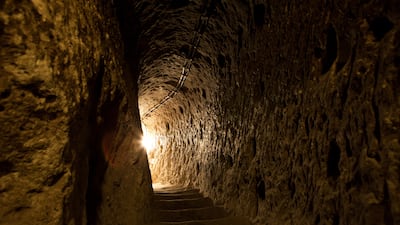
• Oppidum underground residence. Photo: Oppidum
    Oppidum underground residence. Photo: Oppidum
  • The residence can be used to house artworks safely.
    The residence can be used to house artworks safely.
  • Leisure facilities can be incorporated.
    Leisure facilities can be incorporated.
  • A rendering of a bedroom.
    A rendering of a bedroom.
  • A meeting room. The residence could be used to conduct business.
    A meeting room. The residence could be used to conduct business.
  • A secure door into the residence underground.
    A secure door into the residence underground.
  • A luxury lounge amid high living standards.
    A luxury lounge amid high living standards.
  • Oppidum was developed by Jakub Zamrazil, a serial entrepreneur.
    Oppidum was developed by Jakub Zamrazil, a serial entrepreneur.
  • An inner garden provides some greenery.
    An inner garden provides some greenery.
  • A garage to protect a fleet of high-end motors.
    A garage to protect a fleet of high-end motors.
  • An Oppidum consists of a residence designed and built for defense, and like a bunker.
    An Oppidum consists of a residence designed and built for defense, and like a bunker.
  • L’Héritage offers a total of 1,000 square meters of accommodation.
    L’Héritage offers a total of 1,000 square meters of accommodation.
  • In case of a power outage, blackout or instability in the grid, the power system seamlessly switches to one of its multiple fail-safe alternative power sources.
    In case of a power outage, blackout or instability in the grid, the power system seamlessly switches to one of its multiple fail-safe alternative power sources.
  • Energy backup is provided by batteries with sufficient power to run the entire Oppidum; these are protected against electromagnetic pulse (EMP) damage and kept fully charged at any time to operate the Oppidum for at least 24 hours in full comfort or longer with reduced energy consumption.
    Energy backup is provided by batteries with sufficient power to run the entire Oppidum; these are protected against electromagnetic pulse (EMP) damage and kept fully charged at any time to operate the Oppidum for at least 24 hours in full comfort or longer with reduced energy consumption.
  • Invisible technology includes telecoms and internet connectivity through GSM, fibre and regular or low-Earth-orbit satellite networks.
    Invisible technology includes telecoms and internet connectivity through GSM, fibre and regular or low-Earth-orbit satellite networks.

Inside luxury underground residences targeting UAE buyers


Ian Oxborrow
  • English
  • Arabic

Property projects are increasingly a race towards the sky as developers vie for the tallest tower. Or, if you're Elon Musk, the vision is for homes on Mars.

But what if another direction was sought in the quest for architectural splendour, safety and comfort — that being downwards.

Oppidum, a developer of contemporary fortified underground residences, is looking to bring its somewhat alternative style of living to the UAE and other parts of the world.

Its residences are designed for short and long-term contingency plans, whether for private business or leisure.

The UAE is widely regarded as one of the safest places in the world. In Gallup’s Global Law and Order 2021 report, the Emirates scored 95 per cent when it came to feeling safe about walking alone at night. In the highest law and order index, it came second behind Norway

Oppidum told The National that its clients use it despite being in safe and secure places such as the UAE for various reasons.

An Oppidum underground residence is typically protected by significant structural reinforcement and rigorously controlled access. Photo: Oppidum

The developer said: "We don’t discuss individual clients, but in general terms we have had interest from people who wish to protect significant collections of rare and valuable art or automobiles, likewise some clients require a highly secure space to conduct sensitive business meetings. It may also be a luxurious extension of an existing property that does not intrude on their grounds at surface level.

"Many see an Oppidum as a beautifully appointed and luxurious addition to their existing home and a place where they can enjoy their collections and time with their families in the knowledge that these possessions and the people they love are afforded the very highest level of protection should circumstances dictate."

An Oppidum is built for defence, like a bunker, and is protected by significant structural reinforcement and rigorously controlled access.

The developer says it takes military-grade protection equipment and environmental systems and integrates them invisibly into a luxurious family home.

It has self-contained power and water supplies but leaves almost no visible trace of its presence on the surface. It is designed and delivered to the client’s precise specification.

Projects start at $10 million and it said there is no upper limit.

Its most extensive design, called L’Heritage, is suitable for installation at larger properties and is about $100m, depending on location, design, personalisation and interior finish.

It offers a total of 1,000 square metres of accommodation, with public and private areas, an indoor garden, gallery and technical spaces.

Oppidum says it has had "significant interest" from the UAE, and insists its teams are "very well-equipped to deliver supremely luxurious and ultra-secure additions to client’s existing homes across the UAE".

Six abandoned underground cities, subways and tunnel networks to visit

  • Going underground: City Hall subway station, New York. The tiled, vaulted ceilings look down on the platform which was last used on December 31, 1945. Getty Images
    Going underground: City Hall subway station, New York. The tiled, vaulted ceilings look down on the platform which was last used on December 31, 1945. Getty Images
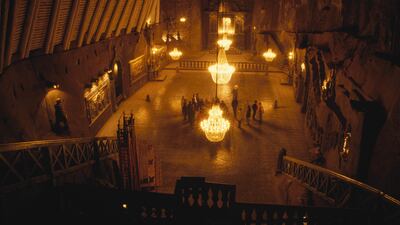
  • The chandelier-filled cathedral carved out of the rock salt in Wieliczka salt mine, Poland, which has been on the Unesco World Heritage List since 1978. Supplied
    The chandelier-filled cathedral carved out of the rock salt in Wieliczka salt mine, Poland, which has been on the Unesco World Heritage List since 1978. Supplied
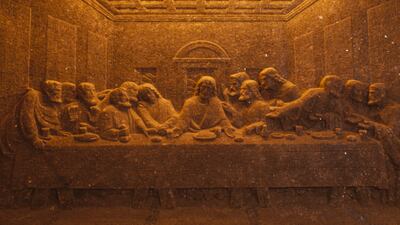
  • Religious artwork carved into the walls of the Wieliczka salt mine, including Leonardo da Vinci's 'The Last Supper'. Getty Images
    Religious artwork carved into the walls of the Wieliczka salt mine, including Leonardo da Vinci's 'The Last Supper'. Getty Images
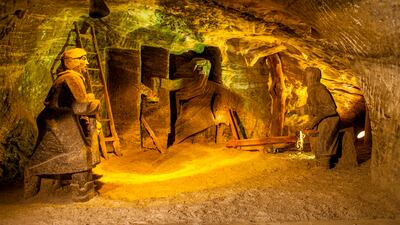
  • Among the tunnels and chambers of the mine are many statues and sculptures carved out of salt. Getty Images
    Among the tunnels and chambers of the mine are many statues and sculptures carved out of salt. Getty Images
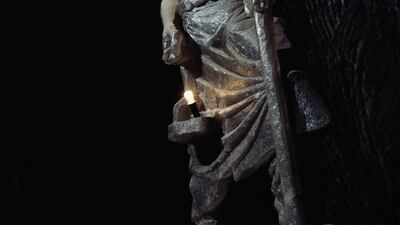
  • Statue of a miner sculpted from a single piece of rock salt. Getty Images
    Statue of a miner sculpted from a single piece of rock salt. Getty Images
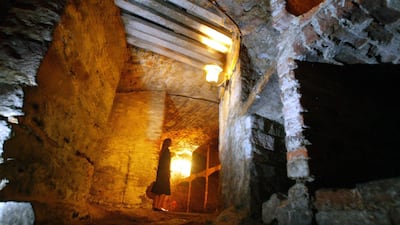
  • Work on the underground Edinburgh Vaults was completed in 1788 and visitors can tour the many abandoned taverns and workshops. Getty Images
    Work on the underground Edinburgh Vaults was completed in 1788 and visitors can tour the many abandoned taverns and workshops. Getty Images
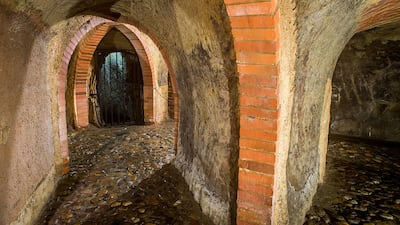
  • Part of the Pilsen Historical Underground tunnels in the Czech Republic, which started construction in the 13th century. Alamy
    Part of the Pilsen Historical Underground tunnels in the Czech Republic, which started construction in the 13th century. Alamy
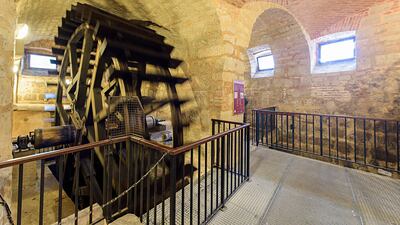
  • The Pilsen medieval network of vaulted subterranean tunnels stretches for more than 12 miles and contains replicas of former features, such as this water wheel. Alamy
    The Pilsen medieval network of vaulted subterranean tunnels stretches for more than 12 miles and contains replicas of former features, such as this water wheel. Alamy
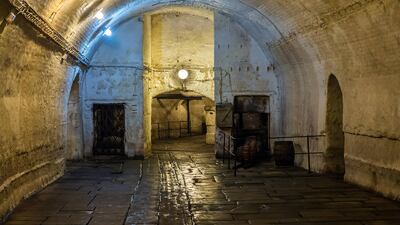
  • Archaeologists have found items dating back to the Middle Ages in the walls of the Pilsen Historical Underground. Alamy
    Archaeologists have found items dating back to the Middle Ages in the walls of the Pilsen Historical Underground. Alamy
  • Derinkuyu Underground City in Cappadocia, Turkey, dates back to the 7th and 8th centuries BC. Getty Images
    Derinkuyu Underground City in Cappadocia, Turkey, dates back to the 7th and 8th centuries BC. Getty Images
  • Turkey's Derinkuyu Underground City was built over 1,800 years and can accommodate over 20,000 people, including livestock and stores. Getty Images
    Turkey's Derinkuyu Underground City was built over 1,800 years and can accommodate over 20,000 people, including livestock and stores. Getty Images
Updated: July 15, 2022, 4:30 AM