How will Gen Alpha invest?
Mark Chahwan, co-founder and chief executive of robo-advisory firm Sarwa, forecasts that Generation Alpha (born between 2010 and 2024) will start investing in their teenage years and therefore benefit from compound interest.
“Technology and education should be the main drivers to make this happen, whether it’s investing in a few clicks or their schools/parents stepping up their personal finance education skills,” he adds.
Mr Chahwan says younger generations have a higher capacity to take on risk, but for some their appetite can be more cautious because they are investing for the first time. “Schools still do not teach personal finance and stock market investing, so a lot of the learning journey can feel daunting and intimidating,” he says.
He advises millennials to not always start with an aggressive portfolio even if they can afford to take risks. “We always advise to work your way up to your risk capacity, that way you experience volatility and get used to it. Given the higher risk capacity for the younger generations, stocks are a favourite,” says Mr Chahwan.
Highlighting the role technology has played in encouraging millennials and Gen Z to invest, he says: “They were often excluded, but with lower account minimums ... a customer with $1,000 [Dh3,672] in their account has their money working for them just as hard as the portfolio of a high get-worth individual.”
From spending habits to investment and financial goals, the generational gap, it seems, will never fade away. Depending on the stage of life you are currently at, the economic environment in which you came of age and the major world events that shaped your outlook, the way you approach your finances will differ from other generations, according to experts.
Baby boomers, or those born between 1946 and 1964, are mostly retired or getting close to retirement, while Gen X-ers (born between 1965 and 1980) are in their prime earning years or nearing early retirement.
Globally, there are 1.8 billion millennials (born between 1981 and 1995), accounting for roughly a quarter of the world's population, according to the World Economic Forum. The oldest millennials are nearing 40, while the youngest members are still in college.
By 2030, millennials are expected to control as much as $20 trillion (Dh73.5tn) in assets globally, according to market intelligence platform CB Insights.
Millennials also tend to prefer the do-it-yourself route when it comes to investing their funds.
Meanwhile, Generation Z (born between 1996 and 2015) usually learn about investment on the internet or on YouTube. According to research from financial services company Morningstar, which surveyed 1,300 Gen Zers in the US, every respondent said they use at least one financial app, whether for budgeting, investing or everyday banking.
"Given their young age, millennials and Gen Z are comfortable taking on more risk. The new generations want convenience, transparency and personalisation just as much as performance", says Mark Chahwan, co-founder and chief executive of robo-advisory firm Sarwa.
He adds that given the younger generation's higher risk capacity, stocks are their favourite asset class. "It’s not just about returns, they also demand their adviser and their portfolio make a positive difference in the world," Mr Chahwan adds.
Meanwhile, Baby Boomers and Gen Xers are more conservative in their approach to risk. "They have learnt from the past that the best thing to do when the stock market crashes is to do nothing or rebalance the portfolio to take advantage of lower stock prices," he says.
We speak to a representative from each of the four generations for an insight into how they approach their finances.
Gen Z: Thinking about the future
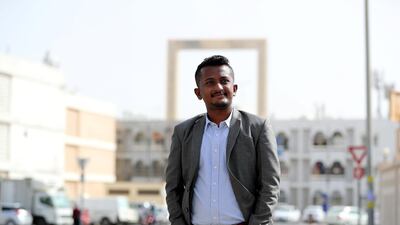
Jerin Shaji, 25, is a UAE-based trader who is a big proponent of impact investing, For the past three years, the Gen Zer has been investing in companies or funds that promote sustainability.
“I want to invest in companies that abide by environmental, social and governance practices because such companies last longer though the returns may be slightly less,” says Mr Shaji.
“I have invested in exchange-traded funds that promote social sustainability as well as stocks in technology companies such as Apple, Microsoft, Tesla, etc. These funds offer conservative risk, but returns are sustainable.”
I want to invest in companies that abide by environmental, social and governance practices because such companies last longer
Mr Shaji started investing when he was 20 years old, when he secured a job with US-based stock exchange Nasdaq right after college. "It was mandatory to have a portfolio and I started investing in stocks," he tells The National.
The Gen Zer attributes his discipline in handling money to his father’s monthly budgeting exercises. Mr Shaji’s father, who was an accountant, gave his son access to both his and his wife’s bank accounts.
“When I was growing up, I was unaware of where money was being spent. These budgeting lessons helped shape my attitude to finance,” he says.
The Dubai-based trader from India recommends everyone should save 30 to 40 per cent of their earnings. “Save first, spend later," he says. "That habit will create personal financial discipline.”
Mr Shaji has invested in exchange-traded funds, stocks and a small amount in digital gold. Although he tried investing in physical gold, he did not make a big profit when selling it.
Mr Shaji is also keen to learn more about cryptocurrencies, saying all investors must consider this “fledgling industry because many experts claim this could be a future technology for currencies”.
He aims to be financially independent between the ages of 35 and 40. Because of his 15-year savings outlook, Mr Shaji does not adopt a high-risk approach to investment.
“I have a conservative to medium-risk appetite. I want to reinvest whatever returns I am earning through dividends back into stocks,” he adds.
Although he was initially mentored by a few financial experts, Mr Shaji claims he has learned about trading on YouTube and the internet. Now, he adopts a DIY approach to trading.
Millennials: The DIY approach
Julien Sanchz, 39, had his first experience with the world of investing at the age of 20. In college, he allocated his savings to mutual funds. The Colombian later parked his money in a savings account.
Mr Sanchz, a regional customer manager with DHL, purchased a property in 2011 in Downtown Dubai. Meanwhile, he also signed up with an investment company to invest in a portfolio of mutual funds and was on the plan for three years.
“I cancelled it later when I realised I could do the same on my own. I have now invested in ETFs and manage it on my own. I have an 80:20 allocation towards equity and bonds,” says Mr Sanchz.
After reading books, attending a few lectures and doing his own analysis, he has decided to adopt a DIY approach to investment.
I want to reach financial independence sooner so work need not be a must in my life, rather an option only
Mr Sanchz says his upbringing helped shape his attitude to personal finance. “My parents were teachers and they were savers. When it was payday for them, they would withdraw all their money, put it on the table and allocate it for various expenses. That budget exercise is still vivid in my mind and made an impact on me,” he recalls.
Although most of his portfolio is in shares, he does not see himself as an aggressive risk-taker. Mr Sanchz says he wouldn’t put his money in Bitcoin and other emerging technologies because he “prefers to invest in something that is tangible and has a structure”.
Mr Sanchz aims to be financially independent within five to seven years.
"Money is not my ultimate goal. I have a comfortable lifestyle now and enjoy spending money on travel, food, restaurants and experiences. I want to reach financial independence sooner so work need not be a must in my life, rather an option only," he tells The National.
When the Covid-19-induced uncertainty wreaked havoc on global financial markets in March this year, this millennial remained unperturbed and did not tweak his portfolio. “Instead, I was waiting for payday to invest some more money in stocks. As soon as I was paid, I transferred money to those ETFs and they have increased in value,” he explains.
Gen X: Keeping faith in property
Rajesh Keerthy, 48, invests for three reasons. The aviation industry professional from India wants to primarily to lead a comfortable life after retirement. He also wants to fund his son’s college education expenses. Lastly, he believes that keeping track of how the money market moves is a good exercise to keep his brain cells active.
“Investing is extremely important given the times we live in. More so with the current economic scenario and rampant job losses, having a second source of income is extremely important,” says Mr Keerthy.
He has invested in real estate in India and South Africa, and in mutual funds and bonds. Stressing the importance of taking out life insurance for the safety and security of family, Mr Keerthy says this not only creates a forced saving plan but also provides a safety net in case of critical illness or the demise of the family’s main breadwinner.
With the current economic scenario and rampant job losses, having a second source of income is extremely important
The Al Ain resident currently sets aside almost 50 per cent of his earnings for investment. “Though it leaves me very little to spend on luxuries, I have realised that if you have money in your account, you will always have the urge to splurge,” he adds.
Mr Keerthy, who started investing in the financial market just 10 years ago, says he has invested in retirement plans that offer decent returns after a fixed period. “Also, invest in a three-bedroom house back home. Once you retire, you can probably sell that house for a good price and buy yourself a smaller house, which will ensure you have some money left over in your bank,” Mr Keerthy says.
He was unfazed by the recent bout of market correction. “I am someone who likes to ride along with the waves and not worry about short-term disruptions.”
Although Mr Keerthy is a big fan of artificial intelligence (AI), he eschews it in terms of investing because “it takes away the fun of doing calculations and taking your own decisions”.
“At some point, you might be able to leave all your investment worries to AI, maybe in another five to six or even 10 years,” he says.
Mr Keerthy recommends the help of a financial consultant from a professional agency, a bank relationship manager or a friend who is a seasoned investor.
He adds that investors must also start studying the nuances of the financial market so that they can slowly start treading the waters by themselves.
Baby boomers: Wealth preservation is key
The top financial goal of Iftikhar, aka Dr Yess, a mentor and strategy consultant to family businesses, is to preserve his capital and pass on assets safely to the next generation.
The 61 year-old has diversified into all asset classes and has zero appetite for risk.
"I take risk only in business enterprises, not in investments. I don't believe in speculation," he tells The National.
Dr Yess, who started investing in his teens, ignored headlines during the recent bout of market volatility. “I stayed the course and did not make any changes to my portfolio,” he notes.
He advocates the need for baby boomers to have their succession planning in place. This includes having a power of attorney, will, nominee, joint account or trust to manage their wealth. All original documents must be deposited in a safe, accessible and fireproof place, he says, adding that boomers must also draft a letter to convey their instructions, wishes and passwords.
Dr Yess says boomers must also pay immediate attention to contingency planning as part of their overall financial planning in these uncertain times.
He also stresses the importance of taking out medical insurance for boomers. “Consider the cost and benefits of long-term care and critical illness insurance. Authorise someone to make/sign critical medical decisions required by healthcare providers for emergencies.”
Dr Yess recommends boomers to adopt a "3+3+3" formula for their wealth. “Have three months’ worth of expenses as cash under the mattress; three months’ worth of expenses as cash in the bank with auto-payment standing orders for liabilities such as utilities, rent, etc.; and three months’ worth of expenses as cash reserves in the bank. Interest rates on deposits are negligible, so it’s better to have ready access to cash,” he suggests.
He asserts that boomers must ensure their bank accounts are active by making small withdrawals or deposit transactions in order to avoid them being declared dormant.
For those boomers who are hunting for yield, Dr Yess suggests fractional investment in enterprises, start-ups or real estate to supplement their passive income.

In-demand jobs and monthly salaries
- Technology expert in robotics and automation: Dh20,000 to Dh40,000
- Energy engineer: Dh25,000 to Dh30,000
- Production engineer: Dh30,000 to Dh40,000
- Data-driven supply chain management professional: Dh30,000 to Dh50,000
- HR leader: Dh40,000 to Dh60,000
- Engineering leader: Dh30,000 to Dh55,000
- Project manager: Dh55,000 to Dh65,000
- Senior reservoir engineer: Dh40,000 to Dh55,000
- Senior drilling engineer: Dh38,000 to Dh46,000
- Senior process engineer: Dh28,000 to Dh38,000
- Senior maintenance engineer: Dh22,000 to Dh34,000
- Field engineer: Dh6,500 to Dh7,500
- Field supervisor: Dh9,000 to Dh12,000
- Field operator: Dh5,000 to Dh7,000
Who was Alfred Nobel?
The Nobel Prize was created by wealthy Swedish chemist and entrepreneur Alfred Nobel.
- In his will he dictated that the bulk of his estate should be used to fund "prizes to those who, during the preceding year, have conferred the greatest benefit to humankind".
- Nobel is best known as the inventor of dynamite, but also wrote poetry and drama and could speak Russian, French, English and German by the age of 17. The five original prize categories reflect the interests closest to his heart.
- Nobel died in 1896 but it took until 1901, following a legal battle over his will, before the first prizes were awarded.
ANDROID%20VERSION%20NAMES%2C%20IN%20ORDER
%3Cp%3EAndroid%20Alpha%3C%2Fp%3E%0A%3Cp%3EAndroid%20Beta%3C%2Fp%3E%0A%3Cp%3EAndroid%20Cupcake%3C%2Fp%3E%0A%3Cp%3EAndroid%20Donut%3C%2Fp%3E%0A%3Cp%3EAndroid%20Eclair%3C%2Fp%3E%0A%3Cp%3EAndroid%20Froyo%3C%2Fp%3E%0A%3Cp%3EAndroid%20Gingerbread%3C%2Fp%3E%0A%3Cp%3EAndroid%20Honeycomb%3C%2Fp%3E%0A%3Cp%3EAndroid%20Ice%20Cream%20Sandwich%3C%2Fp%3E%0A%3Cp%3EAndroid%20Jelly%20Bean%3C%2Fp%3E%0A%3Cp%3EAndroid%20KitKat%3C%2Fp%3E%0A%3Cp%3EAndroid%20Lollipop%3C%2Fp%3E%0A%3Cp%3EAndroid%20Marshmallow%3C%2Fp%3E%0A%3Cp%3EAndroid%20Nougat%3C%2Fp%3E%0A%3Cp%3EAndroid%20Oreo%3C%2Fp%3E%0A%3Cp%3EAndroid%20Pie%3C%2Fp%3E%0A%3Cp%3EAndroid%2010%20(Quince%20Tart*)%3C%2Fp%3E%0A%3Cp%3EAndroid%2011%20(Red%20Velvet%20Cake*)%3C%2Fp%3E%0A%3Cp%3EAndroid%2012%20(Snow%20Cone*)%3C%2Fp%3E%0A%3Cp%3EAndroid%2013%20(Tiramisu*)%3C%2Fp%3E%0A%3Cp%3EAndroid%2014%20(Upside%20Down%20Cake*)%3C%2Fp%3E%0A%3Cp%3EAndroid%2015%20(Vanilla%20Ice%20Cream*)%3C%2Fp%3E%0A%3Cp%3E%3Cem%3E*%20internal%20codenames%3C%2Fem%3E%3C%2Fp%3E%0A
Ten tax points to be aware of in 2026
1. Domestic VAT refund amendments: request your refund within five years
If a business does not apply for the refund on time, they lose their credit.
2. E-invoicing in the UAE
Businesses should continue preparing for the implementation of e-invoicing in the UAE, with 2026 a preparation and transition period ahead of phased mandatory adoption.
3. More tax audits
Tax authorities are increasingly using data already available across multiple filings to identify audit risks.
4. More beneficial VAT and excise tax penalty regime
Tax disputes are expected to become more frequent and more structured, with clearer administrative objection and appeal processes. The UAE has adopted a new penalty regime for VAT and excise disputes, which now mirrors the penalty regime for corporate tax.
5. Greater emphasis on statutory audit
There is a greater need for the accuracy of financial statements. The International Financial Reporting Standards standards need to be strictly adhered to and, as a result, the quality of the audits will need to increase.
6. Further transfer pricing enforcement
Transfer pricing enforcement, which refers to the practice of establishing prices for internal transactions between related entities, is expected to broaden in scope. The UAE will shortly open the possibility to negotiate advance pricing agreements, or essentially rulings for transfer pricing purposes.
7. Limited time periods for audits
Recent amendments also introduce a default five-year limitation period for tax audits and assessments, subject to specific statutory exceptions. While the standard audit and assessment period is five years, this may be extended to up to 15 years in cases involving fraud or tax evasion.
8. Pillar 2 implementation
Many multinational groups will begin to feel the practical effect of the Domestic Minimum Top-Up Tax (DMTT), the UAE's implementation of the OECD’s global minimum tax under Pillar 2. While the rules apply for financial years starting on or after January 1, 2025, it is 2026 that marks the transition to an operational phase.
9. Reduced compliance obligations for imported goods and services
Businesses that apply the reverse-charge mechanism for VAT purposes in the UAE may benefit from reduced compliance obligations.
10. Substance and CbC reporting focus
Tax authorities are expected to continue strengthening the enforcement of economic substance and Country-by-Country (CbC) reporting frameworks. In the UAE, these regimes are increasingly being used as risk-assessment tools, providing tax authorities with a comprehensive view of multinational groups’ global footprints and enabling them to assess whether profits are aligned with real economic activity.
Contributed by Thomas Vanhee and Hend Rashwan, Aurifer
Banned items
Dubai Police has also issued a list of banned items at the ground on Sunday. These include:
-
-
-
-
-
-
-
-
-
Political flags or banners
-
Bikes, skateboards or scooters
Indoor Cricket World Cup - Sept 16-20, Insportz, Dubai
Evacuations to France hit by controversy
- Over 500 Gazans have been evacuated to France since November 2023
- Evacuations were paused after a student already in France posted anti-Semitic content and was subsequently expelled to Qatar
- The Foreign Ministry launched a review to determine how authorities failed to detect the posts before her entry
- Artists and researchers fall under a programme called Pause that began in 2017
- It has benefited more than 700 people from 44 countries, including Syria, Turkey, Iran, and Sudan
- Since the start of the Gaza war, it has also included 45 Gazan beneficiaries
- Unlike students, they are allowed to bring their families to France
Have you been targeted?
Tuan Phan of SimplyFI.org lists five signs you have been mis-sold to:
1. Your pension fund has been placed inside an offshore insurance wrapper with a hefty upfront commission.
2. The money has been transferred into a structured note. These products have high upfront, recurring commission and should never be in a pension account.
3. You have also been sold investment funds with an upfront initial charge of around 5 per cent. ETFs, for example, have no upfront charges.
4. The adviser charges a 1 per cent charge for managing your assets. They are being paid for doing nothing. They have already claimed massive amounts in hidden upfront commission.
5. Total annual management cost for your pension account is 2 per cent or more, including platform, underlying fund and advice charges.
COMPANY%20PROFILE
%3Cp%3E%3Cstrong%3ECompany%20name%3A%3C%2Fstrong%3E%20Alaan%3Cbr%3E%3Cstrong%3EStarted%3A%3C%2Fstrong%3E%202021%3Cbr%3E%3Cstrong%3EBased%3A%3C%2Fstrong%3E%20Dubai%3Cbr%3E%3Cstrong%3EFounders%3A%3C%2Fstrong%3E%20Parthi%20Duraisamy%20and%20Karun%20Kurien%3Cbr%3E%3Cstrong%3ESector%3A%3C%2Fstrong%3E%20FinTech%3Cbr%3E%3Cstrong%3EInvestment%20stage%3A%3C%2Fstrong%3E%20%247%20million%20raised%20in%20total%20%E2%80%94%20%242.5%20million%20in%20a%20seed%20round%20and%20%244.5%20million%20in%20a%20pre-series%20A%20round%3Cbr%3E%3Cbr%3E%3C%2Fp%3E%0A
Starring: Jamie Foxx, Angela Bassett, Tina Fey
Directed by: Pete Doctor
Rating: 4 stars
Springsteen: Deliver Me from Nowhere
Director: Scott Cooper
Starring: Jeremy Allen White, Odessa Young, Jeremy Strong
Rating: 4/5
Why it pays to compare
A comparison of sending Dh20,000 from the UAE using two different routes at the same time - the first direct from a UAE bank to a bank in Germany, and the second from the same UAE bank via an online platform to Germany - found key differences in cost and speed. The transfers were both initiated on January 30.
Route 1: bank transfer
The UAE bank charged Dh152.25 for the Dh20,000 transfer. On top of that, their exchange rate margin added a difference of around Dh415, compared with the mid-market rate.
Total cost: Dh567.25 - around 2.9 per cent of the total amount
Total received: €4,670.30
Route 2: online platform
The UAE bank’s charge for sending Dh20,000 to a UK dirham-denominated account was Dh2.10. The exchange rate margin cost was Dh60, plus a Dh12 fee.
Total cost: Dh74.10, around 0.4 per cent of the transaction
Total received: €4,756
The UAE bank transfer was far quicker – around two to three working days, while the online platform took around four to five days, but was considerably cheaper. In the online platform transfer, the funds were also exposed to currency risk during the period it took for them to arrive.
Sarfira
Director: Sudha Kongara Prasad
Starring: Akshay Kumar, Radhika Madan, Paresh Rawal
Rating: 2/5
What can you do?
Document everything immediately; including dates, times, locations and witnesses
Seek professional advice from a legal expert
You can report an incident to HR or an immediate supervisor
You can use the Ministry of Human Resources and Emiratisation’s dedicated hotline
In criminal cases, you can contact the police for additional support
COMPANY PROFILE
Company name: Blah
Started: 2018
Founder: Aliyah Al Abbar and Hend Al Marri
Based: Dubai
Industry: Technology and talent management
Initial investment: Dh20,000
Investors: Self-funded
Total customers: 40
The%20Boy%20and%20the%20Heron
%3Cp%3E%3Cstrong%3EDirector%3A%C2%A0%3C%2Fstrong%3EHayao%20Miyazaki%3C%2Fp%3E%0A%3Cp%3E%3Cstrong%3EStarring%3A%3C%2Fstrong%3E%C2%A0Soma%20Santoki%2C%20Masaki%20Suda%2C%20Ko%20Shibasaki%3C%2Fp%3E%0A%3Cp%3E%3Cstrong%3ERating%3A%20%3C%2Fstrong%3E5%2F5%3C%2Fp%3E%0A
How will Gen Alpha invest?
Mark Chahwan, co-founder and chief executive of robo-advisory firm Sarwa, forecasts that Generation Alpha (born between 2010 and 2024) will start investing in their teenage years and therefore benefit from compound interest.
“Technology and education should be the main drivers to make this happen, whether it’s investing in a few clicks or their schools/parents stepping up their personal finance education skills,” he adds.
Mr Chahwan says younger generations have a higher capacity to take on risk, but for some their appetite can be more cautious because they are investing for the first time. “Schools still do not teach personal finance and stock market investing, so a lot of the learning journey can feel daunting and intimidating,” he says.
He advises millennials to not always start with an aggressive portfolio even if they can afford to take risks. “We always advise to work your way up to your risk capacity, that way you experience volatility and get used to it. Given the higher risk capacity for the younger generations, stocks are a favourite,” says Mr Chahwan.
Highlighting the role technology has played in encouraging millennials and Gen Z to invest, he says: “They were often excluded, but with lower account minimums ... a customer with $1,000 [Dh3,672] in their account has their money working for them just as hard as the portfolio of a high get-worth individual.”
