

Bitcoin enjoyed a bright start to the year, with the price almost doubling to more than $30,000 by the end of June.
It seemed to feed off the US technology stock recovery, as investors got their mojo back after a tough bear market in 2022.
Yet, the past month has been difficult, with Bitcoin suffering a flash crash and trading more than 10 per cent lower than it did only one month ago at about $26,000.
This kind of volatility is nothing new for the crypto market. US tech stock mania has also eased but Bitcoin has fallen at twice the speed of the Nasdaq – and has failed to benefit from the recent small recovery.
Watch: What happened to the price of Bitcoin?
It’s still 50 per cent up over the year but experts say something isn’t quite right with crypto at the moment.
Manuel Villegas, next-generation research analyst at Julius Baer, says the recent Bitcoin “retracement” follows clear signs of waning interest as “market depth has been quietly degrading while its annualised volatility hit an all-time low”.
Volatility did then pick up but not in the way investors would have wanted.
Bitcoin's price plunged almost 12 per cent in the week beginning August 14, in what Mr Villegas calls “the sharpest and steepest setback since the FTX fallout”, referring to the collapse of Sam Bankman-Fried’s crypto platform in November.
“Crypto’s market capitalisation lost close to $100 billion within minutes,” he says.
Bitcoin has been caught up in the general risk-off attitude as the US Federal Reserve looks to force further interest rate rises and Chinese bank Evergrande’s bankruptcy filing threatens contagion across the country’s property and financial sectors.
It has also been hit by problems specific to crypto following reports that Elon Musk’s SpaceX has written down $373 million worth of Bitcoin holdings in the past two years and sold an undisclosed amount of the digital coin.
Tesla has been taking a similar approach. The electric car maker's stock often moves in lockstep with crypto and it's been selling off hard, too, down more than 13 per cent in a month.
Mr Villegas says there has also some selling by crypto market makers, which were forced to adjust their hedges amid the changing volatility landscape.
Giles Coghlan, chief market analyst consulting for HYCM, notes that Bitcoin tends to track tech stocks and the recent sharp drop is a timely reminder that this is a currency rather than a commodity.
“This means it’s liable for speculation and the price is mainly moved by US monetary policy.”
As a speculative asset class, Bitcoin and other alt-coins will always be vulnerable when investors flee risk, says Mads Eberhardt, cryptocurrency analyst at Saxo Bank. “Particularly those driven by retail investors, like Bitcoin.”
Private investors are still piling into US tech but “are nearly completely absent from the crypto market, resulting in a lack of new money flowing into crypto”, he adds.
Macro uncertainty, high interest rates, a hostile US regulatory environment and last year’s collapse of both FTX and crypto Terra has added to investor hesitancy.
“With fewer retail investors and market makers, there is now less liquidity in the market. This leaves it more vulnerable to sharp price movements, as we’ve seen in recent weeks,” Mr Eberhardt says.
There is also a chance that artificial intelligence mania has given investors something new to get excited about. Whisper it, but is Bitcoin looking a little old?
Crypto sentiment could receive a major boost if the US Securities and Exchange Commission does approve crypto ETFs, as most analysts expect, Mr Eberhardt says.
“In that scenario, we expect to see the futures Ethereum ETF as early as mid-October, while the spot Bitcoin ETF can launch early next year.”
Both should bring wider benefits. “They may increase the accessibility and mainstream adoption of cryptocurrencies and allow traditional US investors to gain exposure to Bitcoin and Ethereum easily and securely through normal brokerage accounts.”
The next Bitcoin halving, expected in April 2024, may further lift sentiment by cutting issuance in half, thereby potentially increasing its scarcity and value, Mr Eberhardt adds.
Yet, he warns that this may not reverse today’s downwards trend. “The crypto market is still highly speculative and subject to various external factors such as liquidity, the regulatory and macro environments, and interest rates.”
Cryptocurrencies – in pictures
-
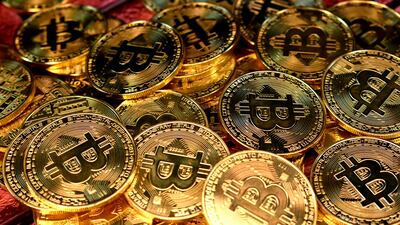
The crypto market, which includes currencies such as Bitcoin, pictured, has lost $2 trillion of its value in six months. Unsplash -

The price of Ethereum, the second largest cryptocurrency by market size, has fallen by 70 per cent this year. Investors and analysts are watching to see if it will dip below $1,000. Unsplash -
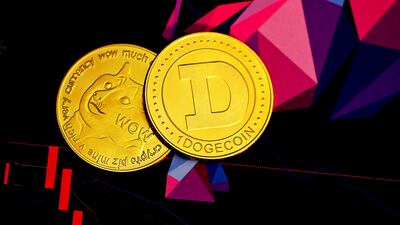
Dogecoin, supported by Elon Musk, is about 90 per cent down from May last year, yet it is outperforming Bitcoin and Ethereum in the current crash. Unsplash -
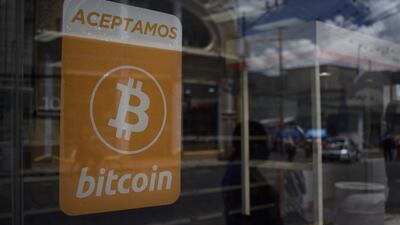
The government of El Salvador has invested $105 million in Bitcoin. President Nayib Bukele's embrace of the cryptocurrency as legal tender is being questioned as the market crashes. Getty -

Changpeng Zhao, founder of crypto exchange giant Binance, has compared the current market turmoil to the dotcom bubble of the early 2000s. Still, the company is aggressively pursuing licensing in international jurisdictions and introducing new products. Getty -
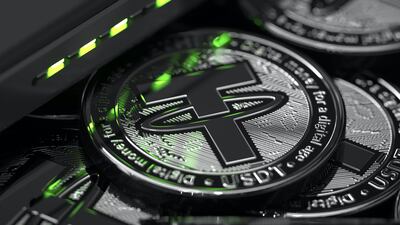
Tether is the biggest issuer of stablecoins, a type of cryptocurrency pegged to a traditionally stable asset like the US dollar. Most stablecoins are meant to maintain a constant price of $1 and are backed by real reserve funds, making it easy to convert crypto investments into cash. But Tether's financial statements show that may not be true, leaving the issuer and its investors vulnerable. Unsplash -

The recent crypto crash can in part be attributed to the collapse of TerraUSD, a stablecoin pegged to the US dollar through algorithms and linked to a "sister" cryptocurrency named Luna. When the price of Luna plummeted, TerraUSD also fell, creating a “death spiral” to practically zero for both coins. Unsplash -

On June 12 crypto lender Celsius Network said it had paused customer withdrawals, saying it needed “to stabilise liquidity and operations”. Investors are still waiting, with no signs that the current meltdown will let up. Getty


Mr Villegas remains positive towards Bitcoin, saying the price will be supported by “a broad range of positive fundamentals including increasing institutional adoption, holder accumulation, the potential approval of spot ETFs in the United States, which we believe is more likely than not, and a looming supply squeeze”.
Now could be a good time to take a position in Bitcoin, while sentiment is down and the price is falling.
Given its exposure to macro forces, it is likely to rebound when the Fed finally starts cutting rates and general animal spirits return.
With a volatile asset class like this one, the best time to buy is when sentiment is low and the price is falling. Ironically, this is exactly the time when it is most likely to slip off investors' radar.
Private investors seem to have forgotten all about crypto for now.
The danger is they suddenly remember when monetary conditions ease but by then, they will have missed the early stage of the recovery.
While traders can still have fun with Bitcoin, long-term investors should only invest as a small part of a balanced portfolio.
The opportunity cost of holding it is even greater when cash and bonds are yielding about 5 per cent a year and dividend stocks are cheap.
Bitcoin’s recent setback looks far from fatal and, one day, we could all be kicking ourselves for failing to buy it at $26,000 – just as we did more than a decade ago, when it was trading below $10.
Yes, it does look like some of the shine has come off crypto. Especially when compared to a superstar AI-fuelled stock like Nvidia, which is up 230 per cent year-to-date. How long that can last is another question altogether.

