New York City is home to the world’s highest concentration of resident millionaires at 340,000, a report has found.
Tokyo and San Francisco Bay Area are ranked second and third, with resident millionaire populations of 290,300 and 285,000, respectively, according to Henley & Partners, which tracks private wealth and investment migration trends worldwide, and global wealth intelligence provider New World Wealth.
London dropped to fourth place on this year's list with 258,000 resident high-net-worth individuals (HNWIs), followed by city-state Singapore with 240,100, Henley & Partners said in the report, which focuses on people with a net worth of $1 million or more.
Los Angeles, Hong Kong, Beijing, Shanghai and Sydney round out the top 10 wealthiest cities globally, according to the report.
“Traditional wealth magnets such as Monaco and Dubai have also experienced especially strong millionaire growth over the past decade,” Andrew Amoils, head of research at New World Wealth, said.
“The average wealth of a person living in Monaco exceeds $10 million, making it the top-ranked city on a wealth per capita basis.
“Dubai is another established international wealth centre, with its low tax rates making it a magnet for migrating millionaires from all over the world. Approximately 3,500 HNWIs moved to the city in 2022 alone.”
The world’s ultra-wealthy shed a combined $10 trillion, or 10 per cent, from their net worth in 2022, driven by the triple “shock” of global economic uncertainty, the energy crisis and the war in Ukraine, a March report by property consultancy Knight Frank said.
The super-rich in Europe were at the centre of the crisis, with ultra-high-net-worth individuals (UHNWIs) losing an average of 17 per cent from their fortunes, Knight Frank said in The Wealth Report 2023.
Knight Frank defines UHNWIs as people who possess a net worth of $30 million or more, including primary residences and second homes not held as investments.
New York is also home to the most centimillionaires — people with a net worth of $100 million or more in investable assets — in the world at 724, followed by the San Francisco Bay Area with 629 and Los Angeles at 480, the Henley & Partners research found.
However, San Francisco Bay Area is home to the most billionaires globally at 63, followed by New York City with 58 and Beijing at 43.
Dubai hosts 68,400 millionaires, 206 centimillionaires and 15 billionaires, according to the report. Abu Dhabi is home to 24,200 millionaires, 68 centimillionaires and four billionaires.
Meanwhile, the US and China dominate the list of fastest-growing cities when it comes to resident millionaires over the past decade, the report said.
China’s Hangzhou topped the list in this respect, with millionaire growth of 105 per cent between 2012 and 2022, the data showed.
Shenzhen and Guangzhou also enjoyed significant HNWI expansion over the past decade, at 98 per cent and 86 per cent, respectively.
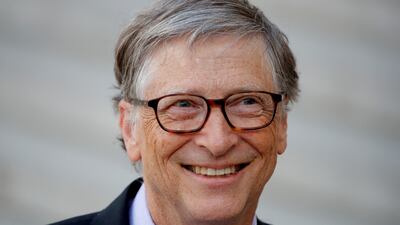
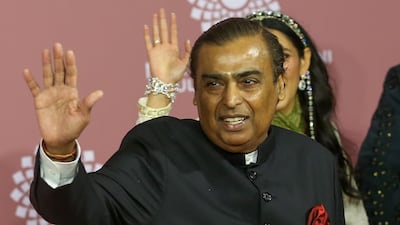
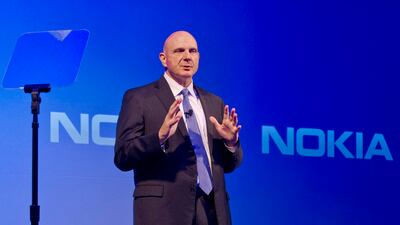
World's top 10 richest people in 2023 — in pictures
Meanwhile, the three fastest-growing millionaire hotspots in the US are Austin, which recorded a 102 per cent growth in resident HNWIs, West Palm Beach (90 per cent), and Scottsdale (88 per cent), according to Henley & Partners.
Indian cities Bengaluru and Hyderabad recorded 88 per cent and 78 per cent growth, respectively, in millionaires over the past decade, while Sharjah saw an 84 per cent growth.
Top 10 wealthiest cities and their millionaire population
- New York: 340,000
- Tokyo: 290,300
- San Francisco Bay Area: 285,000
- London: 258,000
- Singapore: 240,100
- Los Angeles: 205,400
- Hong Kong: 129,500
- Beijing: 128,200
- Shanghai: 127,200
- Sydney: 126,900

Who's who in Yemen conflict
Houthis: Iran-backed rebels who occupy Sanaa and run unrecognised government
Yemeni government: Exiled government in Aden led by eight-member Presidential Leadership Council
Southern Transitional Council: Faction in Yemeni government that seeks autonomy for the south
Habrish 'rebels': Tribal-backed forces feuding with STC over control of oil in government territory
The White Lotus: Season three
Creator: Mike White
Starring: Walton Goggins, Jason Isaacs, Natasha Rothwell
Rating: 4.5/5
Key facilities
- Olympic-size swimming pool with a split bulkhead for multi-use configurations, including water polo and 50m/25m training lanes
- Premier League-standard football pitch
- 400m Olympic running track
- NBA-spec basketball court with auditorium
- 600-seat auditorium
- Spaces for historical and cultural exploration
- An elevated football field that doubles as a helipad
- Specialist robotics and science laboratories
- AR and VR-enabled learning centres
- Disruption Lab and Research Centre for developing entrepreneurial skills
Fixtures and results:
Wed, Aug 29:
- Malaysia bt Hong Kong by 3 wickets
- Oman bt Nepal by 7 wickets
- UAE bt Singapore by 215 runs
Thu, Aug 30:
- UAE bt Nepal by 78 runs
- Hong Kong bt Singapore by 5 wickets
- Oman bt Malaysia by 2 wickets
Sat, Sep 1: UAE v Hong Kong; Oman v Singapore; Malaysia v Nepal
Sun, Sep 2: Hong Kong v Oman; Malaysia v UAE; Nepal v Singapore
Tue, Sep 4: Malaysia v Singapore; UAE v Oman; Nepal v Hong Kong
Thu, Sep 6: Final
Cheeseburger%20ingredients
%3Cp%3EPrice%20for%20a%20single%20burger%20%C2%A30.44%3Cbr%3EPrice%20for%20a%20single%20bun%20%C2%A30.17%3Cbr%3EPrice%20for%20a%20single%20cheese%20slice%20%C2%A30.04%3Cbr%3EPrice%20for%2010g%20Gherkins%20is%20less%20than%20%C2%A30.01%3Cbr%3EPrice%20for%2010g%20ketchup%20is%20less%20than%20%C2%A30.01%20%3Cbr%3EPrice%20for%2010g%20mustard%20is%20less%20than%20%C2%A30.01%3Cbr%3EPrice%20for%2010g%20onions%20is%20less%20than%20%C2%A30.01%3C%2Fp%3E%0A%3Cp%3ETotal%2068p%3C%2Fp%3E%0A%3Cp%3ECredit%3A%20Meal%20Delivery%20Experts%3C%2Fp%3E%0A
Tax authority targets shisha levy evasion
The Federal Tax Authority will track shisha imports with electronic markers to protect customers and ensure levies have been paid.
Khalid Ali Al Bustani, director of the tax authority, on Sunday said the move is to "prevent tax evasion and support the authority’s tax collection efforts".
The scheme’s first phase, which came into effect on 1st January, 2019, covers all types of imported and domestically produced and distributed cigarettes. As of May 1, importing any type of cigarettes without the digital marks will be prohibited.
He said the latest phase will see imported and locally produced shisha tobacco tracked by the final quarter of this year.
"The FTA also maintains ongoing communication with concerned companies, to help them adapt their systems to meet our requirements and coordinate between all parties involved," he said.
As with cigarettes, shisha was hit with a 100 per cent tax in October 2017, though manufacturers and cafes absorbed some of the costs to prevent prices doubling.
Full Party in the Park line-up
2pm – Andreah
3pm – Supernovas
4.30pm – The Boxtones
5.30pm – Lighthouse Family
7pm – Step On DJs
8pm – Richard Ashcroft
9.30pm – Chris Wright
10pm – Fatboy Slim
11pm – Hollaphonic
Mercer, the investment consulting arm of US services company Marsh & McLennan, expects its wealth division to at least double its assets under management (AUM) in the Middle East as wealth in the region continues to grow despite economic headwinds, a company official said.
Mercer Wealth, which globally has $160 billion in AUM, plans to boost its AUM in the region to $2-$3bn in the next 2-3 years from the present $1bn, said Yasir AbuShaban, a Dubai-based principal with Mercer Wealth.
“Within the next two to three years, we are looking at reaching $2 to $3 billion as a conservative estimate and we do see an opportunity to do so,” said Mr AbuShaban.
Mercer does not directly make investments, but allocates clients’ money they have discretion to, to professional asset managers. They also provide advice to clients.
“We have buying power. We can negotiate on their (client’s) behalf with asset managers to provide them lower fees than they otherwise would have to get on their own,” he added.
Mercer Wealth’s clients include sovereign wealth funds, family offices, and insurance companies among others.
From its office in Dubai, Mercer also looks after Africa, India and Turkey, where they also see opportunity for growth.
Wealth creation in Middle East and Africa (MEA) grew 8.5 per cent to $8.1 trillion last year from $7.5tn in 2015, higher than last year’s global average of 6 per cent and the second-highest growth in a region after Asia-Pacific which grew 9.9 per cent, according to consultancy Boston Consulting Group (BCG). In the region, where wealth grew just 1.9 per cent in 2015 compared with 2014, a pickup in oil prices has helped in wealth generation.
BCG is forecasting MEA wealth will rise to $12tn by 2021, growing at an annual average of 8 per cent.
Drivers of wealth generation in the region will be split evenly between new wealth creation and growth of performance of existing assets, according to BCG.
Another general trend in the region is clients’ looking for a comprehensive approach to investing, according to Mr AbuShaban.
“Institutional investors or some of the families are seeing a slowdown in the available capital they have to invest and in that sense they are looking at optimizing the way they manage their portfolios and making sure they are not investing haphazardly and different parts of their investment are working together,” said Mr AbuShaban.
Some clients also have a higher appetite for risk, given the low interest-rate environment that does not provide enough yield for some institutional investors. These clients are keen to invest in illiquid assets, such as private equity and infrastructure.
“What we have seen is a desire for higher returns in what has been a low-return environment specifically in various fixed income or bonds,” he said.
“In this environment, we have seen a de facto increase in the risk that clients are taking in things like illiquid investments, private equity investments, infrastructure and private debt, those kind of investments were higher illiquidity results in incrementally higher returns.”
The Abu Dhabi Investment Authority, one of the largest sovereign wealth funds, said in its 2016 report that has gradually increased its exposure in direct private equity and private credit transactions, mainly in Asian markets and especially in China and India. The authority’s private equity department focused on structured equities owing to “their defensive characteristics.”
Dust and sand storms compared
Sand storm
- Particle size: Larger, heavier sand grains
- Visibility: Often dramatic with thick "walls" of sand
- Duration: Short-lived, typically localised
- Travel distance: Limited
- Source: Open desert areas with strong winds
Dust storm
- Particle size: Much finer, lightweight particles
- Visibility: Hazy skies but less intense
- Duration: Can linger for days
- Travel distance: Long-range, up to thousands of kilometres
- Source: Can be carried from distant regions
Key findings of Jenkins report
- Founder of the Muslim Brotherhood, Hassan al Banna, "accepted the political utility of violence"
- Views of key Muslim Brotherhood ideologue, Sayyid Qutb, have “consistently been understood” as permitting “the use of extreme violence in the pursuit of the perfect Islamic society” and “never been institutionally disowned” by the movement.
- Muslim Brotherhood at all levels has repeatedly defended Hamas attacks against Israel, including the use of suicide bombers and the killing of civilians.
- Laying out the report in the House of Commons, David Cameron told MPs: "The main findings of the review support the conclusion that membership of, association with, or influence by the Muslim Brotherhood should be considered as a possible indicator of extremism."