

Bitcoin is not the first blockchain that springs to mind when you think of non-fungible tokens (NFTs); that would be Ethereum.
In the past two weeks, however, NFTs have entered Bitcoin’s orbit, thanks to Ordinals.
This newly launched protocol lets users “inscribe” images on satoshis, the lowest denomination of Bitcoin — images that then live in perpetuity on the eponymous blockchain.
Watch: What is Bitcoin and how did it start?
What happened next should not surprise anyone familiar with Bitcoin’s immutable infrastructure.
With grim inevitability, a user used Ordinals to inscribe an offensive image on the blockchain.
This image — as with all other information on Bitcoin — is inscribed permanently on to satoshis. These images also automatically appear on the Ordinal’s homepage, in this case forcing creator Casey Rodarmor to scramble into action and manually remove the image from the site.
What Mr Rodarmor could never do, though, is permanently remove the image.
As such, this incident — which may seem frivolous and inconsequential to some — has raised serious questions about censorship resistance.
And this is a principle that sits at the very heart of the cryptocurrency industry and certainly at the heart of Bitcoin, which is by far the most censorship-resistant of all chains.
Why care about censorship resistance?
There are mixed views on Bitcoin’s censorship resistance.
Bitcoin proponents contend that it is one of the network’s strongest advantages, an attribute assured by its high level of decentralisation and absolutely critical to the network’s overall health.
Others — including those who long to see stronger regulations brought to the cryptocurrency industry — believe some level of censorship may be required to weed out those using blockchain to launder money, fund illegal enterprises or publish offensive images, for example.
While block explorers can enforce their own moderation policies, users are free to inscribe whatever image they want on to the blockchain.
On the Ordinals scandal, Mr Rodarmor observed: “The inscription is still on the chain and if you run your own copy of Ordinals — which everybody is free to do — it will not have the config file and you will see the [image] if that is what you so desire.”
The question is, should we care about this? If someone elects to spend their own money defacing a satoshi with an offensive image or something worse, does it warrant our concern?
More than that, does it warrant censorship of Bitcoin or any other blockchain?
The cost of financial freedom
To my mind, Bitcoin’s uncensorable, immutable and permissionless nature is one of its greatest strengths as a currency and the Ordinals imbroglio doesn’t relate to currency.
Instead, it relates to everyday users’ “freedom” to add their own non-financial contributions (digital artefacts, etc) to the network.
A use-case that Satoshi Nakamoto, for all his brilliance, could not have foreseen.
There are clearly benefits to some level of censorship when we are discussing Web3 features such as those offered by Ordinals.
I do not think any of us can be blase about the prospect of criminals freely minting, say, NFTs with grim imagery.
We can fiercely oppose such degeneracy while also being ardent supporters of Bitcoin’s transactional immutability.
Currently, Bitcoin’s founding mission as a transparent, independent currency and store of value available to any citizen is under threat.
Cryptocurrencies — in pictures
-
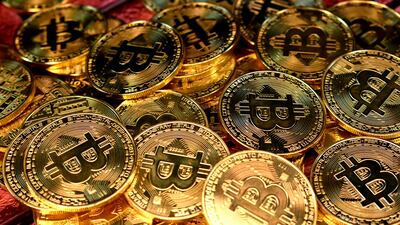
The crypto market, which includes currencies such as Bitcoin, pictured, has lost $2 trillion of its value in six months. Unsplash -

The price of Ethereum, the second largest cryptocurrency by market size, has fallen by 70 per cent this year. Investors and analysts are watching to see if it will dip below $1,000. Unsplash -
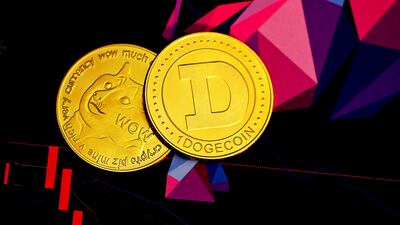
Dogecoin, supported by Elon Musk, is about 90 per cent down from May last year, yet it is outperforming Bitcoin and Ethereum in the current crash. Unsplash -
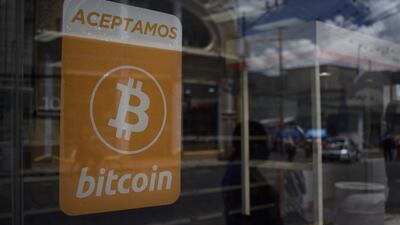
The government of El Salvador has invested $105 million in Bitcoin. President Nayib Bukele's embrace of the cryptocurrency as legal tender is being questioned as the market crashes. Getty -
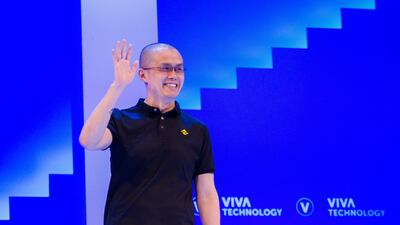
Changpeng Zhao, founder of crypto exchange giant Binance, has compared the current market turmoil to the dotcom bubble of the early 2000s. Still, the company is aggressively pursuing licensing in international jurisdictions and introducing new products. Getty -
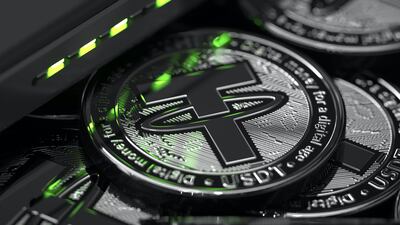
Tether is the biggest issuer of stablecoins, a type of cryptocurrency pegged to a traditionally stable asset like the US dollar. Most stablecoins are meant to maintain a constant price of $1 and are backed by real reserve funds, making it easy to convert crypto investments into cash. But Tether's financial statements show that may not be true, leaving the issuer and its investors vulnerable. Unsplash -

The recent crypto crash can in part be attributed to the collapse of TerraUSD, a stablecoin pegged to the US dollar through algorithms and linked to a "sister" cryptocurrency named Luna. When the price of Luna plummeted, TerraUSD also fell, creating a “death spiral” to practically zero for both coins. Unsplash -

On June 12 crypto lender Celsius Network said it had paused customer withdrawals, saying it needed “to stabilise liquidity and operations”. Investors are still waiting, with no signs that the current meltdown will let up. Getty


The preponderance of centralised banks and corporations adding Bitcoin to their portfolio, not to mention offering crypto custody services to money managers, is significantly threatening the network’s decentralisation.
In this use case, centralised censorship is absolutely something to be resisted, and we can be thankful Bitcoin is hard-wired against it.
As the past year has shown, centralisation is not only anathema to the founding principles of the blockchain and cryptocurrency project but in this space, frankly dangerous.
Decentralisation is the only way to ensure the safe growth of a truly censorship-resistant, fully accessible financial ecosystem.
Bitcoin remains the flagship project of this mission, and we shouldn't let an NFT experiment detract from that, regardless of the sensational headlines it attracts.
What we can say in favour of the Ordinals NFT project is that it has brought a new wave of interest to Bitcoin, resulting in an enlarged average block size as more users join the network.
However, while this is a welcome development, we must not forget the founding principles of Bitcoin as a blockchain and currency that can resist censorship and manipulation by central and investment banks, which fiat currencies such as the US dollar cannot.
The future of finance may not be Bitcoin, but it must and will be decentralised and censorship-resistant.
Stefan Rust is the founder of Laguna Labs, a blockchain development house, and former chief executive of bitcoin.com

