

Mukesh Ambani
Mukesh Ambani, the billionaire chairman of Reliance Industries, will be focusing his attention on the Indian conglomerate’s pivot to green energy, according to sources, after putting his children in charge of other businesses.
The 65-year-old will oversee strategy, including the building of gigafactories and blue hydrogen facilities, will assess acquisition targets and is talking to potential investors, the people said, asking not to be named as the information isn’t public.
Last year, Mr Ambani unveiled plans to spend $75 billion on clean energy projects over the next 15 years.
Asia’s second-richest man is known for his single-minded focus on key pursuits: in the 1990s he lived for months in shipping containers to build what is today the world’s largest petrochemical refinery and about two decades later, another of his upstart companies became India’s biggest telecom operator.
Mr Ambani has since handed the operational reins to his three children and turned his attention to green energy, which will see him go head-to-head with the region’s wealthiest person, Gautam Adani.
Reliance is seeking billions of dollars of investments in India’s energy sector and has approached potential investors, including Middle Eastern funds, sources said.
His ambition is to disrupt the sector just like he did with his mobile phone company Reliance Jio Infocomm, one of the people said, adding that the billionaire and his team were telling marquee investors they would own every link of the renewables supply chain that can enhance margins.
Mr Ambani’s deal-making acumen will be crucial. Reliance spent almost $50 billion to build Reliance Jio, which became India’s number one wireless carrier within some three years of its 2016 debut by offering free calls and cheap data.
Then, over a few months of the pandemic lockdown in 2020, Mr Ambani raised more than $20 billion for his digital ventures from a slew of investors, including Silicon Valley giants, Meta Platforms and Google.
Reliance, with a market value of $206 billion, has a 2035 target for turning carbon net zero.
India’s transition from fossil fuels to renewables will provide an opportunity for Reliance’s continuous “hyper-growth” over many decades, Mr Ambani told shareholders last August.
Mr Adani, on his part, has committed $70 billion to become the world’s largest renewables player.
Mr Ambani’s focus on clean energy comes after he spent much of last year establishing his children at his empire’s other businesses.
Eldest son Akash Ambani was named chairman of Reliance Jio, twin sister Isha Ambani will oversee Reliance’s retail operations and youngest Anant Ambani will be looking after the energy unit.

Jack Ma
Jack Ma, the unconventional billionaire founder of tech giant Alibaba and the totem of China’s entrepreneurial brilliance, has stepped out of the limelight since a crackdown that chopped back his empire.
The most recognisable face in Asian business, Mr Ma has seen his fortune fall by around half to an estimated $25 billion after the authorities pulled what would then have been the world’s biggest-ever initial public offering in 2020.
Chinese regulators torched the planned listing of Mr Ma’s Ant Group in Hong Kong and Shanghai, and the following year hit Alibaba with a record $2.75 billion fine for alleged unfair practices.
A reshuffle of Ant’s shareholding structure will now lead to Mr Ma ceding control of the FinTech company he founded in 2014.
He will hold just 6.2 per cent of the voting rights as the company moves to ensure “no shareholder, alone or jointly with other parties, will have control over Ant Group”, the company said in a statement on Saturday.
It is the latest humbling of China’s former poster boy for enterprise, who in recent years has retreated from the public eye he once so relished.
Mr Ma’s rags-to-riches backstory came to embody a self-confident generation of Chinese entrepreneurs ready to shake up the world.
Mr Ma was cash-strapped and working as an English teacher when someone showed him the internet on a 1990s trip to the US — and he was hooked.
He toyed with many internet-related projects, before convincing a group of friends to give him $60,000 to start a new business in 1999 in China.
Alibaba was the result, an e-commerce behemoth founded from his bedroom in the eastern city of Hangzhou that started an online shopping revolution and grew into a FinTech titan.
The company changed the shopping habits of hundreds of millions of Chinese people and catapulted Mr Ma to international stardom.
“The first time I used the internet, I touched on the keyboard and I find, ‘Well, this is something I believe, it is something that is going to change the world and change China’,” Mr Ma once told CNN.
In 2014, Alibaba listed in New York in a world-record $25 billion offering.
Ant is still the world’s largest digital payments platform, with hundreds of millions of monthly users on its Alipay app.
Sometimes referred to in China as “Father Ma”, he was praised for his self-deprecation — he recounts being rejected by Harvard “10 times”.
As his fortune grew, Mr Ma rebranded as a philanthropist, in 2019 retiring from the business to focus on giving.
He rarely features in the headlines these days, save for appearances at charity events and occasional sojourns overseas.

Gautam Adani
The sweetener offered by billionaire Gautam Adani’s conglomerate to the once-defiant founders of New Delhi Television (NDTV) could test India’s takeover regulations that require all shareholders to be paid the same price by an acquirer.
Founders Prannoy Roy and Radhika Roy sold 27.26 per cent of their equity in NDTV to Adani-controlled RRPR Holding — an existing NDTV holding company — at 342.65 rupees ($4.1426) per share, according to an exchange filing — an almost 17 per cent mark-up to what minority shareholders received in an open offer that closed on December 5.
The transaction will boost their stake in NDTV to 64.7 per cent.
Despite acquisition regulations mandating that all exiting shareholders be paid the same price, the Adani-Roy share transfer is exempt from the takeover rules and allowed to pay the premium since it’s through vehicles linked to the company’s owners.
While the deft legal move shows the ingenuity of the tycoon and his dealmakers in clinching acquisitions — Mr Adani’s entry into NDTV four months ago was also via an indirect route — it could invoke the regulator’s scrutiny on grounds that it is unfair to common shareholders.
Besides the risk that this higher payout to the Roys may trigger scrutiny by India’s market regulator, the deal spotlights the risk appetite and aggression of Asia’s richest person as he rapidly expands his empire from ports and power plants to airports, cement, data centres and media.
Scroll through the gallery below to see the world's richest people last year
-
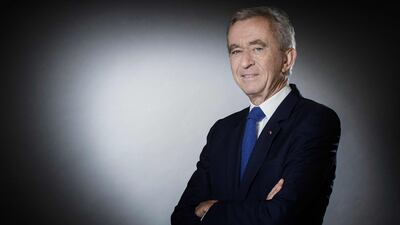
LVMH chairman Bernard Arnault ended 2022 as the world's richest person with a net worth of $162 billion, according to the Bloomberg Billionaires Index. AFP -
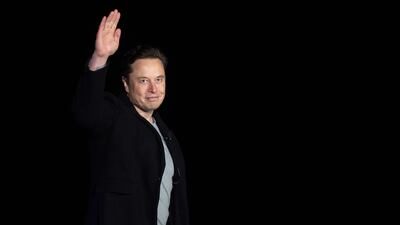
Elon Musk is no longer the world's richest person with a personal fortune of $132 billion. AFP -
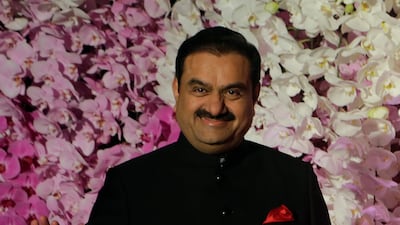
India's Gautam Adani has shot up the Bloomberg Billionaires Index to become the world's third-richest person in 2022 with a net worth of $119 billion. AP -
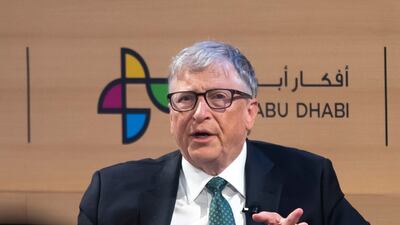
Bill Gates expects to drop out of the world's rich lists because of his pledge to give away most of his fortune. He is the world's fourth-richest person with a net worth of $109 billion. Ruel Pableo / The National -
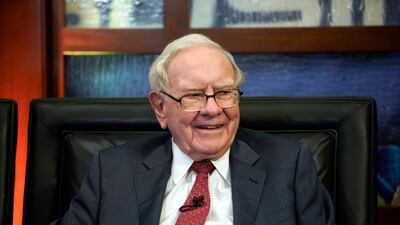
Renowned investor Warren Buffett has pledged to give away the majority of his fortune, estimated at $106 billion by Bloomberg. AP -

Jeff Bezos has a personal fortune of $105 billion. Reuters -
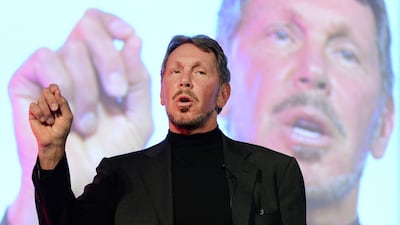
Larry Ellison has dropped out of the centibillionaires' club and now has a net worth of $90.1 billion. AFP -
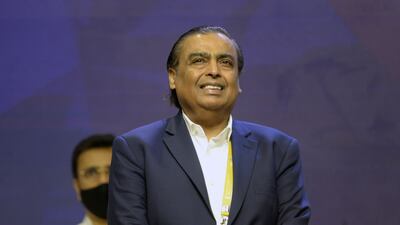
Mukesh Ambani has edged up one place in the Bloomberg Billionaires Index with a fortune of $86.9 billion. Bloomberg -
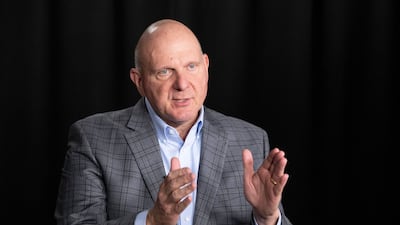
Steve Ballmer is the world's eighth-richest person with a fortune of $84.1 billion. AP -
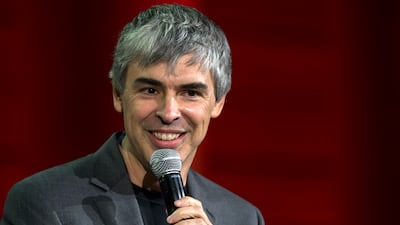
Google co-founder Larry Page has a net worth of $81.2 billion. Bloomberg


Mr Adani is relying on two technicalities in India’s market regulations to stitch this deal together, according to Rajat Sethi, partner at law firm S&R Associates.
First, the transaction is a so-called inter-se transfer — share sale between entities linked to NDTV’s owners — that allows paying a premium to the current market price.
Mr Adani meets this condition only because he’s using RRPR Holding to purchase the Roys’ shares.
RRPR’s ownership changed to an Adani Group company recently, but that doesn’t alter anything since the Indian regulation doesn’t consider changes at the holding company level, Mr Sethi says.
The second technicality is that Roys’ share sale to Adani was announced 18 days after the close of the open offer that was priced much lower.
If the deal was negotiated between the Adani Group and Roys after the open offer closed, then the local takeover code’s requirements won’t bite.
“If the agreement with the Roys at a higher price had been in existence earlier, the position would have been different,” Mr Sethi says.
Yet, India’s takeover law also mandates that all exiting shareholders should be paid the same price if they are selling to the acquirer within 26 weeks of the open offer ending.
That will come up against the exemption Mr Adani’s deal enjoys.

Tim Draper
Venture capitalist billionaire Tim Draper thinks Bitcoin will hit $250,000 a coin by the middle of the year, even after a bruising year for the cryptocurrency, according to a CNBC report.
Mr Draper previously predicted that Bitcoin would top $250,000 by the end of 2022, but in early November, at the Web Summit tech conference in Lisbon, he said it would take until June 2023 for this to materialise.
He reaffirmed this position in December when asked how he felt about his price call following the collapse of crypto exchange FTX.
“I have extended my prediction by six months. $250,000 is still my number,” Mr Draper told CNBC.
“I expect a flight to quality and decentralised crypto like Bitcoin, and for some of the weaker coins to become relics.”
Mr Draper’s rationale for Bitcoin’s breakout next year is that there remains a massive untapped demographic: women.
“My assumption is that, since women control 80 per cent of retail spending and only one in seven Bitcoin wallets are currently held by women, the dam is about to break,” he said.
Bitcoin halving — which cuts the Bitcoin rewards to miners — in 2024 will also boost the cryptocurrency as it chokes the supply over time, Mr Draper told CNBC.
- Additional reporting by Bloomberg and AFP

