

Margaret Thatcher always used to say that “you can’t buck the markets”.
Having, in 1990, been dragged, very much against her will, into joining the exchange rate mechanism of the European monetary system (in which other EU currencies traded in a fixed band around the deutschmark in what was intended to be a precursor to the euro), she appeared to gain vindication 30 years ago today, when the UK government abandoned its attempt to keep the pound within the mechanism and let it float — which in practice meant that it let the currency collapse.
The events of “Black Wednesday” were a classic example of how economic actors can inadvertently display their weakness when they try to show strength.
The pound had been overvalued when it entered the mechanism. Then the mark strengthened still further after the US Federal Reserve started to cut rates to stimulate the economy. That briefly pushed the pound above $2, an infeasible level.
Hedge funds, led by George Soros, who would become a household name as a result, realised that such a high level for the pound could not be defended and prepared to place big negative bets against sterling.
Early on Black Wednesday, the Bank of England (not independent of the government at that point) announced that it was raising rates by two whole percentage points, from 10 per cent to 12 per cent.
With most British homeowners on variable-rate mortgages, this meant that their monthly borrowing costs had leapt by 20 per cent. Still, everyone kept selling the pound. By lunchtime, there was a new announcement; the lending rate was going up to 15 per cent.
This extraordinarily aggressive step was directly counterproductive. It meant that everyone’s mortgage payments would go up by 50 per cent, which traders (particularly Mr Soros) knew was untenable.
Everyone kept selling the pound, with only the Bank of England itself around as a buyer. After the market closed, the chancellor, Norman Lamont, announced on a street pavement that Britain was leaving the exchange rate mechanism.
Next morning, the Bank of England cut rates all the way down to 9 per cent, and the government embarked on a new strategy based on a weak currency.
It strengthened the economy nicely but not the political fortunes of the Conservative Party, by then led by John Major; its reputation for fiscal competence would take a generation to recover.
One of the many important lessons from the incident is that governments can’t peg a currency above a level that the market will accept.
It doesn’t have to be the government that takes the blame. In 1985, the pound tanked after the Fed raised the fed funds rate to 11.75 per cent late in the previous year. It led to a speculative pile-on that took the pound as close as it has ever been to parity.
And the biggest daily fall by far for the pound came on the night of the Brexit referendum in 2016. Black Wednesday saw the first ever fall of more than 4 per cent; the British electorate managed to make it fall by 8 per cent.
What lessons for today? Any intervention in foreign exchange markets must be credible to have any chance of working. And when the Fed takes a course that is out of sync with the rest of the world, stresses increase on the rest of the foreign exchange architecture.
That is unfortunate because US bond yields are in an upswing again. As of late Thursday trading, 10-year real yields (which offer inflation compensation) had topped 1 per cent.
This landmark was last reached for a few weeks in late 2018, and helped to precipitate a stock sell-off and a “pivot” towards easy money by the Fed. That seems very, very unlikely in the immediate future. Before 2018, real yields had been below 1 per cent uninterruptedly for seven years.
In the six months since the invasion of Ukraine, 10-year real yields have surged by more than two full percentage points. This is as big a financial shock as any since the global crisis year of 2008.
And the problem is that this brings more money into the dollar, and puts more pressure on everyone else.
If anyone wants to try making a big contrarian bet based on fundamentals, they have a problem because those fundamentals have never been so ambiguous.
These could be difficult times to intervene, then. If anyone should be tempted to try, it might be the Bank of Japan. The country continues to have far lower inflation than anyone else, and this should lead its currency to appreciate over time.
Thus, the extent of the devaluation it has suffered on a real effective broad rate is awe-inspiring.
The last big wave down came with the advent of “Abenomics”, after the late Shinzo Abe became prime minister for the second time 10 years ago and the government wanted a big boost to Japan’s competitiveness. It was welcome.
This most-recent fall, as the Bank of Japan stays obdurately dovish and points out that Japan’s inflation is still low, is not. That leads to speculation about intervention from the Ministry of Finance to strengthen the yen.
The problem with this is that almost all recent attempts at intervention have backfired. The ministry sold yen (to make the currency go down), and instead it went up.
The bruised British officials from 30 years ago would probably advise the Japanese to save their money and not attempt to buck the market.
When the Fed is out of sync with the rest of the world, and the global imbalances are as deep as they are now, it is best for everyone else to maintain what the British would call a stiff upper lip.
That leads to the question of exactly where the global economy is heading and whether the imbalances are here to stay. And, unfortunately, the latest data from Barclays shows that imbalances look set to intensify.
It hasn’t been the best few months for the global economy, thanks to at least three shocks: the energy crisis in Europe, the continuing pandemic lockdowns in China and the decision by central banks worldwide to tighten monetary policies to curb surging prices of goods and services.
That triple whammy sets the stage for a “synchronous global slowdown”. That is mainly because there is no sign of central banks letting up.
Barclays analysts Ajay Rajadhyaksha and Amrut Nashikkar don’t expect the Fed and European Central Bank to show any signs of hitting the brakes for the rest of the year.
The reason for such hawkishness is the multi-decade surge in inflation on both sides of the Atlantic, massively exacerbated by the energy shock caused by the invasion of Ukraine.
Before the war, Russia had provided roughly a quarter of Europe’s energy (gas and oil). A few months ago, many analysts assumed the use of natural gas exports as a bargaining tool would have ceased in time for normal supplies by winter, when Europe’s gas needs are greatest.
Instead, in mid-September, Russia is still amping up the pressure by cutting off supply, claiming technical reasons.
On the other side of the world, China, normally considered the largest contributor to global growth, had a very weak second quarter as Covid-19 lockdowns in major cities such as Shanghai continue.
Even as rules have relaxed recently, such restrictions have significantly hurt economic activity. The nation’s property sector continues to falter in the third quarter.
Cost of living crisis in the UK — in pictures
-
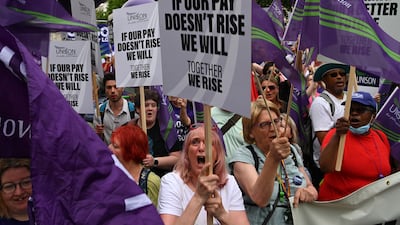
People demonstrate in central London against the rising cost of living. EPA -
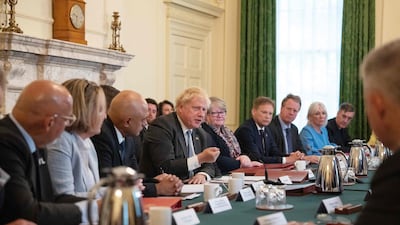
Former British prime minister Boris Johnson said workers should accept a pay cut to avoid spiralling inflation. AFP -
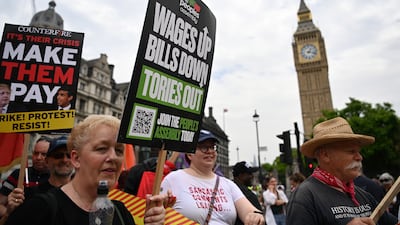
Inflation in the UK hit an annual rate of 9.1 per cent in May. EPA -

The British government told workers they cannot expect pay rises to keep up with the increasing cost of living. EPA -
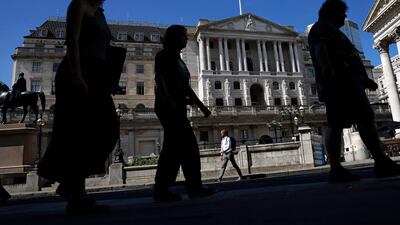
The Bank of England, which says it can do nothing to stop the sharp increase in prices, is raising rates at an unprecedented rate. AFP -

The UK was also brought to standstill by the biggest rail strike in 30 years this week, with 40,000 RMT union members walking out in a row over a below-inflation pay offer. PA -
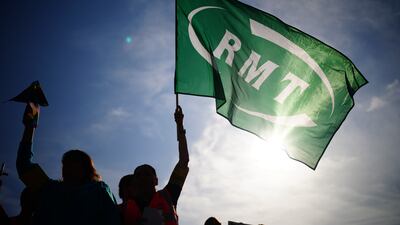
The RMT picket line outside Bristol Temple Meads station. PA -
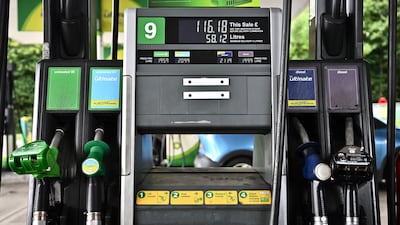
The cost of petrol continues to rise. AFP -
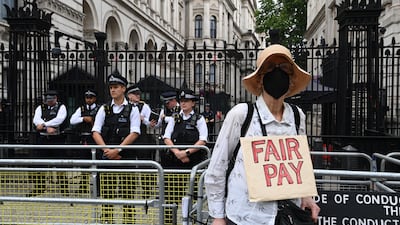
A protester demonstrates outside Downing Street. EPA -

Volunteers in Bradford, northern England, prepare food parcels at the Bradford Central Foodbank. More and more people are visiting the centre. AFP


“All in all, the world economy seems headed for a very sharp slowdown,” they wrote in a note on Thursday. “We expect inflation worldwide to slow as activity weakens and base effects kick in.”
For now, inflation has driven spectacular corrections for bonds — although it is noticeable that the US is relatively unscathed.
Equity indexes aren’t faring any better, slumping anywhere from 15 per cent to 25 per cent across the developed world. Even emerging market stocks have joined the downturn, shedding over a quarter of their value this year.
Few asset allocation choices prove attractive amid this environment, pushing investors to look for “the least dirty shirt in the laundry”.
For the Barclays analysts, whether considering equities or debt, the cleanest shirts are in the US.
“The one standout for us is not an asset, but a geography. Specifically, the US is in better shape than other major economies.”
If it wasn’t evident already, the moral and political dilemmas that lie ahead for central banks promise to be as intractable as the economic challenges.
Asked after Black Wednesday if he had any regrets, chancellor Mr Lamont said “Je ne regrette rien”. He was relieved of his job soon after.
Mr Lamont’s assistant gaining his first experience in politics, the future prime minister David Cameron, subsequently said that his favourite song was Tangled Up In Blue by Bob Dylan, which seems appropriate given his entanglement in Britain’s serial ruptures with the EU.
Black Wednesday came as The Shamen’s Ebeneezer Goode replaced Snap’s Rhythm Is A Dancer as the number one. So, if all else fails, you could always go and dance all night in a field with thousands of others.

