

The cryptoverse is teeming with stories of windfall-like gains and gargantuan losses. One differentiating factor separating the winners from the losers is the use of cryptocurrency tools and strategies.
There is more to cryptocurrency investing than simply buying digital assets. As is the case with traditional investment vehicles, cryptocurrency investing goes beyond picking the right assets and managing your portfolio.
An increasing number of cryptocurrency trading platforms now offer a range of tools to enhance your trading experience and outcomes. These tools, when used knowledgeably, can boost returns, minimise losses, mitigate risk and help in making well-informed investment decisions.
These features, or strategies, can be the difference between discovering the next Bitcoin and falling for an overhyped meme currency.
Given the continuing cryptocurrency market free fall, these strategies have never been more relevant as a way to preserve your wealth.
This guide provides you with information on useful cryptocurrency tools that could significantly improve your investing experience, as well as help take precautionary steps against mercurial price swings in the crypto sphere.
Stop-loss
A stop-loss order is a useful instrument that helps minimise your losses. It is an order to buy or sell a specific asset at a predetermined price.
For instance, when a stop-loss is triggered, meaning when the cryptocurrency asset reaches your predefined price, your position is automatically closed.
To put it in perspective, if a person has bought Ether, the native coin of the Ethereum blockchain, at $2,000, but believes that the trend is weak below $1,500, they can place a stop-loss order at the latter price point. When the price hits the stop-loss limit, the asset is sold and, resultantly, your loss is limited.
These orders help to manage risk and are only triggered when the asset price falls to a predetermined point.
Unlike stock markets, cryptocurrency trading works non-stop, which makes it hard to monitor it constantly.
Setting up a stop-loss order offers you peace of mind knowing that your buy or sell orders will be executed at the predetermined price — even while you are on holiday.
Seasoned traders use this strategy in conjunction with charting (studying the price history of an asset) to determine their stop-loss price.
The idea is to identify a key support level on a chart and place a stop-loss order slightly below that level to limit any downside during market meltdowns.
One key advantage of a stop-loss order is that it automates the investing decision, which helps to eliminate knee-jerk emotional reactions to price swings and prevent hyper-reactive investment choices.
Limit orders
A limit order allows investors to buy a cryptocurrency asset below the current price or sell it at a price level that is above the current price.
For example, if the price of Solana is $45 and you feel that the current level is too high, you can place a limit buy order at $30, or at a lower price, which will be executed when the price comes down.
On the flip side, if you are in a long position and if you feel the price can go higher, you can place a limit sell order at $60 or at a higher price of your choosing.
Cryptocurrencies — in pictures
-
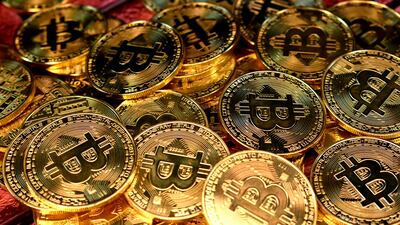
The crypto market, which includes currencies such as Bitcoin, pictured, has lost $2 trillion of its value in six months. Unsplash -
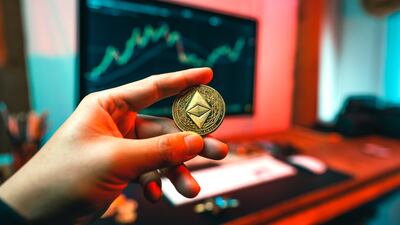
The price of Ethereum, the second largest cryptocurrency by market size, has fallen by 70 per cent this year. Investors and analysts are watching to see if it will dip below $1,000. Unsplash -
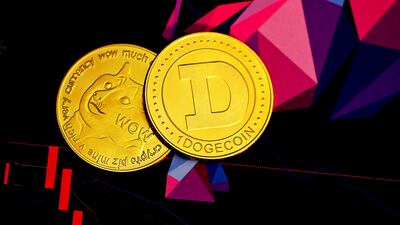
Dogecoin, supported by Elon Musk, is about 90 per cent down from May last year, yet it is outperforming Bitcoin and Ethereum in the current crash. Unsplash -
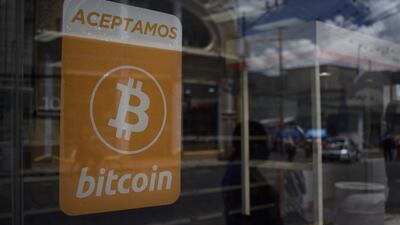
The government of El Salvador has invested $105 million in Bitcoin. President Nayib Bukele's embrace of the cryptocurrency as legal tender is being questioned as the market crashes. Getty -

Changpeng Zhao, founder of crypto exchange giant Binance, has compared the current market turmoil to the dotcom bubble of the early 2000s. Still, the company is aggressively pursuing licensing in international jurisdictions and introducing new products. Getty -
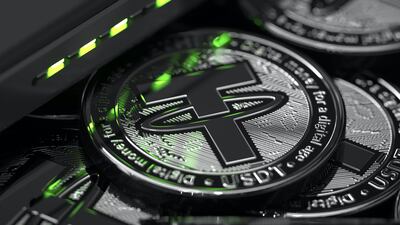
Tether is the biggest issuer of stablecoins, a type of cryptocurrency pegged to a traditionally stable asset like the US dollar. Most stablecoins are meant to maintain a constant price of $1 and are backed by real reserve funds, making it easy to convert crypto investments into cash. But Tether's financial statements show that may not be true, leaving the issuer and its investors vulnerable. Unsplash -

The recent crypto crash can in part be attributed to the collapse of TerraUSD, a stablecoin pegged to the US dollar through algorithms and linked to a "sister" cryptocurrency named Luna. When the price of Luna plummeted, TerraUSD also fell, creating a “death spiral” to practically zero for both coins. Unsplash -
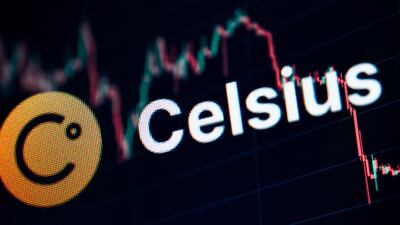
On June 12 crypto lender Celsius Network said it had paused customer withdrawals, saying it needed “to stabilise liquidity and operations”. Investors are still waiting, with no signs that the current meltdown will let up. Getty


Once you set a limit order to sell your asset above the current price, the sale of the asset is triggered as soon as the price reaches your limit order price.
This takes emotions out of the trade and eliminates the need for constant monitoring of your position.
While a limit order is not guaranteed to be filled, it ensures that your order is filled at or lower than a specific price level. For buy limit orders, the order will be executed only at the limit price or a lower one, while for sell limit orders, the order will be executed only at the limit price or a higher one.
Dollar cost averaging
Dollar cost averaging is a tactic generally used to improve a position.
In dollar cost averaging, a fixed amount of money is invested in the asset (in this case cryptocurrency) at regular intervals for the longer term. It reduces the stress of price volatility as your investments are built incrementally over a period of time.
For instance, if you are investing $500 in Ether each month over a longer time frame rather than in one go, you will not have to worry if the price drops suddenly.
Dollar cost averaging works effectively both as a buying and selling strategy. Instead of entering or exiting in one fell swoop, it is more prudent to ease in or out of a position over time.
Breaking up your investments into smaller parts and stretching them over a longer time frame is particularly beneficial in volatile market conditions, when the risk of making rash, emotionally driven judgments may be high.
At its core, dollar cost averaging is a more risk-averse strategy, compared with investing using a lump sum.
It takes time to acquire the skill to determine spots and the size for each transaction, which makes dollar cost averaging as much art as it is science.
Charting
Another useful arrow in an investor’s quiver, charting is employed frequently by more experienced investors and traders.
Price charts are an easy way for market participants to see historic price movements.
Seasoned traders and investors use charting to recognise patterns and use those data points to determine entry or exit points to improve gains and lower risk.
While past performance is no guarantee of future results, charting can help to identify risk-reward trade-off opportunities based on how things played out in the past.
In cryptocurrency investing, charting could reveal if an asset’s price is prone to rising or dropping significantly around specific levels. Investors can, thus, execute around those price levels.
As with equities, charts of cryptocurrencies can help investors recognise patterns, supports and resistances, as well as the supply and demand zones at different price points.
By setting up efficient charts, cryptocurrency investors can exploit market data, analyse the information they need to make successful trading decisions and ensure they are ahead of the game.
Bear in mind, the ability to analyse technical indicators is key. In essence, charts are graphic depictions of people’s emotions, which are rather predictable, hence they provide cryptocurrency investors with an undeniable edge.
Volatility is a natural part of the cryptocurrency market. Cycles of boom and doom are two sides of the same coin and must be embraced by digital currency investors.
However, as the sharp and steep crash this year in cryptocurrency prices from record highs has shown, there was never a better time to employ advanced trading tools and strategies to head off risk and uncertainty.
Investing is a long journey. These trading features could arm investors with the best tools to navigate different market conditions and grow their investment through well-timed decisions to buy and sell assets, while reining in downside risk.

