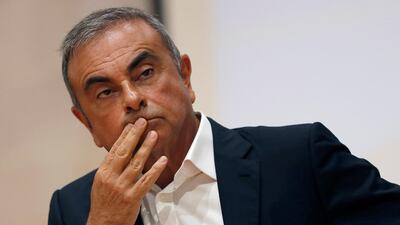
Former Nissan Motors chairman Carlos Ghosn was arrested on the same day as Greg Kelly in November 2018 but later fled to Beirut. AP Photo.

Former Nissan chief executive who triggered Carlos Ghosn’s downfall testifies in court


  • English
  • Arabic

Former Nissan chief executive Hiroto Saikawa testified in court about his role in the events leading to the arrest of Carlos Ghosn more than two years ago, which triggered turmoil within the car maker and later led to his escape from Japan and life as a fugitive in Lebanon.

Greg Kelly, the former Nissan director who was arrested on the same day as Mr Ghosn in November 2018, is standing trial for allegedly helping the former chairman of Nissan and its alliance with Renault and Mitsubishi understate tens of millions of dollars in compensation. Mr Saikawa is taking the stand on Wednesday at roughly the mid-point of the trial, which began in September and is slated to end around July.

Mr Saikawa, 67, was the most senior leader at Nissan after Mr Ghosn when he was detained, sending shock waves through the alliance and wider business world. That put the Japanese executive in a position to know many of the details behind the allegations against Mr Ghosn and Mr Kelly. With Mr Ghosn in exile, Mr Kelly’s trial is the only forum where those accusations will likely get a full legal airing.

Mr Saikawa, dressed in a black suit, told prosecutors that Mr Ghosn didn’t like compensation disclosure rules, and had expressed this to the board. The former chief executive also said he had agreed with Mr Kelly in 2011 that Mr Ghosn should be paid more to prevent him from going to a rival car maker, and that the executive should receive compensation for non-competition and consulting services after retirement.

“I supported what [Mr] Kelly was doing,” Mr Saikawa said in response to prosecutors’ questions. Asked why he signed a document outlining the remuneration, the former chief executive said Mr Kelly had asked him to because “it was a draft and I wanted to support the initiative”.

Following Mr Ghosn and Mr Kelly’s arrests, Mr Saikawa became the face of Nissan’s allegations against the pair, starting with a news conference on the day they were detained, and attacking Mr Ghosn for using Nissan’s money for personal gain. The big question is whether Mr Saikawa himself was also involved in decisions about Mr Ghosn’s pay, and if so, to what extent.

Mr Ghosn and Mr Kelly were accused of underreporting Mr Ghosn’s remuneration by about ¥9 billion ($85 million) over eight years through to March 2018. After helming Nissan as co-chief executive with Mr Ghosn, Mr Saikawa took over from April 2017, and was a board member throughout the period concerned. He stepped down as chief executive in late 2019 following a scandal over his own compensation.

While Mr Kelly denies allegations that he helped Mr Ghosn hide his remuneration and is seeking to exonerate himself, Nissan – the company is also on trial for its role – has effectively pleaded no contest. Mr Saikawa’s testimony this week may shed some light on how the chairman of a publicly listed company, with processes and checks and balances covering every function, was allegedly able to misrepresent his income for close to a decade.

Former Nissan chairman Carlos Ghosn. AP Photo

Mr Saikawa has said in the past that he accepts responsibility for the Mr Ghosn's scandal and had intended to resign as chief executive of Nissan once the company found a suitable replacement. In an interview with a Japanese magazine in June 2019, Mr Kelly said Mr Saikawa was fully aware of Mr Ghosn’s compensation situation. Mr Kelly also revealed that Mr Saikawa received tens of millions of yen in extra income through date-adjusted stock appreciation rights, triggering the events that led to the former chief executive's exit.

Nissan doesn’t consider Mr Saikawa’s excess payment to have violated laws and Mr Saikawa has denied he ordered the payments, saying the matter was mishandled by staff.

Mr Ghosn and Mr Saikawa’s partnership began in 2001, two years after Renault rescued Nissan from the brink of bankruptcy by purchasing about a third of its shares. Mr Ghosn, appointed as Nissan’s chief operating officer, chose Mr Saikawa to head a new office coordinating purchasing between the Japanese and French car makers.

Mr Saikawa was groomed and promoted by Mr Ghosn through the years, but their relationship began to change when Mr Ghosn started pushing for greater integration of Renault and Nissan. Mr Saikawa opposed the idea of Nissan becoming subsumed into a global conglomerate with its smaller and less profitable partner, telling the Nikkei that he saw “no merit” in combining the two in an interview in April 2018.

When Hari Nada, a senior vice president at Nissan, brought evidence he and others had been collecting on what they suspected was financial misconduct relating to Mr Ghosn’s compensation to Mr Saikawa in October 2018, the then-chief executive quickly agreed to cooperate with prosecutors, Bloomberg has reported.

Mr Saikawa then went on to help organise the operation to arrest Mr Ghosn and Mr Kelly upon their arrival to Japan the following month.

In Mr Ghosn’s first press conference since his arrest, held in Beirut in January 2020, he called out Nissan executives including Mr Saikawa, accusing them of conspiring to topple him to prevent further integration of Nissan with Renault. Nissan maintains that the cause of this chain of events is “the misconduct led by Mr Ghosn and Mr Kelly” for which the company found “substantial and convincing evidence”.


ABU%20DHABI'S%20KEY%20TOURISM%20GOALS%3A%20BY%20THE%20NUMBERS
%3Cp%3EBy%202030%2C%20Abu%20Dhabi%20aims%20to%20achieve%3A%3C%2Fp%3E%0A%3Cp%3E%3Cstrong%3E%E2%80%A2%2039.3%20million%20visitors%2C%3C%2Fstrong%3E%20nearly%2064%25%20up%20from%202023%3C%2Fp%3E%0A%3Cp%3E%3Cstrong%3E%E2%80%A2%20Dh90%20billion%20contribution%20to%20GDP%2C%3C%2Fstrong%3E%20about%2084%25%20more%20than%20Dh49%20billion%20in%202023%3C%2Fp%3E%0A%3Cp%3E%3Cstrong%3E%E2%80%A2%20178%2C000%20new%20jobs%2C%3C%2Fstrong%3E%20bringing%20the%20total%20to%20about%20366%2C000%3C%2Fp%3E%0A%3Cp%3E%3Cstrong%3E%E2%80%A2%2052%2C000%20hotel%20rooms%2C%3C%2Fstrong%3E%20up%2053%25%20from%2034%2C000%20in%202023%3C%2Fp%3E%0A%3Cp%3E%3Cstrong%3E%E2%80%A2%207.2%20million%20international%20visitors%2C%3C%2Fstrong%3E%20almost%2090%25%20higher%20compared%20to%202023's%203.8%20million%3C%2Fp%3E%0A%3Cp%3E%3Cstrong%3E%E2%80%A2%203.9%20international%20overnight%20hotel%20stays%2C%3C%2Fstrong%3E%2022%25%20more%20from%203.2%20nights%20in%202023%3C%2Fp%3E%0A
The specs: 2019 Haval H6

Price, base: Dh69,900

Engine: 2.0-litre turbocharged four-cylinder

Transmission: Seven-speed automatic

Power: 197hp @ 5,500rpm

Torque: 315Nm @ 2,000rpm

Fuel economy, combined: 7.0L / 100km

Our legal consultants

Name: Hassan Mohsen Elhais

Position: legal consultant with Al Rowaad Advocates and Legal Consultants.

Company%20profile
%3Cp%3E%3Cstrong%3ECompany%20name%3A%20%3C%2Fstrong%3EXare%C2%A0%3C%2Fp%3E%0A%3Cp%3E%3Cstrong%3EStarted%3A%20%3C%2Fstrong%3EJanuary%2018%2C%202021%C2%A0%3C%2Fp%3E%0A%3Cp%3E%3Cstrong%3EFounders%3A%20%3C%2Fstrong%3EPadmini%20Gupta%2C%20Milind%20Singh%2C%20Mandeep%20Singh%C2%A0%3C%2Fp%3E%0A%3Cp%3E%3Cstrong%3EBased%3A%20%3C%2Fstrong%3EDubai%C2%A0%3C%2Fp%3E%0A%3Cp%3E%3Cstrong%3ESector%3A%20%3C%2Fstrong%3EFinTech%C2%A0%3C%2Fp%3E%0A%3Cp%3E%3Cstrong%3EFunds%20Raised%3A%20%3C%2Fstrong%3E%2410%20million%C2%A0%3C%2Fp%3E%0A%3Cp%3E%3Cstrong%3ECurrent%20number%20of%20staff%3A%20%3C%2Fstrong%3E28%C2%A0%3C%2Fp%3E%0A%3Cp%3E%3Cstrong%3EInvestment%20stage%3A%20%3C%2Fstrong%3Eundisclosed%3C%2Fp%3E%0A%3Cp%3E%3Cstrong%3EInvestors%3A%20%3C%2Fstrong%3EMS%26amp%3BAD%20Ventures%2C%20Middle%20East%20Venture%20Partners%2C%20Astra%20Amco%2C%20the%20Dubai%20International%20Financial%20Centre%2C%20Fintech%20Fund%2C%20500%20Startups%2C%20Khwarizmi%20Ventures%2C%20and%20Phoenician%20Funds%3C%2Fp%3E%0A
Sun jukebox

Rufus Thomas, Bear Cat (The Answer to Hound Dog) (1953)

This rip-off of Leiber/Stoller’s early rock stomper brought a lawsuit against Phillips and necessitated Presley’s premature sale to RCA.

Elvis Presley, Mystery Train (1955)

The B-side of Presley’s final single for Sun bops with a drummer-less groove.

Johnny Cash and the Tennessee Two, Folsom Prison Blues (1955)

Originally recorded for Sun, Cash’s signature tune was performed for inmates of the titular prison 13 years later.

Carl Perkins, Blue Suede Shoes (1956)

Within a month of Sun’s February release Elvis had his version out on RCA.

Roy Orbison, Ooby Dooby (1956)

An essential piece of irreverent juvenilia from Orbison.

Jerry Lee Lewis, Great Balls of Fire (1957)

Lee’s trademark anthem is one of the era’s best-remembered – and best-selling – songs.

Three tips from La Perle's performers

1 The kind of water athletes drink is important. Gwilym Hooson, a 28-year-old British performer who is currently recovering from knee surgery, found that out when the company was still in Studio City, training for 12 hours a day. “The physio team was like: ‘Why is everyone getting cramps?’ And then they realised we had to add salt and sugar to the water,” he says.

2 A little chocolate is a good thing. “It’s emergency energy,” says Craig Paul Smith, La Perle’s head coach and former Cirque du Soleil performer, gesturing to an almost-empty open box of mini chocolate bars on his desk backstage.

3 Take chances, says Young, who has worked all over the world, including most recently at Dragone’s show in China. “Every time we go out of our comfort zone, we learn a lot about ourselves,” she says.

MATCH INFO

Manchester United 2 (Heaton (og) 42', Lindelof 64')

Aston Villa 2 (Grealish 11', Mings 66')

Episode list:

Ep1: A recovery like no other- the unevenness of the economic recovery 

Ep2: PCR and jobs - the future of work - new trends and challenges 

Ep3: The recovery and global trade disruptions - globalisation post-pandemic 

Ep4: Inflation- services and goods - debt risks 

Ep5: Travel and tourism 

Cracks in the Wall

Ben White, Pluto Press 

'Worse than a prison sentence'

Marie Byrne, a counsellor who volunteers at the UAE government's mental health crisis helpline, said the ordeal the crew had been through would take time to overcome.

“It was worse than a prison sentence, where at least someone can deal with a set amount of time incarcerated," she said.

“They were living in perpetual mystery as to how their futures would pan out, and what that would be.

“Because of coronavirus, the world is very different now to the one they left, that will also have an impact.

“It will not fully register until they are on dry land. Some have not seen their young children grow up while others will have to rebuild relationships.

“It will be a challenge mentally, and to find other work to support their families as they have been out of circulation for so long. Hopefully they will get the care they need when they get home.”