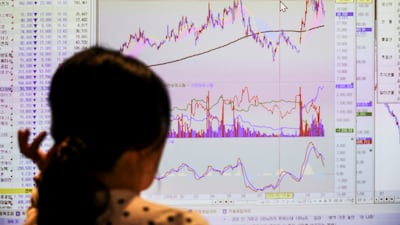

Oil prices slumped, along with the US dollar and stocks of some chipmakers, but a selective rally in equities supported gains in Asian markets, after the US Democratic party's stunning midterm electoral gains raised hopes for progress towards ending the Iran war.
While the US currency continued to weaken against major peers and American treasuries advanced, the midterm stock-rotation trade that provided tailwinds for US markets was more pronounced in Asia.
The broader MSCI Asia Pacific Index rose, driven by a sharp rise in e-commerce and automobile stocks.
The Hang Seng Tech Index, dominated by Chinese e-commerce platforms such as Tencent and Alibaba, jumped as much as 5.9 per cent. Toyota shares surged 8 per cent, while those of Hyundai Motors advanced 3.7 per cent.
Australia’s benchmark index climbed 2.3 per cent, the main stocks measure in Indonesia added 2 per cent and Malaysian equities advanced more than 1 per cent.
However, the Kospi Index in South Korea, a bellwether for the artificial intelligence trade in Asia, dropped 4.39 per cent. Chipmaker Samsung Electronics and SK Hynix both slumped more than 5 per cent as investors hedged bets fearing tighter US regulation for the sector.
-
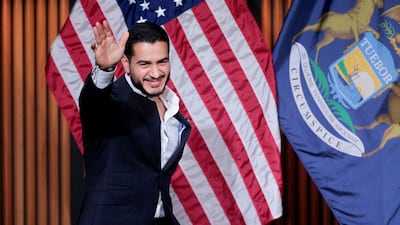
Abdul El-Sayed, who has become the first Muslim to be elected to the US Senate, celebrates his milestone victory in Detroit, Michigan. Reuters -
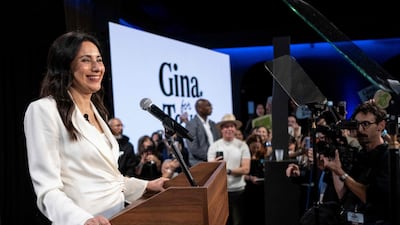
Gina Hinojosa, who has been elected as the first Latina governor of Texas, addresses supporters. AFP -
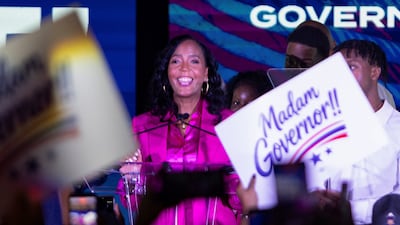
Democrat Keisha Lance Bottoms addresses supporters in Atlanta, Georgia, after becoming the first African American woman to be elected governor of a state. Reuters -

Adam Hamilton, Democratic Senate candidate for Kansas, celebrates in Overland Park as the results pour in. Reuters -
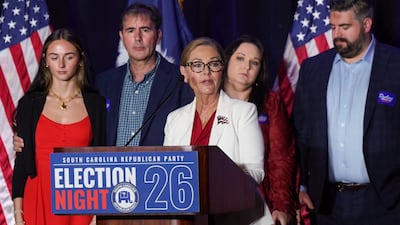
Republican Senator Darline Graham concedes defeat to Annie Andrews in the South Carolina race. AFP -

Annie Andrews, the Democratic Senate candidate for South Carolina, celebrates with her family in Charleston as results pour in. Senate. AFP -
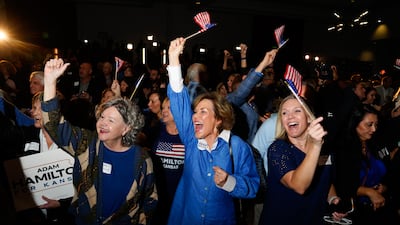
Supporters of Adam Hamilton, the Democratic Senate candidate for Kansas, cheer during an election night event in Overland Park. Bloomberg -

Roy Cooper, Democratic Senate candidate and former North Carolina governor, attends an election night rally. Reuters -
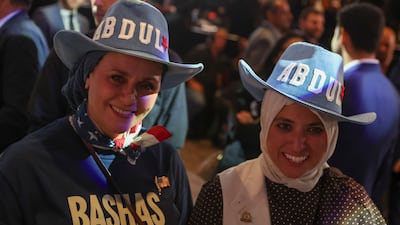
Supporters of US Senate candidate Abdul El-Sayed attend the Michigan Democrats' election night watch party in Detroit. EPA -
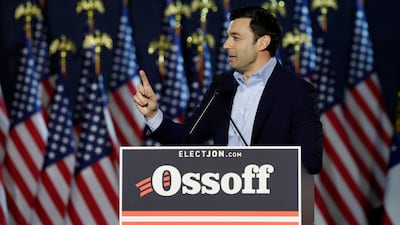
US Senator Jon Ossoff, Democrat from Georgia, speaks in Atlanta after winning re-election. AFP -
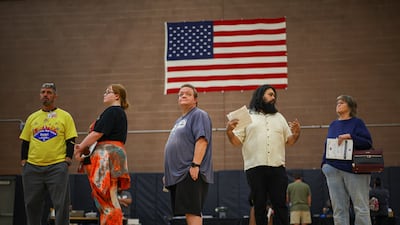
People stand in line to vote in the US midterm elections at Boulder City High School in Boulder City, Nevada. Reuters -
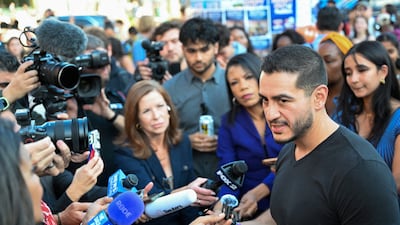
Democratic candidate for US Senate, Abdul El-Sayed, speaks to the media as he visits a polling site in Ann Arbor, Michigan. Reuters -
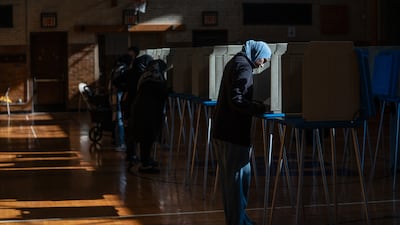
Voter cast their ballots in Dearborn, Michigan. Bloomberg -
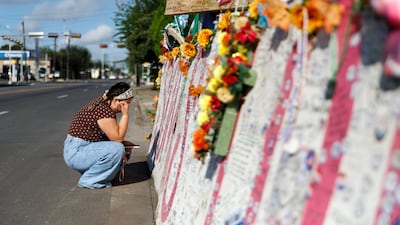
A voter cries after placing their "I Voted" sticker on a memorial for Lorenzo Salgado Araujo, who was shot dead by an Immigration and Customs Enforcement officer in July, in Houston, Texas. Bloomberg -
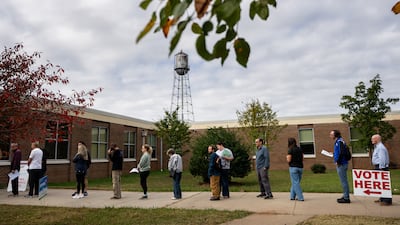
Voters wait in line to cast their ballots in Durham, North Carolina. Bloomberg -
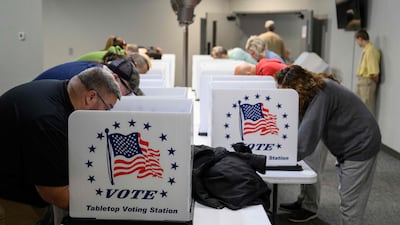
Voters cast their US midterm election ballots at a polling station at the Bridge of Hope Church in Youngstown, Ohio. AFP -
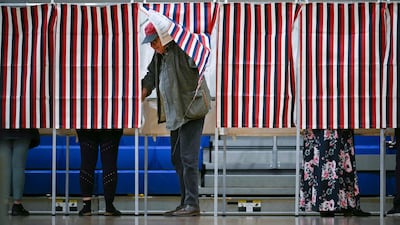
Voters in South Portland, Maine. AFP -
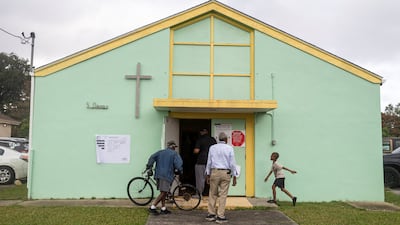
Orleans parish election commissioner Calvin Alexander stands outside St David Baptist Church, as residents arrive to vote in New Orleans, Louisiana. Reuters -
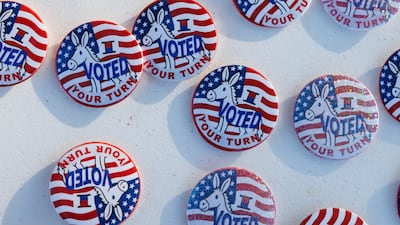
Badges at a polling site in Clayton, North Carolina. Bloomberg -
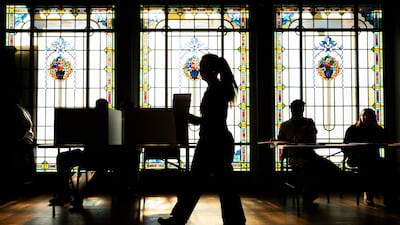
US voters cast their ballots at the Museum of Contemporary Art in Arlington, Virginia. EPA -
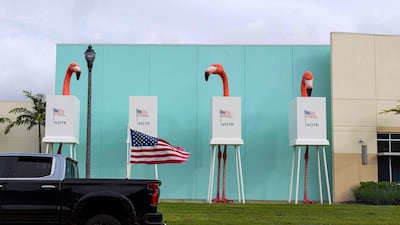
Flamingos created by artist Matthew Mazzotta outside the Supervisor of Elections building in West Palm Beach, Florida. AFP -

Abdul El-Sayed, Democratic US Senate candidate, from Michigan, speaks during a campaign event at the Majestic Theatre in Detroit. Bloomberg -
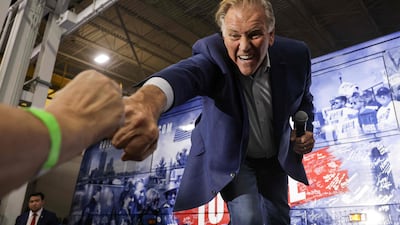
Republican Senate candidate Mike Rogers greets supporters as he takes the stage at a campaign rally in Rochester Hills, Michigan. AFP -
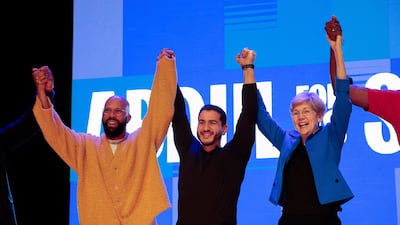
Mr El-Sayed attends a campaign rally with rapper Common and US Senator Elizabeth Warren ahead of the midterm elections, in Detroit, Michigan. Reuters -
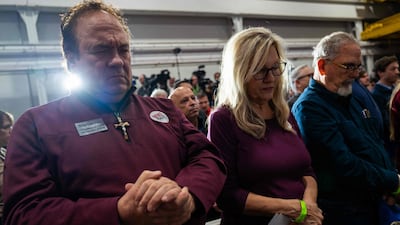
People pray during a rally for Michigan Republican Senate candidate Mike Rogers, in Rochester Hills. AFP -
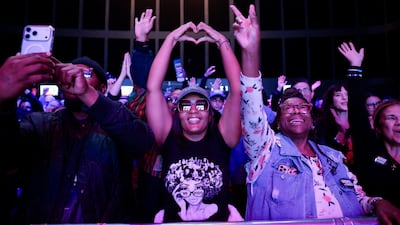
Supporters attend Mr El-Sayed's campaign rally with Common, in Detroit. Reuters -
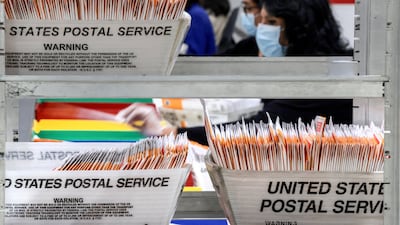
Midterm election ballots are extracted from envelopes at the Los Angeles County Ballot Processing Centre, in City of Industry, California. Reuters -
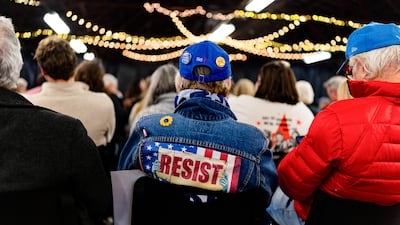
An attendee wears a "Resist" jacket during a campaign event with Abdul El-Sayed, Democratic US Senate candidate from Michigan. Bloomberg -
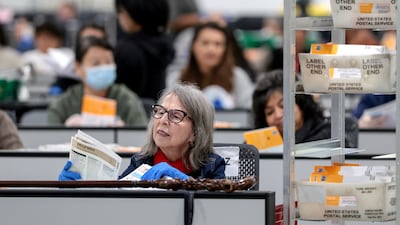
Election staff at work at the LA County Ballot Processing Centre. Reuters -
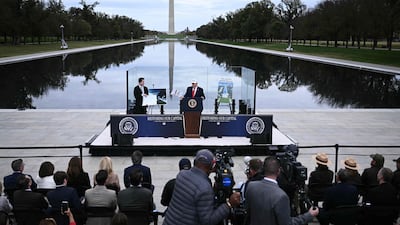
US President Donald Trump delivers a speech marking the end of the midterm election campaign, in Washington DC, the day before voting starts. AFP


“We’re seeing a clear continuation of the rotation out of chipmakers,” Tim Waterer, chief market analyst at KCM Trade, was quoted by Bloomberg as saying.
“The Democratic sweep raises the real possibility that the AI data-centre buildout hits a regulatory brick wall if the party follows through on its pre-election pledges. That has kept semiconductor names under pressure across the region.”
Equities in Asia followed the overnight trend in the US, where the Dow Jones Industrial Average gained 1,570 points, or 3 per cent. The benchmark S&P 500 and Nasdaq Composite rose 1.58 per cent and 1.44 per cent, respectively.
US President Donald Trump, who had earlier hinted at rejecting the results if his party was defeated, accepted the election outcome. The move dissipated fears of political upheaval in the country and supported gains in US equities.
“There's been violent two-way price action in the markets in response to US midterm elections. But ultimately, the price action has proven very bullish,” Kyle Rodda, senior financial market analyst at Capital.com, said.
“Despite initial concerns about the risk posed by many Democrats, who campaigned heavily on tech regulation and slowing or halting the AI build-out, those fears gave way when US President Trump vowed to accept the election result and suggested he's open to working with the soon-to-be Democrat-dominated Congress.”
Slumping oil
An overnight drop of about 9 per cent in oil prices also supported the equities rally in Asia.
Brent, the benchmark for two thirds of the world's oil, continued to slide on Thursday, shedding a further 0.55 per cent to reach $94.10 a barrel at 9.44am UAE time. Over the past three days Brent has slumped about 19 per cent.
West Texas Intermediate, the gauge that tracks US crude, also dropped 1.07 per cent to $87.18 per barrel.
Oil's retreat below the $100-per-barrel mark on Wednesday came after Mr Trump acknowledged that the Iran war was among the chief reasons for his party’s defeat in polls.
The sweeping Democratic win is being seen as a message from American voters frustrated by high inflation and soaring gas prices as a result of the war.
Although Mr Trump did not say whether he is willing to end the war soon, he will face very strong opposition from both the House and the Senate if he chooses to engage in another round of an all-out war with Tehran.
“Markets anticipate faster US-Iran diplomacy following the election, stripping out war-risk premium despite falling US crude inventories,” said Daniel Richards, Mena economist at Emirates NBD.

