

Even as the outlook brightens for emerging-market debt, bonds from a handful of the riskiest countries are being left behind. And there is little evidence that is about to change.
Dollar notes from nations including Tunisia, Argentina, Lebanon and Egypt are handing investors steep losses this month, contributing the most to a 0.7 per cent decline in the Bloomberg Emerging Markets Sovereign Index.
The laggards have weighed on the performance of an otherwise resilient group, which stands to benefit as inflation eases and central banks near the end of interest rate-raising cycles.
While their problems vary, the underperforming countries stand out for their weaker credit markets and their overreliance on support from multilateral lenders such as the International Monetary Fund.
“The countries that are under stress are clearly demonstrating a larger concern” for investors, said Joe Delvaux, a money manager at Amundi in London.
“Some of the concerns can be predominantly focused on their debt sustainability, while others again also face political issues.”
Some of these nations, including Lebanon, are already in default, and investors weighing the likelihood of others following suit came out of the spring IMF meetings in Washington this month with few reassurances.
The gathering — a barometer for whether bailout deals can be reached — showed that governments and the multilateral lender remain deadlocked in many cases.
-

People queue outside a closed bakery, waiting for it to open, in Chiyah, Lebanon. Reuters -
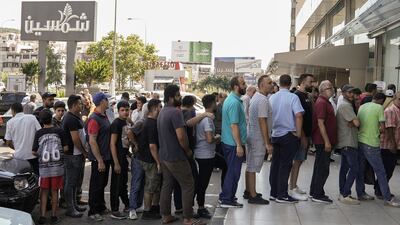
Another queue at a bakery in Khaldeh. The Lebanese Parliament has approved a $150m World Bank loan for wheat imports to address shortages in the country. Reuters -

The loan will finance wheat imports for at least six months, alleviating acute bread shortages. Reuters -

Lebanon has suffered from chronic scarcity of wheat and flour since its economic crisis began in 2019. Reuters -

A man holds stacks of bread as he makes his way through a crowd of people queuing for bread outside a bakery in Beirut. Reuters -

Subsidised Arabic bread consumed in most Lebanese households has become scarce. AFP -

About 22 per cent of Lebanese households are food insecure, according to the World Food Programme, with that number likely to rise. AFP -
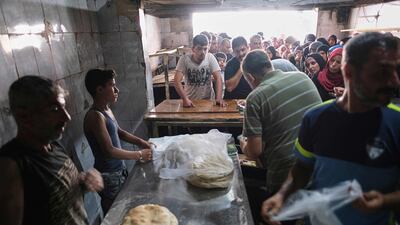
Soaring inflation, paired with a plunge in the value of the local currency, has badly affected the purchasing power of Lebanon's citizens. AFP -

Long early-morning queues often form in front of bakeries and shops as customers race to purchase limited quantities of subsidised bread. AFP -
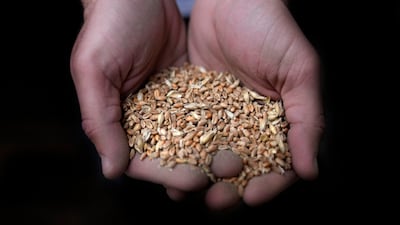
The limited availability of bread has caused tensions to frequently boil over in queues. Two people were wounded in Tripoli in mid-July after a gunfight over who was ahead in a bread queue. AP -
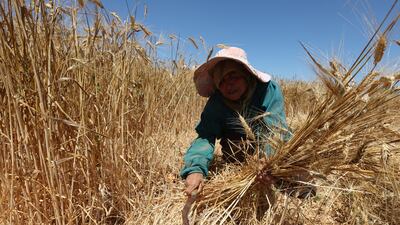
A woman uses a sickle to harvest wheat at a field in Houla village, near the border with Israel, southern Lebanon. Reuters -
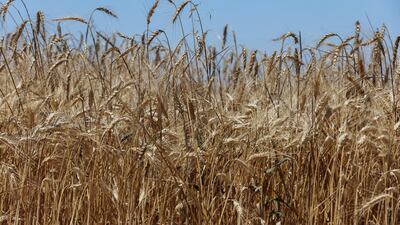
Russia’s invasion of Ukraine in February has also been detrimental, with the war there hindering the country’s ability to export wheat. About 80 per cent of Lebanon’s wheat came from Ukraine prior to the invasion. Reuters -
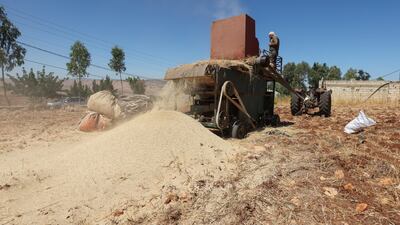
The Beirut port explosion in August 2020 destroyed the country’s grain silos and with it most of Lebanon’s wheat reserves. Reuters


“We don’t come away from the meetings with more optimism” for low-rated bonds, Morgan Stanley strategists wrote in a note. Discussions were on the “bearish side” around several deals, including Egypt and Tunisia.
Bonds from those countries have lost as much as 9 per cent this month, while debt from Lebanon, Senegal and Kenya posted losses in mid-single digits, according to data compiled by Bloomberg.
Several governments are running out of time to fix their fiscal imbalances and win IMF programmes.
Egypt is facing an acute shortage of wheat, with a little more than two months of stocks, as a currency crisis rages.
Kenya had to delay salaries to public sector workers, while Argentina’s central bank raised rates by 300 basis points to 81 per cent on Thursday to try to contain rampant inflation.
S&P Global Ratings last week lowered the outlook on Egypt’s debt to negative. The option-adjusted spread on Egyptian bonds in dollars rose the most in emerging markets in the week, rising 198 basis points to 1,434 basis points over US Treasuries.
“A lot of the countries need the money now,” said Mark Bohlund, a senior credit research analyst with Redd Intelligence.
“Otherwise, they’ll have to borrow at very high rates, both locally and externally. If they lock up the current high market rates, it is only going to worsen the problem.”
In a twist, the worst performer, Argentina, received another $5.4 billion from the IMF at the end of last month, and some investors are optimistic coming elections will bring in a more market-friendly government.
Still, with near triple-digit inflation and falling international reserves weighing on the serial defaulter, the country’s bonds have slid about 12 per cent this month.
For those willing to take on the risk, there is the enormous upside in betting on the most distressed bonds.
Many of the riskiest countries trade below the value investors could expect to receive in a debt restructuring.
The average recovery value on defaulted sovereign bonds over the past four decades is 50 per cent, though there have been recoveries as high as 95 per cent, said Elena Duggar, Moody’s chief credit officer for the Americas.
History shows investors have been rewarded for buying back the debt quickly once there is any incremental progress on talks with lenders.
Bolivia is a case in point. The country’s debt was one of the worst performers in emerging markets earlier in April, but rebounded last week on signs it will get multilateral financing support.
Still, in most cases, the market is left waiting for a catalyst.
In Tunisia, for example, bondholders could expect an average recovery rate of 74 cents on the dollar, Morgan Stanley International analysts indicate. Bonds due in 2026 currently trade at about 49 cents, according to data compiled by Bloomberg.
The government, however, has not made progress on negotiations with the IMF.
“The protracted stalemate with the IMF makes us less optimistic,” analyst Neville Mandimika wrote in an April 19 note. He added that the bank moved the credit to a “dislike stance”.
“If this persists, Tunisia could fall into arrears,” he said.

