


The value of the Egyptian pound is expected to fall further after reaching a near all-time low of 19 to the US dollar this week, according to analysts.
The pound slid to 19 on Monday and was trading between 19.01 and 19.07 to the greenback on Tuesday afternoon, Refinitiv data showed.
It is the lowest since December 2016 when the pound hit 19.3 to the dollar after a drastic devaluation that preceded an economic reforms programme backed by the International Monetary Fund.
Analysts forecast that the currency will reach up to 21 to the dollar by the end of this year, as the Arab world’s most populous country grapples with the economic fallout of the Russia-Ukraine war.
“This [the downward trend] has been happening for the last month and a half. We had gone down from 18.17 to about 18.25 and then from 18.25, we never looked back. And we expect that trend to continue,” Allen Sandeep, director of research at Cairo-based Naeem Holding, told The National.
Since Russia invaded Ukraine in February, Egypt has suffered soaring inflation and falling foreign currency reserves. The two warring countries account for the majority of Egypt’s wheat imports and a big chunk of its tourists.
In March, Egypt allowed its currency to depreciate more than 14 per cent from 15.7 pounds to the dollar, the rate at which it had traded since November 2020.
By devaluing the pound, it sought to boost the competitiveness of its exports and better position itself for a new loan from the IMF.
However, it has not been enough to offset high commodity prices and the flight of foreign direct investments.
“We’re in a situation where even if we depreciate by a large degree … the current circumstances globally do not encourage non-oil FDI,” Mr Sandeep said.
Egypt’s core annual inflation rate increased to 14.6 per cent in June from 13.3 per cent in May, the highest since 2017, according to central bank figures.
Foreign currency reserves fell more than $7 billion in April and May and totalled $33.4bn at the end of June.
-

On Monday, Egypt devalued the currency from 15.7 pounds to the dollar, where it had remained mostly steady since November 2020. AP Photo -
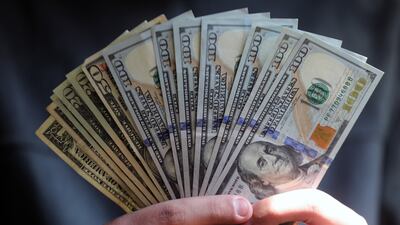
The Egyptian pound slid to about 18.50 to the US dollar on Tuesday from 18.27, a day after the country devalued its currency by 14 per cent, Refinitiv data showed. EPA -

The latest depreciation brings the total devaluation since Monday morning to slightly more than 15 per cent, close to the amount by which at least some analysts had estimated it was overvalued. EPA -

Egypt plans to restructure its public budget for fiscal year 2022/23 to cope with the global crisis resulting from the war in Ukraine, a cabinet statement said. Reuters -

The Egyptian Prime Minister Moustafa Madbouly said: 'Prices increased in an unprecedented way. We saw how fuel and food prices have significantly increased which put a huge pressure on our resources because now, we need to secure as much resources as we can to provide needed goods.' Reuters -
!['Prices are still the same over the past 10 days or two weeks. There are goods now sold at somehow reduced prices in government-owned shops in order to beat [traders] who raise prices, who use this opportunity [currency devaluation] to raise prices. This is a good step by the government to support citizens,' said one Egyptian citizen. Reuters](https://www.thenationalnews.com/resizer/v2/6FR37B5P2FDHRMIUE5FEQWVGIA.JPG?smart=true&auth=d7d5cc1adc349847e83833f41bc5cbb1dbdfcedd80a2890f417d4d0617bf5958&width=400&height=225)
'Prices are still the same over the past 10 days or two weeks. There are goods now sold at somehow reduced prices in government-owned shops in order to beat [traders] who raise prices, who use this opportunity [currency devaluation] to raise prices. This is a good step by the government to support citizens,' said one Egyptian citizen. Reuters -

The central bank raised its overnight lending and borrowing rates by one percentage point, state banks began selling one-year certificates of deposit to the public with a yield of 18 per cent and the government announced an economic relief package. Reuters


!['Prices are still the same over the past 10 days or two weeks. There are goods now sold at somehow reduced prices in government-owned shops in order to beat [traders] who raise prices, who use this opportunity [currency devaluation] to raise prices. This is a good step by the government to support citizens,' said one Egyptian citizen. Reuters](https://www.thenationalnews.com/resizer/v2/6FR37B5P2FDHRMIUE5FEQWVGIA.JPG?smart=true&auth=d7d5cc1adc349847e83833f41bc5cbb1dbdfcedd80a2890f417d4d0617bf5958&width=800&height=450)

Businesses in the Egyptian non-oil economy recorded weaker performance in July, as output and new orders declined, albeit at slower rates compared with June. The S&P Global Egypt Purchasing Managers’ Index reached 46.4 last month, well below the 50 neutral mark.
“This kind of a situation, with all these factors happening at the same time, is unprecedented for Egypt,” Mr Sandeep said.
“We have a growing current account deficit of $20bn and we are also faced with another problem, which is maturing external debt repayments, which comes up to about $15bn for the next 12 months,” he said.
Egypt’s current account deficit stood at 4.3 per cent of GDP on a four-quarter sum basis in the first quarter, according to a recent research note from Capital Economics.
Its foreign currency debt is about a quarter of the government’s overall debt burden. The weakening of the pound will “basically increase the cost of servicing the debt”, James Swanston, Mena economist at Capital Economics, told The National.
Headline inflation will remain elevated and is expected to hit close to 20 per cent by the end of this year, he said.
“A 5 per cent to 10 per cent weakening of the pound would be required,” Mr Swanston said, leading Capital Economics to forecast a depreciation to 21 to the dollar by the end of this year and a further 16 per cent fall to 25 by the end of 2024.
The consensus expects a much smaller depreciation, the report noted. Naeem Holding forecasts the pound will hit 20 to the dollar by the end of this year and 20.50 in 2023.
The Central Bank of Egypt seems to be shifting to a more flexible exchange rate regime that allows market forces to dictate how the pound moves, rather than staying flat.
“The IMF has said a flexible exchange rate is very much needed,” Mr Swanston said.
Egypt and the IMF have been in negotiations since March, but in a note released on July 26, the Washington-based lender said Egypt must make “decisive progress” on fiscal and structural reforms to ultimately receive more financial support from the fund.
“We assume that Egypt’s external funding conditions will improve as an agreement on an IMF programme is eventually reached later this year,” Krisjanis Krustins, director at Fitch Ratings, told The National. “However, we also expect gradual depreciation from current levels, amid continued high ― albeit declining ― current account deficits and inflation.”

