

A broad rally across regional GCC markets and higher oil prices led to the MSCI GCC aggregate index surging about 18 per cent in the first three months of 2022, its biggest quarterly gain since the second quarter of 2009 during the global financial crisis.
The rise was supported by four consecutive months of gains in the index, Kamco Invest said in a report.
All the regional markets were in the green during the quarter, with Abu Dhabi reporting the biggest gain of about 17 per cent, followed by Qatar and Saudi Arabia, with gains of around 16 per cent each, the report said.
The capital goods, materials and banking sectors had the biggest gains, at almost 20 per cent. Energy and health care followed, expanding 18 per cent and 15 per cent, respectively.
Consumer durables and apparels, and pharma were the only sectors that declined in the first quarter, the report found.
The Abu Dhabi Securities Exchange (ADX) was the best-performing market in the GCC in March, with the exchange’s market capitalisation increased 4.7 per cent during the month to reach Dh1.81 trillion ($492 billion).
Total volume of shares traded grew 39 per cent to 6.2 billion in March from 4.4 billion in February. Monthly value traded also rose 44 per cent to Dh40.2bn last month.
ADX, the Arab world’s second-largest stock market by market value, also led the GCC in terms of year-to-date gains that reached 17.2 per cent at the end of March after registering record growth during 2021, the report said.
The Abu Dhabi exchange, which more than doubled its market capitalisation last year, had nine listings in 2021. It could host 13 more IPOs before the end of this year as it seeks to reach a market value of Dh3tn, Mohammed Al Shorafa, chairman of ADX, told Sky News Arabia last week.
-
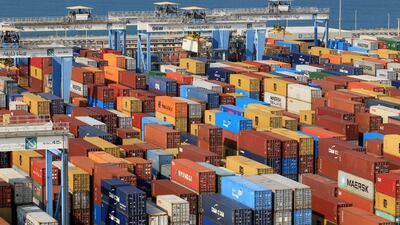
Abu Dhabi Ports - $1.1 billion IPO in February 2022: AD Ports Group raised $1.1bn from its share sale to help expand its operations globally and boost growth. ADQ, one of the region’s largest holding companies, remains a majority shareholder in AD Ports Group with a 75.44 per cent stake in the listed entity. Reuters -

Dewa became the first public entity to list on the Dubai Financial Market, raising Dh22.41bn in an oversubscribed share sale. The IPO of the Dubai utility in April was the largest in Europe and the Middle East since Saudi Aramco’s debut in 2019. It has a market value of about $39bn and is the largest on the exchange. AFP -
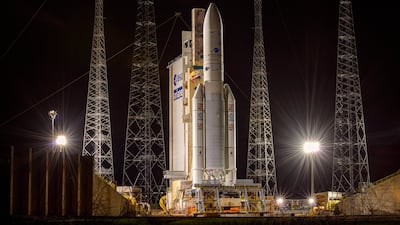
Yahsat – $730.6 million in July 2021: a unit of Mubadala Investment Company, it raised about $731m from its initial public offering last July. It sold 975.9 million shares, or 40 per cent of equity, through the IPO, which was several times oversubscribed, with significant demand from both qualified institutional and retail investors in the UAE. Photo: Mubadala Investment Company -
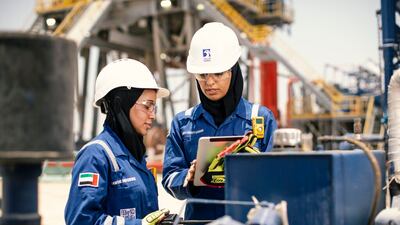
Adnoc Drilling - $1.1 billion IPO in October 2021: Adnoc Drilling’s share sale, oversubscribed more than 31 times, was the largest listing on the ADX, raising more than $1.1 billion. Adnoc maintains its majority 84 per cent stake in the company while US energy services company Baker Hughes, which entered into a strategic partnership with Adnoc Drilling in October 2018, has a 5 per cent stake, and US contract oil and gas driller Helmerich & Payne holds 1 per cent. Photo: Adnoc -
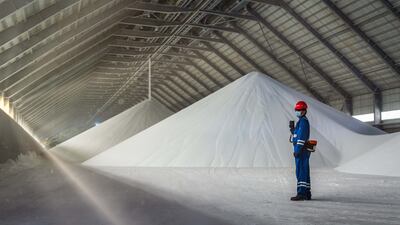
Fertiglobe- $795 million in October 2021: a joint venture between Adnoc and Netherlands-listed OCI, raised about $795m in its initial IPO last year, amid strong demand from international, regional and local investors. The company — which is also the Mena region’s largest producer of nitrogen fertilisers by production capacity — sold more than 1.145 billion shares, representing 13.8 per cent of its share capital. Photo: Fertiglobe


The Dubai Financial Market also gained 5 per cent in March, closing at 3,526.6 points, supported by gains in six out of nine sectoral indices including large-cap sectors such as banks, property and insurance, the report said.
Trading activity on the exchange increased during March as compared to February, with total volume of shares traded up by about 40 per cent and total value increasing 83 per cent to Dh10.5bn.
The DFM is also expected to see a slew of new listings this year, starting with the IPO of Dubai Water and Electricity Authority later this month. The utility company is expected to raise between Dh20.25bn and Dh22.3bn from its listing.
Outside the UAE, the Saudi Stock Exchange (Tadawul), the Arab region’s biggest exchange, posted new “multi-year highs” in March, with the Tasi index closing the month at the highest level in almost 17 years.
The index’s returns have reached 16 per cent this year, the third-highest in the GCC, as well as its highest quarterly gain since the fourth quarter of 2016.
The primary market in Saudi Arabia “remained vibrant” with the listing of six companies during the month of March, including the IPO of Nahdi Medical, the report said.
The market capitalisation of Tadawul grew about 24 per cent annually to reach 11.96tn riyals ($3.19tn) in the first quarter of 2022, the exchange said on Sunday.
The Kuwaiti equity market was also up for the third consecutive month during March, registering the second-best monthly performance in the GCC with the all share index gaining nearly 7 per cent.
“However, unlike the previous month when the positive performance was mainly led by mid-cap and small-cap stocks, the performance during March was solely driven by large-cap stocks partially offset by a decline in main market stocks,” the report said.
The performance in the first quarter was also led by premier market stocks, which gained almost 19 per cent. The broader all share index rose 16 per cent in the first three months of the year, one of the best in the GCC.

The Bahrain Bourse All Share Index also grew around 6 per cent to close at 2,073.54 points in March, breaking the 2,000 mark for the first time since November 2008, according to Kamco.
The index touched 2,080.43 points on March 27, the highest mark since the global financial crisis of 2008. Gains over the past four consecutive months have pushed the year-to-date 2022 returns for the Bahrain bourse to one of the best in the GCC at over 15 per cent, the report said.
Oman’s MSX index recorded the smallest monthly gain in the GCC during March, with the benchmark rising about 4 per cent to 4,205.2 points.
The index reached the highest level since December 2018 during the first week of March, “but mostly trended downwards for the rest of the month”, the report said.
The rise last month “more than offset the declines during the first two months of the year” with a first-quarter gain of about 2 per cent, the smallest in the GCC, it said.

