


Natural rubber prices will probably climb as dry weather cuts production in South East Asia and consumption increases. Areas in southern Thailand, the biggest producer and exporter, experienced a rain deficit in the past 90 days.
-
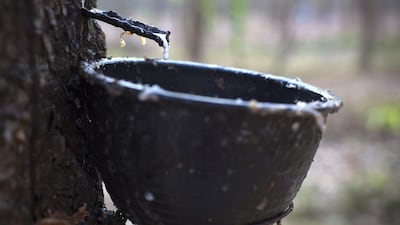
-
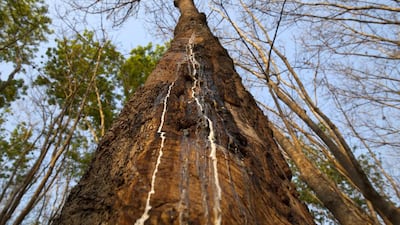
Rubber sap drips from a tree on a rubber plantation in Rayong, Thailand. The sap is collected during the early hours of the morning when the temperature is usually lowest. Paula Bronstein / Getty Images -
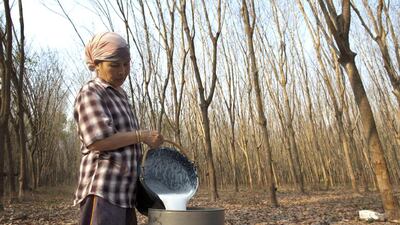
Thongshin Klaharn pours rubber sap collected from trees on her and her husband’s rubber plantation in Rayong, Thailand. Thongshin and her husband Somporn Klaharn have been working in the rubber business for 30 years. Paula Bronstein / Getty Images -
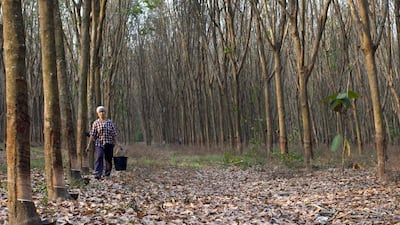
Thongshin Klaharn carries a bucket of rubber sap collected from some of the 1,200 trees in his plantation. Paula Bronstein / Getty Images -
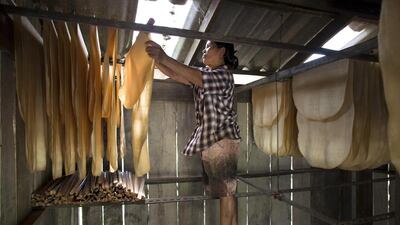
Sheets of rubber are hung in the drying shack of Thongshin and Somporn Klaharn’s plantation. Paula Bronstein / Getty Images -
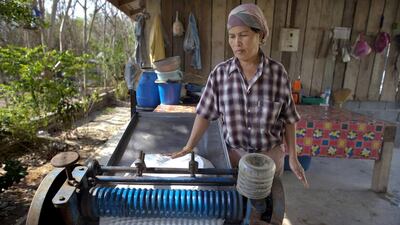
Slabs of rubber are fed through a press to flatten it for drying. Paula Bronstein / Getty Images -
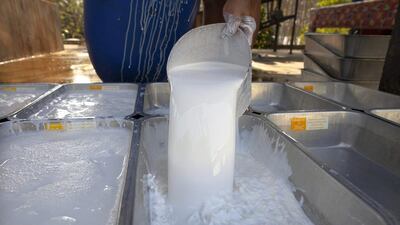
Water mixed with acid is added to the rubber sap to make the rubber coagulate for processing. Paula Bronstein / Getty Images -
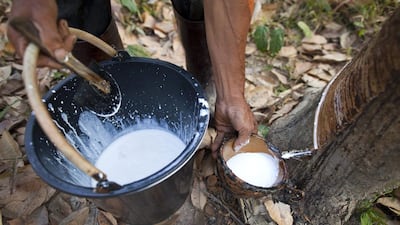
Rubber sap is collected during the early hours of the morning when the temperature is usually lowest, forcing Thai farmers to work through the night until after sunrise as they complete the harvesting process. Paula Bronstein / Getty Images -
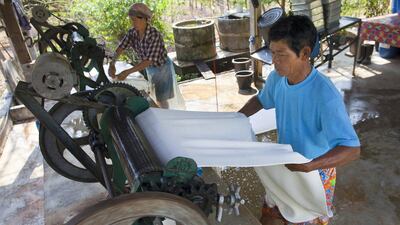
Somporn Klaharn, and his wife Thongshin work together in their small processing plant pressing sheets of rubber in Rayong, Thailand. Paula Bronstein / Getty Images -
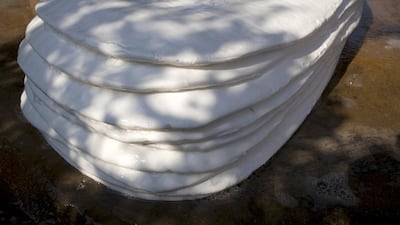
Large rubber slabs are stacked before being pressed flat and dried. Paula Bronstein / Getty Images -
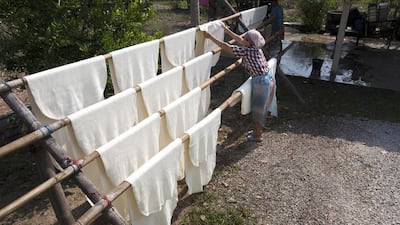
Sheets of rubber just processed on a drying rack are hung at a workshop in Rayong, Thailand. Paula Bronstein / Getty Images -
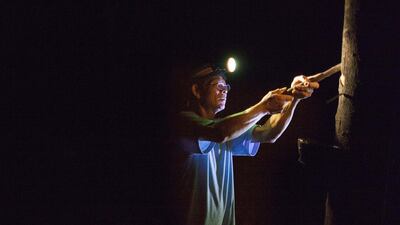
Somporn Klaharn carves a notch into a rubber tree to harvest the sap at a plantation in Rayong, Thailand. Paula Bronstein / Getty Images
In pictures: rubber tapping in Thailand
Most popular today

