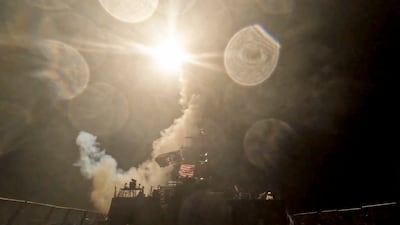

Oil prices rose by more than 4 per cent on Friday and posted a huge weekly gain as the US and Iran exchanged further attacks, disrupting the flow of oil through the Strait of Hormuz, a vital chokepoint for global crude supplies.
Brent, the benchmark for two thirds of the world's oil, jumped 4.59 per cent to settle at $88.10 a barrel. West Texas Intermediate, the gauge that tracks US crude, added 4.42 per cent to close at $82.44 a barrel.
Both benchmarks settled at more than $80 for the first time in a month. From last week's close, Brent and WTI soared by nearly 16 per cent, its strongest weekly gain since April.
“Brent rose back to $85 per barrel overnight, partially recouping Thursday’s losses, as US-Iran tensions remain elevated into the weekend,” said Nick Stadtmiller, chief economist and group head of research at Emirates NBD.
Soojin Kim, a research analyst at MUFG, said the "fresh US strikes on Iranian military targets, alongside attacks on vessels near Iran’s main export terminal and missile threats extending to Qatar and the Bab Al Mandeb shipping route, heightened fears of broader regional disruption".
Although some tankers have passed through the Strait of Hormuz, shipments "remain constrained, while tighter fuel markets in the US and Europe have pushed refining margins to record highs", she added.
The US and Iran have intensified their fighting in the past week, with Washington on Thursday launching attacks on Iranian coastal surveillance and air defence sites, military logistics infrastructure and maritime capabilities. It was the sixth consecutive night of strikes.
Iranian media reported that five bridges were hit and seven people were killed in the latest round of US strikes. Iran’s Mehr news agency said a US missile strike hit the Chabahar maritime control tower. It was the third time the US hit the facility this week, the agency added.
Iran, meanwhile, attacked US military infrastructure in Kuwait in response to US attacks. Bahrain and Qatar also reported attacks early on Friday and a child in Qatar was injured by shrapnel after an attack was intercepted.
The latest hostilities come despite the US and Iran signing an interim agreement last month to stop fighting for two months and continue negotiations for a lasting peace. The 60-day deal expires on August 16, with Rystad Energy predicting a “narrow, face-saving agreement” between the two countries.
“The narrow deal is still our base case, but it has become a considerably less comfortable one,” said Jorge Leon, senior vice president and head of geopolitical analysis at the Oslo-based group. “Both sides have strong economic incentives to avoid a complete breakdown and that is what keeps the narrow deal alive at 40 per cent.”
Washington wants oil prices to drop and to secure a diplomatic win before the midterm elections in November, while Tehran has a substantial economic package on the table, including access to frozen assets and export waivers, Mr Leon added.
Kpler said oil recovery in the Strait of Hormuz was losing momentum amid the renewed attacks. Confirmed crude and condensate transit through the waterway fell 62 per cent to 4.1 million barrels per day, while regional loadings dropped 47 per cent, the consultancy said in an update on Thursday.
"The conflict is increasingly affecting both crude and refined fuel markets, suggesting that the persistence and geographic spread of supply disruptions will be the key drive of oil prices in the near term," Ms Kim said.