
Blood and iron will decide the great questions of the day, as Otto von Bismarck said. Like all conflicts from the Bronze Age onwards, modern wars rely on metal. But the struggle in the Gulf has also bent the global metals industry out of shape. Reforging it will take time.
It may be the ticking time bomb under oil supplies that has driven the combatants to negotiations. We should soon see whether travel through the Strait of Hormuz is about to be restored. Nevertheless, the war has dented the world’s metals market in four ways. First, the blockage of essential inputs and the export of the finished metals, because of the near-total closure of the strait.
Second, the shutdown of production because of lack of energy. Aluminium smelters in particular are energy gluttons, and Qatar’s Qatalum had to be closed almost from the war’s beginning when gas production was interrupted.

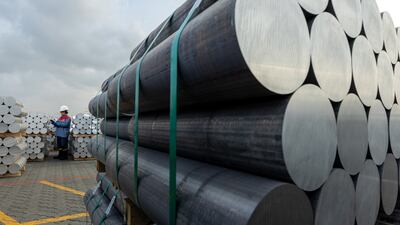
Third, physical damage to facilities. The Gulf makes 9 per cent of global primary aluminium, and the huge plants of Bahrain’s Alba and the UAE’s EGA were damaged by an Iranian attack in March. Aluminium plants are vulnerable to unplanned shutdowns, because the molten minerals solidify in the reduction pots, and will have to be chiselled out, perhaps taking a year to fix.

And US and Israeli air strikes severely hit Iran’s major steel factories in Ahvaz and Isfahan, with a repair timeline of six to 12 months.
Fourth, the loss of other crucial inputs to the global minerals industry. Mines are prodigious consumers of diesel, one of the fuels hardest-hit by the loss of Gulf petroleum.
Sulphur squeeze
An even more notable, yet overlooked, input is sulphur. The yellow element is a by-product of processing “sour” gas and oil, typical in the Gulf, which supplied nearly half of the world’s seaborne exports before the war. The UAE is the world’s biggest exporter of sulphur. This will be boosted further by new projects, notably Adnoc’s giant offshore Hail-Ghasha sour gas project.
Sulphuric acid is used to extract copper from oxide ores, which form about 20 per cent of copper deposits globally. This acid is also employed to dissolve uranium from underground deposits in Kazakhstan, to process nickel ores in Indonesia, to leach lithium from hard-rock ores, and to recycle nickel, cobalt, manganese and lithium from batteries.
Mining has to compete for scarce sulphur with other hungry users, notably fertiliser manufacturers. In April, China, the world’s largest exporter of sulphuric acid, banned exports to protect its domestic industries.
The GCC is overall a net importer of steel, so the hit to the global metals market primarily affects aluminium and, indirectly, copper, nickel and lithium. It so happens that these are the most crucial metals for key, fast-growing sectors: renewable energy, electric vehicles, batteries, long-distance electricity cables, data centres, and military technologies.
These are core parts of the Gulf’s economic diversification push. And in turn, many countries see faster deployment of renewables and battery vehicles as key to diminishing dependence on Gulf hydrocarbon supplies.
There is no danger of a long-term aluminium shortage: bauxite, the primary ore, is abundant, and new smelters are cropping up, notably in Indonesia and EGA’s greenfield plant in Oklahoma. But the market was forecast to be tight this year, without accounting for disruption from the Gulf conflict. The EU is eyeing new sanctions on Russia’s metals industry.
Copper's challenges
Copper is even more of a problem. It can to some extent be replaced by aluminium in wiring, but that now just shifts the shortage. World copper output dropped 3.4 per cent in the first quarter of this year, even before the impact of war-related disruption.
Ore grades have been declining for years, and the industry has struggled with political and labour issues at some key mines, and very long development timelines for new deposits. A serious accident in September has cut output at the Grasberg mine in Indonesia.
Proofing the world’s metal supply is a complex task. The industry had probably not thought of the Gulf as a key locus of risk before February. Chinese restrictions on exports, discontent in Chile or Congo, or Russian ravages of Ukraine’s steel industry, seemed more immediate threats.
Running the Gulf’s metals industries at full tilt will require ships that can bring in the bauxite or iron ore, and take out the aluminium or steel. So far, this has seemed less urgent than reviving the flow of oil and gas.
Land logistics
Even if current negotiations speedily resolve the months-long blockade, the imperative to create alternatives to the strait will remain. The shipping problem for metals and minerals can be partly solved by road and rail. The UAE’s Etihad Rail and its Hafeet Rail joint venture with Oman, and the Saudi Land-Bridge from Riyadh to Jeddah, will be increasingly important.

But these land-based routes are more expensive and capacity-constrained than sea. Constructing remaining segments, and connecting up other Gulf countries such as Kuwait and Qatar, will take years.
Sulphur is rarely produced on its own account, but miners and fertiliser-makers may seek primary sources. That would be sensible anyway in the long-term, if global oil and gas demand eventually diminishes.
The Gulf has become a locus of global aluminium smelting because of its cheap electricity. Low-cost renewables promise to extend that advantage. But a perception of insecurity, along with reshoring, domestic industrialisation, and national security policies, could pull future smelting towards the US, Canada, and African miners.
These challenges suggest three strategies for the Gulf’s metals industries. First, to improve logistics, to maintain operations despite the Gulf’s troubled waters. This includes new transport routes, stockpiling raw materials, and storing inventories overseas.
Second, to integrate more deeply into global supply chains, to make Gulf countries yet more indispensable. This can include going beyond aluminium, sulphur and steel, into the processing of more niche metals. Investment in international mines and smelters was already part of the strategies of Riyadh, Abu Dhabi, Doha, Manama and Muscat before the conflict. In the latest such move, a fund backed by Abu Dhabi’s ADQ might buy a stake in Eramat, a French miner of nickel and lithium.
And third, to support peace-building, and ideally the reconstruction of the region’s economy. The door is open for Iran, with major mineral resources of its own, if Tehran wants to follow a more positive path. Conflicts may be settled by iron, but future peace will be won by copper and sulphur, aluminium and lithium.
Robin M. Mills is chief executive of Qamar Energy, and author of The Myth of the Oil Crisis

