
Oil prices slid by more than 2 per cent on Friday but still posted their first weekly gain in three weeks as renewed fighting between the US and Iran raised concerns of continued supply disruption in the Middle East.
Brent, the benchmark for two thirds of the world's oil, settled 2.04 per cent lower at $93.09 a barrel. West Texas Intermediate, the gauge that tracks US crude, shed 2.69 per cent to close at $90.54 per barrel.
From last week's close, Brent and WTI, both of which had held steady in early trading, added nearly 2.16 per cent and 3.64 per cent, respectively.

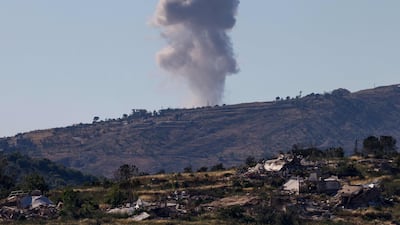
Crude ticked up early on Friday as the US-Iran deal remained elusive and Israel continued to attack Lebanon despite a truce, said Vandana Hari, chief executive of Singapore-based Vanda Insights.
The fighting between the US and Iran that started on February 28 has shaken global oil markets due to closure of the Strait of Hormuz as well as missile and drone strikes on Gulf energy infrastructure. More than 20 per cent of global supply passed through the strait before the war.
Oil prices spiked to nearly $120 per barrel in March and have remained volatile since then. While a ceasefire was announced by the US and Iran on April 8, talks to end the war have not yet reached a conclusion.
Despite the ceasefire announcement, the US and Iran exchanged strikes this week, which again pushed up oil prices. Iran attacked Kuwait International Airport on Wednesday, killing one person and injuring several others.
On Friday, oil loading at Oman's Mina Al Fahal terminal was briefly suspended following an explosion. Operations later resumed and are "proceeding normally", Oman's news agency said on X, citing Petroleum Development Oman. Oman exports 800,000 to 900,000 barrels per day of crude from the terminal, according to Reuters.
Meanwhile, Hezbollah also rejected a US-brokered ceasefire between Lebanon and Israel, describing it as “illusory”. The group's leader Naim Qassem pledged that Hezbollah would continue to respond to Israeli attacks until a comprehensive truce was achieved.
Analysts have raised their forecast for energy prices amid the continued conflict in the region.
“Brent crude, which averaged $69 per barrel in 2025, is forecast to average $81.5 per barrel in 2026,” BMI, a Fitch Solutions company, said in a research note.
It also increased the forecast for Dated Brent, which is expected to average $88 per barrel for the whole year under an extended conflict scenario from an average of $88 per barrel just for the second quarter.
European gas prices have also moved higher, with Dutch TTF front-month prices to average €38.5 ($44.74) per megawatt hour in 2026, up from €36.4 in 2025. Jet fuel is projected to average $107 per barrel globally in 2026. These trends are expected to boost the earnings of major oil companies globally, BMI added.