


Libya’s oil production has increased to 1.43 million barrels per day, the highest level in more than a decade, which could prove crucial as supplies of oil to global markets through the Strait of Hormuz remain disrupted by the Iran war.
The increase indicates “production stability” as the Opec member aims to boost output to two million bpd by 2030, Libya’s National Oil Corporation (NOC) said in a Facebook post on Sunday. Its output was 1.28 million bpd in February, Opec's monthly report showed.
The development came after a meeting between NOC chairman Masoud Suleman and Abdul Hamid Dbeibah, Prime Minister of Libya's Government of National Unity in Tripoli. The company also transferred February's oil sales revenue, worth $1 billion, completely to the public treasury for the first time in years, the post added.

Oil and gas flows to global markets has been severely affected as the Strait of Hormuz, a crucial waterway for the supply of 20 per cent of global crude consumption, is effectively shut as conflict escalates between Iran and the US and Israel. The disruption, along with Iran's attacks on energy infrastructure in the Gulf, pushed oil prices close to $120 per barrel last month, with crude continuing to trade higher owing to supply concerns.
Libya has a direct pipeline connecting the western part of the country to Italy to transport natural gas to European markets, as well as oil terminals for exports using ships. Bloomberg reported last month that Egypt is looking to import at least one million barrels a month of Libyan oil to compensate for a halt in Kuwaiti crude supplies because of the Hormuz blockade.
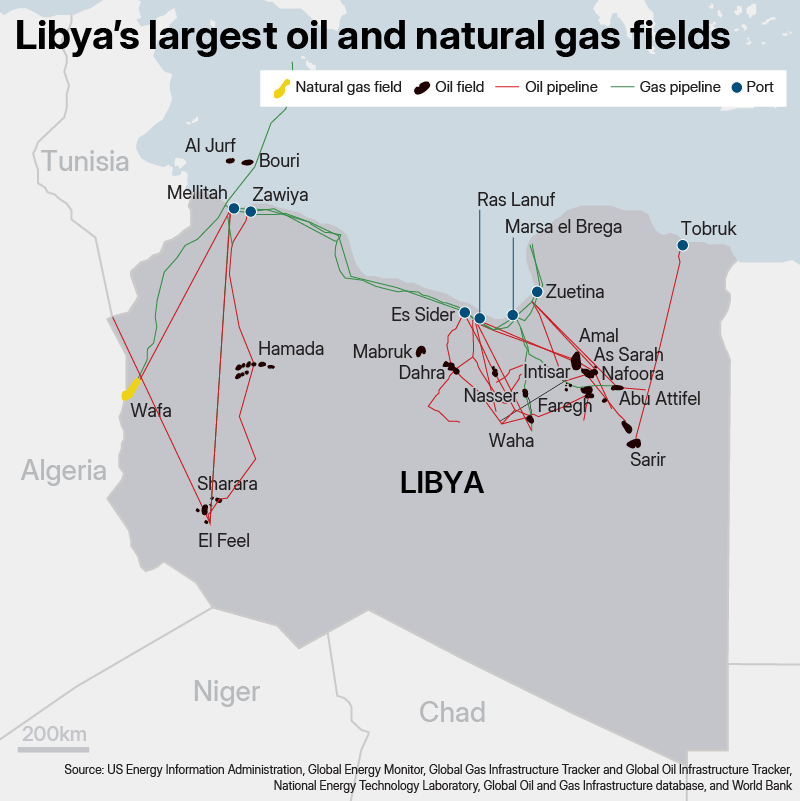
Libya has some of the cheapest, largely sweet, oil in northern Africa. But much of it has remained offline since a civil war erupted between rival factions after the downfall of Muammar Qaddafi in 2011. The country is trying to revive its hydrocarbons sector and awarded oil and gas exploration blocks to foreign energy companies, including Chevron, Eni, QatarEnergy and Repsol.
State-owned NOC in February named winners of its first bidding round since 2007, allocating concessions across the onshore Sirte and Murzuq basins, as well as offshore gasfields in the Mediterranean. Libya also signed a 25-year oil development agreement worth more than $20 billion with France’s TotalEnergies and US company ConocoPhillips in January.
Libya's economy is beset with problems, including the lack of a unified government to make policy decisions, as well as high-level corruption and unregulated spending outside official channels. Oil and gas account for nearly 95 per cent of exports and government revenue, with no strategy in place to reduce dependence on the sector.

