


Live updates: Follow the latest on Donald Trump’s inauguration
US President Donald Trump on Monday declared a “national energy emergency” as he took early steps to reverse his predecessor's climate legacy, which included withdrawing from the Paris Climate Accords.
The energy emergency declaration was signed to increase domestic oil and gas production in a bid to lower costs for consumers, and is part of a broader “America First” agenda by the newly inaugurated president.
“We will be a rich nation again, and it is that liquid gold under our feet that will help to do it,” Mr Trump said during his inaugural address inside the Capitol rotunda.
He said the inflationary surge in 2022 was caused by rising energy costs and “massive overspending”.
“That’s why today I will also declare a national energy emergency. We will drill, baby, drill,” Mr Trump said.
The declaration was part of a host of executive orders signed by the President on Monday, many of which were designed to reverse parts of former president Joe Biden's legacy.
-
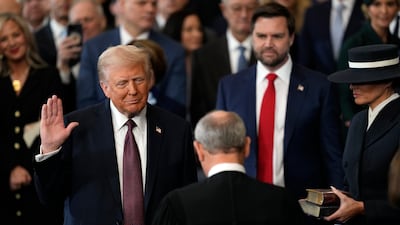
Donald Trump is sworn in as the 47th president of the United States by Chief Justice John Roberts in the Rotunda of the US Capitol in Washington. AP -
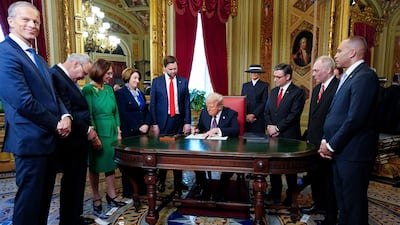
Mr Trump takes part in a signing ceremony in the President's Room at the US Capitol. AP -
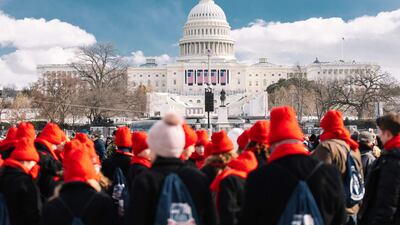
Pro-Trump supporters gather at the National Mall in Washington. AFP -
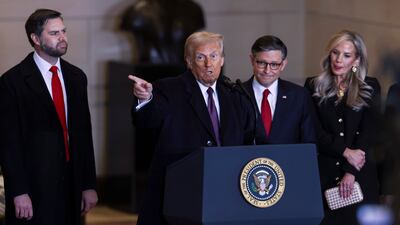
Mr Trump speaks from Emancipation Hall at the US Capitol. AP -
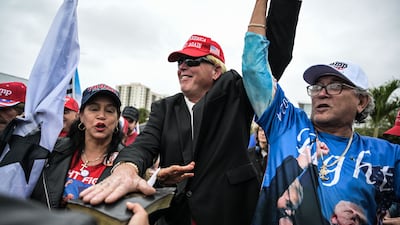
Supporters of Mr Trump celebrate in Miami, Florida. AFP -
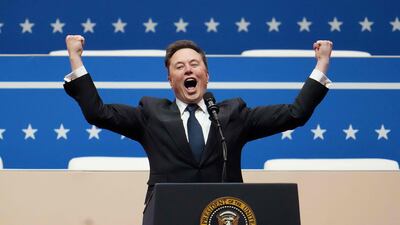
Elon Musk arrives to speak during an inauguration event at Capital One Arena in Washington. AFP -
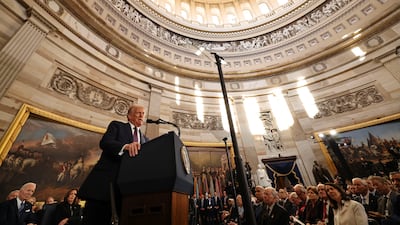
Mr Trump speaks in the Rotunda as his second presidency begins in Washington. AP -
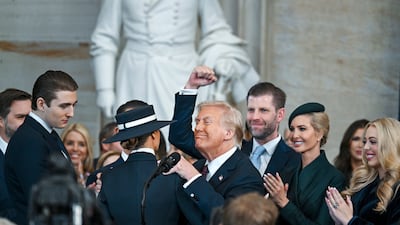
Mr Trump with his family in the Rotunda immediately after taking the oath of office. AP -
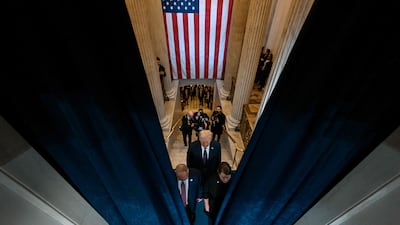
Mr Trump enters the Rotunda to a fanfare before his inauguration as the 47th President of the US. AFP -
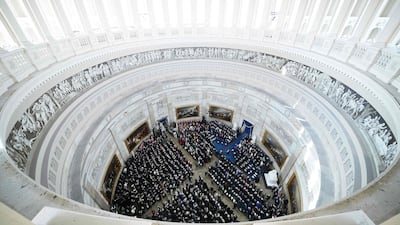
Guests attend the inauguration of Donald Trump at the US Capitol. AFP -
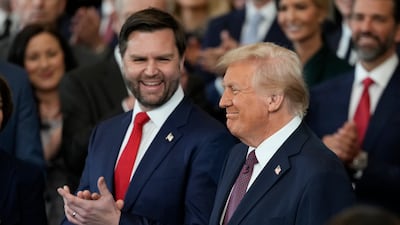
Mr Trump and vice president-elect JD Vance arrive in the Rotunda of the US Capitol in Washington. AP -
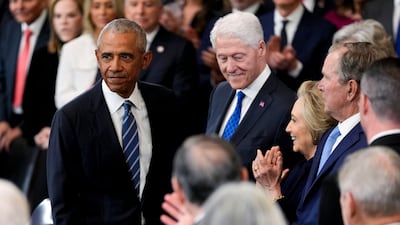
Former US president Barack Obama in the Rotunda. Bloomberg -
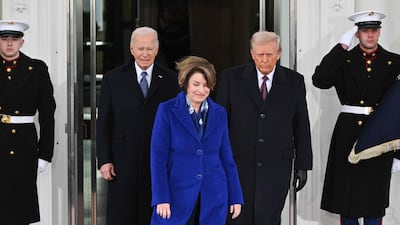
US President Joe Biden, Senator Amy Klobuchar, Democrat from Minnesota, and Mr Trump leave the White House for the US Capitol in Washington. AFP -
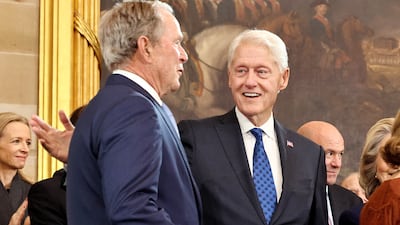
Former US presidents George W Bush, left, and Bill Clinton arrive. Reuters -
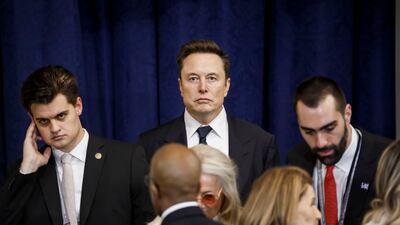
Mr Musk, centre, arrives at the US Capitol in Washington. EPA -
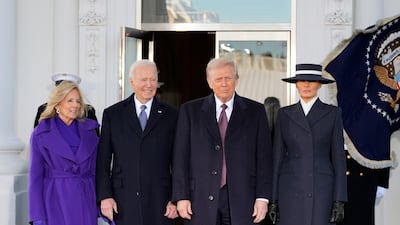
Mr Trump and wife Melania are greeted by President Joe Biden and his wife Jill on their arrival at the White House. AP -
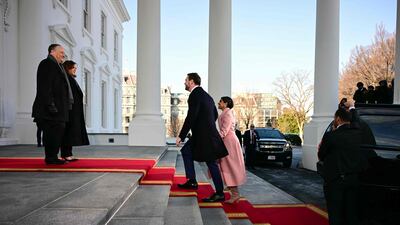
Vice President Kamala Harris and her husband Douglas Emhoff greet vice president-elect JD Vance and his wife Usha Vance as they arrive at the White House. AFP -
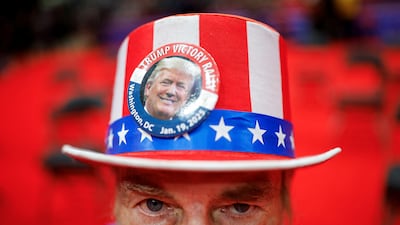
A Trump supporter poses for a picture inside Capital One arena. Reuters -
President-elect Donald Trump arrives for mass at St John's Church in Washington before the 60th presidential inauguration. Bloomberg -
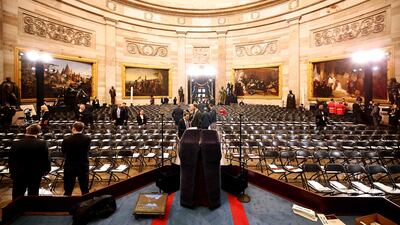
Staff prepare for the inauguration in the US Capitol. AFP -
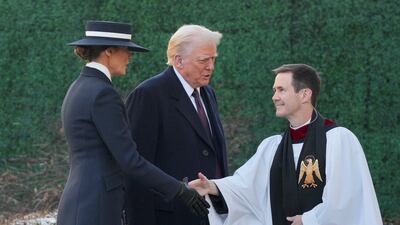
Mr Trump and his wife Melania arrive for a service at St John's Episcopal Church. Reuters -
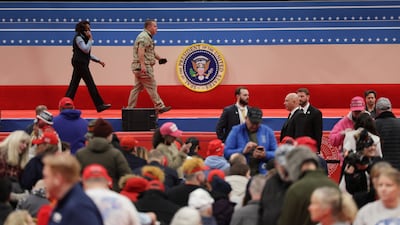
Guests begin to arrive for the relocated parade at the Capitol One Arena in Washington. EPA -
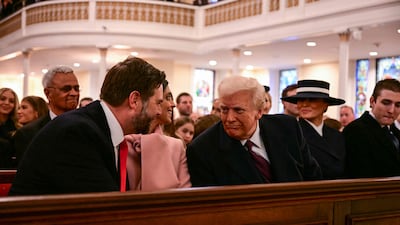
Mr Trump speaks with vice president-elect JD Vance during a church service at St John's. AFP -
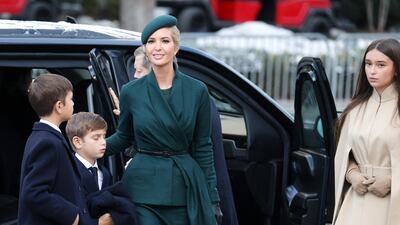
Ivanka Trump, daughter of Mr Trump, arrives with her family for the church service. AFP -
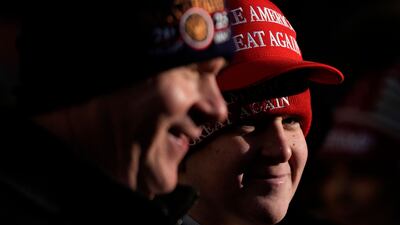
Supporters from Arkansas make their way through the line at Capital One Arena. AFP


“America will be a manufacturing nation once again, and we have something that no other manufacturing nation will ever have: the largest amount of oil and gas of any country on Earth, and we are going to use it,” he said.
The US became the world's largest crude oil producer during Mr Trump's first term. Mr Biden further exceeded the gap between the US and Russia and Saudi Arabia during his term in office. The US is also the world's largest producer and exporter of liquefied natural gas.
Brent crude futures closed 1.08 per cent lower at $79.92 on Monday, while US West Texas Intermediate futures fell 1.29 per cent to $76.39.
Mr Trump will also “unleash American energy by ending Biden’s policies of climate extremism, streamlining permitting, and reviewing for revocation all regulations that impose undue burdens on energy production and use, including mining and processing of non-fuel minerals”, according to a list of priorities released by the White House.
Inside the Oval Office, the President also signed orders aimed to promote oil and gas projects in Alaska that reverse Biden restrictions.
The orders run in stark contrast to warnings from the International Energy Agency, however, which says that there must be no new oil and gas projects to achieve net-zero emissions by 2050.
Mr Trump also repeated his pledge to fill the strategic petroleum reserve, another promise he made on the campaign trail.
“We will bring prices down, fill our strategic reserves up again, right to the top, and export American energy all over the world,” he said.
Mr Biden tapped into the strategic reserve in 2022 to keep oil prices steady amid Russia's invasion of Ukraine, but caused the nation's reserves to drop to their lowest levels in decades. Mr Trump has argued that its current threat poses national security risks.
Analysts have said that refilling the reserves would come at an enormous cost and requires congressional approval to restore it. Mr Trump tapped into the nation's strategic reserve in 2019 after an attack on critical production fields in Saudi Arabia.
US to pull out of Paris, again
He also withdrew the US from the Paris Climate Agreement, a 2015 pact aimed to limit global warming to 1.5°C above pre-industrial levels.
Mr Trump initially withdrew the US from the agreement during his first time, but that decision was immediately reversed by Mr Biden. Hoping to shore up his climate legacy before leaving office, Mr Biden pledged to cut US greenhouse gas emissions by more than 60 per cent by 2035.
Mr Trump's decision to pull the US out of Paris now means that America now joins Iran, Libya and Yemen as the only nations not to be in the agreement.
The US is the second-largest greenhouse gas emitter in the world behind China.
Rolling back EV rules
Mr Trump also said he would revoke a what he called the electric vehicle mandate. The Environmental Protection Agency last year issued a new set of rules requiring car makers to reduce emissions.
The rule was considered to be critical to Mr Biden's efforts to combat climate change and shift the US towards making electric vehicles
EV and hybrid vehicle sales accounted for 20 per cent of all car sales in the US for the first time last year, according to auto data firm Motor Intelligence.

