
Mohsen Paknezhad, a former official in the state-run National Iranian Oil Company, has been nominated as Iran's new oil minister.
Mr Paknezhad’s nomination comes at a challenging time for Iran, marked by heightened regional tensions that pose a threat to its growing oil sales, along with international sanctions that have hindered the country’s ability to build new infrastructure and tap global financial markets.
President Masoud Pezeshkian, who was elected last month, submitted his proposed cabinet to parliament on Sunday. The list of nominated ministers must be approved by lawmakers before they can assume their roles.
Mr Paknezhad served as an adviser to former oil minister Bijan Namdar Zanganeh during Hassan Rouhani's presidency.
He was also acting managing director of the National Iranian Oil Company from November 2018 until the start of the following year. From 2000 to 2007, he was a board member at the Iranian Central Oil Fields Company.
Iran's Industries and Mines Commission has begun reviewing the records, plans and previous performance of Mr Paknezhad, the oil ministry's news agency Shana reported on Wednesday.
The commission has discussed Mr Paknezhad’s plans, which include increasing production from shared oil and gasfields, improving oil refineries and petrochemical plants, and capturing gas flares. He has also called for measures to support the oil industry's human capital.
Mr Paknezhad is a “pragmatic” choice to reshape the Iranian oil industry given his technical background, Francesco Sassi, research fellow at Ricerche Industriali Energetiche in Bologna, told The National.
“The only way to increase the resilience of [the oil industry] in the face of American sanctions is the consistent implementation of several domestic measures and reforms to improve the efficiency of the industry and, at the same time, co-operate with foreign companies when this is possible,” Mr Sassi said.
Iran holds funeral procession for Ismail Haniyeh – in pictures
-
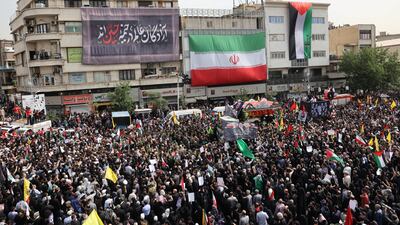
Iranians gather for the funeral procession of assassinated Hamas chief, Ismail Haniyeh in Tehran. Reuters -

Iran's supreme leader Ayatollah Ali Khamenei leads funeral prayers for Mr Haniyeh. Photo: IRNA -
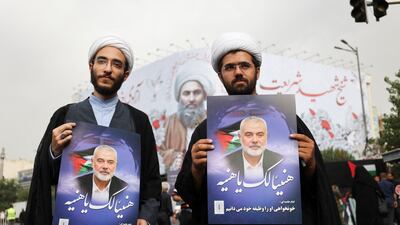
Iranians hold posters of Mr Haniyeh during his funeral procession, in Tehran. Reuters -
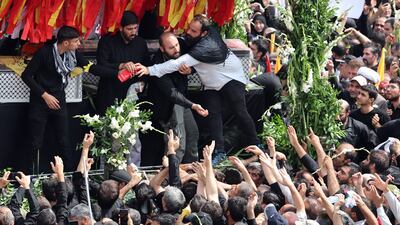
People gather around a lorry carrying the coffins of Mr Haniyeh and his bodyguard, in Tehran. EPA -
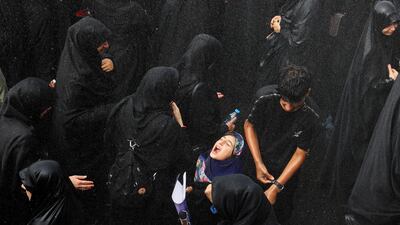
A woman reacts during the funeral of Mr Haniyeh in Tehran. Reuters


Iran has managed to endure US sanctions imposed in 2018 and aimed at crippling its oil exports – a major source of revenue for the country.
Since President Joe Biden assumed office in 2021, sanctions enforcement has relaxed, leading China to become a significant buyer of Iranian oil, often at discounted prices.
Most of Iran’s crude is exported to China through a network of dark fleet tankers that has grown over the past five years as both countries seek to bypass international sanctions.
Iran was the second-largest source of crude supply growth last year after the US, with production reaching about 3.4 million barrels per day and exports at about 1.5 million bpd.
Tehran plans to increase its crude production to 4 million bpd by 2025 and boost gas output to 1.3 billion cubic metres per day within five years, up from the current 1.07 billion cubic metres per day.
“A broader conflict with Israel could elevate energy as a tool of statecraft once again in the Middle East and simply jeopardise whatever Paknezhad plans for a reform,” Mr Sassi said.
The likelihood of a full-scale regional conflict has increased following the recent assassinations of Hamas leader Ismail Haniyeh in Tehran and senior Hezbollah military commander Fouad Shukr in Beirut.
Iran has threatened “harsh punishment” for Israel, which Tehran has blamed for the Hamas leader's killing.
“At present, main challenges will be to deal with market pressures and risks related to the expected war with Israel,” said Cyril Widdershoven, analyst at Hilltower Resource Advisors.
“Any actions will be scaring clients and investors,” he told The National
Tehran has repeatedly threatened to close the Strait of Hormuz in response to international pressure.
About 30 per cent of global oil trade passes through the maritime route, with 70 per cent going to Asia, according to the International Energy Agency.
Sanctions relief
Mr Pezeshkian was sworn in as Iran’s ninth president last month, succeeding Ebrahim Raisi who died in a helicopter crash in May.
Mr Pezeshkian, who was Iran’s health minister from 1997 to 2005, aims to prioritise sanctions relief for Iran and its struggling economy, and has discussed mending some ties with the West.
However, the supreme leader, Ayatollah Ali Khamenei, holds the ultimate authority in the country, overseeing all state matters, including foreign and nuclear policy.
In 2015, Iran reached an agreement with the US and five other nations that resulted in the removal of numerous sanctions in return for stringent restrictions on its nuclear programme.
In 2018, the Trump administration exited the Joint Comprehensive Plan of Action as part of its “maximum pressure” strategy aimed at economically and politically isolating Iran.
Opec membership
Iran is a member of the Opec group of oil-producing countries, which together account for about 27 per cent of the world's crude production.
Since 2016, Opec has been working with non-Opec countries, led by Russia, to regulate global production.
Iran, Libya and Venezuela have been granted exemptions from Opec+ production targets in recent years due to the challenges faced by their respective oil industries.
Opec+ has total production curbs of 5.86 million bpd in place, including a reduction of 2 million bpd agreed in 2022, and voluntary cuts of 1.66 million bpd, announced in April last year and extended to December 2024.
However, there are growing concerns that Iran's rising output could undermine the effectiveness of Opec+ output curbs.
Last year, Opec secretary general Haitham Al Ghais said the group would welcome Iran’s full return to the oil market when sanctions are lifted.
“We believe that Iran is a responsible player amongst its family members, the countries in the Opec group,” Shana quoted him as saying. “I’m sure there will be good work together, in synchronisation, to ensure that the market will remain balanced as Opec has continued to do over the past many years.”

