

The EU, currently facing an energy crisis, has become a global leader in technology patents related to hydrogen, a report by the European Patent Office and the International Energy Agency has said.
Hydrogen is considered to be a low-carbon alternative to oil and natural gas.
Global patenting of the fuel is led by the EU and Japan, which accounted for 28 per cent and 24 per cent, respectively, of all international patent families from 2011 to 2020, the report said.
Germany leads Europe with 11 per cent of the global total, followed by France (6 per cent) and the Netherlands (3 per cent).
“Hydrogen from low-emissions sources can play an important role in clean energy transitions, with [the] potential to replace fossil fuels in industries where few clean alternatives exist, like long-haul transport and fertiliser production,” said IEA executive director Fatih Birol.
“This study shows that innovators are responding to the need for competitive hydrogen supply chains, but also identifies areas — particularly among end users — where more effort is required.
“We will continue to help governments spur innovation for secure, resilient and sustainable clean energy technologies.”
The US, with 20 per cent of all hydrogen-related patents, is the only major innovation centre where international hydrogen patent applications declined over the past decade.
While international patent activity in hydrogen technology remained “modest” in South Korea and China, it is on the rise, the report said.
The study revealed that the UK, Switzerland and Canada are also generating “significant volumes” of hydrogen patents.
Hydrogen, which can be produced from both renewable energy and natural gas, is expected to play a key role in the coming years as economies and industries transition to a low-carbon world to mitigate climate change.
The fuel comes in various forms, including blue, green and grey. Blue and grey hydrogen are produced from natural gas while green is derived from splitting water by electrolysis.
Global hydrogen demand reached 94 metric tonnes in 2021, a 5 per cent increase on demand in 2020, driven mainly by a recovery of activity in the chemical sector and refining, according to an IEA report.
Low-carbon ammonia, which is made from nitrogen and clean hydrogen, is the most promising hydrogen carrier and potential clean fuel for a wide range of applications, including transport, power generation and fertiliser production.
The IEA and EPO report found that low-emission innovation generated more than twice the number of international patents across the hydrogen value chain than established technology.
“Harnessing the potential of hydrogen is a key part of Europe’s strategy to achieve climate neutrality by 2050,” said EPO president Antonio Campinos.
“But if hydrogen is to play a major role in reducing carbon dioxide emissions, innovation is urgently needed across a range of technologies.”
Start-ups with patents attracted more than half of the $10 billion in venture capital funds invested in hydrogen companies from 2011 to 2020, the report said.
More than 80 per cent of late-stage investment in hydrogen start-ups went to companies that had already filed a patent application in areas such as electrolysis, fuel cells or low-emission methods for producing hydrogen from gas, the study said.
-
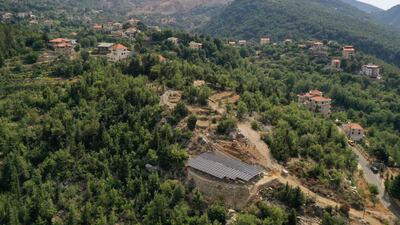
An aerial view of the solar panels installed in the village of Toula in northern Lebanon. All photos by AFP -
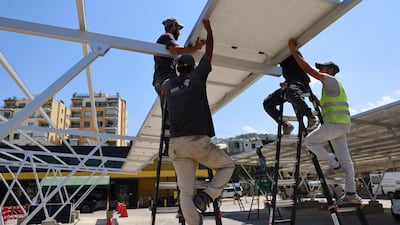
Workers instal solar panels as shades for vehicles in the car park of a shopping mall in the city of Byblos in northern Lebanon. -
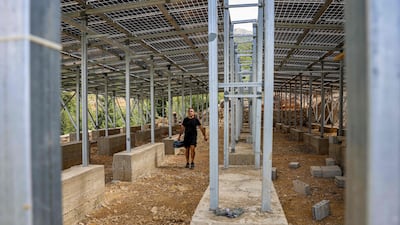
A technician works on the solar panel system installed for the village of Toula in northern Lebanon. -
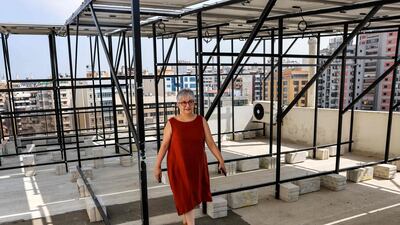
Lebanese homemaker Zeina Sayegh walks beneath the solar panels she installed atop her apartment building in Lebanon's capital Beirut. -
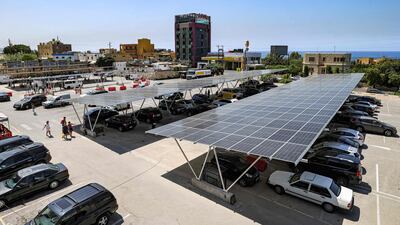
Solar panels cover a shopping mall's car park in the city of Byblos in northern Lebanon. -
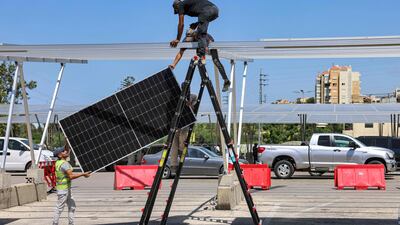
Workers instal solar panels over parking spaces at a shopping mall in Byblos, Lebanon. -
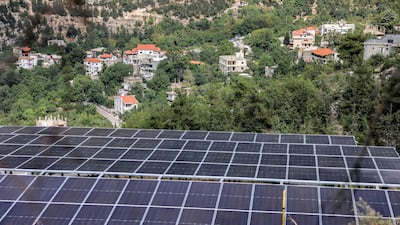
The solar panel system installed on a hillside above the village of Toula in northern Lebanon. -

Solar panels cover the roof of a shopping mall in Byblos, Lebanon.



