


Petrochemicals company Borouge awarded contracts for the development of the fourth unit of a polyolefin manufacturing complex in the UAE's downstream centre of Ruwais.
The engineering, procurement and construction contracts were awarded to Abu Dhabi’s Al Asab General Transport and Contracting, French construction company Technip Energies and Italy-based Tecnimont, Borouge said on Sunday.
The move “underscores Borouge’s drive to unlock opportunities in polyolefin manufacturing, enable industrial growth and maximise the value of every barrel produced in the emirate of Abu Dhabi”, Borouge said.
Borouge is a joint venture between Adnoc and Austrian chemicals producer Borealis. Last month, the two companies signed an agreement to invest $6.2 billion to expand the Ruwais complex and build a fourth unit, Borouge 4.
With this expansion, Borouge will become the world’s largest single-site polyolefin complex. It will also enable the next phase of growth at the Ruwais Industrial Complex by supplying feedstock to the Ta’ziz Industrial Chemicals Zone.
"Borouge 4 is a key contributor to advancing the UAE’s ambitions for economic diversification, helping boost exports to customers globally,” said chief executive Hazeem Al Suwaidi.
The expansion will further strengthen Borouge’s international presence and will help in generating In-Country Value. About 60 per cent of all engineering, procurement, commissioning and construction activities will be managed by local companies and local materials will be used, the company said.
Borouge operates a polythene unit with a capacity of 450,000 tonnes per annum. The unit was commissioned in 2001.
Borouge 2 and 3, commissioned in 2010 and 2014, raised the capacity to 2 million tonnes and 4.5 million tonnes of polyethylene and polypropylene per annum, respectively.
-
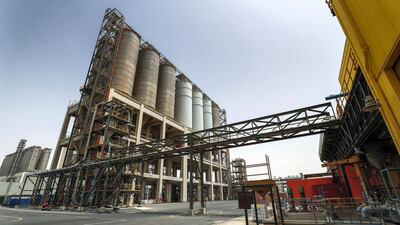
The Ruwais Industrial Complex is located 250 kilometres west of the UAE's capital, Abu Dhabi. Victor Besa / The National -
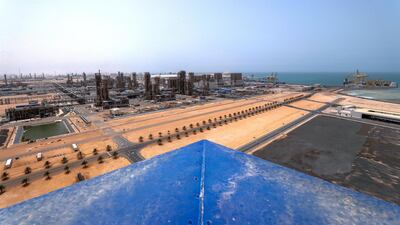
Adnoc plans to build a large-scale 'blue' ammonia plant at the complex. Victor Besa / The National -
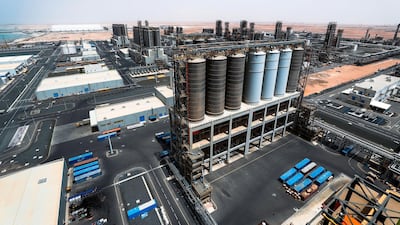
The ammonia plant will be located at the Ta'zizz industrial and chemicals hub. Victor Besa / The National -

The birthing area and container terminal in place will allow materials to be easily transported. Victor Besa / The National -
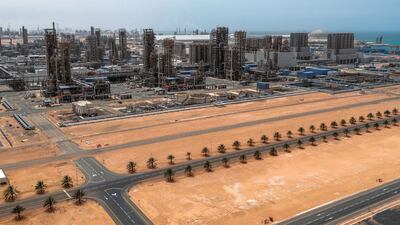
The view from the Borouge 3 Tower shows the size of the complex. Victor Besa / The National -

The area will help to grow the UAE's manufacturing and industrial base. Victor Besa / The National -
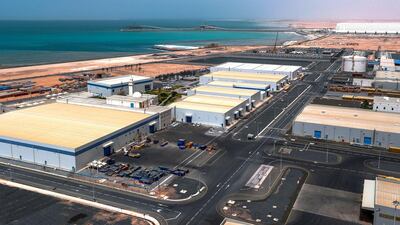
Adnoc and CNPC have agreed to explore downstream and upstream partnership opportunities. Victor Besa / The National -
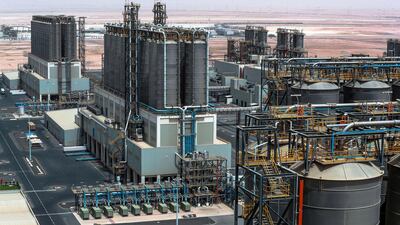
The facility will have the capacity to produce 1,000 kilotonnes of ammonia per year, Adnoc says. Victor Besa / The National -
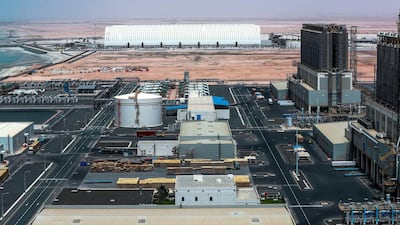
Blue ammonia is a more easily transportable fuel source made from blue hydrogen. Victor Besa / The National -
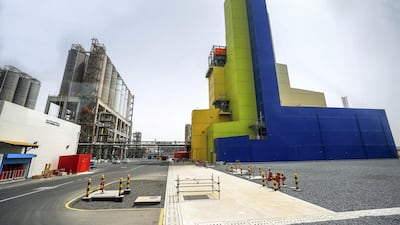
The UAE is drawing up a comprehensive road map to position itself as an exporter of hydrogen. Victor Besa / The National -
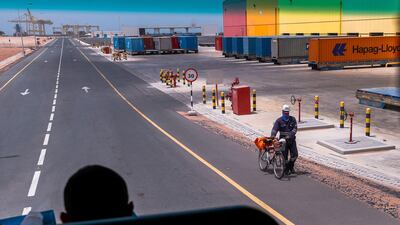
Adnoc already produces 300,000 tonnes of hydrogen annually and plans to expand this to more than 500,000 tonnes. Victor Besa / The National -
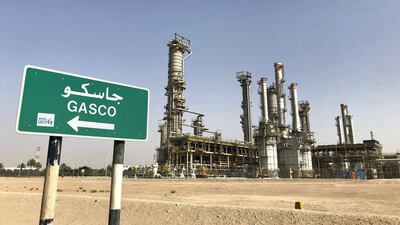
A sign displays the old name of Adnoc’s gas processing plant. Looking ahead, the company plans to achieve gas self-sufficiency by 2025. Jennifer Gnana / The National


With the final unit, overall polyolefin production will reach 6.4 million tonnes.
The company also plans to install a carbon capture unit to offset emissions by 80 per cent. The unit will be operational in time for the start-up of Borouge 4.
Borealis is the eighth-largest producer of polyethylene and polypropylene and has oil and gas company OMV as a significant minority shareholder.
The increased output will capture the growing demand for polyolefins in the Middle East, Africa and Asia, according to the company.
Abu Dhabi plans to triple its petrochemical production capacity from 4.5 million tonnes – currently produced entirely by the Borouge plant in Ruwais – by 2025.

