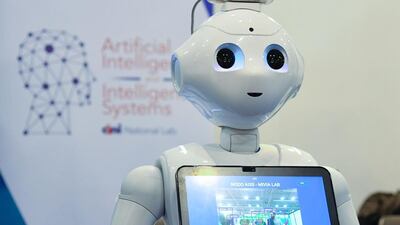
The UK's manufacturing sector has just 89 robots per 10,000 workers, about a tenth of the ratio in Singapore and the lowest of any major economy, according to the International Federation of Robotics. AFP
The UK's manufacturing sector has just 89 robots per 10,000 workers, about a tenth of the ratio in Singapore and the lowest of any major economy, according to the International Federation of Robotics.

Britain's technological drive slowed by Covid-19 and Brexit wrangling


  • English
  • Arabic

In the country that pioneered the world’s first industrial revolution in the 18th century, its latest one is looking very much on hold.

The global shift toward robotics and artificial intelligence, which is prevalent across advanced economies, is currently in a go-slow phase in the UK – where both Covid-19 and Brexit have hampered progress.

That threatens to harm Britain’s competitiveness against rival economies which are already retooling more aggressively to increase productivity. It could also mean greater long-term pain in the UK labour market, delaying the inevitable adjustment for workers who need to retrain as jobs in industries from manufacturing to retail become obsolete.

“Eventually, businesses will have to automate because it is just cheaper and better – better for employees as well,” said Tera Allas, director of research and economics at McKinsey. “In sectors that are competitive, either we automate them and we continue to be competitive, or someone else automates them and we ship in those goods from some other country.”

Britain has long been a somewhat slow mover in the so-called Fourth Industrial Revolution harnessing the potential of robots and artificial intelligence. That was the conclusion of a report by lawmakers last year, which called on the government to develop a strategy to accelerate that shift.

In manufacturing, for example, the UK has just 89 robots per 10,000 workers, compared to over 900 in Singapore, according to the International Federation of Robotics. That’s the lowest level of any major economy.

One reason for that is subdued investment provoked by Brexit uncertainty and the redefining of Britain’s trading relationship with the European Union.

The transition in place when the UK did finally leave the EU in January provided some encouragement – with spending intentions on plants and machinery rising to a two-year high, according to a Confederation of British Industry survey. Robot orders reached the highest since 2012, another study showed.

But then Covid-19 struck. Business investment plunged more than 30 per cent as a nationwide lockdown shuttered firms, kept employees out of workplaces and broke international supply chains.

Since then, the virus has created a new incentive for businesses to shift away from human employment and find more reliable workers and processes that can’t succumb to illness.

But that has yet to translate into new orders for Brian Palmer, the chief executive of Tharsus. His company creates and commercialises robots for clients such as online grocery giant Ocado Group and jet engine maker Rolls Royce.

“People are still trying to figure out what this new normal looks like,” he said. “There’s more interest, but is there investment and action? Not yet.”

People are still trying to figure out what this new normal looks like

Such news might come as a slight relief for millions of UK employees already facing the threat of layoffs as government wage support winds down. The advent of automation and robotics has long been a spectre hanging over labour markets that could displace as much as 50 per cent of the global workforce, Bank of England chief economist Andy Haldane said in 2018.

That respite may not last forever, though. In a survey of European business leaders by EY, more than 80 per cent said the shift to automation technology will probably accelerate because of the pandemic.

The UK government must take action to spur a technological revolution that will create a "faster and smarter" economy and equip companies for the post-pandemic world, Mr Haldane wrote in a joint paper with former John Lewis partnership chairman Charlie Mayfield for the The Mail on Sunday.

“It is now just much more expensive to employ people because you have to worry about social distancing, you have to worry about safety equipment, you have to worry about testing and tracing,” said McKinsey’s Ms Allas. “Covid itself has massively changed the playing field between capital and labour.”

Guildhawk, a company which provides translation and content management systems for companies like KPMG and Hitachi, is confident that Britain’s Fourth Industrial Revolution won’t stay on hold for long. The company has unveiled two new products since the coronavirus struck – including one which automates the process of checking and correcting large volumes of translated text.

“Now we can see what technology can do for us, people are really pushing forward,” said founder Jurga Zilinskiene. “Instead of looking at tech as some kind of monster to take away your job, now the tech is the hero.”

Still, the risk if businesses don’t respond to the shifting landscape is that the UK will lag further behind peers when it comes to sowing the seeds of future growth by adopting technology to boost poor productivity.

That could not only delay the labour market’s adjustment to the new reality, but also curtail work prospects for future generations of employees.

“The UK have missed the opportunities to invest in automation over a long time,” said Susanne Bieller, general secretary of the IFR. “If you don’t use robots, why would you create the skills around them?”


The%C2%A0specs%20
%3Cp%3E%3Cstrong%3EEngine%3A%3C%2Fstrong%3E%204-cylinder%202-litre%3Cbr%3E%3Cstrong%3ETransmission%3A%20%3C%2Fstrong%3E9-speed%20automatic%3Cbr%3E%3Cstrong%3EPower%3A%20%3C%2Fstrong%3E252%20brake%20horsepower%3Cbr%3E%3Cstrong%3ETorque%3A%20%3C%2Fstrong%3E352Nm%3Cbr%3E%3Cstrong%3EPrice%3A%20%3C%2Fstrong%3Efrom%20Dh146%2C700%3Cbr%3E%3Cstrong%3EOn%20sale%3A%20%3C%2Fstrong%3Enow%3C%2Fp%3E%0A
COMPANY%20PROFILE%20
%3Cp%3EName%3A%20DarDoc%3Cbr%3EBased%3A%20Abu%20Dhabi%3Cbr%3EFounders%3A%20Samer%20Masri%2C%20Keswin%20Suresh%3Cbr%3ESector%3A%20HealthTech%3Cbr%3ETotal%20funding%3A%20%24800%2C000%3Cbr%3EInvestors%3A%20Flat6Labs%2C%20angel%20investors%20%2B%20Incubated%20by%20Hub71%2C%20Abu%20Dhabi's%20Department%20of%20Health%3Cbr%3ENumber%20of%20employees%3A%2010%3C%2Fp%3E%0A
Five famous companies founded by teens

There are numerous success stories of teen businesses that were created in college dorm rooms and other modest circumstances. Below are some of the most recognisable names in the industry:

  1. Facebook: Mark Zuckerberg and his friends started Facebook when he was a 19-year-old Harvard undergraduate. 
  2. Dell: When Michael Dell was an undergraduate student at Texas University in 1984, he started upgrading computers for profit. He starting working full-time on his business when he was 19. Eventually, his company became the Dell Computer Corporation and then Dell Inc. 
  3. Subway: Fred DeLuca opened the first Subway restaurant when he was 17. In 1965, Mr DeLuca needed extra money for college, so he decided to open his own business. Peter Buck, a family friend, lent him $1,000 and together, they opened Pete’s Super Submarines. A few years later, the company was rebranded and called Subway. 
  4. Mashable: In 2005, Pete Cashmore created Mashable in Scotland when he was a teenager. The site was then a technology blog. Over the next few decades, Mr Cashmore has turned Mashable into a global media company.
  5. Oculus VR: Palmer Luckey founded Oculus VR in June 2012, when he was 19. In August that year, Oculus launched its Kickstarter campaign and raised more than $1 million in three days. Facebook bought Oculus for $2 billion two years later.
Company%20Profile
%3Cp%3E%3Cstrong%3ECompany%20name%3A%3C%2Fstrong%3E%20Cargoz%3Cbr%3E%3Cstrong%3EDate%20started%3A%3C%2Fstrong%3E%20January%202022%3Cbr%3E%3Cstrong%3EFounders%3A%3C%2Fstrong%3E%20Premlal%20Pullisserry%20and%20Lijo%20Antony%3Cbr%3E%3Cstrong%3EBased%3A%3C%2Fstrong%3E%20Dubai%3Cbr%3E%3Cstrong%3ENumber%20of%20staff%3A%3C%2Fstrong%3E%2030%3Cbr%3E%3Cstrong%3EInvestment%20stage%3A%3C%2Fstrong%3E%20Seed%3C%2Fp%3E%0A
ROUTE%20TO%20TITLE
%3Cp%3E%3Cstrong%3ERound%201%3A%3C%2Fstrong%3E%20Beat%20Leolia%20Jeanjean%206-1%2C%206-2%3Cbr%3E%3Cstrong%3ERound%202%3A%20%3C%2Fstrong%3EBeat%20Naomi%20Osaka%207-6%2C%201-6%2C%207-5%3Cbr%3E%3Cstrong%3ERound%203%3A%20%3C%2Fstrong%3EBeat%20Marie%20Bouzkova%206-4%2C%206-2%3Cbr%3E%3Cstrong%3ERound%204%3A%3C%2Fstrong%3E%20Beat%20Anastasia%20Potapova%206-0%2C%206-0%3Cbr%3E%3Cstrong%3EQuarter-final%3A%20%3C%2Fstrong%3EBeat%20Marketa%20Vondrousova%206-0%2C%206-2%3Cbr%3E%3Cstrong%3ESemi-final%3A%20%3C%2Fstrong%3EBeat%20Coco%20Gauff%206-2%2C%206-4%3Cbr%3E%3Cstrong%3EFinal%3A%3C%2Fstrong%3E%20Beat%20Jasmine%20Paolini%206-2%2C%206-2%3C%2Fp%3E%0A
Jetour T1 specs

Engine: 2-litre turbocharged

Power: 254hp

Torque: 390Nm

Price: From Dh126,000

Available: Now

Company profile

Company name: Dharma

Date started: 2018

Founders: Charaf El Mansouri, Nisma Benani, Leah Howe

Based: Abu Dhabi

Sector: TravelTech

Funding stage: Pre-series A 

Investors: Convivialite Ventures, BY Partners, Shorooq Partners, L& Ventures, Flat6Labs

Who's who in Yemen conflict

Houthis: Iran-backed rebels who occupy Sanaa and run unrecognised government

Yemeni government: Exiled government in Aden led by eight-member Presidential Leadership Council

Southern Transitional Council: Faction in Yemeni government that seeks autonomy for the south

Habrish 'rebels': Tribal-backed forces feuding with STC over control of oil in government territory

COMPANY%20PROFILE
%3Cp%3E%3Cstrong%3EName%3A%20%3C%2Fstrong%3ESmartCrowd%0D%3Cbr%3E%3Cstrong%3EStarted%3A%20%3C%2Fstrong%3E2018%0D%3Cbr%3E%3Cstrong%3EFounder%3A%20%3C%2Fstrong%3ESiddiq%20Farid%20and%20Musfique%20Ahmed%0D%3Cbr%3E%3Cstrong%3EBased%3A%20%3C%2Fstrong%3EDubai%0D%3Cbr%3E%3Cstrong%3ESector%3A%20%3C%2Fstrong%3EFinTech%20%2F%20PropTech%0D%3Cbr%3E%3Cstrong%3EInitial%20investment%3A%20%3C%2Fstrong%3E%24650%2C000%0D%3Cbr%3E%3Cstrong%3ECurrent%20number%20of%20staff%3A%3C%2Fstrong%3E%2035%0D%3Cbr%3E%3Cstrong%3EInvestment%20stage%3A%20%3C%2Fstrong%3ESeries%20A%0D%3Cbr%3E%3Cstrong%3EInvestors%3A%20%3C%2Fstrong%3EVarious%20institutional%20investors%20and%20notable%20angel%20investors%20(500%20MENA%2C%20Shurooq%2C%20Mada%2C%20Seedstar%2C%20Tricap)%3C%2Fp%3E%0A
Schedule:

Sept 15: Bangladesh v Sri Lanka (Dubai)

Sept 16: Pakistan v Qualifier (Dubai)

Sept 17: Sri Lanka v Afghanistan (Abu Dhabi)

Sept 18: India v Qualifier (Dubai)

Sept 19: India v Pakistan (Dubai)

Sept 20: Bangladesh v Afghanistan (Abu Dhabi) Super Four

Sept 21: Group A Winner v Group B Runner-up (Dubai) 

Sept 21: Group B Winner v Group A Runner-up (Abu Dhabi)

Sept 23: Group A Winner v Group A Runner-up (Dubai)

Sept 23: Group B Winner v Group B Runner-up (Abu Dhabi)

Sept 25: Group A Winner v Group B Winner (Dubai)

Sept 26: Group A Runner-up v Group B Runner-up (Abu Dhabi)

Sept 28: Final (Dubai)

Company Profile

Name: JustClean

Based: Kuwait with offices in other GCC countries

Launch year: 2016

Number of employees: 130

Sector: online laundry service

Funding: $12.9m from Kuwait-based Faith Capital Holding

Mercer, the investment consulting arm of US services company Marsh & McLennan, expects its wealth division to at least double its assets under management (AUM) in the Middle East as wealth in the region continues to grow despite economic headwinds, a company official said.

Mercer Wealth, which globally has $160 billion in AUM, plans to boost its AUM in the region to $2-$3bn in the next 2-3 years from the present $1bn, said Yasir AbuShaban, a Dubai-based principal with Mercer Wealth.

Within the next two to three years, we are looking at reaching $2 to $3 billion as a conservative estimate and we do see an opportunity to do so,” said Mr AbuShaban.

Mercer does not directly make investments, but allocates clients’ money they have discretion to, to professional asset managers. They also provide advice to clients.

“We have buying power. We can negotiate on their (client’s) behalf with asset managers to provide them lower fees than they otherwise would have to get on their own,” he added.

Mercer Wealth’s clients include sovereign wealth funds, family offices, and insurance companies among others.

From its office in Dubai, Mercer also looks after Africa, India and Turkey, where they also see opportunity for growth.

Wealth creation in Middle East and Africa (MEA) grew 8.5 per cent to $8.1 trillion last year from $7.5tn in 2015, higher than last year’s global average of 6 per cent and the second-highest growth in a region after Asia-Pacific which grew 9.9 per cent, according to consultancy Boston Consulting Group (BCG). In the region, where wealth grew just 1.9 per cent in 2015 compared with 2014, a pickup in oil prices has helped in wealth generation.

BCG is forecasting MEA wealth will rise to $12tn by 2021, growing at an annual average of 8 per cent.

Drivers of wealth generation in the region will be split evenly between new wealth creation and growth of performance of existing assets, according to BCG.

Another general trend in the region is clients’ looking for a comprehensive approach to investing, according to Mr AbuShaban.

“Institutional investors or some of the families are seeing a slowdown in the available capital they have to invest and in that sense they are looking at optimizing the way they manage their portfolios and making sure they are not investing haphazardly and different parts of their investment are working together,” said Mr AbuShaban.

Some clients also have a higher appetite for risk, given the low interest-rate environment that does not provide enough yield for some institutional investors. These clients are keen to invest in illiquid assets, such as private equity and infrastructure.

“What we have seen is a desire for higher returns in what has been a low-return environment specifically in various fixed income or bonds,” he said.

“In this environment, we have seen a de facto increase in the risk that clients are taking in things like illiquid investments, private equity investments, infrastructure and private debt, those kind of investments were higher illiquidity results in incrementally higher returns.”

The Abu Dhabi Investment Authority, one of the largest sovereign wealth funds, said in its 2016 report that has gradually increased its exposure in direct private equity and private credit transactions, mainly in Asian markets and especially in China and India. The authority’s private equity department focused on structured equities owing to “their defensive characteristics.”

Company%20profile
%3Cp%3E%3Cstrong%3ECompany%3A%20%3C%2Fstrong%3EWafeq%3Cbr%3E%3Cstrong%3EStarted%3A%20%3C%2Fstrong%3EJanuary%202019%3Cbr%3E%3Cstrong%3EFounder%3A%20%3C%2Fstrong%3ENadim%20Alameddine%3Cbr%3E%3Cstrong%3EBased%3A%20%3C%2Fstrong%3EDubai%2C%20UAE%3Cstrong%3E%3Cbr%3EIndustry%3A%20%3C%2Fstrong%3Esoftware%20as%20a%20service%3Cbr%3E%3Cstrong%3EFunds%20raised%3A%20%3C%2Fstrong%3E%243%20million%3Cbr%3E%3Cstrong%3EInvestors%3A%20%3C%2Fstrong%3ERaed%20Ventures%20and%20Wamda%2C%20among%20others%3C%2Fp%3E%0A
Biog

Mr Kandhari is legally authorised to conduct marriages in the gurdwara

He has officiated weddings of Sikhs and people of different faiths from Malaysia, Sri Lanka, Russia, the US and Canada

Father of two sons, grandfather of six

Plays golf once a week

Enjoys trying new holiday destinations with his wife and family

Walks for an hour every morning

Completed a Bachelor of Commerce degree in Loyola College, Chennai, India

2019 is a milestone because he completes 50 years in business


The specs

Engine: 4-litre twin-turbo V8

Transmission: nine-speed

Power: 542bhp

Torque: 700Nm

Price: Dh848,000

On sale: now

Living in...

This article is part of a guide on where to live in the UAE. Our reporters will profile some of the country’s most desirable districts, provide an estimate of rental prices and introduce you to some of the residents who call each area home.