Abu Dhabi to invest $6bn in culture and creative industries amid economic diversification push


Deena Kamel
  • English
  • Arabic

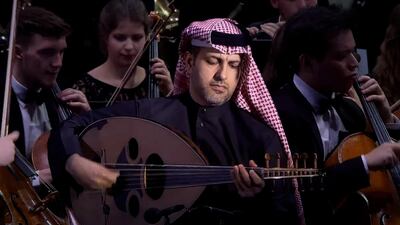
Abu Dhabi plans to invest Dh22 billion ($6bn) over the next five years in its cultural and creative industries as it seeks to reduce its economic reliance on oil, create new jobs and attract talent.

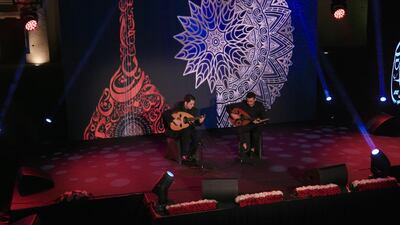
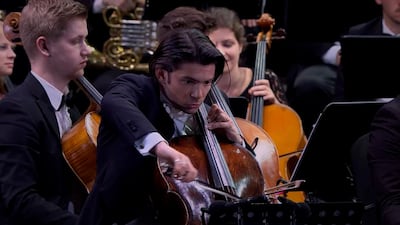
After pledging Dh8.5bn in the past five years, the government has earmarked an additional Dh22bn to develop new museums as well as invest in the performing arts, music, media and gaming sectors, the emirate’s Department of Culture and Tourism said on Tuesday.

The department is "uniting the more traditional elements of the culture sector with cutting-edge creative domains and creating the conditions for multidisciplinary businesses, creators and partnerships to innovate and grow, now and for years to come," DCT Abu Dhabi chairman Mohamed Al Mubarak told The National.

The move comes as the emirate emerges from the Covid-19 pandemic with a sharper focus on hastening its push into high value-added sectors as it reduces its dependence on oil revenue.

The emirate has invested heavily in the arts, opening Louvre Abu Dhabi in 2017 to position itself as a cultural tourism city with the aim of drawing visitors from around the world to view the artworks on display.

The latest round of cultural funding will be funnelled into more large-scale projects that are yet to come.

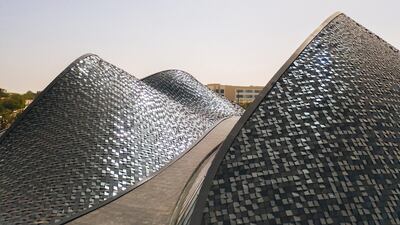
These include the Zayed National Museum that details the history of the nation and showcases the life of Sheikh Zayed, the Founding Father, the Guggenheim Abu Dhabi that will complement Louvre Abu Dhabi’s offering with modern and contemporary art and the Abrahamic Family House.

All three projects are in the Saadiyat Cultural District.

There are already 20,000 people employed in the emirate’s cultural and creative industries and this number is expected “to grow significantly” in the coming years, DCT Abu Dhabi undersecretary Saood Al Hosani told The National.

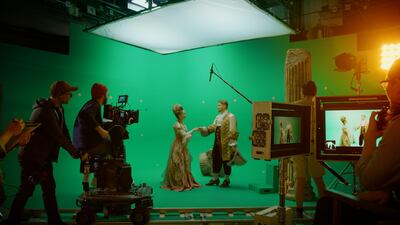
The emirate intends to create 16,000 jobs in the multimedia and gaming sectors.

“As thousands of new jobs will be created, the industry’s direct contribution to economic output will grow significantly as more professionals and families make their lives here in the emirate,” he said.

To attract new talent, Abu Dhabi is offering the creative visa to ease the entry of skilled professionals.

The application process is fast and cheap, and the emirate has already received more than 1,000 “expressions of interest”, said Mr Al Hosani.

“Our ambition is for creative professionals to thrive in Abu Dhabi; to make attainable to them sustainable, long-term careers that offer unparalleled opportunities to develop, grow and make a great living in Abu Dhabi for years and even decades,” he said.

Abu Dhabi has already started training hundreds of cultural professionals in various fields, with programmes developed for young people to learn the skills needed to compete in a digital future, said Mr Al Hosani. AD Gaming has partnered with global company Unity Technologies to offer students in the UAE an opportunity to hone their skills in design, coding and the use of 3D technology, while more than 150 aspiring film-makers and scriptwriters have graduated from Image Nation Abu Dhabi’s Arab Film Studio, he said.

Besides attracting talent to live and work in Abu Dhabi, the cultural and creative industries are also a significant driver of tourism in the emirate.

Last year, when movement restrictions posed challenges to cultural institutions, DCT Abu Dhabi’s cultural initiatives drew 6 million visitors, said Mr Al Hosani.

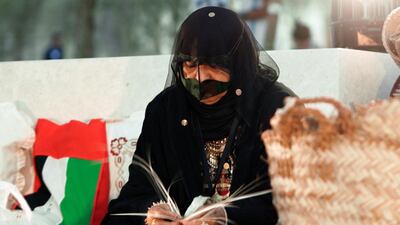
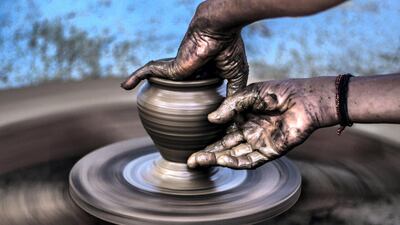
The department plans to bring cultural and creative industries under its umbrella, adding fields such as film, TV, multimedia, gaming and e-sports to its existing sectors of heritage, crafts and design, publishing and visual and performing arts.

The aim is to leverage “the natural synergies between the emirate’s culture, tourism and creative sectors”, said Mr Al Mubarak.

DCT Abu Dhabi's cultural and creative industries’ strategy is underpinned by five pillars: policy formulation, talent development, innovation and digitisation, business development and the construction of infrastructure that improves people’s quality of life, it said.

The Dh8.5bn invested in cultural projects in the past five years has included projects at Saadiyat Cultural District, Yas Creative Hub and initiatives such as the creative visa.


TECH%20SPECS%3A%20APPLE%20WATCH%20SERIES%208
%3Cp%3E%3Cstrong%3EDisplay%3A%3C%2Fstrong%3E%2041mm%2C%20352%20x%20430%3B%2045mm%2C%20396%20x%20484%3B%20Retina%20LTPO%20OLED%2C%20up%20to%201000%20nits%2C%20always-on%3B%20Ion-X%20glass%3C%2Fp%3E%0A%3Cp%3E%3Cstrong%3EProcessor%3A%3C%2Fstrong%3E%20Apple%20S8%2C%20W3%20wireless%2C%20U1%20ultra-wideband%3C%2Fp%3E%0A%3Cp%3E%3Cstrong%3ECapacity%3A%3C%2Fstrong%3E%2032GB%3C%2Fp%3E%0A%3Cp%3E%3Cstrong%3EMemory%3A%3C%2Fstrong%3E%201GB%3C%2Fp%3E%0A%3Cp%3E%3Cstrong%3EPlatform%3A%3C%2Fstrong%3E%20watchOS%209%3C%2Fp%3E%0A%3Cp%3E%3Cstrong%3EHealth%20metrics%3A%3C%2Fstrong%3E%203rd-gen%20heart%20rate%20sensor%2C%20temperature%20sensing%2C%20ECG%2C%20blood%20oxygen%2C%20workouts%2C%20fall%2Fcrash%20detection%3B%20emergency%20SOS%2C%20international%20emergency%20calling%3C%2Fp%3E%0A%3Cp%3E%3Cstrong%3EConnectivity%3A%3C%2Fstrong%3E%20GPS%2FGPS%20%2B%20cellular%3B%20Wi-Fi%2C%20LTE%2C%20Bluetooth%205.3%2C%20NFC%20(Apple%20Pay)%3C%2Fp%3E%0A%3Cp%3E%3Cstrong%3EDurability%3A%3C%2Fstrong%3E%20IP6X%2C%20water%20resistant%20up%20to%2050m%2C%20dust%20resistant%3C%2Fp%3E%0A%3Cp%3E%3Cstrong%3EBattery%3A%3C%2Fstrong%3E%20308mAh%20Li-ion%2C%20up%20to%2018h%2C%20wireless%20charging%3C%2Fp%3E%0A%3Cp%3E%3Cstrong%3ECards%3A%3C%2Fstrong%3E%20eSIM%3C%2Fp%3E%0A%3Cp%3E%3Cstrong%3EFinishes%3A%3C%2Fstrong%3E%20Aluminium%20%E2%80%93%20midnight%2C%20Product%20Red%2C%20silver%2C%20starlight%3B%20stainless%20steel%20%E2%80%93%20gold%2C%20graphite%2C%20silver%3C%2Fp%3E%0A%3Cp%3E%3Cstrong%3EIn%20the%20box%3A%3C%2Fstrong%3E%20Watch%20Series%208%2C%20magnetic-to-USB-C%20charging%20cable%2C%20band%2Floop%3C%2Fp%3E%0A%3Cp%3E%3Cstrong%3EPrice%3A%3C%2Fstrong%3E%20Starts%20at%20Dh1%2C599%20(41mm)%20%2F%20Dh1%2C999%20(45mm)%3C%2Fp%3E%0A
Another way to earn air miles

In addition to the Emirates and Etihad programmes, there is the Air Miles Middle East card, which offers members the ability to choose any airline, has no black-out dates and no restrictions on seat availability. Air Miles is linked up to HSBC credit cards and can also be earned through retail partners such as Spinneys, Sharaf DG and The Toy Store.

An Emirates Dubai-London round-trip ticket costs 180,000 miles on the Air Miles website. But customers earn these ‘miles’ at a much faster rate than airline miles. Adidas offers two air miles per Dh1 spent. Air Miles has partnerships with websites as well, so booking.com and agoda.com offer three miles per Dh1 spent.

“If you use your HSBC credit card when shopping at our partners, you are able to earn Air Miles twice which will mean you can get that flight reward faster and for less spend,” says Paul Lacey, the managing director for Europe, Middle East and India for Aimia, which owns and operates Air Miles Middle East.

Mercer, the investment consulting arm of US services company Marsh & McLennan, expects its wealth division to at least double its assets under management (AUM) in the Middle East as wealth in the region continues to grow despite economic headwinds, a company official said.

Mercer Wealth, which globally has $160 billion in AUM, plans to boost its AUM in the region to $2-$3bn in the next 2-3 years from the present $1bn, said Yasir AbuShaban, a Dubai-based principal with Mercer Wealth.

Within the next two to three years, we are looking at reaching $2 to $3 billion as a conservative estimate and we do see an opportunity to do so,” said Mr AbuShaban.

Mercer does not directly make investments, but allocates clients’ money they have discretion to, to professional asset managers. They also provide advice to clients.

“We have buying power. We can negotiate on their (client’s) behalf with asset managers to provide them lower fees than they otherwise would have to get on their own,” he added.

Mercer Wealth’s clients include sovereign wealth funds, family offices, and insurance companies among others.

From its office in Dubai, Mercer also looks after Africa, India and Turkey, where they also see opportunity for growth.

Wealth creation in Middle East and Africa (MEA) grew 8.5 per cent to $8.1 trillion last year from $7.5tn in 2015, higher than last year’s global average of 6 per cent and the second-highest growth in a region after Asia-Pacific which grew 9.9 per cent, according to consultancy Boston Consulting Group (BCG). In the region, where wealth grew just 1.9 per cent in 2015 compared with 2014, a pickup in oil prices has helped in wealth generation.

BCG is forecasting MEA wealth will rise to $12tn by 2021, growing at an annual average of 8 per cent.

Drivers of wealth generation in the region will be split evenly between new wealth creation and growth of performance of existing assets, according to BCG.

Another general trend in the region is clients’ looking for a comprehensive approach to investing, according to Mr AbuShaban.

“Institutional investors or some of the families are seeing a slowdown in the available capital they have to invest and in that sense they are looking at optimizing the way they manage their portfolios and making sure they are not investing haphazardly and different parts of their investment are working together,” said Mr AbuShaban.

Some clients also have a higher appetite for risk, given the low interest-rate environment that does not provide enough yield for some institutional investors. These clients are keen to invest in illiquid assets, such as private equity and infrastructure.

“What we have seen is a desire for higher returns in what has been a low-return environment specifically in various fixed income or bonds,” he said.

“In this environment, we have seen a de facto increase in the risk that clients are taking in things like illiquid investments, private equity investments, infrastructure and private debt, those kind of investments were higher illiquidity results in incrementally higher returns.”

The Abu Dhabi Investment Authority, one of the largest sovereign wealth funds, said in its 2016 report that has gradually increased its exposure in direct private equity and private credit transactions, mainly in Asian markets and especially in China and India. The authority’s private equity department focused on structured equities owing to “their defensive characteristics.”

WISH
%3Cp%3E%3Cstrong%3EDirectors%3A%3C%2Fstrong%3E%20Chris%20Buck%2C%20Fawn%20Veerasunthorn%3Cbr%3E%3Cstrong%3EStars%3A%3C%2Fstrong%3E%20Ariana%20DeBose%2C%20Chris%20Pine%2C%20Alan%20Tudyk%3Cbr%3E%3Cstrong%3ERating%3A%3C%2Fstrong%3E%203.5%2F5%3C%2Fp%3E%0A
The%20specs
%3Cp%3E%3Cstrong%3EEngine%3A%3C%2Fstrong%3E%20Twin%20electric%20motors%20and%20105kWh%20battery%20pack%0D%3Cbr%3E%3Cstrong%3EPower%3A%20%3C%2Fstrong%3E619hp%0D%3Cbr%3E%3Cstrong%3ETorque%3A%20%3C%2Fstrong%3E1%2C015Nm%0D%3Cbr%3E%3Cstrong%3ETransmission%3A%20%3C%2Fstrong%3ESingle-speed%20auto%0D%3Cbr%3E%3Cstrong%3ETouring%20range%3A%20%3C%2Fstrong%3EUp%20to%20561km%0D%3Cbr%3E%3Cstrong%3EOn%20sale%3A%20%3C%2Fstrong%3EQ3%20or%20Q4%202022%0D%3Cbr%3E%3Cstrong%3EPrice%3A%20%3C%2Fstrong%3EFrom%20Dh635%2C000%3C%2Fp%3E%0A
The specs: 2018 Genesis G70

Price, base / as tested: Dh155,000 / Dh205,000

Engine: 3.3-litre, turbocharged V6

Gearbox: Eight-speed automatic

Power: 370hp @ 6,000rpm

Torque: 510Nm @ 1,300rpm

Fuel economy, combined: 10.6L / 100km