


Live updates: Follow the latest on Israel-Gaza
As Gaza remains engulfed in violence following Israel’s continuing attacks hitting the one-year mark on Tuesday, businesses in the region face a high-stakes decision: will they foster peace or deepen divisions?
According to John Katsos, a professor at the American University of Sharjah, businesses operating in conflict zones like Gaza can either aggravate tensions or become key drivers of peace – depending on the ethical choices they make.
He said companies, particularly multinational corporations, have the potential to act as stabilising forces by creating jobs, reinvesting profits locally, and even mediating between warring parties in some cases.
Their role is critical, explained Mr Katsos, as business are usually the ones who continue investing in local growth once the global attention on the conflict and foreign aid start to wane.
Drawing from his research in Iraq, Syria, and Ukraine, he stressed that the influence of businesses on peace-building efforts often go under the radar, but their impact can be profound.

“Businesses often have unique access to both sides in conflicts … they are trusted by conflicting parties to negotiate behind the scenes,” Mr Katsos said, highlighting the role of their neutrality and influence on a country's institutions and key decision makers.
For example, in South Africa, gold mining company Goldfields played an important role in brokering the peace agreements that ended apartheid by using its economic influence, Mr Katsos said.
Goldfields was part of the Consultative Business Movement (CBM), which enabled negotiations between opposing political groups during the turbulent transition phase in South Africa. The CBM helped establish the National Peace Accord in 1991 that led to democratic elections.
In Colombia, coffee cooperatives like Juan Valdez, which primarily operated in regions with significant civil unrest, fostered trust between rural farming communities and urban buyers, Mr Katsos pointed out. This ensured fair profit distribution, which helped reduce poverty and violence by implementing inclusive economic practices that benefitted all stakeholders along the supply chain.

Call to action
While in Iraq, businesses played a key role in the post-ISIS recovery, according to Mr Katsos, particularly in areas where Daesh had been pushed back. Corporates were able to pick up the slack after attention and aid to Iraq dissipated, and were the ones who adopted a long-term strategy of investing in the local population and economy of the conflict zone.
Former US president George Bush said in 2004: “It is not the responsibility of the US to rebuild Iraq. That is the responsibility of the Iraqi people.” He notably emphasised the need for businesses and private sector to pitch in once foreign involvement scaled back.
Mr Katsos emphasised the critical role businesses in Iraq played for its long-term economic recovery.
“Companies were instrumental in bringing back livelihoods, recreating jobs, and rebuilding infrastructure … without this, they risk deepening divisions and escalating violence,” Mr Katsos said.
These examples provide important lessons for Gaza, he explained remaining cautiously optimistic that the region could experience similar recovery patterns once the violence subsides.
However, he pointed out that businesses also face political challenges, as their efforts to promote intercommunal dialogue and avoid paying bribes often put them in conflict with both regional and national governments.
Despite these challenges, the private sector’s involvement is essential to the reconstruction process, he added.
He said his research, conducted jointly with Timothy Fort of Indiana University and Jason Miklian from the University of Oslo, serves as a “powerful call to action for the business community”.
Mr Katsos is also the board member of UNGC (UN Global Compact) UAE local network, the UNPRME (UN Principles for Responsible Management Education) business for peace working group, and DiverseCity, a US-based social enterprise.
Talking about the timeline of recovery in Gaza, Mr Katsos argued that the first decade following the conflict is crucial. In the initial five years, governments and international organisations play a leading role, while businesses operate in the background. However, during the second half of this period, businesses must step up as foreign aid declines.
Mr Katsos emphasised that “businesses often fear investing in conflict zones due to the inherent risks, however, companies that are willing to commit long-term and reinvest profits locally have the potential to stabilise a region" and also a return on investment.
“Whether multinational or local, the key is ensuring that profits remain in the community,” said Mr Katsos, without naming any Gaza businesses.
In Gaza, several businesses operate under challenging conditions in sectors like agriculture, textiles and construction. Also, many global businesses have teamed up with local distributors, but the volatile environment has led to scaling back of operations.
Gaza’s gross domestic product plunged by 81 per cent in the fourth quarter of last year, leading to a 22 per cent contraction for the whole year, UN Trade and Development said in a report on September 12. Unemployment reached 79 per cent in the last quarter of 2023, compared with 46 per cent in the July-September period.
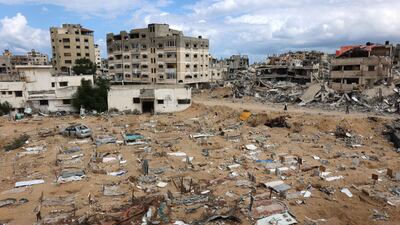
By early this year, between 80 per cent and 96 per cent of Gaza's agricultural assets, including irrigation systems, livestock farms, orchards, machinery and storage facilities had been decimated, hitting food production and worsening already high levels of food insecurity.
Choices, choices
In Gaza, businesses face unique challenges.
Mr Katsos acknowledged that it is nearly impossible for companies to take a “public or leading role” during peak conflict. Instead, their main contribution often occurs quietly behind the scenes.
He cited Coca-Cola’s Palestinian bottling plant, opened by Palestinian businessman Zaki Khoury in the 1990s, as a model for how companies can navigate complex political environments.
This plant, despite the unstable situation, became one of the largest private employers in Gaza and the West Bank, proving that foreign businesses can contribute to stability through local job creation and reinvestment.
However, Mr Katsos cautioned that businesses can also accelerate violence if they focus solely on profit extraction.
“If a multinational extracts resources without reinvesting in the community, it will only worsen the situation,” he warned.
For instance, the discovery of natural gas in Gaza's coastal waters has been a subject of dispute. Israel’s control over gas extraction rights has fuelled debate about the equality of profit distribution as benefits are not reinvested in Gaza’s local economy.
Gaza Marine, a natural gasfield discovered in 2000 with an estimated reserve of one trillion cubic feet of gas, remains undeveloped due to long-standing political tensions between Israel and the Palestinian Authority, depriving Gaza of critical access to its natural resources. The gasfield is located 30 kilometres off the coast of the Gaza Strip, in the eastern Mediterranean Sea.
Mr Katsos outlined a couple of ways businesses can contribute during a crisis. First, through humanitarian aid – whether financial contributions, essential goods, or services.
Companies already present in Gaza must go beyond aid by ensuring the protection and support of their local staff and facilities. This includes continuing to pay salaries, even when work halts due to the conflict.
The Palestinian government has also only been paying partial salaries, and by February, it owed employees arrears equivalent to 4.3 months of wages, with $48.4 million owed to those in Gaza and $102.7 million owed to employees in the West Bank, Unctad said.

Also, 40 per cent of private sector workers in the West Bank have experienced a wage reduction of about 20 per cent.
Second, businesses can contribute to peace through their ethical actions.
Mr Katsos referred to examples from past conflict zones like Colombia and South Africa, where businesses, through unethical choices or inaction, hindered peace efforts – a scenario he argued Gaza cannot afford to repeat. In such scenarios, businesses influence key actors in the conflict and indirectly fund or support violent groups, worsening conflict rather than nurturing peace.
During civil conflict in Colombia, certain companies aligned themselves with paramilitary groups, prioritising short-term profit over the long-term stability of the region. These companies often paid off militias to protect their assets, contributing to continuing violence rather than promoting peace.
In South Africa, during the apartheid era, some multinationals took a passive approach, choosing to operate without challenging the exploitative system. By not using their influence to push for reform, they prolonged the oppressive regime.
This unethical or passive behaviour facilitated businesses to gain short-term benefits, but eventually expanded social divisions and delayed efforts towards tangible solutions, Mr Katsos explained.
Mr Katsos warned that similar scenarios could unfold in Gaza if businesses fail to act ethically and strategically.
“Ethical business practices are the key to fostering peace, but this cannot be imposed from the outside … it must be embedded in the corporate culture.”
For Gaza, he emphasised, that ethical conduct must be at the core of business operations.
“In a region where every action has far-reaching consequences, only businesses with a genuine commitment to peace and social responsibility can make a meaningful difference.”
No playing both sides
Businesses in conflict zones cannot remain neutral, said Mr Katsos.
“There is no middle ground in crisis zones … you are either helping to reduce violence or contributing to it. Every action carries political weight.”
He cautioned against adopting a “rose-coloured” view of corporate involvement, acknowledging that businesses can just as easily do harm by underpaying workers, exploiting resources, or disregarding local social dynamics.
“In places like Gaza, where survival often overshadows commerce, companies must have a clear agenda – one that goes beyond profitmaking and embraces non-violent conflict resolution.”
He also highlighted the delicate balance local businesses must strike when promoting global brands in conflict zones like Gaza.
In regions rife with tensions, local subsidiaries of multinationals often face a dual challenge. On one hand, they benefit from the brand value, but on the other, they must navigate local perceptions, which can be influenced by political sentiments or boycotts against global brands.
AUS professor
In conflict zones, where brands like McDonald's or Starbucks are often viewed as symbols of external influence, “local franchisees must walk a fine line”.
Mr Katsos emphasised that these businesses must make it clear they are not just foreign entities extracting profits but are deeply embedded in the local economy.
“They have to show that they are local – employing local people, reinvesting in the community, and supporting local causes,” he said.
-
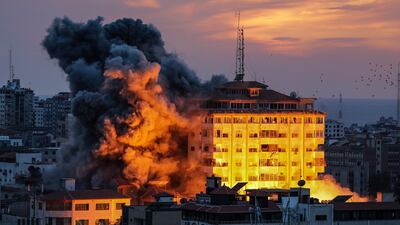
Smoke rises after Israeli air strikes targeted Palestine Tower in Gaza city on October 7, 2023. EPA -
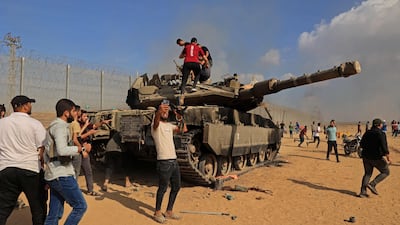
Palestinians take control of an Israeli Merkava battle tank after crossing the border fence with Israel from Khan Yunis in the southern Gaza Strip on October 7, 2023. AFP -
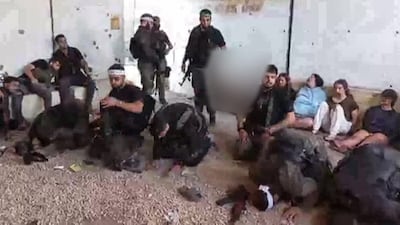
This video grab from footage released by the Israeli Hostage and Missing Families Forum campaign group on May 22 shows what the group described as Israeli female soldiers being captured by Palestinian Hamas militants during the October 7, 2023, attack on Israel. AFP -
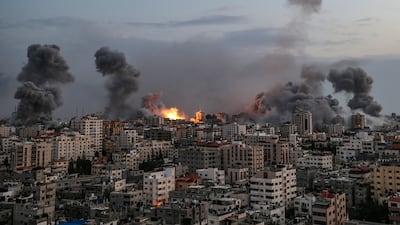
Smoke rises following an Israeli air strike in Gaza city on October 9, 2023. EPA -
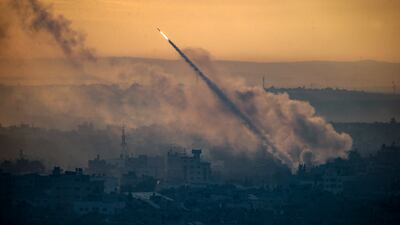
A rocket is launched from the coastal Gaza strip towards Israel by militants of the Ezz Al-Din Al Qassam militia, the military wing of Hamas movement, in Gaza city. EPA -

Israel's Iron Dome anti-missile system intercepts rockets launched from the Gaza Strip, as seen from the city of Ashkelon, Israel, on October 9, 2023. Reuters -

Lightning strikes as smoke billows following an Israeli air strike in Gaza city on October 9, 2023. AFP -
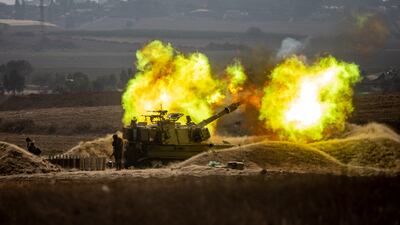
An Israeli artillery unit fires at an area along the border with Gaza, southern Israel, on October 11, 2023. EPA -

Ultra-Orthodox Jewish people carry their belongings before boarding a ship for US nationals and their immediate family members, as they leave Israel headed for Cyprus. Reuters -
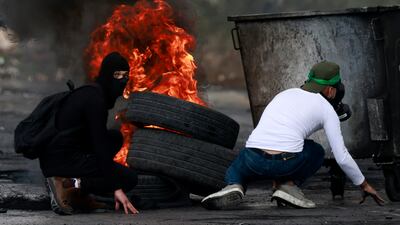
Palestinian youths take cover behind a rubbish container as they clash with Israeli forces at the northern entrance of the West Bank city of Ramallah near the Israeli settlement of Beit El on October 20, 2023. AFP -

A man mourns as he attends a funeral of Palestinians killed in Israeli strikes in Khan Younis in the southern Gaza Strip on October 24, 2023. Reuters -
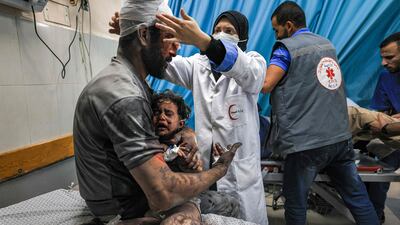
A man holds a child, survivors of Israeli bombardment, as they are treated at a trauma ward at Nasser hospital in Khan Yunis in the southern Gaza Strip on October 24, 2023. AFP -

People search for survivors and the bodies of victims through the rubble of buildings destroyed during Israeli bombardment in Khan Yunis in the southern Gaza Strip on October 26, 2023. AFP -

Anti-war protesters raise their 'bloody' hands behind US Secretary of State Antony Blinken during a Senate Appropriations Committee hearing on President Biden's $106 billion national security supplemental funding request to support Israel and Ukraine, as well as bolster border security, on Capitol Hill in Washington on October 31, 2023. Reuters -
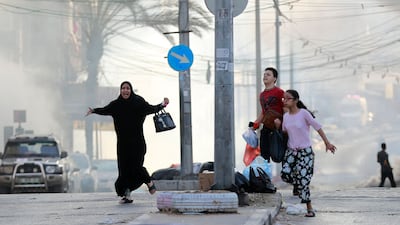
Palestinians run for cover after a strike near the Al Shifa hospital in Gaza city on November 1, 2023. AFP -
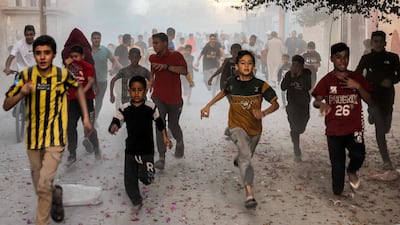
Palestinian children run as they flee from Israeli bombardment in Rafah in the southern Gaza Strip on November 6, 2023. AFP -
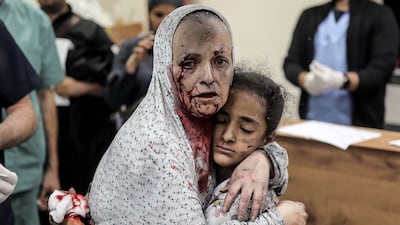
An injured Palestinian woman covered in dust and blood hugs an injured girl child at the hospital following the Israeli bombardment of Khan Yunis in the southern Gaza Strip on November 15, 2023. AFP -

Hostages released by Hamas Gal, left, and Tal Almog-Goldstein, second left, stand in a bus transporting them to an army base in Ofakim in southern Israel after they were released by the Palestinian militant group from the Gaza Strip on November 26, 2023. AFP -
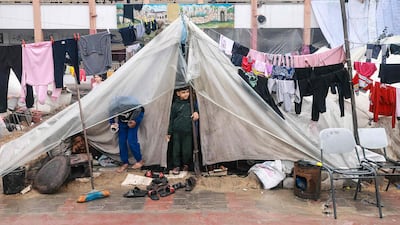
Palestinian boys stand in their makeshift tent at a camp set up on a schoolyard in Rafah in the southern Gaza Strip where most civilians have taken refuge, on December 13, 2023. AFP -
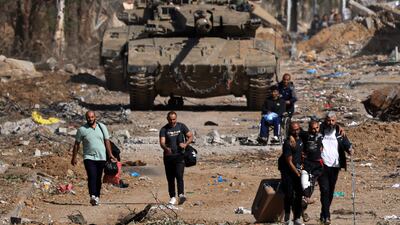
Palestinians fleeing the north through the Salaheddin road in the Zeitoun district on the southern outskirts of Gaza city, walk past Israeli army tanks on November 24, 2023. AFP -
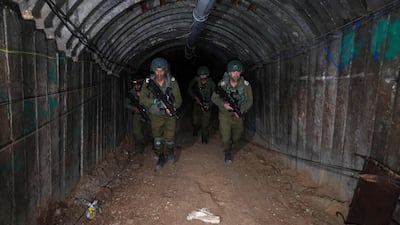
In this picture taken during a media tour organised by the Israeli military on December 15, 2023, soldiers visit a tunnel that Hamas reportedly used to attack Israel through the Erez border crossing on October 7. AFP -

Jewish protesters block the passage of aid trucks being sent to Gaza in Ashdod, Israel on February 1, 2024. Reuters -
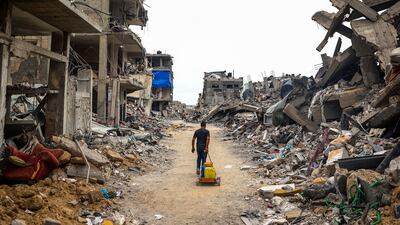
A man pulls water containers as he walks past destroyed buildings in Khan Younis on May 5, 2024. AFP -

Relatives of Hanan Yablonka, one of the Israeli hostages held in the Gaza Strip since the October 7, 2023 attack by Palestinian Hamas militants, mourn during his funeral in Tel Aviv on May 26. AFP -

Humanitarian aid packages land after being dropped from a plane in Al Mawasi district of Khan Younis, on May 30, 2024. Reuters -
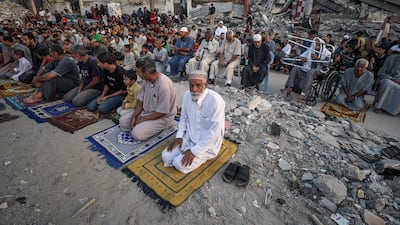
Palestinians attend Eid al-Adha prayer in Khan Younis town, southern Gaza strip, on June 16. EPA -
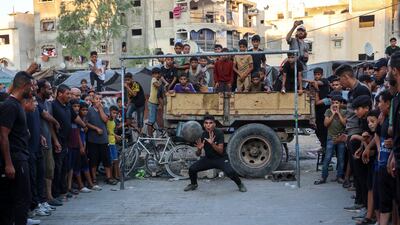
Displaced Palestinians play football in Jabalia on July 23, 2024. AFP -
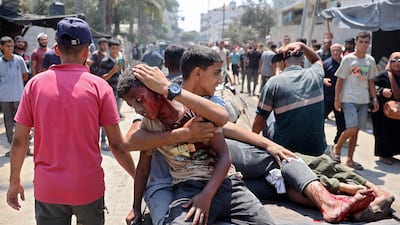
Palestinians injured in an Israeli strike on a school ride on the back of a cart in Deir Al Balah on July 27, 2024. AFP -
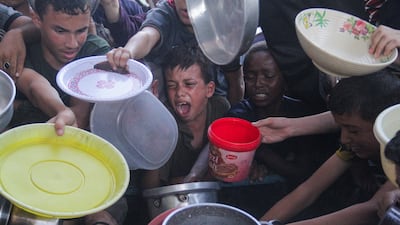
Palestinians gather to receive food cooked by a charity kitchen, amid the Israel-Hamas conflict, in the northern Gaza Strip, September 11. Reuters -

Palestinians survey the damage at the site of Israeli strikes on a displacement camp in Khan Younis on September 10, 2024. AFP -
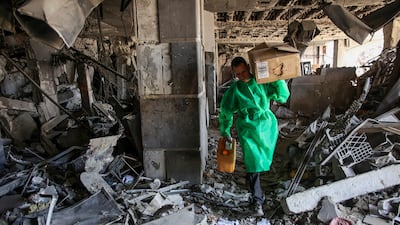
A medical staff member carries supplies through a destroyed section of Al Shifa hospital in Gaza city on September 17. AFP -
People walk past makeshift graves in Gaza city on September 17. AFP


He pointed to the example of McDonald's in Egypt, where the brand saw a 70 per cent drop in sales following a political crisis, not because the product had changed, but because the brand was perceived as symbolising something consumers morally opposed.
“If local subsidiaries manage to align themselves with the needs and values of the local community, they can be powerful forces for good ... but if they fail, they risk alienating consumers and deepening divisions.”

