

Saudi Arabia's economy, the largest in the Arab world, contracted by 0.8 per cent annually last year, mainly due to a sharp decline in the oil sector, although the non-oil sector expanded by 4.4 per cent during the period.
The oil sector recorded a 9 per cent drop in 2023, while the government sector grew 2.1 per cent, the General Authority for Statistics said on Sunday.
Most economic activities grew last year, with social and personal services recording the sharpest expansion at 10.8 per cent, followed by transportation, storage, and communications at 7.3 per cent, the report said.
Wholesale and retail trade, restaurants, and hotels grew by 7 per cent, while financial, insurance and business services grew by 6.8 per cent. Mining and quarrying activities expanded by 5.7 per cent.
However, crude petroleum and natural gas activities decreased by 9.4 per cent, and petroleum refining activities fell by 7.4 per cent.
Last year, the kingdom's GDP at current prices exceeded 4 trillion Saudi riyals ($1.06 trillion), according to the latest data from Gastat.
Crude petroleum and natural gas activities contributed 25.4 per cent to the total, followed by government services (15.7 per cent), wholesale and retail trade, restaurants and hotels (9.7 per cent), manufacturing excluding petroleum refining (8.8 per cent), petroleum refining activities (6 per cent) and real estate (5.9 per cent).
Net taxes on products contributed 5.4 per cent to the kingdom's GDP, the report said.
A decrease in net exports of 6.5 per cent affected GDP growth, while imports expanded 9.9 per cent during the year, Gastat said.
Brent crude, the benchmark for two thirds of the world’s oil, fell by about 10 per cent in 2023 on higher-than-expected supply from non-Opec countries and concerns about crude demand.
Saudi Arabia, along with other members of the Opec+ alliance, has been reducing crude output as part of efforts to “balance the market”.
Earlier this month, the kingdom, the world’s biggest oil exporter and Opec's largest producer, said it will extend its voluntary cut of one million barrels per day through to the end of the second quarter of 2024.
The production cap is in addition to the voluntary cut of 500,000 bpd announced by the kingdom in April 2023, which will remain in effect until the end of December.
Saudi Arabia is aggressively taking steps to transform its economy as part of its Vision 2030 diversification agenda.
Riyadh has unveiled a series of initiatives and policy reforms to reduce its dependence on oil, broaden its non-oil economic base and support domestic industries and job growth.
Business activity in the non-oil private sector economy of Saudi Arabia expanded at a brisk pace in February.
The seasonally adjusted Riyad Bank purchasing managers’ index – a benchmark gauge of the kingdom’s non-oil economy – rose to 57.2 in February, from 55.4 in January, staying well above the neutral 50 mark that separates growth from contraction.
-
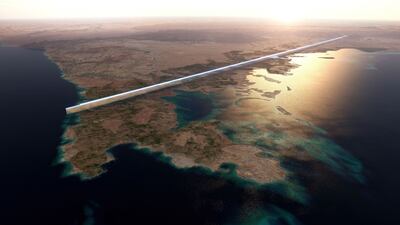
The Line, which made international headlines when it was announced in 2021 for its sheer ambitiousness, is 170km-long, 500-metre-tall dual tower project that is part of the futuristic Neom development. Photo: Neom -
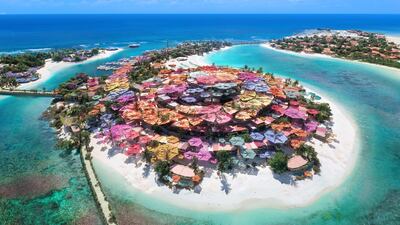
Grand Hyatt The Red Sea is part of phase one of the mega-tourism project in Saudi Arabia. Photo: Red Sea Global -
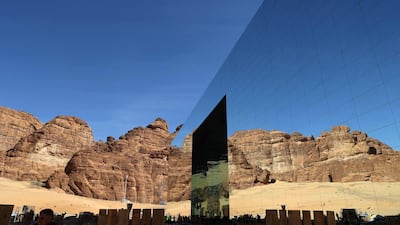
The Maraya, the world's largest mirrored building, is part of the AlUla project. AFP -
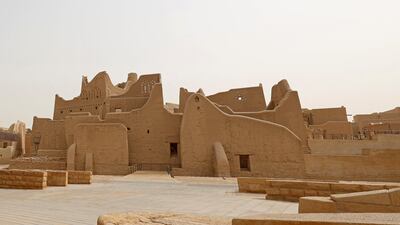
An 18th-century palace built from mud and straw, where the kingdom's royal family is said to have plotted its conquest of the Arabian Peninsula, in the historic district of Diriyah, on the outskirts of Riyadh. AFP -
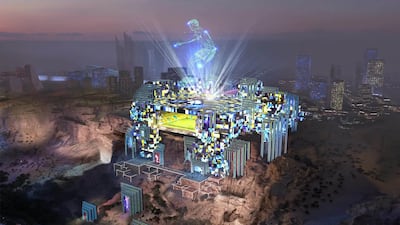
A rendering of the Prince Mohammed bin Salman Stadium, which will be built in Qiddiya and feature a retractable roof. Photo: Qiddiya -
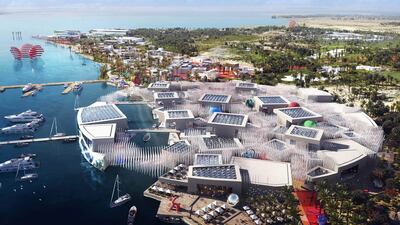
Amaala will have more than 25 hotels, luxury residences and 200 fine-dining outlets when completed in 2027. Photo: SCTH -
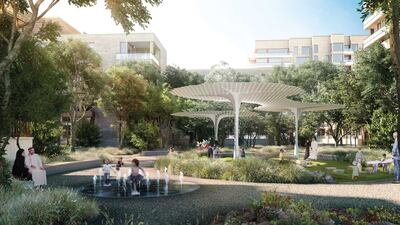
The King Salman Park covers an area of more than 16 square kilometres. Photo: Royal Commission for Riyadh -
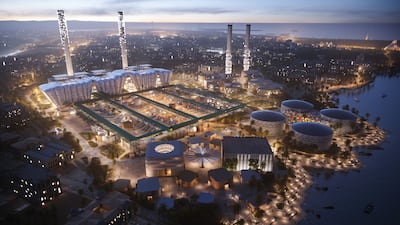
The Jeddah Central Project will be home to an industrial museum. Photo: Jeddah Central Project -
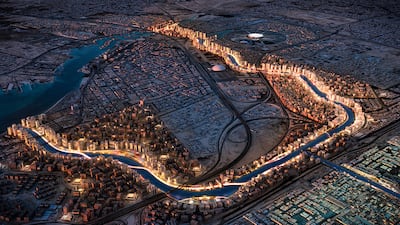
Marafy canal will include water taxis and offer a direct canal link to King Abdulaziz International Airport. Photo: Roshn -
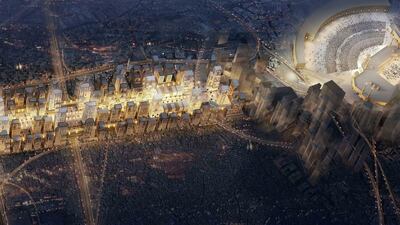
Masar is an urban development project in Makkah covering 1.2 square kilometres. Photo: Masar -
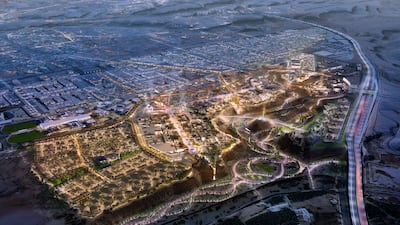
The Mohammed bin Salman Non-Profit City, better known as Misk, is a district in Riyadh that will act as an incubator for youth volunteer groups, as well as local and international non-profits. Photo: Misk -
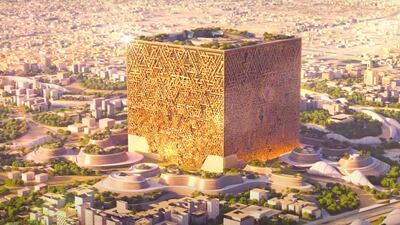
New Murabba is Riyadh’s new city centre and will include a museum, a technology and design university, a multipurpose immersive theatre and more than 80 cultural and entertainment venues. Photo: New Murabba Development Company -

The masterplan for Expo 2030 Riyadh, which was unveiled last June. Photo: Expo 2030 Riyadh -
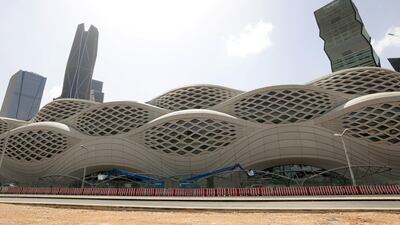
A Riyadh metro station in the King Abdullah Financial District. AFP


The kingdom's economy is projected to grow by 2.7 per cent this year and 5.5 per cent in 2025, according to the International Monetary Fund.
In the fourth quarter of the year, Saudi Arabia's GDP contracted by 4.3 per cent annually. While non-oil activities rose by 4.2 per cent and government activities expanded by 3.1 per cent, oil activities fell by 16.2 per cent, the report found.
Financial, insurance and business services activities achieved the highest annual growth rates during the fourth quarter, followed by wholesale and retail trade activities, restaurants, and hotels.
GDP at current prices amounted to 1.02 trillion riyals during the last three months of the year, Gastat said.

