


A key priority for the upcoming Cop28 should be to ensure capital commitment for the energy transition from all parties, according to the managing director of the International Finance Corporation.
What is required is “a commitment from the capital markets to finance the energy transition, to finance climate action activities, water, transport and specific ideas … not only energy transition”, Makhtar Diop told The National this month, after the conclusion of the annual meetings of World Bank and the International Monetary Fund in Marrakesh.
Mr Diop said the countries who are the largest emitters of carbon dioxide and the JETP countries (Just Energy Transition Partnership countries which includes Japan, the US, Canada, Denmark, France, Germany, Italy, Norway, the EU and UK), must come to Cop28 with firm commitments.
He called for commitments “from the use of cleaner technology, helping on the social impact of decommissioning some coal mines, to really come up with progress”.
He also said that countries must “continue to do more on adaptation and to give incentive to companies to invest in adaptation”.
A fourth priority should be to give more attention to water, transportation and combatting methane emissions to tackle climate change.
As Cop28 preparations get under way in the UAE, Mr Diop highlighted the role of Cop28 President-designate Dr Sultan Al Jaber: “Dr Al Jaber has been doing a fantastic job, his energy is just endless.
“I've been in hundreds of meetings with him where he's been pushing very hard” for climate action.
“I'm very impressed by the commitment he has shown to really have concrete results.”
The private sector arm of the World Bank and the UAE are working closely on climate finance: the IFC and Abu Dhabi Fund for Development recently signed a co-operation framework that includes a commitment to co-invest up to $1.5 billion in private sector-led projects.
But Mr Diop is seeking more co-operation for financing the green transition.
He said: “Dr Al Jaber has a very ambitious programme and we would be happy to partner on all the elements that he thinks IFC can support, along with the international community.”
Mr Diop explained that the coming period requires serious efforts to enable blended finance and to de-risk investments in emerging countries and frontier markets.
He spoke of the efforts the multilateral development banks are undertaking to meet the challenges facing the global economy, explaining that in the last spring meetings, US Treasury Secretary Janet Yellen had called on the banks to respond to present-day challenges.
With an “evolution roadmap” that is “well received and well understood” by all sides, Mr Diop said there was an optimism about the future of the organisations.
The IFC, as the leading international organisation for private sector development, is at an important milestone with greater emphasis on “how to crowd in the private sector and doing so more often”, said Mr Diop.
In June, the World Bank Group launched the Private Sector Investment Lab, chaired by Mark Carney, UN special envoy on climate action and finance, and Shriti Vadera, chair of Prudential, to mobilise capital more effectively.
The first meeting was held on the sidelines of the UN General Assembly and is expected to focus greatly on financing the energy transition.
“As the World Bank Group, we are trying now to be more consolidating in the way we are offering guarantees to clients and to make our products more known," Mr Diop said.
On syndication, he said that a meeting called by the US Treasury last July in Italy facilitated a discussion with “institutional investors” who explained that “size matters”, in that they don't want to invest in small ventures.
He added that “political guarantees matter, and I was surprised how much they were very strong on that, and data information matters as well”.
The IFC is therefore working to enable greater financing, particularly when it comes to political guarantees in frontier and emerging markets, in addition to working on consolidating some assets which are on the balance sheets of the World Bank “to be able to offload it to the market” under specific conditions, he said.
Countries with the right regulatory framework, where the right conditions are in place ”which are sitting on the balance sheet of the World Bank and governments, could be offloaded to the private sector”, said Mr Diop.
Blended finance, in particular, will be important for some of the investments.
However, Mr Diop acknowledged that “the uncertainty we are [facing] in the world today [means] bringing some blended finance to lower the cost of capital and reduce the risk of investors in frontier markets”.
This global uncertainty, compounded by the Israel-Gaza war, comes at a time of International Development Association replenishment. The IDA, part of the World Bank, helps the world’s poorest countries and aims to reduce poverty by providing zero to low-interest loans and grants for programmes that boost economic growth, reduce inequalities and improve people’s living conditions.
-
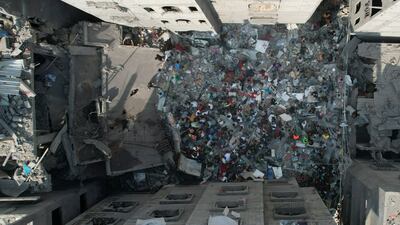
Palestinians look for survivors of Israeli bombardment of the Gaza Strip at Nusseirat refugee camp. AP -
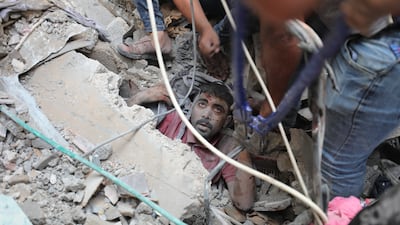
A survivor is found in the rubble in Nusseirat. AP -
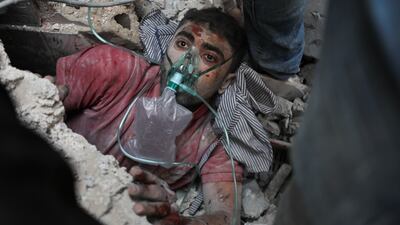
A man is given oxygen and pulled from the rubble in Nusseirat. AP -
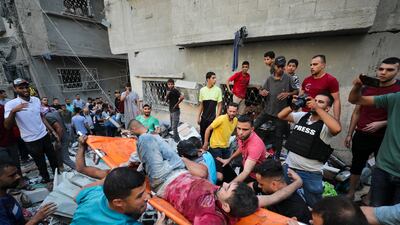
This desperate search for survivors is being replicated across the Gaza Strip. AP -
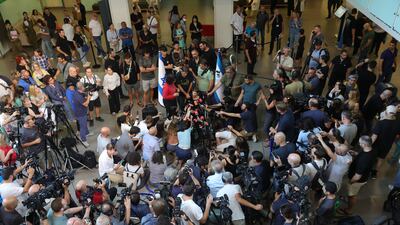
Yocheved Lifshitz speaks to the media outside a Tel Aviv hospital after being released by Hamas. EPA -
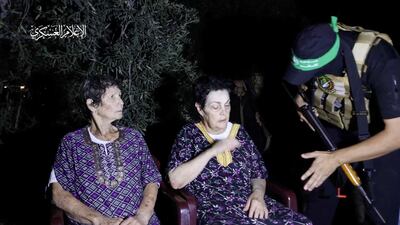
Israeli women who were held hostage by Palestinian Hamas militants, Yocheved Lifshitz and Nurit Cooper (also known as Nurit Yitzhak), are released by the militants. Reuters -
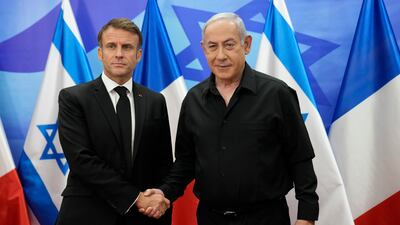
Israeli Prime Minister Benjamin Netanyahu, right, welcomes French President Emmanuel Macron before their talks in Jerusalem. AP -

Palestinians search for casualties at the site of an Israeli air strike on a house in Khan Younis, in the southern Gaza Strip. Reuters -

Palestinians inspect the damage of a destroyed house that was hit by an Israeli air strike in Khan Younis. AP -
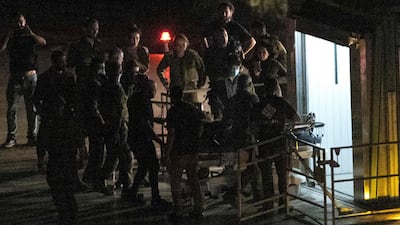
Ms Cooper and Ms Lifshitz arrive at the Tel Aviv Sourasky Medical Centre after being released by Hamas on Monday. AFP -
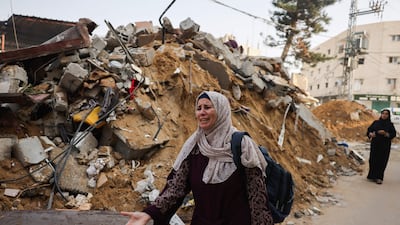
A woman cries next to the rubble of a building after Israeli strikes on Rafah in the south of the Gaza Strip. AFP -
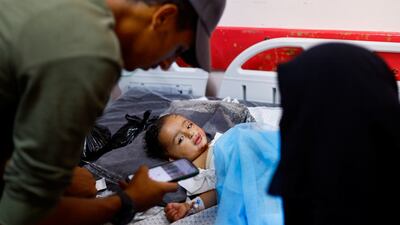
Wateen, a 14-month-old Palestinian baby, who was wounded in an Israeli strike that killed her mother and injured her twin brother Ahmed, recovers at Nasser hospital, in Khan Younis, Gaza Strip. Reuters -
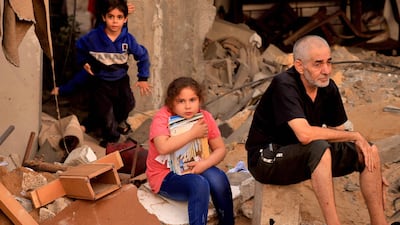
A Palestinian girl clutches salvaged books as people look for survivors in the rubble of a destroyed building hit in an Israeli strike in Khan Younis. AFP -
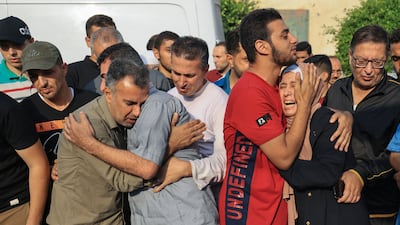
People mourn during the funeral of members of the Abu Morad family who died following Israeli strikes, in Khan Younis. AFP -
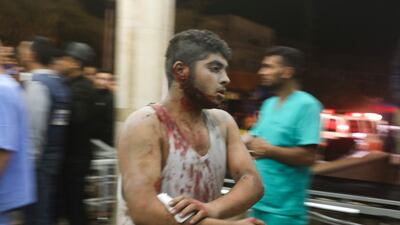
A wounded Palestinian man arrives at Nasser Medical Complex, following Israeli air strikes on the town of Khan Younis in the southern Gaza Strip. AP -
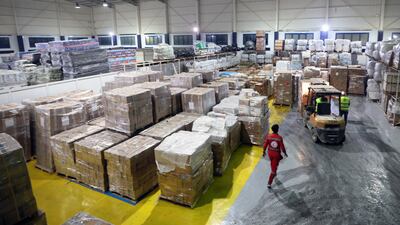
Red Crescent Society employees sort humanitarian aid bound for Palestinians in Gaza, at a warehouse in Arish, Egypt. EPA -
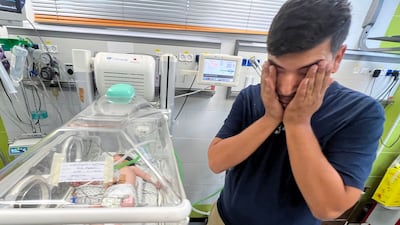
Ayman Abou Chamalah stands next to his daughter Mecca as she receives care inside an incubator at a hospital in Rafah. AFP -
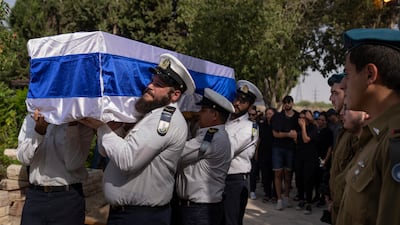
Israeli soldiers carry the coffin of Erik Kraunik, chief of security in the kibbutz of Be'eri, during his funeral at a cemetery in Yehud, Israel. AP -
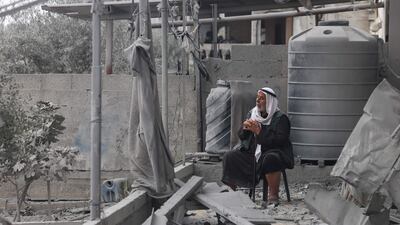
A man sits among the rubble of a building destroyed in Israel's bombardment of Rafah, in the southern Gaza Strip. AFP -
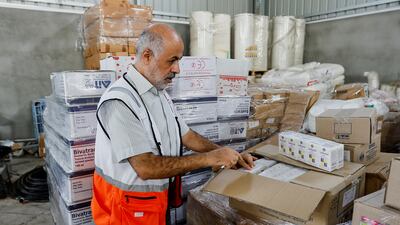
A Red Crescent worker sorts aid for Palestinians in Khan Younis, in the southern part of the blockaded enclave. Reuters -
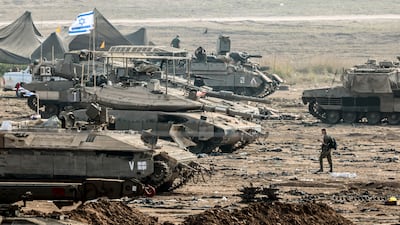
Israeli soldiers take part in a drill near the border with Gaza ahead of an expected ground invasion. EPA -
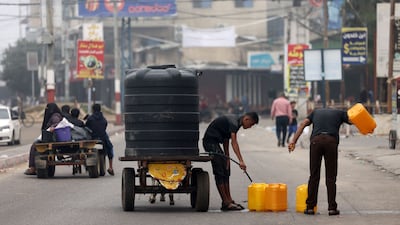
Men fill fuel containers with drinking water in Rafah. AFP -

Smoke billows over Gaza after an air strike, as seen from southern Israel. AP -
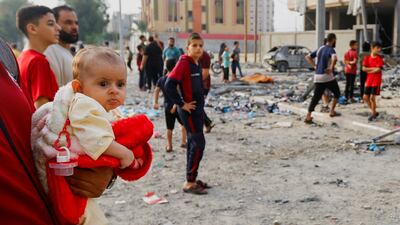
A person holds a child as Palestinians gather in Khan Younis at the site of a house destroyed during an Israeli bombardment. Reuters -
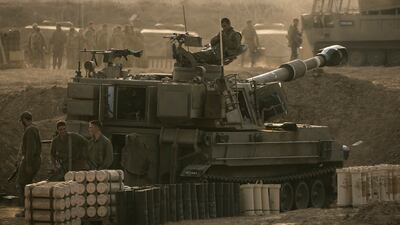
Israeli soldiers sit on top of a tank near the border with Gaza. Getty Images -
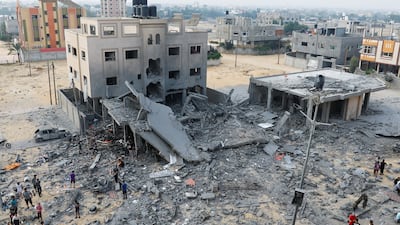
Buildings destroyed by Israeli air strikes in Khan Younis. Reuters -
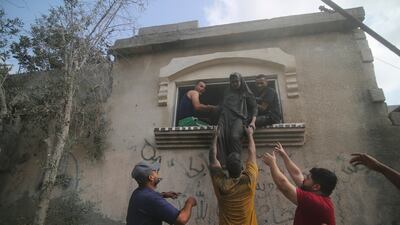
Palestinians are evacuated from a building in Rafah that was hit during Israel's bombardment. AP -
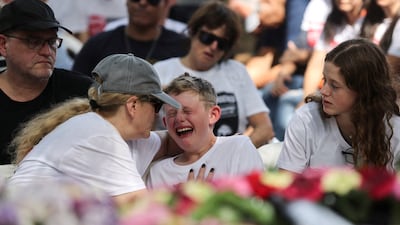
Shahar Idan, 9, mourns during the funeral of his brother Maayan, 18, who was killed by Hamas gunmen in the kibbutz of Nahal Oz. His father Tzahi is being held hostage in Gaza. Reuters -

Palestinian doctors treat a premature baby at Al Aqsa Hospital in Deir Al Balah, Gaza. AP -
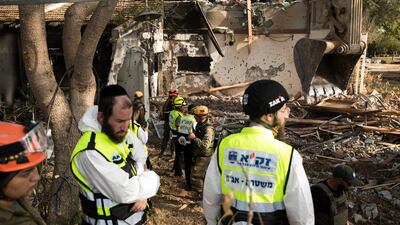
Rescue crews search for bodies after Hamas militants attacked the kibbutz of Be'eri in Israel. Getty Images -
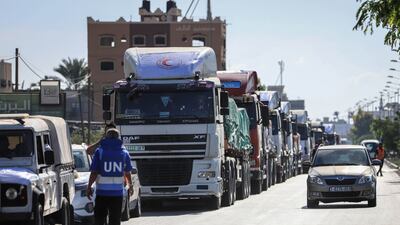
Lorries carrying humanitarian aid head to Deir Al Balah after crossing from Egypt through Rafah. Bloomberg -
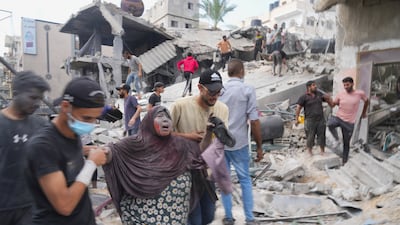
Palestinians evacuate survivors in Deir Al Balah after an Israeli bombardment. AP -
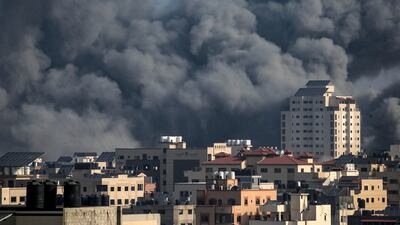
Smoke rises after Israeli air strikes on Gaza. EPA -
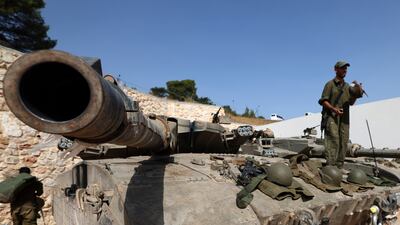
Israeli soldiers at a position along the border with Lebanon. EPA -
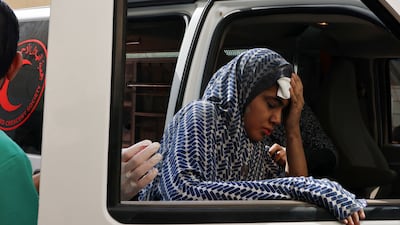
A woman leans against the window of an ambulance outside Kuwait Hospital after an Israeli strike in Rafah. AFP -
A Palestinian cries as the body of his daughter is recovered from beneath the rubble of a building destroyed during an Israeli air strike on Rafah. AFP -
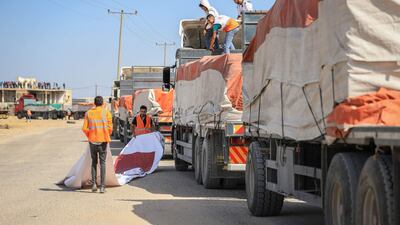
A convoy carrying humanitarian aid arrives in Rafah after crossing into the Gaza Strip from Egypt. Bloomberg -
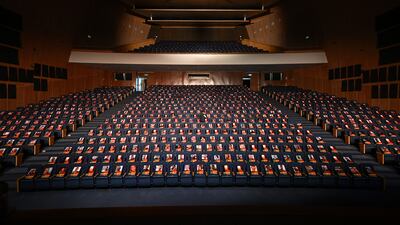
The pictures of more than 1,000 people abducted or killed during the attack by Hamas militants are displayed on empty seats at Tel Aviv University. Getty -
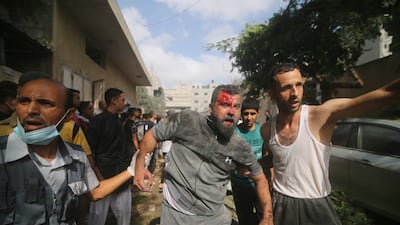
Palestinians are evacuated from buildings in Rafah after the bombardment of the Gaza Strip. AP -
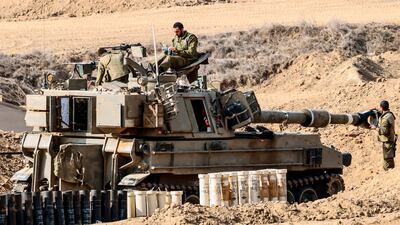
Israeli soldiers gather at an undisclosed location near the border with Gaza. EPA -
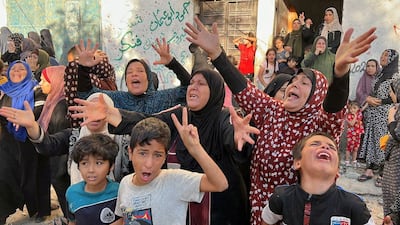
Palestinians mourn outside a house in Gaza struck by Israel. Reuters -
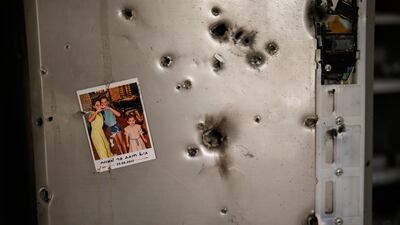
A bullet-riddled fridge in a house in the kibbutz of Kissufim in southern Israel, where 14 people were killed and four were abducted by Hamas militants on October 7. AP -
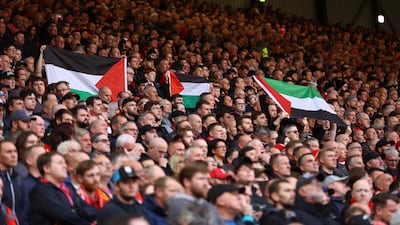
Football fans inside Anfield stadium hold up Palestine flags during the Liverpool-Everton derby on Saturday. Reuters -
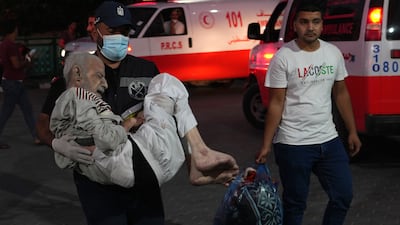
Palestinians wounded in the bombardment of Gaza are taken to Al Asa Hospital in Deir Al Balah. AP -
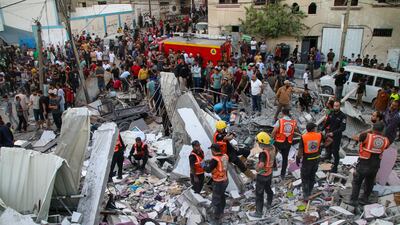
Rescuers search for victims and survivors in buildings destroyed by air strikes in Khan Younis, Gaza. Getty -
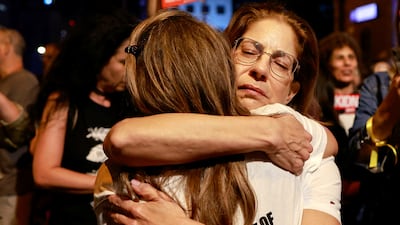
Residents of Tel Aviv show support for the families of hostages being held in Gaza by Hamas. Reuters


The World Bank announced last May its intention to mobilise $12 billion for a new Crisis Facility, seeking pledges by December 2023, ahead of the IDA replenishment in early 2024.
This was in large part affected by the Ukraine war and predates the Gaza war but has become even more urgent.
The IDA's Private Sector Window (PSW) is a vital arm in supporting private sector investment.
The blended finance instrument uses non-commercial, development funds to mobilise private sector investments in underserved sectors and markets.
“We need to help countries to get enough resources as [World Bank President] Ajay Banga has really highlighted and within those resources … to make sure that we can crowd in private sector by de-risking the investment," Mr Diop said.
“IDA-PSW has been a good instrument for us to reduce the risk that we are having in emerging markets.”
He stressed that with Cop28, “opportunities are coming up”, including the discussion about a “just transition” when it comes to energy.
In addition to the right technologies and innovation needed for developments like carbon capture “the type of things that will help a smooth transition [include] finding the right incentive financially to do that”.
Innovation will also be critical, said Mr Diop, giving the example of the reduction of methane as one of many where projects in countries such as Uganda need to be replicated.
“It is not just about CO2 emissions, other elements in the climate change agenda need to be taken care of, methane emissions being one of them … [as well as] water and transport.
“The UAE has a particular interest in water … they have been pushing on some innovation in that area and would like to see the IFC as an important partner in crowding in private sector investment," he said.
Another key sector affecting climate change is transport, where the IFC is helping finance solutions for green transportation.
Mr Diop spoke of the need to “find an instrument to keep the capital markets engaged in emerging market and not to have all these assets pulled back in the US or Europe because interest rates have been increased”.
The IFC’s efforts to expand investment in frontier markets comes at a time of heightened political and economic uncertainty, with high interest rates and slow growth in key economies.
Mr Diop sounded optimistic: “We are in a relatively good place, not a bad place, because more and more countries are seizing the opportunities which are coming from” climate action.
As an example, he said “green hydrogen will come from the south, and from emerging countries, because that's where you have renewable energy in large amounts”.
“It's not by chance that very strategically, the UAE and Saudi Arabia have been anticipated to invest very much in technology, which are related to solar and renewable energy to position the economy [for the future]."
Another area of rising opportunity is the voluntary credit market where the IFC seeks to play a role.
The pursuit of “food security also is raising opportunities for people to invest in that sector much more aggressively in emerging economies, because we know that unfortunately, because of the invasion of Ukraine, you have a disruption in the flow of food”, he said.
As a result, there is increased investment in agriculture. Another sector is technology, especially with e-economy and e-solutions being in demand.
Mr Diop said: “The UAE was the only country in the world to anticipate [having a] Minister for AI when nobody was thinking about it. The UAE was very visionary in terms of anticipating the importance of [AI] in the world economy … and gives us another important possibility for investing.”
He stressed the emergence of opportunities as there is increasing “divestment from government … governments want to monetise their assets now … as they face fiscal pressures, so, they see that these assets which are not productive, and owned by the state could now be monetised.”
Mr Diop said that Egypt is one of the countries the IFC is working with to “monetise a few assets in the different verticals that they have identified”.
The partnership for the IFC with Egypt is seen as potentially “a good model for us to help countries in monetising the assets, and creating robust PPP [public-private partnership] pipelines”, according to Mr Diop.
In the fiscal year 2023, IFC committed a record $43.7 billion to private companies and financial institutions in developing countries.
“Before that, we were on a $1.5 billion trajectory a year, incremental, we did 10 billion more, 10 times what we were doing on average," Mr Diop said.
He said that his team was committed “and they really embraced the challenge that we had … in this time to increase by 30 per cent the commitment in frontier markets is not an easy task”.
To achieve this feat, “we did it by crossing some historical lines”, he said.
“More than $10 billion in Africa, making us the largest FDI [foreign direct investor] in the private sector investing in Africa, and certainly one of the largest private institutions investing in Africa."
The IFC also committed $14 billion to climate action initiatives. While he would not reveal how much is expected for next year, he expects “very good numbers”.
“I do not expect less than 20 per cent [growth] … in the current conditions it shows really that the institution is up to the challenge.”
And while Mr Diop is optimistic about the future and the IFC’s role in increasing private sector investment, he also stressed that this is a challenging time.
“The challenges in the world are multiple. In my professional life, I don't think that I've ever come across a period of time where so many challenges were hitting us at the same time.
“This is a time more than ever, that for those who had any doubt that if you want to increase private sector investment in emerging countries and frontier markets, we need a blended finance to de-risk.”
With interest rates rising in OECD countries, in addition to inflationary pressures, there are greater challenges due to “geopolitical and war issues that we never thought that would happen in our lifetime … when you have issue of shortage in food, when you have a pandemic hitting”.
For an investor sitting in New York or London or Paris or somewhere else, their first reflex will be to go to safe assets, he said.
Asset managers such as pension managers have regulatory obligations, which means they need “simplification but also political guarantees and de-risking investment”.
Whoever talks about private sector investing “needs to put every dollar needed to de-risk investment”, Mr Diop added.

