

Signs that Japan has intervened in the yen for the second time in a month has Wall Street once again wondering how Japanese authorities are funding dollar sales and whether that may fuel more volatility in the Treasury market.
There is speculation from analysts that Japan’s Ministry of Finance sold securities to fund the intervention as Japanese authorities did in September. Until two weeks ago, foreign central banks had been shedding their holdings of US Treasuries, which suggested the country's institutions were selling bonds to stockpile cash.
There is also the possibility the Bank of Japan drained ready funds parked at the Federal Reserve’s foreign reverse repurchase agreement facility.
“The worry is that even if the BoJ has cash for intervention now, the rate at which they are intervening will require them to sell more Treasuries for future interventions,” said TD Securities strategist — Goldberg.
“That’s really what’s driving the fear.”
Treasuries cheapened in early trading on Friday, with yields soaring across the long-end and spreads steepening, as traders braced for potential Japanese intervention as the yen extended past 150.
The Ministry of Finance disclosed last month that it spent ¥2.84 trillion ($19.7 billion) in September to slow the yen’s slide in its first intervention to support the currency since 1998. Some analysts had estimated the intervention at up to ¥3.6tn.
Wall Street strategists initially assumed Japan removed cash from the Fed. After all, the island nation has historically been the largest user of the foreign reverse repo pool, with an estimated more than $110bn of cash there, data showed.
Instead, the Ministry of Finance’s foreign reserves for September showed securities were worth $985bn from $1.037tn the prior month, while deposits were little changed, an indication Japan sold holdings to finance its intervention.
More recently, though, foreign central banks replenished their Treasury holdings at the New York Fed for the second straight week, with the total rising $6bn through the week ended October 19 after rising by $11bn the prior week. By comparison, official holdings of Treasuries fell by $82bn in the six weeks ending October 5.
-

Foreign travellers arrive in Tokyo after Japan opened its doors to tourists after two-and-a-half years, owing to travel restrictions sparked by the Covid-19 outbreak. Reuters -

Japan has fully reopened to vaccinated tourists after 30 months of restrictions. Photo: Unsplash / Alex Knight -
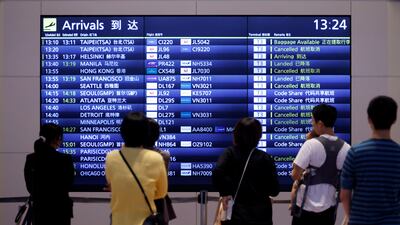
People wait for arriving travellers at Haneda International Airport. Reuters -
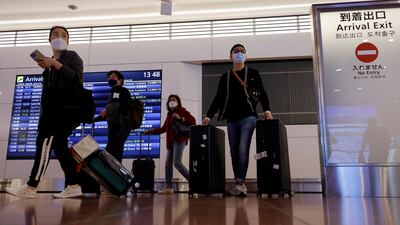
Passengers arrive at Haneda International Airport as Japan welcomes tourists again. Reuters -

International passengers arrive at Tokyo's Haneda Airport after two-and-a-half years of Covid-19 restrictions in Japan. AFP -

A traveller gets assistance at an information counter at the international terminal of Tokyo's Haneda Airport. AFP -

Unmasked people have food and drinks outdoors in Omoide Yokocho in the Shinjuku area of Tokyo. AFP -
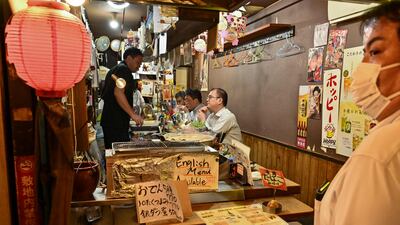
Face masks are likely to remain in most indoor places in Japan. AFP -

People visit the Meiji Shrine, a popular tourist spot, in Tokyo. AFP -

Tourists walk at the Meiji Shrine in Tokyo. AFP -

Dancers perform in Asakusa, one of Tokyo's most famous tourist spots. Getty Images -

An employee waits for customers outside a restaurant in Tokyo. Getty Images -

Women in rental kimonos walk through the Asakusa area in Tokyo, Japan. Getty Images -

Thai travellers check in for their trip to Osaka and Tokyo, at Suvarnabhumi International Airport in Samut Prakan province, Thailand. AP Photo


Meanwhile, foreign central banks stashed $330bn at the Fed’s reverse repurchase agreement facility, according to data for the period through October 19, down from a record $333bn a week earlier. That is still $55bn above the year-to-date average.
Data next week on Treasury holdings and cash held at the Fed’s foreign repo facility may provide more insight into fund flows and source of funding that immediately preceded the intervention.
The Fed’s creation of a reverse repo facility that is accessible by foreign central banks means that international monetary authorities such as the BoJ can keep a big chunk of their cash there earning interest instead of in Treasury bills and other securities.
And when they need to do something with those dollars, they can just withdraw funds from the facility without ruffling markets.

