

Drought is shrinking crops from the US Farm Belt to China’s Yangtze River basin, increasing fears of global hunger and weighing on the outlook for inflation.
The latest warning came from the American Midwest, where some corn is so parched stalks are missing ears of grain and soybean pods are fewer and smaller than usual. The dismal report from the Pro Farmer Crop Tour has helped to lift a gauge of grain prices back to the highest level since June.
The world is desperate to replenish grain reserves diminished by trade disruptions in the Baltic Sea and unfavourable weather in some of the largest growing regions.
But an industry tour of US fields over the past week shocked market participants — who had been more optimistic — with reports of extensive crop damage because of harsh heat and a lack of water.
Meanwhile, drought is taking a toll in Europe, China and India, while the outlook for exports out of Ukraine, a major corn and vegetable oil shipper, is hard to predict during Russia’s invasion.
“Even before this week’s news from the crop tour, I have been concerned that we would not see much stock rebuilding until 2023,” said Joe Glauber, a former chief economist at the US Department of Agriculture who now serves as a senior fellow at the International Food Policy Research Institute in Washington.
The “opening of Ukraine ports is a welcome sign, but volumes remain far below normal levels”, he said.
Traders always watch weather forecasts closely but this year the vigilance has intensified — every bushel matters. While corn, wheat and soybean prices have cooled off from record or near-record highs this year, futures remain highly volatile. Bad weather surprises from now until autumn harvests are finished could send prices soaring again.
An index of grains and soybeans is trading almost 40 per cent above the five-year average and the surge in crop prices has been a major contributor to global inflation.
Already, food shortages helped to lead to the downfall of Sri Lanka’s government this year when the country ran out of hard currency needed to pay for imports.
In the US, corn is the most dominant crop and a lacklustre harvest will have ripple effects across the global food supply chain, adding pressure on South America to produce bumper crops early next year.
That is especially the case if China, which is suffering its worst drought since the early 1960s, is forced to import more grains to feed its livestock herds and shore up domestic inventories.
-
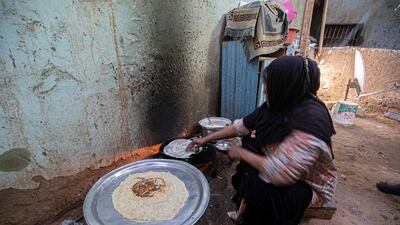
Umm Abdo prepares bread for the family in her home on the west bank of the Nile, by Egypt's southern city of Aswan. All photos: AFP -
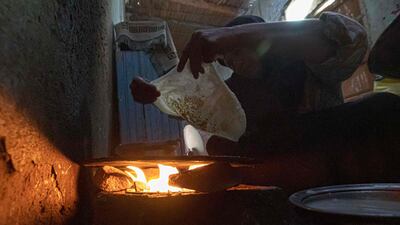
Russia's invasion of Ukraine has disrupted wheat imports to many countries, fuelling fears of higher prices and shortages. -

With global supply chains already under strain due to the Covid-19 pandemic, a wheat-buying frenzy in Egypt, Libya, Tunisia, Algeria and Morocco – all of which depend heavily on imported wheat to feed their populations – lays bare the magnitude of the challenge governments face amid sharp rises in food prices. -

The crisis was highlighted by the UN food agency, which this week predicted that poorer countries in northern Africa, Asia and the Middle East that depend heavily on wheat imports risk suffering significant food insecurity because of the war in Ukraine. -
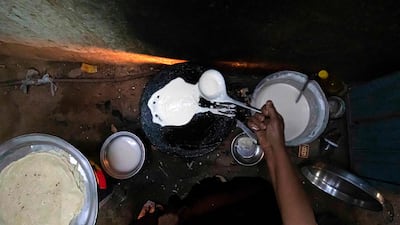
Of the five nations in northern Africa, Egypt’s wheat predicament is perhaps the gravest. The world’s largest wheat importer with a population of 102 million, Egypt relies on Russia and Ukraine for 80 per cent of its supply. -
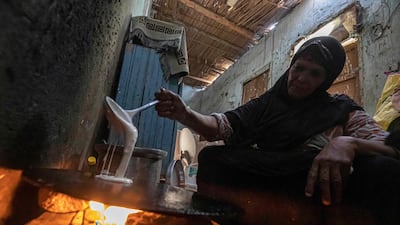
Egypt’s wheat is chiefly used to make the flatbreads provided for about 60 million citizens who are entitled to subsidised food.


After the recent crop tour, officials now estimate that US production will be 4 per cent lower than the formal government forecast. The pinch follows drought-driven shortfalls of US winter wheat as well as soybeans in Brazil, the top grower.
The global farming outlook going into 2023 has market watchers worried. For the first time in more than 20 years, the world is facing a rare third consecutive year of the La Nina phenomenon, when the equatorial Pacific cools, causing a reaction from the atmosphere above it.
This could have dire consequences for drought across the US as well as dryness across the vital crop regions of Brazil and Argentina.
And while it’s hard to link the weather in any given year to long-term climate patterns, analysts warn that global warming will be a growing drag on agricultural output in years to come.
For now, Europe is in the throes of a drought that appears to be the worst in at least 500 years, according to a preliminary analysis by experts from the European Union’s Joint Research Centre. Several EU crops are being hit particularly hard, with the yield forecasts for corn 15 per cent below the five-year average, the latest data show.
“With energy prices remaining elevated at least through this coming winter, any major shortfall in corn supplies will have devastating impact on food and feed sectors,” said Abdolreza Abbassian, a food market analyst and a former economist with the United Nations’ Food and Agriculture Organisation.
In China, drought has hit regions along the Yangtze River and the Sichuan basin, hurting rice crops, the country’s most popular food grain.
India’s rice planting has fallen 8 per cent this season because of a lack of rainfall in some areas. The government is discussing curbs on exports of so-called broken rice, which is mainly used for animal feed or to produce ethanol in India. Top buyers include China, which uses it mostly to nourish its livestock, and some African countries, which import the grain for food.
India accounts for about 40 per cent of global rice trade and is the world’s biggest shipper.
In the US, Nebraska farmer Randy Huls, a participant in the crop tour, is staring down a smaller corn harvest this year because of a lack of rain. In the longer term, he is concerned how changing weather patterns might affect the farm he leaves behind.
“They are predicting the Corn Belt to move north,” said Mr Huls, 71, who raises corn, soybeans, wheat and hogs in southern Nebraska. “We could be a lot drier yet and that’s this climate change thing they are talking about.

