


Oman plans to repay a 512 million Omani rials ($1.33 billion) loan this month, ahead of maturity, as the sultanate uses revenue from soaring oil prices to reduce public debt and increase spending on priority projects.
The government was also able to buy back some international bonds prior to their maturity and has issued local deeds to cut the cost of funding, the state-run Oman News Agency reported on Thursday.
These steps are expected to result in savings of 127m rials, which will be deducted from the future debt service.
"This will enable the government to divert the surplus to spending on areas of priority, thereby enhancing investor confidence," the ONA report said.
Overall, Oman's public debt is expected to fall to 18.6bn rials at the end of July, compared with 20.8bn rials in December 2021, the report said.
"The government affirmed that it is pressing ahead with public debt management efforts ... and expediting the pace of economic recovery," it added.
Earlier this year, Sultan Haitham, Ruler of Oman, said that the country plans to use additional revenue from soaring oil prices to reduce its public debt and support spending on government projects, while ensuring inflation does not affect basic commodity prices.
Oil prices gained 67 per cent last year as the global economy bounced back from the Covid-19 pandemic-driven slowdown.
They have remained volatile this year amid fears of a global recession, Russia’s continuing military assault on Ukraine and lingering effects from the pandemic.
Brent, the global benchmark for two thirds of the world’s oil, rose to a notch under $140 per barrel in March. It has since given up some gains but is still more than 30 per cent higher since the start of this year.
Oman, a relatively small crude producer compared with its Gulf neighbours, is more sensitive to oil-price swings and was hit hard by the pandemic and the collapse in oil prices in 2014.
Higher oil prices, combined with fiscal reforms undertaken by the country, are expected to boost its economic growth and generate a budget surplus in the medium term, the International Monetary Fund said in June.
Oman's economy is projected to grow by about 4.5 per cent in 2022, while the government is expected to have a budget surplus of 5.5 per cent this year, the Washington-based lender said.
-
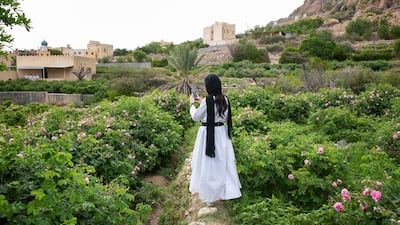
Maryam Al Saleh, 31, from Muscat takes a picture on a tour of the rose gardens of Al Ayn village in Jebel Akhdar in Oman. March and April are harvest season for roses in the picturesque mountains. All photos: Tara Atkinson -
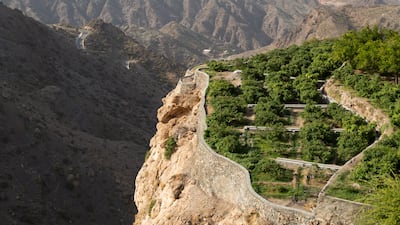
Watered from natural sources using traditional irrigation channels known as falaj, approximately 4,000 individual rose bushes thrive in Jebel Akhdar, also known as the green mountain, in the steep terraced villages of Al Aqer, Al Ayn, Saiq and Al Shuraijah. -

The pink fragrant rose is known as Al Muhammadi Rose (or Damask rose) and is widely used in fragrances, flavouring and herbal remedies in Oman. -
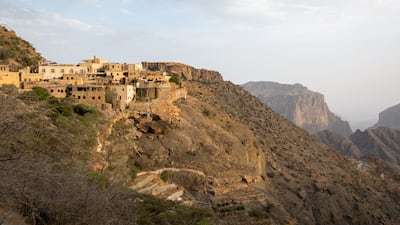
The ancient village of Al Aqer with the Alila Jabal Akhdar hotel behind it. -
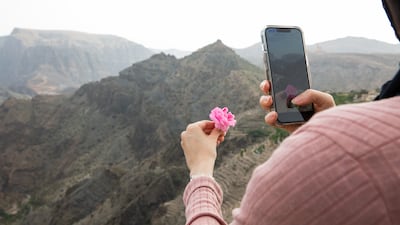
A tourist from Muscat holds up a rose against the mountain range for an Instagram picture. -
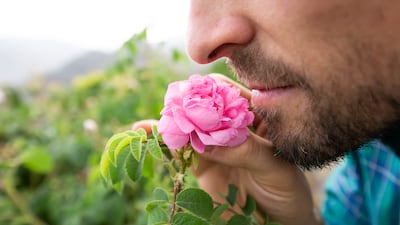
A tourist during a tour of the rose farms in Al Ayn village. -
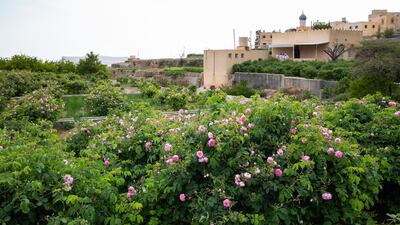
A rose garden in Al Ayn village. -
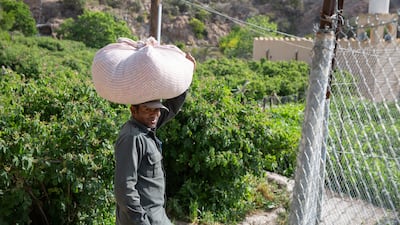
Bilal Hussain, a picker from Bangladesh, works in one of the rose gardens in Jebel Akhdar. Picked roses are placed in a cloth or a scarf and often carried on the heads of pickers. The one Bilal is carrying weighs about 11 kilograms. -
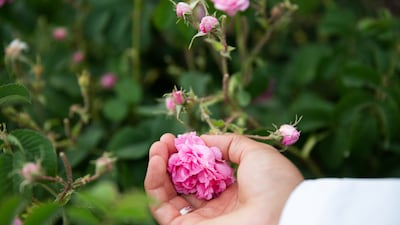
A tour guide demonstrates how roses are picked, by holding the bloom at the base and using the thumbnail to cleanly cut the stalk. Picking the roses like this preserves the petals until they are used for distillation. -
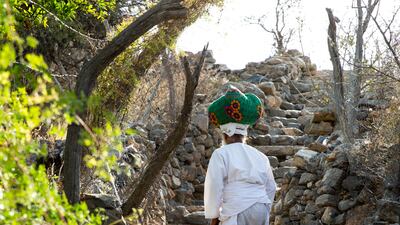
An Omani villager, Nasser, 80, with freshly-picked roses wrapped up in a cloth on his head in Al Ayn Village. Nasser has his own rose garden and factory where he processes the flowers. -
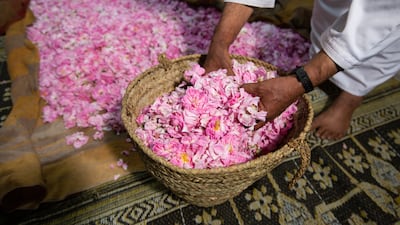
Once the roses are picked they are taken to the distillation factories to process the flowers into fragrant water or oils using traditional and modern methods. -
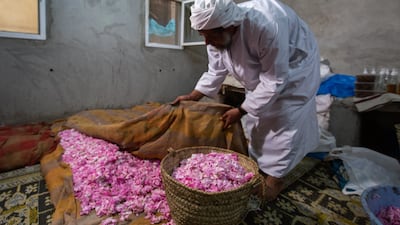
Farmer Abdullah Salim Al-Thani from Al Shuraigah village in Jebel Akhdar covers the rose petals to keep them moist before processing them in his factory behind his house. -
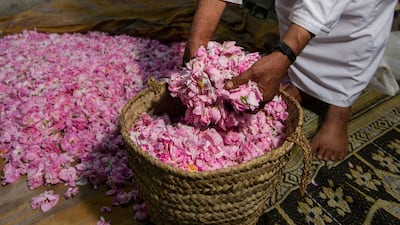
Al-Thani, 60, who is originally from Al Shuraigah village now lives in Seeh Qatanah where his factory and home are located. -
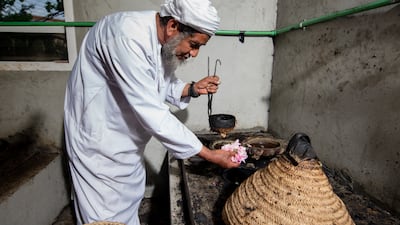
Al-Thani with a traditional distillation unit at his home. -
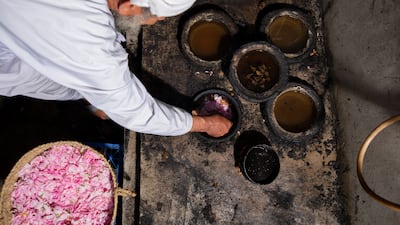
Al-Thani's system uses a bowl heated by a central gas fire. The condensation produces smoky rosewater. -
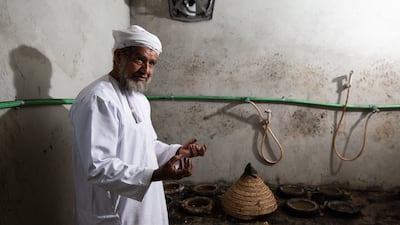
Since he was a child, Al-Thani has worked with his father in the rose factory. -
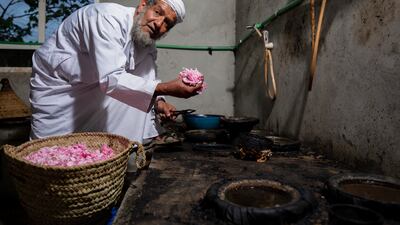
Al-Thani uses a traditional method to extract rosewater from the harvest. -
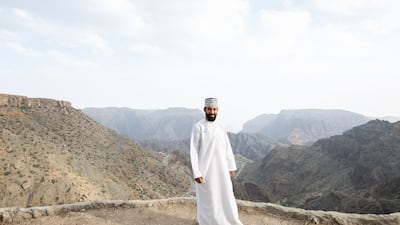
Tour guide Marwan Al Suqri on one of the rose terrace gardens in Al Ayn village. -
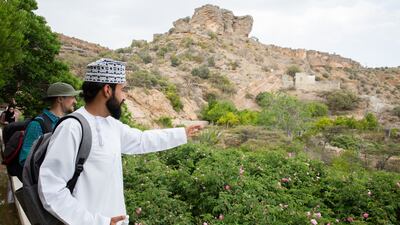
Al Suqri works as a tour guide for a perfume company in his spare time. -
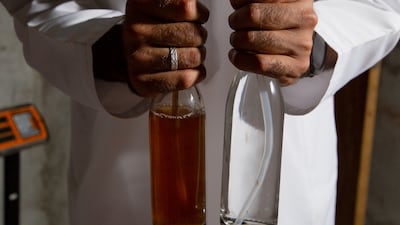
Two types of rosewater are produced in the region. The smoky rosewater is produced by using traditional methods while the clear rosewater uses a similar technique but with a modern distillation process that removes all impurities.


The sultanate recorded a budget surplus of 631m rials in the first five months of the year.
Central government debt will shrink to 45 per cent of the gross domestic product in 2022, from about 63 per cent of output in 2021, the IMF said.

