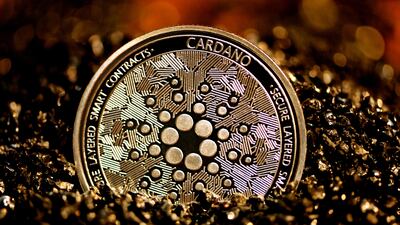
The Biden administration’s increased focus on digital assets comes at a time of broad consumer interest in the volatile cryptocurrency market. Reuters

White House 'prepares government strategy on US cryptocurrency policy'


  • English
  • Arabic

The administration of US President Joe Biden is preparing to release an initial government-wide strategy for digital assets as soon as next month and task federal agencies with assessing the risks and opportunities that they pose, according to people familiar with the matter.

Senior administration officials have held multiple meetings on the plan, which is being drafted as an executive order, said the people. The directive, which would be presented to Mr Biden in the coming weeks, puts the White House at the centre of Washington’s efforts to deal with cryptocurrencies.

Federal agencies have taken a scattershot approach to digital assets over the past several years and Biden’s team is facing pressure to lead on the issue. Industry executives often bemoan what they say is a lack of clarity on US rules and others worry that an embrace by China and other nations of government-backed coins could threaten the dollar’s dominance.

The White House declined to comment.

The Biden administration’s increased focus comes at a time of broad consumer interest in the volatile crypto market. Bitcoin, the biggest and most liquid cryptocurrency, fell below $37,000 on Friday, compared with an all-time high of nearly $69,000 in November.

The late-stage draft of the executive order details economic, regulatory and national security challenges posed by cryptocurrencies, said the people who asked not to be named discussing internal deliberations. It would call for reports from various agencies due in the second half of 2022.

One such study would come from the Financial Stability Oversight Council, a group that includes the heads of Washington’s top financial watchdogs, looking at the possible systemic impacts of digital assets. Another government report would look at illicit uses of the virtual coins.

Meanwhile, the directive would also require other agencies to weigh in – carving out roles for everyone from the State Department to the Commerce Department. Some of those tasks will be meant to ensure that the US remains competitive as the world increasingly adopts digital assets.

The administration’s plan, including the directives in the order, could be further modified before it is finalised, the people cautioned.

The administration is also expected to weigh in on the possibility of the US issuing a government-backed coin, known as a central bank digital currency, the people familiar with the talks said. But, according to one of the people, the administration is likely to hold off on taking a firm position, as the Federal Reserve is still considering the issue.

On Thursday, the Fed released a preliminary paper on the matter and opened a public comment period through May 20.


Who was Alfred Nobel?

The Nobel Prize was created by wealthy Swedish chemist and entrepreneur Alfred Nobel.

  • In his will he dictated that the bulk of his estate should be used to fund "prizes to those who, during the preceding year, have conferred the greatest benefit to humankind".
  • Nobel is best known as the inventor of dynamite, but also wrote poetry and drama and could speak Russian, French, English and German by the age of 17. The five original prize categories reflect the interests closest to his heart.
  • Nobel died in 1896 but it took until 1901, following a legal battle over his will, before the first prizes were awarded.
Long read

Mageed Yahia, director of WFP in UAE: Coronavirus knows no borders, and neither should the response

Mercer, the investment consulting arm of US services company Marsh & McLennan, expects its wealth division to at least double its assets under management (AUM) in the Middle East as wealth in the region continues to grow despite economic headwinds, a company official said.

Mercer Wealth, which globally has $160 billion in AUM, plans to boost its AUM in the region to $2-$3bn in the next 2-3 years from the present $1bn, said Yasir AbuShaban, a Dubai-based principal with Mercer Wealth.

Within the next two to three years, we are looking at reaching $2 to $3 billion as a conservative estimate and we do see an opportunity to do so,” said Mr AbuShaban.

Mercer does not directly make investments, but allocates clients’ money they have discretion to, to professional asset managers. They also provide advice to clients.

“We have buying power. We can negotiate on their (client’s) behalf with asset managers to provide them lower fees than they otherwise would have to get on their own,” he added.

Mercer Wealth’s clients include sovereign wealth funds, family offices, and insurance companies among others.

From its office in Dubai, Mercer also looks after Africa, India and Turkey, where they also see opportunity for growth.

Wealth creation in Middle East and Africa (MEA) grew 8.5 per cent to $8.1 trillion last year from $7.5tn in 2015, higher than last year’s global average of 6 per cent and the second-highest growth in a region after Asia-Pacific which grew 9.9 per cent, according to consultancy Boston Consulting Group (BCG). In the region, where wealth grew just 1.9 per cent in 2015 compared with 2014, a pickup in oil prices has helped in wealth generation.

BCG is forecasting MEA wealth will rise to $12tn by 2021, growing at an annual average of 8 per cent.

Drivers of wealth generation in the region will be split evenly between new wealth creation and growth of performance of existing assets, according to BCG.

Another general trend in the region is clients’ looking for a comprehensive approach to investing, according to Mr AbuShaban.

“Institutional investors or some of the families are seeing a slowdown in the available capital they have to invest and in that sense they are looking at optimizing the way they manage their portfolios and making sure they are not investing haphazardly and different parts of their investment are working together,” said Mr AbuShaban.

Some clients also have a higher appetite for risk, given the low interest-rate environment that does not provide enough yield for some institutional investors. These clients are keen to invest in illiquid assets, such as private equity and infrastructure.

“What we have seen is a desire for higher returns in what has been a low-return environment specifically in various fixed income or bonds,” he said.

“In this environment, we have seen a de facto increase in the risk that clients are taking in things like illiquid investments, private equity investments, infrastructure and private debt, those kind of investments were higher illiquidity results in incrementally higher returns.”

The Abu Dhabi Investment Authority, one of the largest sovereign wealth funds, said in its 2016 report that has gradually increased its exposure in direct private equity and private credit transactions, mainly in Asian markets and especially in China and India. The authority’s private equity department focused on structured equities owing to “their defensive characteristics.”

Company profile

Name:​ One Good Thing ​

Founders:​ Bridgett Lau and Micheal Cooke​

Based in:​ Dubai​​ 

Sector:​ e-commerce​

Size: 5​ employees

Stage: ​Looking for seed funding

Investors:​ ​Self-funded and seeking external investors

Mobile phone packages comparison
UAE currency: the story behind the money in your pockets
Who's who in Yemen conflict

Houthis: Iran-backed rebels who occupy Sanaa and run unrecognised government

Yemeni government: Exiled government in Aden led by eight-member Presidential Leadership Council

Southern Transitional Council: Faction in Yemeni government that seeks autonomy for the south

Habrish 'rebels': Tribal-backed forces feuding with STC over control of oil in government territory

RESULTS
%3Cp%3E5pm%3A%20Wathba%20Stallions%20Cup%20%E2%80%93%20Handicap%20(PA)%20Dh70%2C000%20(Turf)%202%2C200m%3Cbr%3EWinner%3A%20RB%20Sarab%2C%20Allaia%20Tiar%20(jockey)%2C%20Khalifa%20Al%20Neyadi%20(trainer)%3C%2Fp%3E%0A%3Cp%3E5.30pm%3A%20Mamsha%20Alkhair%20%E2%80%93%20Handicap%20(PA)%20Dh80%2C000%20(T)%201%2C600m%3Cbr%3EWinner%3A%20Mutaqadim%2C%20Ray%20Dawson%2C%20Ibrahim%20Al%20Hadhrami%3C%2Fp%3E%0A%3Cp%3E6pm%3A%20Emirates%20Fillies%20Classic%20%E2%80%93%20Prestige%20(PA)%20Dh100%2C000%20(T)%201%2C600m%3Cbr%3EWinner%3A%20Almotajalliah%2C%20Ray%20Dawson%2C%20Ibrahim%20Al%20Hadhrami%3C%2Fp%3E%0A%3Cp%3E6.30pm%3A%20Emirates%20Colts%20Classic%20%E2%80%93%20Prestige%20(PA)%20Dh100%2C000%20(T)%201%2C600m%3Cbr%3EWinner%3A%20Fadwaan%2C%20Antonio%20Fresu%2C%20Ahmed%20Al%20Mehairbi%3C%2Fp%3E%0A%3Cp%3E7pm%3A%20The%20President%E2%80%99s%20Cup%20%E2%80%93%20Group%201%20(PA)%20Dh2%2C500%2C000%20(T)%202%2C200m%3Cbr%3EWinner%3A%20Mujeeb%2C%20Richard%20Mullen%2C%20Salem%20Al%20Ketbi%3C%2Fp%3E%0A%3Cp%3E7.30pm%3A%20The%20President%E2%80%99s%20Cup%20%E2%80%93%20Listed%20(TB)%20Dh380%2C000%20(T)%201%2C400m%3Cbr%3EWinner%3A%20Western%20Writer%2C%20Richard%20Mullen%2C%20Bhupat%20Seemar%3C%2Fp%3E%0A
Kandahar%20
%3Cp%3E%3Cstrong%3EDirector%3A%3C%2Fstrong%3E%20Ric%20Roman%20Waugh%3C%2Fp%3E%0A%3Cp%3E%3Cstrong%3EStars%3A%C2%A0%3C%2Fstrong%3EGerard%20Butler%2C%20Navid%20Negahban%2C%20Ali%20Fazal%3C%2Fp%3E%0A%3Cp%3E%3Cstrong%3ERating%3A%3C%2Fstrong%3E%202.5%2F5%3C%2Fp%3E%0A
Updated: May 30, 2023, 8:13 AM