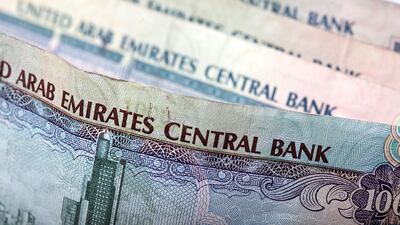
The UAE introduced the federal corporate tax with a standard statutory rate of 9 per cent, which will go into effect for businesses whose financial year starts on or after June 1 this year. Pawan Singh / The National
The UAE introduced the federal corporate tax with a standard statutory rate of 9 per cent, which will go into effect for businesses whose financial year starts on or after June 1 this year. Pawan Sing


What the UAE’s corporate tax means for SMEs


  • English
  • Arabic

April 03, 2023

Many owners of small and medium enterprises (SMEs) often have multiple revenue streams with different legal structures.

These entrepreneurs may understand their investments well. However, the introduction of corporate tax in the UAE means that these should be revisited.

There are nine types of persons defined in the corporate tax decree law and it is possible to be many at once.

Like the children’s game Guess Who, as you systematically examine the particulars of a revenue stream, you understand the beneficiary’s identity from a corporate tax perspective.

I liaised with Peter Wilson, an international tax expert from PB First, to write this column.

We can put two persons at the heart of our understanding: natural persons and juridical persons. The former includes myself and the latter includes the legal entity I work for.

Since Emiratis solely can trade as natural persons, theoretically only they should be affected by corporate tax. Everyone else must operate through a trading entity.

With the Ministry of Finance recently gazetting a ministerial decision on the Determination of Tax Residency and coupled with the corporate tax decree law, some things might not be clear to some.

Take this example. Albert, a UAE visa holder living onshore, owns a business in a qualifying free zone that only trades with similar businesses, supplemented with an occasional offshore deal.

His business is a juridical and free zone person, whereas Albert is a natural and resident person.

Albert can elect that his business is not subject to corporate tax. However, it must conduct an annual external audit.

Albert provides non-executive support to businesses in three non-UAE countries. For this, he receives Dh600,000 ($163,376) per annum.

As his services are imported into those nations, he is not subject to their taxes and, for the purposes of this example, no local withholding tax applies.

Will Albert be liable for UAE corporate tax for these activities?

In the UK, there is something called badges of trade. In simple terms, think of it as the duck test. If it walks, sounds and looks like a duck, it’s a duck.

The corporate tax decree law defines what constitutes a business and, in particular, what a business activity is. But it does not specify the categories of business or business activity that will attract the tax.

Considering the above information, is Albert trading?

Unless the government clarification says otherwise, it is not unreasonable to suggest that what he is doing is business.

The new tax residency rules confirm that Albert is a tax resident in the UAE. As he is also a natural person, he should have a suitable trade licence to conduct his overseas business activities.

Say Albert has a long-stay visa: green or gold. Using this, he can apply to get a work permit. This should ensure his non-executive work can be conducted legally from the UAE.

If such a permit is unincorporated, it does not limit liability.

Not unlike a sole trader, Albert is inherently wrapped up in his permit. A natural/juridical person chimera.

Is his permit onshore or offshore? If it’s onshore, then Albert will have to pay corporate tax on his non-executive income. If it’s offshore, like his entity, it can be avoided.

How is it possible that it could be one or the other? One answer is that it depends where Albert lives.

Some areas contain both onshore and offshore elements. Building A is legally onshore, the one across the road may not be.

I said earlier that non-Emiratis cannot trade in their own name as natural persons.

What happens if Albert receives income from abroad that is not interest, not dividends and not from a qualifying fund?

UAE to introduce federal corporate tax from June 2023 — in pictures

  • The UAE issued its federal corporate tax law that will levy a headline 9 per cent rate on taxable income exceeding Dh375,000. Silvia Razgova / The National
    The UAE issued its federal corporate tax law that will levy a headline 9 per cent rate on taxable income exceeding Dh375,000. Silvia Razgova / The National
  • Taxable income below the aforementioned threshold will be subject to a 0 per cent rate of corporate tax. Chris Whiteoak/ The National
    Taxable income below the aforementioned threshold will be subject to a 0 per cent rate of corporate tax. Chris Whiteoak/ The National
  • No corporate tax will apply on salaries or other personal income from employment — be it in the government, semi-governmental, or private sector, the Ministry of Finance said. Chris Whiteoak/ The National
    No corporate tax will apply on salaries or other personal income from employment — be it in the government, semi-governmental, or private sector, the Ministry of Finance said. Chris Whiteoak/ The National
  • Businesses will become subject to the UAE corporate tax from the beginning of their first financial year that starts on or after June 1, 2023. Victor Besa / The National
    Businesses will become subject to the UAE corporate tax from the beginning of their first financial year that starts on or after June 1, 2023. Victor Besa / The National
  • The UAE corporate tax regime builds from best practices globally and incorporates principles that are internationally known and accepted. Victor Besa / The National
    The UAE corporate tax regime builds from best practices globally and incorporates principles that are internationally known and accepted. Victor Besa / The National

The latter might have been an exempt person, and if it was, then its beneficiary would wear the same guise.

But it is not. Therefore, their beneficiary is in receipt of monies that appear to constitute taxable business revenue.

Hence, here we have an example of where a non-Emirati could be a natural person and still subject to corporate tax.

This article is not exhaustive. There are a number of other persons detailed in the decree law that I have not discussed.

With regard to those that I have, this column only touches on elements of what is possible.

It is only the beginning of the conversations many of you need to start having.

David Daly is partner at Gulf Tax Accounting Group in the UAE

ELIO

Starring: Yonas Kibreab, Zoe Saldana, Brad Garrett

Directors: Madeline Sharafian, Domee Shi, Adrian Molina

Rating: 4/5

Three ways to limit your social media use

Clinical psychologist, Dr Saliha Afridi at The Lighthouse Arabia suggests three easy things you can do every day to cut back on the time you spend online.

1. Put the social media app in a folder on the second or third screen of your phone so it has to remain a conscious decision to open, rather than something your fingers gravitate towards without consideration.

2. Schedule a time to use social media instead of consistently throughout the day. I recommend setting aside certain times of the day or week when you upload pictures or share information. 

3. Take a mental snapshot rather than a photo on your phone. Instead of sharing it with your social world, try to absorb the moment, connect with your feeling, experience the moment with all five of your senses. You will have a memory of that moment more vividly and for far longer than if you take a picture of it.

How to keep control of your emotions

If your investment decisions are being dictated by emotions such as fear, greed, hope, frustration and boredom, it is time for a rethink, Chris Beauchamp, chief market analyst at online trading platform IG, says.

Greed

Greedy investors trade beyond their means, open more positions than usual or hold on to positions too long to chase an even greater gain. “All too often, they incur a heavy loss and may even wipe out the profit already made.

Tip: Ignore the short-term hype, noise and froth and invest for the long-term plan, based on sound fundamentals.

Fear

The risk of making a loss can cloud decision-making. “This can cause you to close out a position too early, or miss out on a profit by being too afraid to open a trade,” he says.

Tip: Start with a plan, and stick to it. For added security, consider placing stops to reduce any losses and limits to lock in profits.

Hope

While all traders need hope to start trading, excessive optimism can backfire. Too many traders hold on to a losing trade because they believe that it will reverse its trend and become profitable.

Tip: Set realistic goals. Be happy with what you have earned, rather than frustrated by what you could have earned.

Frustration

Traders can get annoyed when the markets have behaved in unexpected ways and generates losses or fails to deliver anticipated gains.

Tip: Accept in advance that asset price movements are completely unpredictable and you will suffer losses at some point. These can be managed, say, by attaching stops and limits to your trades.

Boredom

Too many investors buy and sell because they want something to do. They are trading as entertainment, rather than in the hope of making money. As well as making bad decisions, the extra dealing charges eat into returns.

Tip: Open an online demo account and get your thrills without risking real money.

Essentials

The flights
Etihad and Emirates fly direct from the UAE to Delhi from about Dh950 return including taxes.
The hotels
Double rooms at Tijara Fort-Palace cost from 6,670 rupees (Dh377), including breakfast.
Doubles at Fort Bishangarh cost from 29,030 rupees (Dh1,641), including breakfast. Doubles at Narendra Bhawan cost from 15,360 rupees (Dh869). Doubles at Chanoud Garh cost from 19,840 rupees (Dh1,122), full board. Doubles at Fort Begu cost from 10,000 rupees (Dh565), including breakfast.
The tours 
Amar Grover travelled with Wild Frontiers. A tailor-made, nine-day itinerary via New Delhi, with one night in Tijara and two nights in each of the remaining properties, including car/driver, costs from £1,445 (Dh6,968) per person.

The five pillars of Islam

1. Fasting

2. Prayer

3. Hajj

4. Shahada

5. Zakat 

THE BIO

Favourite book: ‘Purpose Driven Life’ by Rick Warren

Favourite travel destination: Switzerland

Hobbies: Travelling and following motivational speeches and speakers

Favourite place in UAE: Dubai Museum

COMPANY%20PROFILE%20
%3Cp%3E%3Cstrong%3ECompany%3A%20%3C%2Fstrong%3EOlive%20Gaea%3Cbr%3E%3Cstrong%3EStarted%3A%3C%2Fstrong%3E%202021%3Cbr%3E%3Cstrong%3ECo-founders%3A%3C%2Fstrong%3E%20Vivek%20Tripathi%2C%20Jessica%20Scopacasa%3Cbr%3E%3Cstrong%3EBased%3A%3C%2Fstrong%3E%20Dubai%3Cbr%3E%3Cstrong%3ELicensed%20by%3A%20%3C%2Fstrong%3EDubai%20World%20Trade%20Centre%3Cbr%3E%3Cstrong%3EIndustry%3A%3C%2Fstrong%3E%20Climate-Tech%2C%20Sustainability%3Cbr%3E%3Cstrong%3EFunding%3A%20%3C%2Fstrong%3E%241.1%20million%3Cbr%3E%3Cstrong%3EInvestors%3A%20%3C%2Fstrong%3ECornerstone%20Venture%20Partners%20and%20angel%20investors%3Cbr%3E%3Cstrong%3ENumber%20of%20employees%3A%3C%2Fstrong%3E%208%3Cbr%3E%3C%2Fp%3E%0A
Who's who in Yemen conflict

Houthis: Iran-backed rebels who occupy Sanaa and run unrecognised government

Yemeni government: Exiled government in Aden led by eight-member Presidential Leadership Council

Southern Transitional Council: Faction in Yemeni government that seeks autonomy for the south

Habrish 'rebels': Tribal-backed forces feuding with STC over control of oil in government territory

How to donate

Send “thenational” to the following numbers or call the hotline on: 0502955999
2289 – Dh10
2252 – Dh 50
6025 – Dh20
6027 – Dh 100
6026 – Dh 200

Updated: November 21, 2024, 12:04 PM