


Saudi Arabia's international passenger traffic more than tripled in the first half of 2022 as the kingdom eased travel restrictions, hosted Umrah pilgrims and benefited from a gradual rebound in demand for long-haul travel.
The number of international passengers through the kingdom's airports rose to 16.6 million in the first six months of the year, up from 4.5 million in the same period of 2021, Mohammed Alkhuraisi, vice president of strategy at the General Authority for Civil Aviation (Gaca), told The National.
International traffic has recovered to approximately 70 per cent of pre-pandemic levels in 2019, he said.
"The Saudi aviation sector is growing in an unprecedented manner," Mr Alkhuraisi said. "It's a great signal on the progress we're making on our aviation targets."
The country's Saudi Aviation Strategy calls for tripling annual passenger traffic to 330 million by 2030, boosting the number of destinations to 250 from 99 at present and establishing a new flag carrier.
This strategy is backed by $100 billion in investments from the government and private sector.
In July, the kingdom's airports recorded a surge in passenger traffic, exceeding the pre-pandemic monthly volumes of July 2019, as the country hosted Hajj pilgrims, the Gaca official said.
A full recovery in annual passenger traffic to pre-pandemic levels is expected this year or the next, earlier than previously anticipated, Mr Alkhuraisi said.
"The next half of the year will continue the momentum, and outperform the first half," he said. "If traffic doesn't recover fully this year, then it will be in 2023, at the pace and rebound we're seeing now."
Growth during the second half of 2022 will be driven by the peak travel summer season in July to September and the kingdom hosting events such as the Future Investment Initiative in October and the World Travel & Tourism Council global summit in November in Riyadh.
-
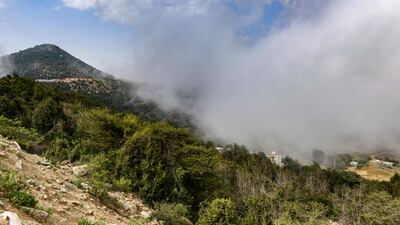
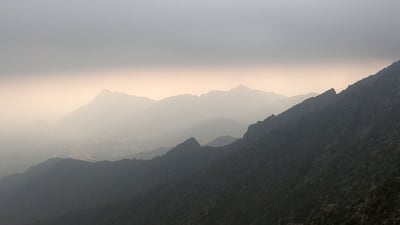
Mist at 2,800 metres above sea level at the Jabal Marir park in Al Namas in Saudi Arabia. All photos: AFP -
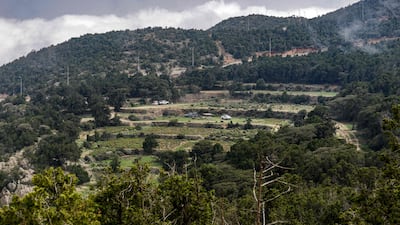
At Al Namas, humid monsoon weather keeps temperatures below 30°C, dropping as low as 15°C at night, as fog blocks out the sun over verdant hills. -

The area is a stark contrast to much of the vast, largely desert country where summer temperatures of up to 50°C are an annual challenge. -
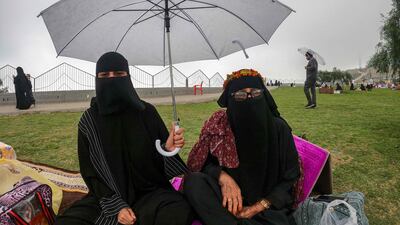
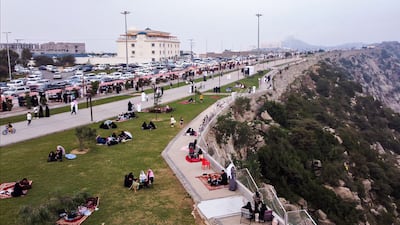
Holidaymakers – some of whom have driven 12 hours from Riyadh to escape the heat – in raincoats and woolly hats. -
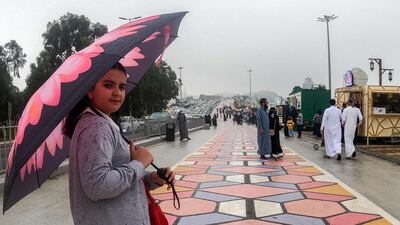
'Before we came, we packed all our winter things,' says Nouf, who did not want to give her surname. -
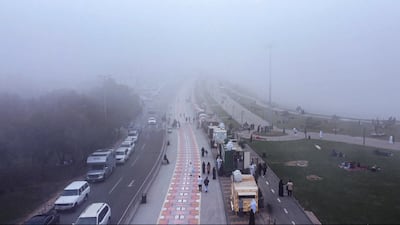
Tourist authorities built a 'fog road' for hikers and cyclists traversing a high summit that overlooks the mist-shrouded mountains. -
In 2020, a study published by 'Science Advances' magazine showed that the Gulf region has the hottest and most humid climate on the planet. -
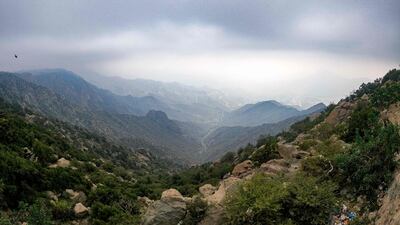
Thanks to its altitude and strong winds, Al Namas escapes the worst of the heat, says Hassan Abdullah, a Jordan-based official from the Wasm weather technology company. -

The area has become a top destination at a time when Saudi authorities, searching for new, non-oil income streams, are heavily promoting domestic and international tourism. -
As airfares surge after the pandemic, Saudi families spent 80 billion riyals (about $21 billion) on domestic travel last year, a 30 per cent increase from 2019, ministry of tourism figures show. -
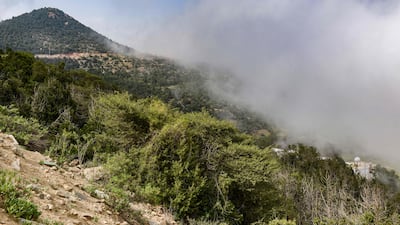
'Summer is the peak tourist season, going from May to October," says Abdullah Al-Shahri, a hotelier at Al Namas, where winter temperatures sometimes plunge to 0°C. -
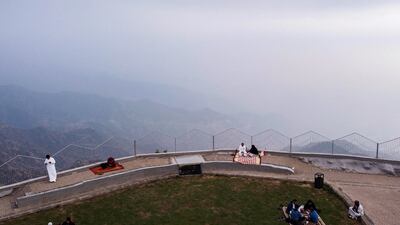
At the top of a hill that overlooks the valley, Mushabab Al-Omari takes in the view, sitting next to his wife. 'I've been here nearly three months,' the retiree says. 'And I'm ready to stay another four or five months if the weather stays like this.'


Saudi Arabia is reducing airport charges for airlines at the kingdom’s main airports by between 10 per cent and 35 per cent to create a more competitive aviation sector and attract more airline customers.
The reduction will probably be introduced in the fourth quarter of this year, Mr Alkhuraisi said.
Gaca is also working on negotiating bilateral agreements with other countries to expand the kingdom's air connectivity and the civil aviation regulator is working with other tourism entities to identify inbound and outbound source markets, he said.
The kingdom is also forging ahead with plans for the privatisation of its airports, as it seeks to diversify its oil-dominated economy and attract more investment in the aviation sector.
There are currently four airports "in the pipeline for privatisation", including Abha, Taif, Hail and Qasim, with due diligence being undertaken to determine the right privatisation model and prepare the technical documents, the Gaca official said.
With the new aviation strategy, the kingdom is "undertaking the largest transformation of the aviation sector in the 21st century", Mr Alkhuraisi said. "We are targeting regulatory reforms, airport expansions, launch of new airlines, connecting new routes, enhancing passenger experience and, most importantly, protecting consumers so that they know their rights."

