An artificial intelligence bot used by Mubadala Investment Company now challenges top executives on their investment decisions – and they even have an affectionate name for her: MAIA, pronounced Maya.
The sovereign wealth fund believes the bot is just the start of a long-term journey in which advanced technology enables money managers to make smarter decisions when billions of dollars are at stake.
Waleed Al Muhairi, Mudadala's deputy chief executive, sat down with The National at the World Economic Forum in Davos.

The presence of an 'AI member' on the board was announced last year, but Mr Al Muhairi, a graduate of Harvard and Georgetown, gave an insight into the workings of its top investment committee.
"We are as an institution, I believe, that is at the forefront of using artificial intelligence. So we have a member of our investment committee that is an AI member," he said.
"And not only does the AI member summarise and check things like valuation, are we in the right ballpark.
"But now we have the counterfactual that gets run; the AI now presents the argument to not do something."
Mudadala
With about $370 billion under management, and at an unpredictable time for the global economy, the advice is crucial, says Mr Al Muhairi.
"MAIA has made us better as an investing institution ... because of the insights that she's able to generate, and to have us curate the right type of discussion and disagreements."
Is MAIA worth the unspecified financial investment it took to create her? "She's more than earned her keep," he laughs.
Risky business
Global money managers are navigating a period of heightened uncertainty as geopolitical fragmentation, monetary tightening and market volatility converge.
For decades, the US dollar has underpinned the global financial system, providing liquidity and stability in trade, reserves and investment.
That dominance is now being questioned – not because the dollar faces imminent displacement, but because sanctions, strategic rivalry and the rise of alternative economic blocs have encouraged some countries to seek reduced reliance on US-centric financial infrastructure.
-
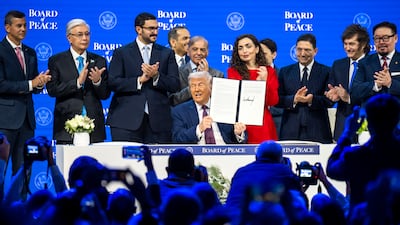
US President Donald Trump holds up the signed founding charter at the Board of Peace meeting. EPA -
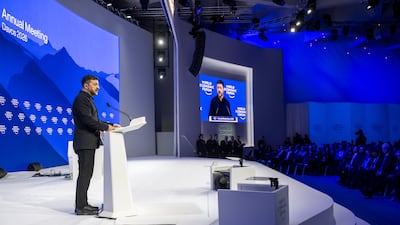
Ukrainian President Volodymyr Zelenskyy addresses the WEF gathering at Davos. EPA -
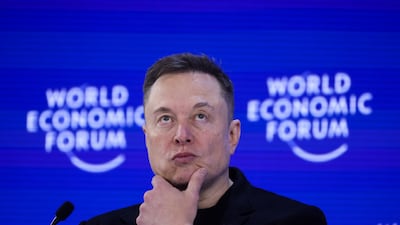
Elon Musk on stage at Davos. Bloomberg -
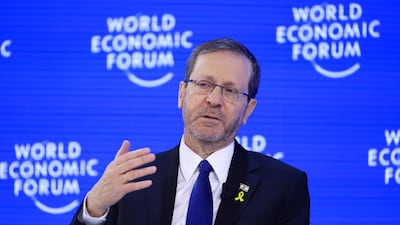
Israel's President Isaac Herzog in discussion at the World Economic Forum's 56th annual meeting in Davos, Switzerland. Bloomberg -
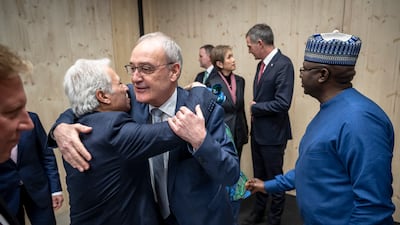
Swiss President Guy Parmelin, centre, welcomes Saudi Minister of Commerce Majid Al Qassabi, centre left, at the opening of the World Trade Organisation's informal ministerial gathering in Davos. EPA -
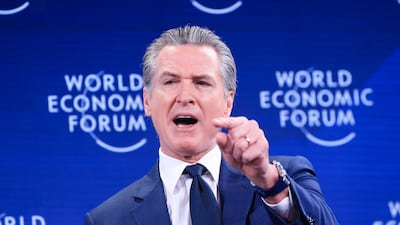
Gavin Newsom, the Governor of California, speaking at the WEF annual meeting. Bloomberg -
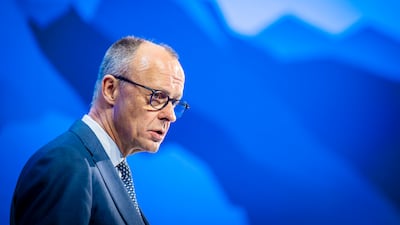
German Chancellor Friedrich Merz speaks during a plenary session in the congress hall. EPA -
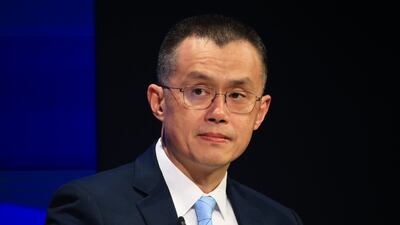
Changpeng Zhao, co-founder of Binance Holdings, in Davos. Bloomberg -
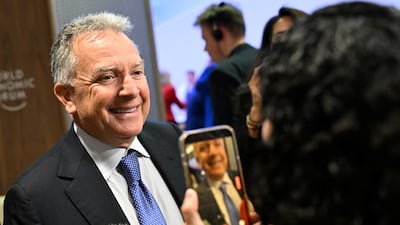
US special envoy Steve Witkoff at the WEF annual meeting. Reuters -
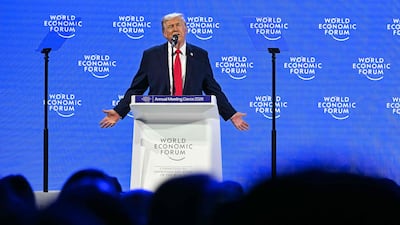
US President Donald Trump delivers his address. AFP -
Mr Trump walks from the Marine One helicopter as he arrives in Davos. EPA -
Egyptian President Abdel Fattah El Sisi at a panel discussion. EPA -
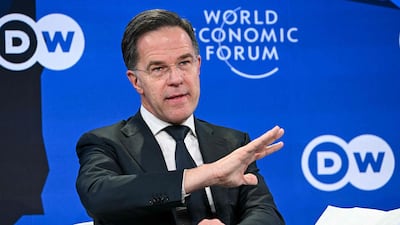
Nato Secretary General Mark Rutte at the WEF annual meeting. AFP -
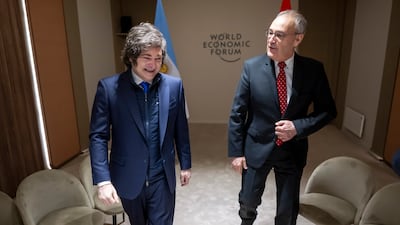
Argentina's President Javier Milei, left, with Switzerland's Federal President Guy Parmelin before a bilateral meeting on the sidelines of WEF. EPA -
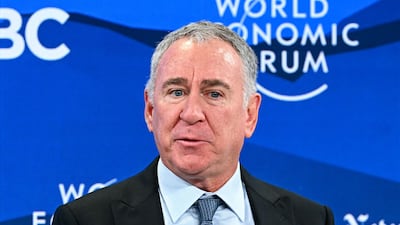
Ken Griffin, founder and chief executive of multinational hedge fund Citadel, speaking at Davos. AFP -
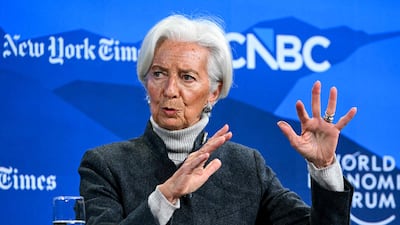
European Central Bank President Christine Lagarde in conversation. AFP -
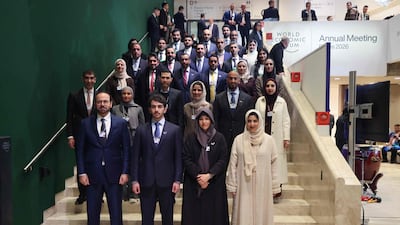
The UAE delegation arrives at the World Economic Forum annual meeting. AFP -
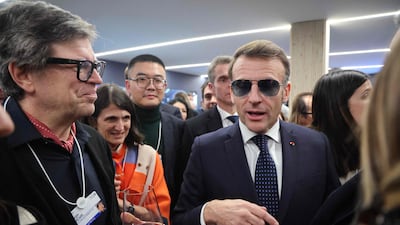
French computer scientist Yann Le Cun and French President Emmanuel Macron at the Business France event in Davos. AFP -
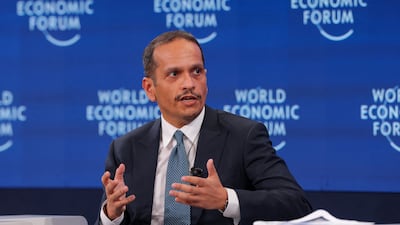
Qatari Prime Minister Mohammed bin Abdul Rahman Al Thani is in attendance. Reuters -
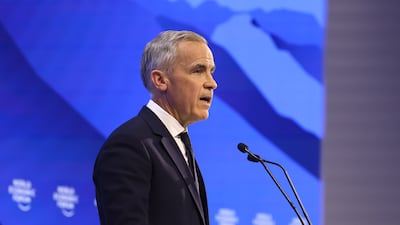
Canadian Prime Minister Mark Carney. Bloomberg -
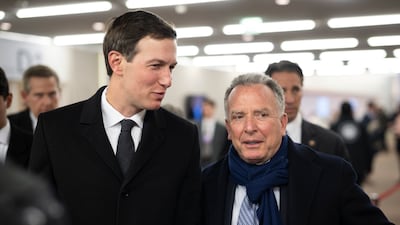
American businessman Jared Kushner, left, and Steve Witkoff, the US Special Envoy to the Middle East, walk the corridors. EPA -
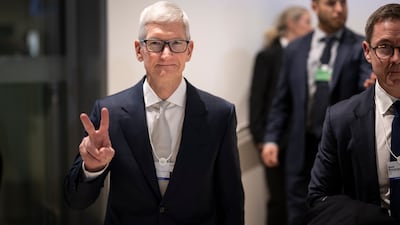
Apple chief executive Tim Cook. EPA -
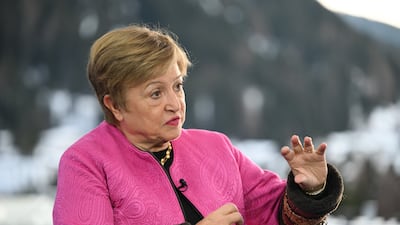
Kristalina Georgieva, managing director of the International Monetary Fund, during a TV interview. Bloomberg -
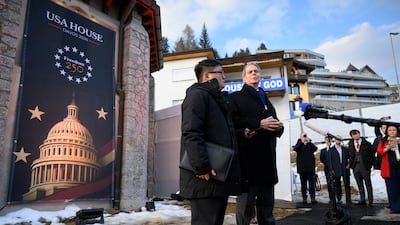
US Treasury Secretary Scott Bessent addresses the media. EPA


The result is a gradual, uneven push towards diversification that could raise transaction costs and increase currency volatility over time.
Mr Al Muhairi said the fund takes a far longer-term view and is a "conviction investor, not momentum investor".
"We don't try and time the market," he said. "We've all seen multiple cycles. We reaffirm and examine the conviction that initially took us to invest in a particular geography asset class or whatever it might be."
But the fund is also always on the lookout for opportunities.
"You want to make sure you have enough liquidity, dry powder, to take advantage of these pullbacks. That's really, really important. And it's also important not to lose your cool."
Investors need to challenge their past assumptions, he said.
"The worst thing that we can do as executives, as professionals, is just stay in our comfort zones," Mr Al Muhairi said.
"Again, [MAIA] she's completely unemotional. She's just fact-driven. Now, she doesn't get everything right. You have to keep feeding more and more information, and they get better and more precise over time.
"And MAIA's going through that journey. She's not perfect. But, wow, sometimes she'll throw out a zinger."
Global markets entered 2026 with fears of overvalued tech companies and a looming bubble. Managing the risks that come with that is the challenge for institutional investors like Mubadala.
"If you're able to take measured risk in that space, I do not think that there is a bubble. But like in all things, there's going to be winners and losers. Not everybody is going to make money."
He added: "It just feels like it's harder and harder to make money.
"Doesn't mean you can't, doesn't mean there isn't opportunity. But some things just make it a little more challenging.
"I tell our investment teams, sharpen your pencils. Opportunity is there, there's no shortage, it's just important to be crystal clear in what you believe in - and what can go wrong. Risk and reward."
UAE boom
One of the biggest stories of the past year has been the flight of wealthy individuals to the Gulf, principally Abu Dhabi and Dubai. Many of them seek to leave high-tax regimes and red tape behind, along with populist governments, fraught domestic politics and culture wars.
Mr Al Muhairi said the fresh arrival of professional financiers, along with start-ups and many thousands of families, adds to the success story of the UAE cities.
"And over time, you're going to see more capital, more businesses, more people, more families. And it's just mutually reinforcing in the most positive way that I can say."



