

The online fashion retail market in India is one of the fastest growing in the world. According to a research report by analysis firm Technavio, the worth of the sector is expected to increase by $22.97 billion between 2021 and 2026, growing at almost 19 per cent a year.
“The growth of online apparel shopping in India has been phenomenal in recent years,” says Akhil Jain, executive director at Madame, a fashion brand in India.
“Factors such as increased internet penetration, availability of affordable smartphones, and the convenience of e-commerce platforms have fuelled this trend.”
India is experiencing a seismic shift in the fashion industry with the rapid rise of online fast fashion, according to Raghav Mittal, chief creative director and managing director of the House of Surya, an Indian ethnic wear brand.
“The phenomenon, driven by technological advancements and changing consumer preferences, has revolutionised the way Indians shop for clothing and accessories,” he says.
The coronavirus pandemic gave the sector a boost as it pushed consumers towards making more purchases online. As a youthful country of 1.4 billion with rising middle-class incomes, India holds enormous potential for growth, industry insiders say.
-
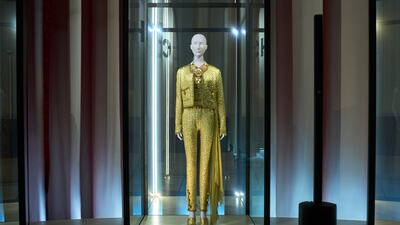
An embossed silk lamé Chanel jacket, trousers and shoes set from autumn/winter 1989 on display at the NMACC's India in Fashion exhibition. All photos: NMACC -
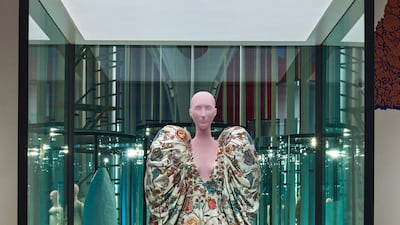
A dress by Rahul Mishra, specially commissioned for the India in Fashion exhibition -
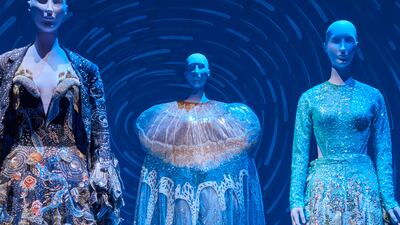
Three looks on display by Rahul Mishra from spring/summer 2023 -

A silk Jean Paul Gaultier evening ensemble from spring/summer 2013 -

Three looks by Indian designer Sabyasachi - an asymmetrical kedia, tulle lehenga and veil from 2015's Bater collection; a flapper-style gown with an extended tulle gilet and a veil from 2013; and a fluted tulle gown also from the Bater collection -

Ensembles from the Chanel section of the exhibition -
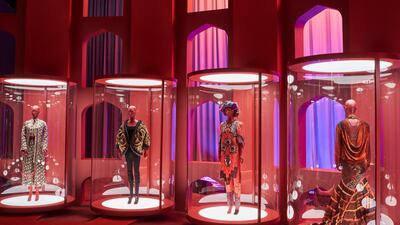
Ensembles by Zandra Rhodes (left and centre) and Jean Paul Gaultier (right)


“One of the key trends driving the growth of online fast fashion in India is the rise of social media,” says Chirag Taneja, co-founder and chief executive at GoKwik, a platform for addressing e-commerce website problems.
“Platforms like Instagram and global digital connectivity have made it easier for brands to reach a wider audience and show off their latest collections. This has led to an increase in demand for trendy and affordable fashion items.”
Access to the internet “has created a wave of aspiration among the young population of the country … and with the ease of access to digital content, social media and other channels the desire to be upbeat, cool and trendy has caught on pretty fast”, says Jasmeet Thind, co-founder of offline to online social commerce platform CoutLoot.
Underscoring the importance of the online apparel market and demand for fast fashion in India to companies, Mukesh Ambani's Reliance Industries last month struck a deal with Chinese online retailer Shein to bring the brand back to the country, according to local media reports.
Shein was banned from India three years ago after the government pushed out a number of Chinese online companies following deadly border clashes between the two countries.
The partnership could help Reliance to build a greater presence in the online fashion market in India, and gives it an opportunity to catch up with market leader Myntra, which was acquired in 2014 by e-commerce marketplace Flipkart – now owned by Walmart. Reliance has an online fashion platform called Ajio.
“The partnership between Shein and Reliance Retail is a significant development that indicates the potential for further growth and expansion in the Indian e-commerce market,” says Mr Taneja.
“It not only brings Shein back to India but also strengthens Reliance Retail's position in the online fashion segment.”
The collaboration is likely “to boost supply chain capabilities and facilitate the entry of Indian vendors into the global market, thereby creating export opportunities and contributing to the growth of the online fast fashion sector in India”, Mr Taneja adds.
Spotting an opportunity to tap the e-commerce apparel market, Beyoung is an online fast-fashion start-up that launched in 2018 “with the vision of providing trendy and affordable clothing options to young consumers”, says co-founder Shivam Soni.
The company, which focuses on menswear, caters to large and smaller cities across India, with a target market of youth and adults aged from 15 to 40 years.
The company now delivers to 25,000 postcodes across India and expects scope to grow as “the outlook for online fast fashion in India is promising”, says Mr Soni.
As the internet becomes a more popular option for fashion purchases, Mr Jain says his brand, Madame, has made significant investments in e-commerce. Its products are available on platforms such as Myntra and through its own online shopping portal, Glamly.com.
“Our online sales have experienced remarkable growth, with more customers opting for the convenience and accessibility of online shopping,” says Mr Jain.
“With the increasing adoption of digital payments and the digital transformation in India, we anticipate further growth in the online fashion segment, opening up new opportunities for fast-fashion brands.”
Consumers can now purchase fast-fashion products manufactured and marketed in any part of India thanks to convenient payment options, according to Siddharth Pandit, chief executive of StyleBuddy.
However, there is a downside and challenge to the growth of fast fashion in India: the environmental impact.
“The impacts are accelerated by superfast fashion retailers,” Mr Pandit says.

This comes as India is trying to reduce its carbon footprint, with the ultimate aim of having net-zero emissions by 2070.
India needs to do much more to be able to manage the environmental effect of its rising appetite for clothing trends and make the sector more sustainable, experts say.
“The increasing demand of fast fashion is definitely a major environmental concern,” says Poonam Bhagchandani, associate professor and head of the department, art and design at Sharda University.
“We all know that the textile industry is major polluting industry. Major pollutants are dyes, chemicals used in the processing, along with the large consumption of water, land and energy. We all talk about sustainable fashion nowadays but to be truly sustainable, it will take many more years.”
More effort is needed to boost India's circular economy as the industry grows, she adds.
“Very less brands are using sustainable measures,” says Professor Bhagchandani. “The government needs to make some strict laws keeping in mind the United Nations Development Programme sustainability goals.”
However, a number of brands are now adopting sustainable practices, with increasing consciousness among consumers regarding their carbon footprint and sustainability, according to Sudiksha Jain, co-founder of NeceSera, an online fashion retailer.
“This has led to the rise of home-grown brands focused on slow fashion, emphasising on ethical practices and sustainable production,”
NeceSera is a “slow-fashion” brand that is creating garments designed to last longer, Ms Jain says.
“We are taking measures to address the environmental impact associated with fast fashion,” she adds.
“We recognise the harmful effects of the use-and-throw culture, non-eco-friendly fabrics, excessive inventory, and frequent shopping patterns. To tackle these issues, we specialise in using higher-quality fabrics that are long-lasting.”
Another challenge for online fast fashion retailers is the high rate of returns.
“Indian consumers are often not satisfied with the fit or quality of the products they purchase online and they return them for a refund,” says Mr Taneja.
“Not only this, cash on delivery is incredibly prominent in India. Brands are also faced with the problem of orders cancelled before delivery, commonly known as return to origin, which further brings a challenge in terms of reverse logistics, product wastage and other added costs.”
Logistics is another area that is not easy in a country as large as India, where infrastructure still requires further development, online retailers say.
“Logistics and transporting goods have presented notable challenges for Beyoung, particularly being based in a tier-two city like Udaipur,” says Mr Soni.
Despite the challenges, the opportunity is enormous and the outlook for the online fast-fashion sector in India is positive, says Mr Taneja.
“With the increasing adoption of digital platforms and the growing fashion consciousness among Indian consumers, the demand for affordable and trendy clothing is expected to continue rising,” he adds.
“Brands that can address the challenges of size and fit, returns and logistics, and sustainability, are likely to thrive in this sector.”

