


Airlines around the world are on track to return to profit next year after narrowing losses this year as passenger demand continues to improve and Covid-19 restrictions ease, despite economic headwinds, the International Air Transport Association (Iata) has said.
The global industry is forecast to collectively earn a net income of $4.7 billion in 2023 — the first time it will return to the black since 2019, when it recorded a profit of $26.4 billion — while revenue is projected to reach $779 billion, Iata said in Geneva on Tuesday.
The net profit margin for 2023 stands at 0.6 per cent, compared with 3.1 per cent in 2019.
The expected financial recovery is a “great achievement”, given the scale of the financial and economic damage caused by government-imposed pandemic restrictions, said Iata director general Willie Walsh.
“Despite the economic uncertainties, there are plenty of reasons to be optimistic about 2023. Lower oil price inflation and continuing pent-up demand should help to keep costs in check as the strong growth trend continues,” he said.
“At the same time, with such thin margins, even an insignificant shift in any one of these variables has the potential to shift the balance into negative territory. Vigilance and flexibility will be key.”
The projected profit and revenue of 2023 shows there is “much more ground to cover” to put the global industry on a solid financial footing, Mr Walsh warned.
While many airlines are sufficiently profitable to attract the capital needed to drive the industry forward as it decarbonises, many others are struggling due to onerous regulation, high costs, inconsistent government policies and inefficient infrastructure, he said.
The expected return to profit next year comes at a time when the industry's prospects for the year have improved, with strong passenger demand and a rebound from the coronavirus-induced slowdown that ravaged air travel for about three years.
Next year, airlines' passenger operations are expected to generate $522 billion in revenue as demand rises to 85.5 per cent of 2019 levels over the course of the year, Iata said.
This takes into account the uncertainty related to China’s zero-Covid policies that has constrained domestic and international markets.
Passenger numbers are expected to surpass four billion for the first time since 2019, with 4.2 billion travellers expected to fly, said Iata.
However, passenger yields could soften as slightly lower energy costs are passed on to the consumer, despite passenger demand growing faster than capacity, it said.
Despite the expected recovery, airlines are monitoring economic and geopolitical risks that could affect next year's outlook.
_____________________________
World's safest airlines 2022 revealed: Etihad Airways and Emirates among best
-

1. Air New Zealand. AFP -
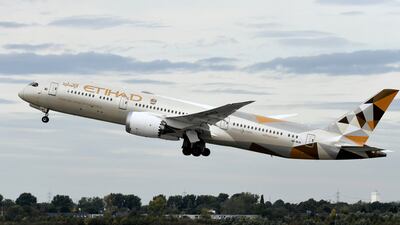
2. Etihad Airways. AFP -
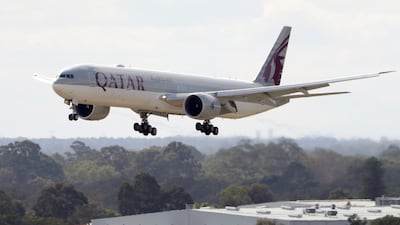
3. Qatar Airways. EPA -
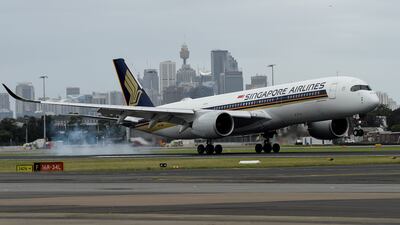
4. Singapore Airlines. EPA -

5. TAP Air Portugal. Reuters -

6. Scandinavian Airlines (SAS). Reuters -

7. Qantas. Reuters -
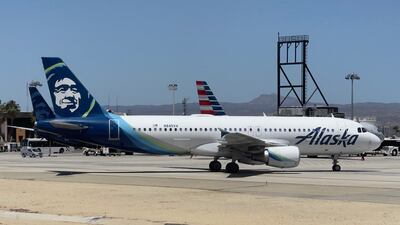
8. Alaska Airlines. AFP -

9. EVA Air. EPA -
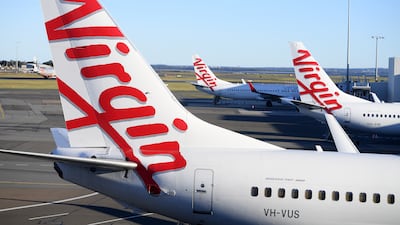
10. Virgin Australia/Atlantic. EPA -

11. Cathay Pacific. Getty Images -

12. Hawaiian Airlines. Reuters -
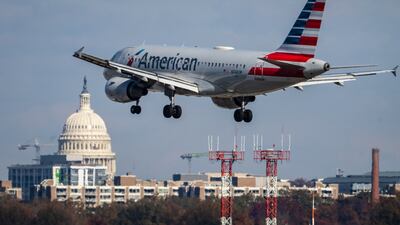
13. American Airlines. AFP -

14. Lufthansa/Swiss Group. AFP -
15. Finnair. AFP -
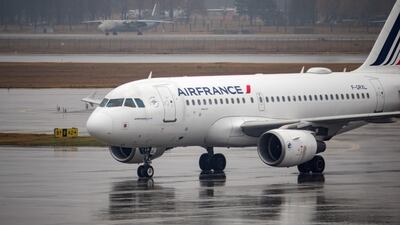
16. Air France-KLM Group. Getty Images -

17. British Airways (BA). EPA -
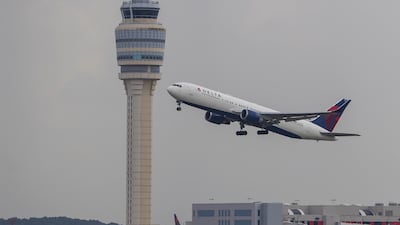
18. Delta Air Lines. EPA -

19. United Airlines. AFP -

20. Emirates. Reuters


_____________________________
The risk of a recession could affect passenger and cargo demand, although this will probably come with some mitigation in the form of lower oil prices, Iata said.
The outlook anticipates a gradual reopening of China to international traffic and the progressive easing of domestic Covid-19 restrictions from the second half of next year. However, prolonged isolation policies would adversely affect the outlook, Iata said.
Proposals to increase infrastructure charges or taxes to support sustainability efforts could also eat away at profitability next year if these ideas materialise, it said.
“Airlines must remain vigilant to any increases in taxes or infrastructure fees. And we will need to be particularly wary of those made in the name of sustainability,” Mr Walsh said.
“Our commitment is to net-zero [carbon dioxide] emissions by 2050. We will need all the resources we can muster, including government incentives, to finance this enormous energy transition. More taxes and higher charges would be counterproductive.”
In 2022, the net losses of airlines are expected to amount to $6.9 billion, an improvement on the $9.7 billion loss for 2022 in Iata's June outlook, the industry body said.
This is significantly higher than losses of $42 billion and $137.7 billion that were recorded last year and in 2020, respectively.
The improved outlook arises from better yields and strong cost control in the face of rising fuel prices.
Passenger yields are expected to grow by 8.4 per cent, from 5.6 per cent outlined in June. Propelled by this, passenger revenue is expected to grow to $438 billion, from $239 billion last year.
Middle East performance
The airlines in the Middle East are expected to post a loss of $1.1 billion in 2022, before they earn a profit of $268 million next year, Iata said.
Passenger demand is expected to grow 23.4 per cent next year, outpacing capacity growth of 21.2 per cent, with the region forecast to serve 97.8 per cent of pre-pandemic demand levels using 94.5 per cent of pre-crisis capacity.
The regional airlines benefited from rerouting of flights from the Ukraine war as they continued to serve destinations in Russia and from pent-up travel demand using their massive global networks as international travel markets reopened.
Air cargo market under pressure
The global air cargo industry is forecast to come under increased pressure next year as belly capacity grows, with airlines returning more passenger jets to the skies in response to higher travel demand.
Cargo revenue is expected to hit $149.4 billion next year, less than this year's $201.4 billion but still stronger than 2019 levels, Iata said.
Economic uncertainty will lead to cargo volume decreasing to 57.7 million tonnes next year, down from 60.3 million tonnes this year and below last year's peak of 65.6 million tonnes.

