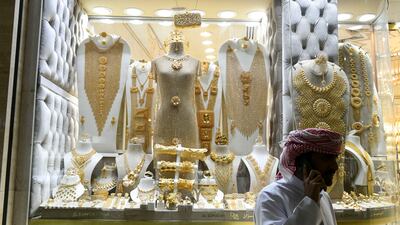
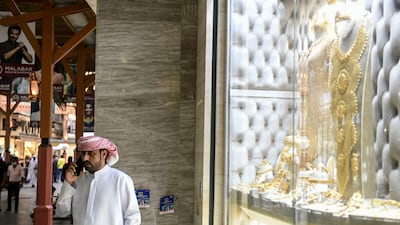
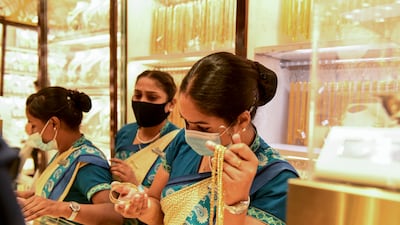
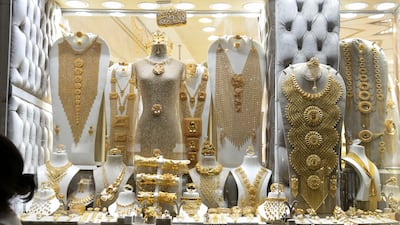
The new rules require companies to take steps to prevent the misuse of gold imports by money launderers. AFP

UAE to introduce new gold import rules with up to $1.36m in fines for businesses in breach


  • English
  • Arabic

The UAE will introduce a new set of regulations on gold imports in line with international rules that seek to thwart money laundering and the financing of terrorism and illegal organisations.

The guidelines were announced by the Ministry of Economy on Thursday and are the latest in a series of initiatives by the Emirates to enhance oversight of the trade and circulation of gold in line with international standards.

The new policy, which governs the responsible sourcing of gold by precious metal importers and refiners, aims to consolidate the UAE’s position as a leading global centre for bullion.

Those found in breach of the regulations face fines in the range of Dh50,000 to Dh5 million ($13,623 to $1.36m).

Regulated businesses must comply and enforce the new provisions. These include companies operating refineries and the recycling of gold products inside and outside the country.

The initiative includes the establishment of the Emirates Gold Bullion Committee to unify national efforts to enhance oversight of the gold sector, with the participation of the private sector, and the setting up of a federal platform for gold trading.

The country unveiled the UAE Good Delivery Standard for Gold in November 2021, a voluntary national standard for the gold sector to establish a framework that favours ideal specifications in the delivery and circulation of the yellow metal.

The regulations on gold imports will come into effect from January 2023. They have been drafted in accordance with guidance from the Organisation for Economic Co-operation and Development (OECD) and its corresponding protocol for gold.

The regulations are expected to promote the competitiveness of the UAE’s business and investment environment, the Ministry of Economy said.

“The adherence to these guidelines is mandatory for all gold refineries operating in the country, starting from next January, in line with national trends in this regard,” said Safeya Al Safi, director of the Anti-Money Laundering Department at the Ministry of Economy.

“It takes international best practices and the findings and recommendations of the Financial Action Task Force into account, and helps consolidate the UAE’s position as a major player in supply chains and global trade networks for the gold.”

The new guidelines support legislation to counter money laundering and combat terrorism financing, in line with the directives of the OECD and its annex related to gold, said Ms Al Safi.

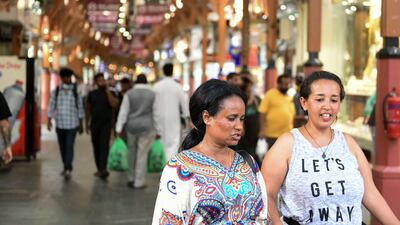
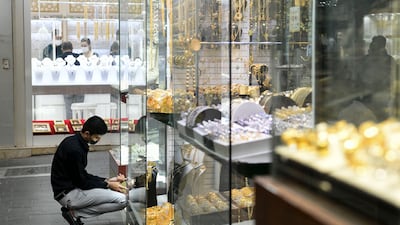
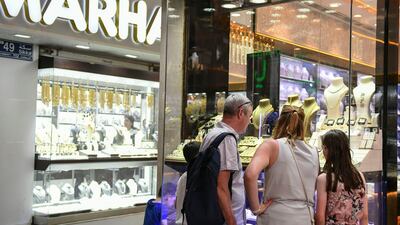
  • Shoppers explore the Deira Gold Souq in Deira. All photos: Khushnum Bhandari / The National
    Shoppers explore the Deira Gold Souq in Deira. All photos: Khushnum Bhandari / The National
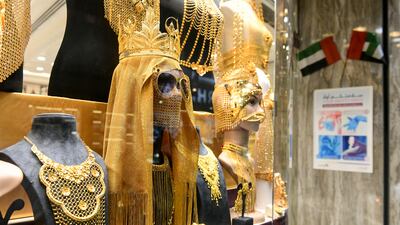
  • The rich displays of the gold souq.
    The rich displays of the gold souq.
  • A salesman adding pieces to the window display.
    A salesman adding pieces to the window display.
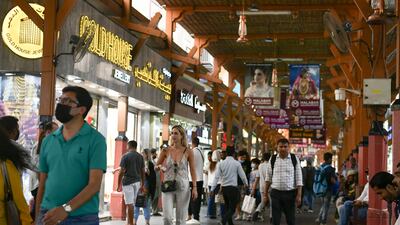
  • Crowds brave the summer heat at the Deira souq.
    Crowds brave the summer heat at the Deira souq.
  • Anil Dhanak, founder of Kanz Jewellers, in the gold souq, Dubai.
    Anil Dhanak, founder of Kanz Jewellers, in the gold souq, Dubai.
  • The gold souq in Deira, Dubai.
    The gold souq in Deira, Dubai.
  • Wares on display at the gold souq in Deira.
    Wares on display at the gold souq in Deira.
  • Sales staff at Kanz Jewellers in the gold souq.
    Sales staff at Kanz Jewellers in the gold souq.
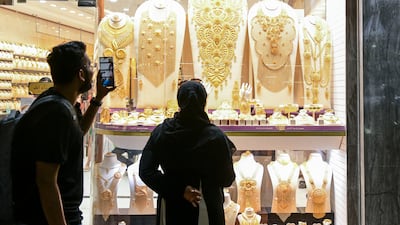
  • A dazzling window display at the gold souq.
    A dazzling window display at the gold souq.
  • A staff member adds pieces to a window display at the gold souq. It is a popular attraction for visitors to Dubai.
    A staff member adds pieces to a window display at the gold souq. It is a popular attraction for visitors to Dubai.
  • Intricately crafted items fill a window at the souq.
    Intricately crafted items fill a window at the souq.
  • A shopkeeper makes sure that his windows gleam as much as the gold items on sale behind them.
    A shopkeeper makes sure that his windows gleam as much as the gold items on sale behind them.
  • Window shopping at the gold souq.
    Window shopping at the gold souq.
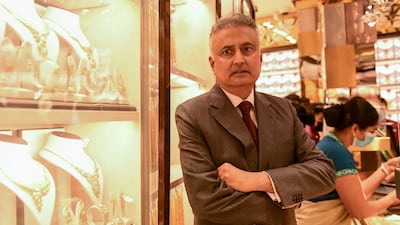
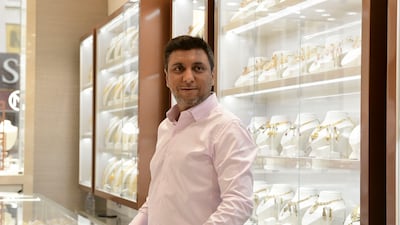
  • Vishal Dhakan, director of Dhakan Jewellers, stands behind his counter, surrounded by an array of gold items.
    Vishal Dhakan, director of Dhakan Jewellers, stands behind his counter, surrounded by an array of gold items.

“These guidelines are expected to enhance the competitiveness of our national business and investment environment, and strengthen our national economy’s reputation at the regional and global levels,” she said.

The regulations specify the affected entities, which include companies involved in gold refining and the recycling of gold products inside and outside the country, businesses falling under the precious metals and gemstones trade sectors, and those labelled as designated non-financial business or professions.

The rules require these companies to take the necessary steps and adapt their policies and procedures to prevent the misuse of gold imports in money laundering or other financial crimes.

“Companies must consider the risks of financial crime in their relations with their suppliers, and communicate with the supervisory authority to find out the measures needed to be taken with regard to the responsible supply of gold from conflict-affected and high-risk areas, to counter money laundering and combat the financing of terrorism,” the Ministry of Economy said.

The regulations state that the gold import centres must comply with a number of risk management policies when supplying gold from conflict-affected and high-risk areas by following a five-step framework.

The framework stipulates the establishment of an effective governance system, provides for risk assessment within the supply chain, mitigates identified risks, allows for independent third-party reviews and calls for periodic reporting.

The guidelines require affected entities to hire an in-house officer to handle compliance tasks within the controlled entities, whose role would entail taking direct responsibility for the due diligence process related to the gold supply chain.


The Saga Continues

Wu-Tang Clan

(36 Chambers / Entertainment One)

What went into the film

25 visual effects (VFX) studios

2,150 VFX shots in a film with 2,500 shots

1,000 VFX artists

3,000 technicians

10 Concept artists, 25 3D designers

New sound technology, named 4D SRL


MATCH INFO

Manchester United 2
(Martial 30', McTominay 90 6')

Manchester City 0

Explainer: Tanween Design Programme

Non-profit arts studio Tashkeel launched this annual initiative with the intention of supporting budding designers in the UAE. This year, three talents were chosen from hundreds of applicants to be a part of the sixth creative development programme. These are architect Abdulla Al Mulla, interior designer Lana El Samman and graphic designer Yara Habib.

The trio have been guided by experts from the industry over the course of nine months, as they developed their own products that merge their unique styles with traditional elements of Emirati design. This includes laboratory sessions, experimental and collaborative practice, investigation of new business models and evaluation.

It is led by British contemporary design project specialist Helen Voce and mentor Kevin Badni, and offers participants access to experts from across the world, including the likes of UK designer Gareth Neal and multidisciplinary designer and entrepreneur, Sheikh Salem Al Qassimi.

The final pieces are being revealed in a worldwide limited-edition release on the first day of Downtown Designs at Dubai Design Week 2019. Tashkeel will be at stand E31 at the exhibition.

Lisa Ball-Lechgar, deputy director of Tashkeel, said: “The diversity and calibre of the applicants this year … is reflective of the dynamic change that the UAE art and design industry is witnessing, with young creators resolute in making their bold design ideas a reality.”

INDIA SQUAD

Rohit Sharma (captain), Shikhar Dhawan (vice-captain), KL Rahul, Suresh Raina, Manish Pandey, Dinesh Karthik (wicketkeeper), Deepak Hooda, Washington Sundar, Yuzvendra Chahal, Axar Patel, Vijay Shankar, Shardul Thakur, Jaydev Unadkat, Mohammad Siraj and Rishabh Pant (wicketkeeper)

'The Woman in the House Across the Street from the Girl in the Window'

Director:Michael Lehmann

Stars:Kristen Bell

Rating: 1/5

Who was Alfred Nobel?

The Nobel Prize was created by wealthy Swedish chemist and entrepreneur Alfred Nobel.

  • In his will he dictated that the bulk of his estate should be used to fund "prizes to those who, during the preceding year, have conferred the greatest benefit to humankind".
  • Nobel is best known as the inventor of dynamite, but also wrote poetry and drama and could speak Russian, French, English and German by the age of 17. The five original prize categories reflect the interests closest to his heart.
  • Nobel died in 1896 but it took until 1901, following a legal battle over his will, before the first prizes were awarded.
Specs

Engine: Dual-motor all-wheel-drive electric

Range: Up to 610km

Power: 905hp

Torque: 985Nm

Price: From Dh439,000

Available: Now

MATCH INFO

Manchester City 3 (Silva 8' &15, Foden 33')

Birmginahm City 0

Man of the match Bernado Silva (Manchester City)

Mercer, the investment consulting arm of US services company Marsh & McLennan, expects its wealth division to at least double its assets under management (AUM) in the Middle East as wealth in the region continues to grow despite economic headwinds, a company official said.

Mercer Wealth, which globally has $160 billion in AUM, plans to boost its AUM in the region to $2-$3bn in the next 2-3 years from the present $1bn, said Yasir AbuShaban, a Dubai-based principal with Mercer Wealth.

Within the next two to three years, we are looking at reaching $2 to $3 billion as a conservative estimate and we do see an opportunity to do so,” said Mr AbuShaban.

Mercer does not directly make investments, but allocates clients’ money they have discretion to, to professional asset managers. They also provide advice to clients.

“We have buying power. We can negotiate on their (client’s) behalf with asset managers to provide them lower fees than they otherwise would have to get on their own,” he added.

Mercer Wealth’s clients include sovereign wealth funds, family offices, and insurance companies among others.

From its office in Dubai, Mercer also looks after Africa, India and Turkey, where they also see opportunity for growth.

Wealth creation in Middle East and Africa (MEA) grew 8.5 per cent to $8.1 trillion last year from $7.5tn in 2015, higher than last year’s global average of 6 per cent and the second-highest growth in a region after Asia-Pacific which grew 9.9 per cent, according to consultancy Boston Consulting Group (BCG). In the region, where wealth grew just 1.9 per cent in 2015 compared with 2014, a pickup in oil prices has helped in wealth generation.

BCG is forecasting MEA wealth will rise to $12tn by 2021, growing at an annual average of 8 per cent.

Drivers of wealth generation in the region will be split evenly between new wealth creation and growth of performance of existing assets, according to BCG.

Another general trend in the region is clients’ looking for a comprehensive approach to investing, according to Mr AbuShaban.

“Institutional investors or some of the families are seeing a slowdown in the available capital they have to invest and in that sense they are looking at optimizing the way they manage their portfolios and making sure they are not investing haphazardly and different parts of their investment are working together,” said Mr AbuShaban.

Some clients also have a higher appetite for risk, given the low interest-rate environment that does not provide enough yield for some institutional investors. These clients are keen to invest in illiquid assets, such as private equity and infrastructure.

“What we have seen is a desire for higher returns in what has been a low-return environment specifically in various fixed income or bonds,” he said.

“In this environment, we have seen a de facto increase in the risk that clients are taking in things like illiquid investments, private equity investments, infrastructure and private debt, those kind of investments were higher illiquidity results in incrementally higher returns.”

The Abu Dhabi Investment Authority, one of the largest sovereign wealth funds, said in its 2016 report that has gradually increased its exposure in direct private equity and private credit transactions, mainly in Asian markets and especially in China and India. The authority’s private equity department focused on structured equities owing to “their defensive characteristics.”

Types of bank fraud

1) Phishing

Fraudsters send an unsolicited email that appears to be from a financial institution or online retailer. The hoax email requests that you provide sensitive information, often by clicking on to a link leading to a fake website.

2) Smishing

The SMS equivalent of phishing. Fraudsters falsify the telephone number through “text spoofing,” so that it appears to be a genuine text from the bank.

3) Vishing

The telephone equivalent of phishing and smishing. Fraudsters may pose as bank staff, police or government officials. They may persuade the consumer to transfer money or divulge personal information.

4) SIM swap

Fraudsters duplicate the SIM of your mobile number without your knowledge or authorisation, allowing them to conduct financial transactions with your bank.

5) Identity theft

Someone illegally obtains your confidential information, through various ways, such as theft of your wallet, bank and utility bill statements, computer intrusion and social networks.

6) Prize scams

Fraudsters claiming to be authorised representatives from well-known organisations (such as Etisalat, du, Dubai Shopping Festival, Expo2020, Lulu Hypermarket etc) contact victims to tell them they have won a cash prize and request them to share confidential banking details to transfer the prize money.

Who's who in Yemen conflict

Houthis: Iran-backed rebels who occupy Sanaa and run unrecognised government

Yemeni government: Exiled government in Aden led by eight-member Presidential Leadership Council

Southern Transitional Council: Faction in Yemeni government that seeks autonomy for the south

Habrish 'rebels': Tribal-backed forces feuding with STC over control of oil in government territory

Updated: July 21, 2022, 1:05 PM