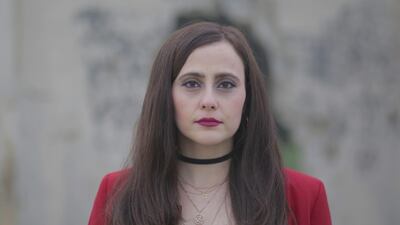
Lebanese director Farah Shaer's short film 'Shakwa' is competing at El Gouna Film Festival. Courtesy of the artist

Farah Shaer on her new film 'Shakwa': 'I wanted it to be as real, spontaneous and stressful as possible'


  • English
  • Arabic

The set is a brutish police station somewhere in Beirut. A woman walks into an office full of men. Hesitantly, she says she wants to report a rape.

Shakwa, the fifth short by Lebanese filmmaker and actress Farah Shaer, is a valiant single-shot film that zooms in on one woman as she attempts to lodge a complaint against her husband. It premiered at El Gouna Film Festival this week and is competing in the short film competition. It is the first of Shaer's films, which revolve around women's issues that often go untold in Arab societies, to be screened in the Arab world.

"I am a feminist, but that is not the reason I make these films. I make these films because first I am a female filmmaker, and it's hard for me to distance myself from the sociopolitical discourse in Lebanon. My whole entourage is my inspiration for these films, and I have a strong voice, a strong tool, which is cinema," Shaer, who also identifies as a sociopolitical activist, tells The National.

Shakwa is centred on Hoda, poignantly portrayed by Vanessa Mghames, as she tries to convince a male officer that she has been repeatedly raped by her husband of a year and a half, and that her life is in danger. Through Mghames, viewers are reminded of the web of bureaucracy required to report domestic violence in many countries around the world, and of how difficult it is to prove such crimes.

“It’s not just about this one-on-one interaction, or one incident. It’s about being a woman inside a whole institution ... She’s not only surrounded by men, but also by patriarchal behaviour and laws, which are unjust,” says Shaer of the wider context in which the idea for the film was conceived.

Instantly, the officer dismisses Hoda’s claim: “There is no such thing as rape in marriage.” Even when she shows her bruises as evidence, he snubs her. How can he know for sure that she didn’t do this to herself, only to frame her husband?

Actress Vanessa Mghames as Hoda in a scene from Shaer’s ‘Shakwa’. Farah Shaer

The importance of Shakwa is that it trudges where the conversation around sexual violence rarely arrives in this part of the world: rape within marriage. The film also underlines how difficult it is for women to report rapists they actually know, for fear of the repercussions they might endure if these men find out. "In cinema, it's not only about the answers, it's about us pushing towards raising questions. Questions like who is in control of a woman's body. Is it her? It definitely should be her. And that's why we make films and raise these questions."

In cinema, it's not only about the answers, it's about us pushing towards raising questions

Politics is inseparable from Shaer's work, she admits. "For me, as a filmmaker, cinema is my only tool for resistance, for seeking change, for asking for change."

Throughout the 14-minute film, the camera never leaves Hoda, perhaps, it could be said, reflecting how societies react following sexual assault allegations. As the public becomes fixated on women after they publish testimonies of abuse or assault demanding to know what they were wearing or whether they called for help in Shakwa, viewers, such as Hoda, feel trapped.

“I wanted to use that technique to make the audience feel her journey and not be distracted by any edit or cut. I wanted it to be as real, spontaneous and stressful as possible,” Shaer says about opting for the one-shot technique

We never see the officer in full. He’s always shot from an angle, and if anything, his voice, coming forth through a string of outbursts aimed at Hoda, is what endures after the film is over. It took more than 20 takes to reach the final cut, after eight rehearsals, each lasting six hours. According to Shaer, maintaining a certain level of formality was required of the crew throughout the rehearsal and filming stages. “I asked both actors not to search nor add each other on social media, not to talk during breaks, and not to know about each other’s real-life details.”

In addition, to help her embody the unfamiliarity and hostility required of their interaction, Mghames was not allowed to socialise with the rest of the cast during rehearsals and filming days. She was not even allowed to check her phone calls and messages.

Despite the spectre of uncertainty that this year has cast on cinema the world over, Shaer has had an impressive year. Last month, Heaven Without People (2017), the award winning family drama in which she plays Rita and is credited as producer, was recently added to Netflix's roster of Lebanese films.

Before flying to Egypt, she was in France at Festival Cinemed with her fourth short film Soukoon, which premiered at Telluride Film Festival last year.

Shaer has two feature films in the pipeline, her first as a writer-director and her second collaboration as producer with Lebanese director Lucien Bourjeily, a film titled Vanishing.

On juggling several roles, she says: “I’m a storyteller. Whenever there is a good story I love to jump in,” but at heart, she considers herself a director and actress.

Whether or not she scoops the top prize at El Gouna Film Festival, which wraps on Saturday, October 31, her talent and coming projects are definitely ones to watch.


The%C2%A0specs%20
%3Cp%3E%3Cstrong%3EEngine%3A%3C%2Fstrong%3E%204-cylinder%202-litre%3Cbr%3E%3Cstrong%3ETransmission%3A%20%3C%2Fstrong%3E9-speed%20automatic%3Cbr%3E%3Cstrong%3EPower%3A%20%3C%2Fstrong%3E252%20brake%20horsepower%3Cbr%3E%3Cstrong%3ETorque%3A%20%3C%2Fstrong%3E352Nm%3Cbr%3E%3Cstrong%3EPrice%3A%20%3C%2Fstrong%3Efrom%20Dh146%2C700%3Cbr%3E%3Cstrong%3EOn%20sale%3A%20%3C%2Fstrong%3Enow%3C%2Fp%3E%0A
COMPANY%20PROFILE%20
%3Cp%3EName%3A%20DarDoc%3Cbr%3EBased%3A%20Abu%20Dhabi%3Cbr%3EFounders%3A%20Samer%20Masri%2C%20Keswin%20Suresh%3Cbr%3ESector%3A%20HealthTech%3Cbr%3ETotal%20funding%3A%20%24800%2C000%3Cbr%3EInvestors%3A%20Flat6Labs%2C%20angel%20investors%20%2B%20Incubated%20by%20Hub71%2C%20Abu%20Dhabi's%20Department%20of%20Health%3Cbr%3ENumber%20of%20employees%3A%2010%3C%2Fp%3E%0A
Five famous companies founded by teens

There are numerous success stories of teen businesses that were created in college dorm rooms and other modest circumstances. Below are some of the most recognisable names in the industry:

  1. Facebook: Mark Zuckerberg and his friends started Facebook when he was a 19-year-old Harvard undergraduate. 
  2. Dell: When Michael Dell was an undergraduate student at Texas University in 1984, he started upgrading computers for profit. He starting working full-time on his business when he was 19. Eventually, his company became the Dell Computer Corporation and then Dell Inc. 
  3. Subway: Fred DeLuca opened the first Subway restaurant when he was 17. In 1965, Mr DeLuca needed extra money for college, so he decided to open his own business. Peter Buck, a family friend, lent him $1,000 and together, they opened Pete’s Super Submarines. A few years later, the company was rebranded and called Subway. 
  4. Mashable: In 2005, Pete Cashmore created Mashable in Scotland when he was a teenager. The site was then a technology blog. Over the next few decades, Mr Cashmore has turned Mashable into a global media company.
  5. Oculus VR: Palmer Luckey founded Oculus VR in June 2012, when he was 19. In August that year, Oculus launched its Kickstarter campaign and raised more than $1 million in three days. Facebook bought Oculus for $2 billion two years later.
Company%20Profile
%3Cp%3E%3Cstrong%3ECompany%20name%3A%3C%2Fstrong%3E%20Cargoz%3Cbr%3E%3Cstrong%3EDate%20started%3A%3C%2Fstrong%3E%20January%202022%3Cbr%3E%3Cstrong%3EFounders%3A%3C%2Fstrong%3E%20Premlal%20Pullisserry%20and%20Lijo%20Antony%3Cbr%3E%3Cstrong%3EBased%3A%3C%2Fstrong%3E%20Dubai%3Cbr%3E%3Cstrong%3ENumber%20of%20staff%3A%3C%2Fstrong%3E%2030%3Cbr%3E%3Cstrong%3EInvestment%20stage%3A%3C%2Fstrong%3E%20Seed%3C%2Fp%3E%0A
ROUTE%20TO%20TITLE
%3Cp%3E%3Cstrong%3ERound%201%3A%3C%2Fstrong%3E%20Beat%20Leolia%20Jeanjean%206-1%2C%206-2%3Cbr%3E%3Cstrong%3ERound%202%3A%20%3C%2Fstrong%3EBeat%20Naomi%20Osaka%207-6%2C%201-6%2C%207-5%3Cbr%3E%3Cstrong%3ERound%203%3A%20%3C%2Fstrong%3EBeat%20Marie%20Bouzkova%206-4%2C%206-2%3Cbr%3E%3Cstrong%3ERound%204%3A%3C%2Fstrong%3E%20Beat%20Anastasia%20Potapova%206-0%2C%206-0%3Cbr%3E%3Cstrong%3EQuarter-final%3A%20%3C%2Fstrong%3EBeat%20Marketa%20Vondrousova%206-0%2C%206-2%3Cbr%3E%3Cstrong%3ESemi-final%3A%20%3C%2Fstrong%3EBeat%20Coco%20Gauff%206-2%2C%206-4%3Cbr%3E%3Cstrong%3EFinal%3A%3C%2Fstrong%3E%20Beat%20Jasmine%20Paolini%206-2%2C%206-2%3C%2Fp%3E%0A
Jetour T1 specs

Engine: 2-litre turbocharged

Power: 254hp

Torque: 390Nm

Price: From Dh126,000

Available: Now

Company profile

Company name: Dharma

Date started: 2018

Founders: Charaf El Mansouri, Nisma Benani, Leah Howe

Based: Abu Dhabi

Sector: TravelTech

Funding stage: Pre-series A 

Investors: Convivialite Ventures, BY Partners, Shorooq Partners, L& Ventures, Flat6Labs

Who's who in Yemen conflict

Houthis: Iran-backed rebels who occupy Sanaa and run unrecognised government

Yemeni government: Exiled government in Aden led by eight-member Presidential Leadership Council

Southern Transitional Council: Faction in Yemeni government that seeks autonomy for the south

Habrish 'rebels': Tribal-backed forces feuding with STC over control of oil in government territory

COMPANY%20PROFILE
%3Cp%3E%3Cstrong%3EName%3A%20%3C%2Fstrong%3ESmartCrowd%0D%3Cbr%3E%3Cstrong%3EStarted%3A%20%3C%2Fstrong%3E2018%0D%3Cbr%3E%3Cstrong%3EFounder%3A%20%3C%2Fstrong%3ESiddiq%20Farid%20and%20Musfique%20Ahmed%0D%3Cbr%3E%3Cstrong%3EBased%3A%20%3C%2Fstrong%3EDubai%0D%3Cbr%3E%3Cstrong%3ESector%3A%20%3C%2Fstrong%3EFinTech%20%2F%20PropTech%0D%3Cbr%3E%3Cstrong%3EInitial%20investment%3A%20%3C%2Fstrong%3E%24650%2C000%0D%3Cbr%3E%3Cstrong%3ECurrent%20number%20of%20staff%3A%3C%2Fstrong%3E%2035%0D%3Cbr%3E%3Cstrong%3EInvestment%20stage%3A%20%3C%2Fstrong%3ESeries%20A%0D%3Cbr%3E%3Cstrong%3EInvestors%3A%20%3C%2Fstrong%3EVarious%20institutional%20investors%20and%20notable%20angel%20investors%20(500%20MENA%2C%20Shurooq%2C%20Mada%2C%20Seedstar%2C%20Tricap)%3C%2Fp%3E%0A
Schedule:

Sept 15: Bangladesh v Sri Lanka (Dubai)

Sept 16: Pakistan v Qualifier (Dubai)

Sept 17: Sri Lanka v Afghanistan (Abu Dhabi)

Sept 18: India v Qualifier (Dubai)

Sept 19: India v Pakistan (Dubai)

Sept 20: Bangladesh v Afghanistan (Abu Dhabi) Super Four

Sept 21: Group A Winner v Group B Runner-up (Dubai) 

Sept 21: Group B Winner v Group A Runner-up (Abu Dhabi)

Sept 23: Group A Winner v Group A Runner-up (Dubai)

Sept 23: Group B Winner v Group B Runner-up (Abu Dhabi)

Sept 25: Group A Winner v Group B Winner (Dubai)

Sept 26: Group A Runner-up v Group B Runner-up (Abu Dhabi)

Sept 28: Final (Dubai)

Company Profile

Name: JustClean

Based: Kuwait with offices in other GCC countries

Launch year: 2016

Number of employees: 130

Sector: online laundry service

Funding: $12.9m from Kuwait-based Faith Capital Holding