


I want to get one thing clear from the start: I have watched — and enjoyed — reality TV shows. But while many see series and docusoaps such as Real Housewives, The Only Way Is Essex and Made In Chelsea as fun, frivolous forays into lifestyles of the filthy rich and famous, I can’t shake off the feeling that there are far more sinister undertones to the caricature-like portrayals.
While I, from Britain, like many others now in their thirties, was very much taken with the first season of Big Brother UK back in 2000, for the past decade or so I’ve watched as the industry and its stars have gotten ever more jaded and cynical, dreaming up more ostentatious ways to hold viewers’ attentions by amping up the levels of drama and conflict.
It was in 2011, when Misha B appeared on The X Factor, that my illusions were first shattered. Judge Tulisa Contostavlos alleged publicly on the show that the contestant was bullying others backstage. Despite Misha’s clear talent, and what turned out to be false accusations, her fate was sealed; she wasn’t long for that show. And neither was I.
To me, it was transparent what was happening; the puppet masters' strings at work, engineering the outcome, manipulating the public vote, and I was outraged. Misha later talked about how she felt suicidal.

Recently, I’ve been listening to a great new podcast called Unreal: A Critical History of Reality TV by BBC Radio 4. The hosts, journalists Pandora Sykes and Sirin Kale, self-confessed reality TV junkies, watched hundreds of hours of popular shows and spoke to more than 60 stars, producers and experts to unpick dilemmas in the unethical underbelly of the genre.
By now, even the most naive of us understand that shows like these hardly reflect reality and are mostly scripted and staged. (The Hills, the American show that popularised the staged reality of docusoaps, demonstrated this well in its final scene where the Hollywood Hills backdrop is pulled away to reveal a production set.) But there’s no doubt that many of these reality stars have become some of the most formidable influencers. Just look at Kim Kardashian.
Scroll through the below gallery to see Kim Kardashian's style evolution:
-
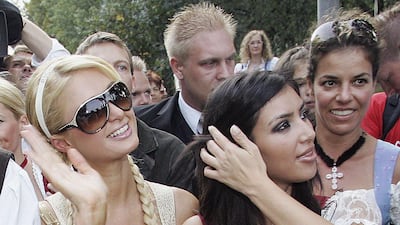
Paris Hilton and Kim Kardashian, in traditional dirndl dresses, attend Oktoberfest on September 25, 2006 in Munich, Germany. Getty Images -
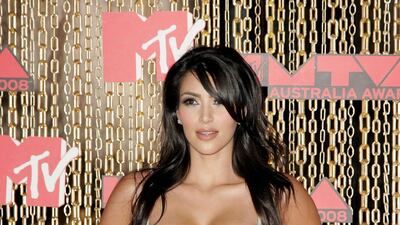
Kim Kardashian, in a silver mini dress, arrives at the MTV Australia Awards at the Australian Technology Park on April 26, 2008 in Sydney, Australia. Getty Images -
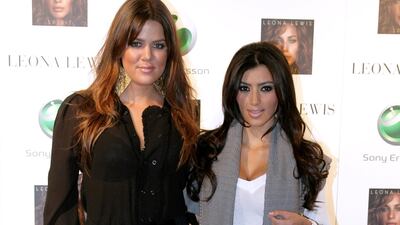
Khloe and Kim Kardashian, in a scarf and jeans, attend a press conference at the Museum of Contemporary Art on April 29, 2008 in Sydney, Australia. Getty Images -
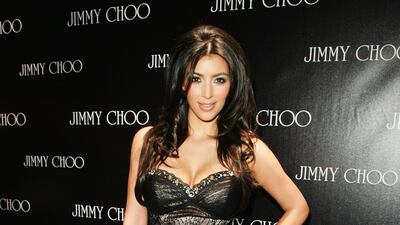
Kim Kardashian, in a black bead-encrusted dress, attends the launch of the new Jimmy Choo boutique at Castlereagh Street on April 30, 2008 in Sydney, Australia. Getty Images -
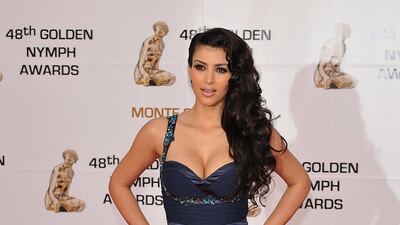
Kim Kardashian, in a fishtail gown, attends the Golden Nymph awards at Grimaldi Forum on June 12, 2008 in Monte Carlo, Monaco. Getty Images -
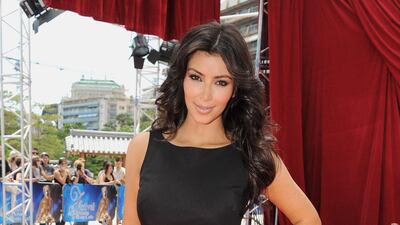
Kim Kardashian, in a LBD, arrives at the Grimaldi Forum during the Monte Carlo Television Festival on June 9, 2009 in Monte Carlo, Monaco. Getty Images -
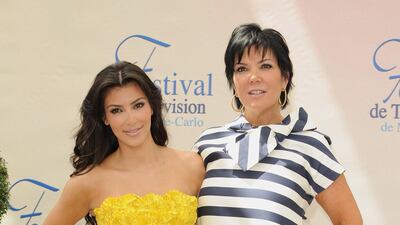
Kim Kardashian, in a strapless mini, and Kris Kardashian at the Monte Carlo Television Festival on June 10, 2009 in Monte Carlo, Monaco. Getty Images -
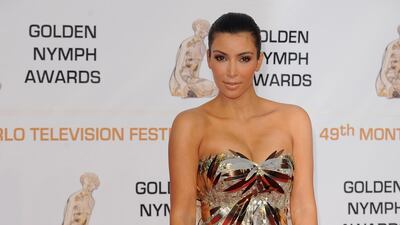
Kim Kardashian, in a sequinned gown, arrives at the closing ceremony of the Monte Carlo Television Festival on June 11, 2009 in Monte Carlo, Monaco. Getty Images -
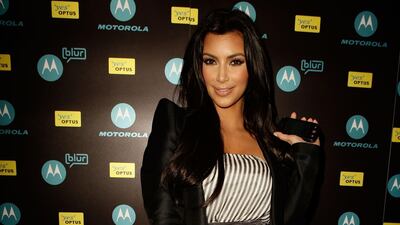
Kim Kardashian, in a leather jacket and striped dress, makes an in-store appearance at Optus on April 19, 2010 in Sydney, Australia. Getty Images -
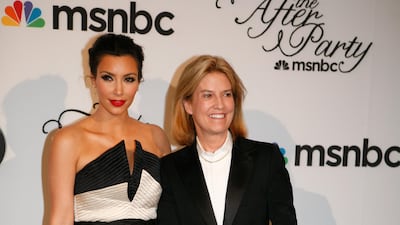
Kim Kardashian, in a monochrome gown, and Greta Van Susteren arrive at the MSNBC afterparty following the White House Correspondents' Association dinner on May 1, 2010 in Washington, DC. Getty Images -
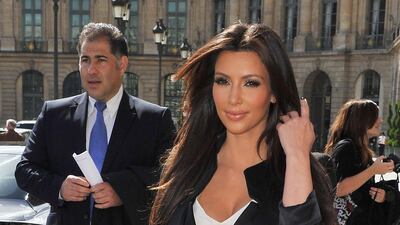
Kim Kardashian, in a ruffled mini and blazer, leaves the Ritz hotel on September 15, 2010 in Paris, France. Getty Images -

Kim Kardashian, in a white halterneck, and Kris Humphries arrive at the Amber Lounge Fashion Monaco show on May 27, 2011 in Monaco. Getty Images -
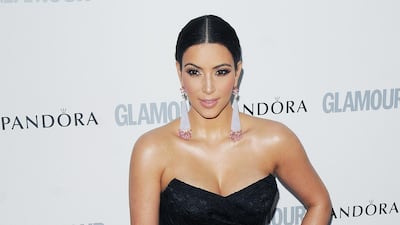
Kim Kardashian, in a strapless evening gown, attends Glamour Women of the Year Awards on June 7, 2011 in London, England. Getty Images -
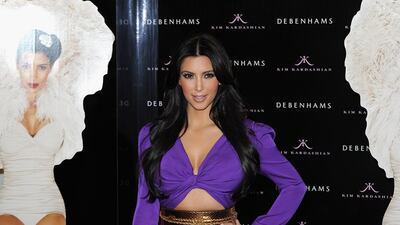
Kim Kardashian, in Gucci, poses during her fragrance launch at Debenhams on June 8, 2011 in London, England. Getty Images -
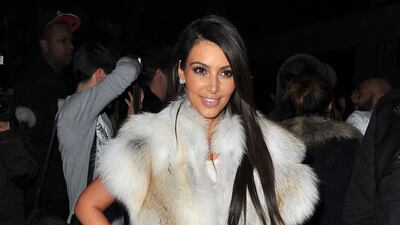
Kim Kardashian, in a fur stole, attends the Kanye West show as part of Paris Fashion Week at Halle Freyssinet on March 6, 2012 in Paris, France. Getty Images -
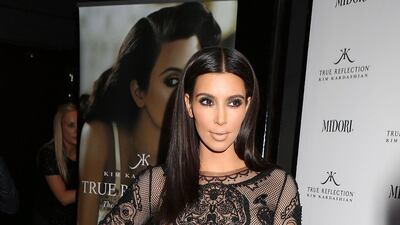
Kim Kardashian, in Emilio Pucci, launches her fragrance at the Rose Club on May 18, 2012 in London, UK. Getty Images -
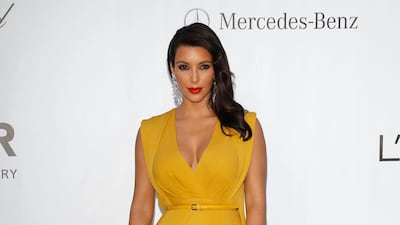
Kim Kardashian, in Elie Saab, arrives at amfAR's Cinema Against Aids gala during the 65th annual Cannes Film Festival on May 24, 2012 in Cap D'Antibes, France. Getty Images -
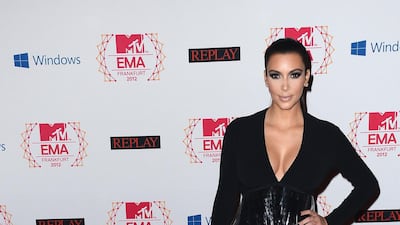
Kim Kardashian, in Stephane Rolland, attends the MTV EMAs at Festhalle Frankfurt on November 11, 2012 in Frankfurt, Germany. Getty Images -
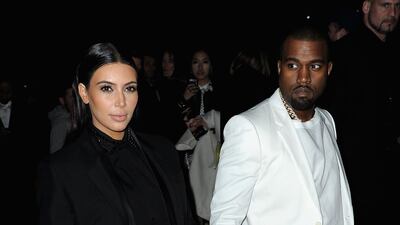
Kim Kardashian, in Givenchy, and Kanye West attend the Givenchy show as part of Paris Fashion Week on March 3, 2013 in Paris, France. Getty Images -
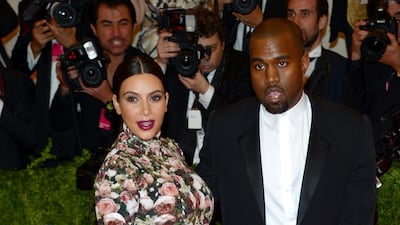
Kim Kardashian, in Givenchy, and Kanye West attend the Met Gala in New York on May 6, 2013. EPA -
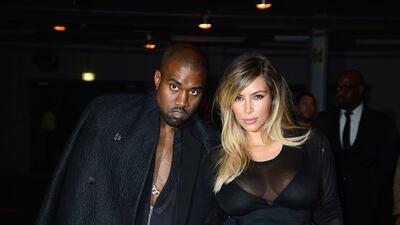
Kim Kardashian, in Givenchy, and Kanye West attend the Givenchy show as part of Paris Fashion Week on September 29, 2013 in Paris, France. Getty Images -
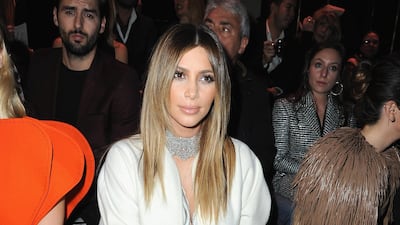
Kim Kardashian, in Stephane Rolland, attends the Stephane Rolland show as part of Paris Fashion Week Haute on January 21, 2014 in Paris, France. Getty Images -
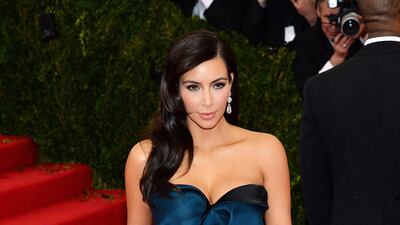
Kim Kardashian, in Lanvin, arrives for the Met Gala in New York on May 5, 2014. EPA -
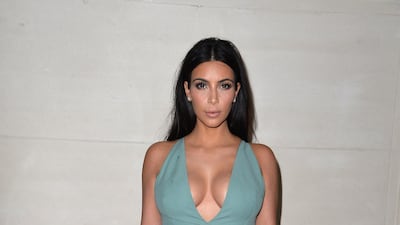
Kim Kardashian, in Valentino, attends the Valentino show as part of Paris Fashion Week on July 9, 2014 in Paris, France. Getty Images -
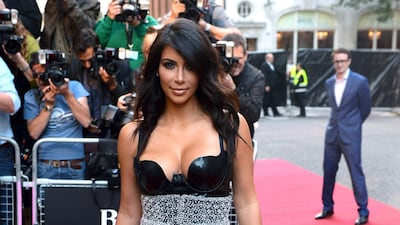
Kim Kardashian, in Ralph & Russo, attends the GQ Men of the Year awards at The Royal Opera House on September 2, 2014 in London, England. Getty Images -
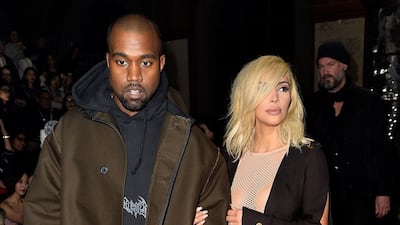
Kanye West and Kim Kardashian, in Lanvin, attend the Lanvin show as part of Paris Fashion Week on March 5, 2015 in Paris, France. Getty Images -
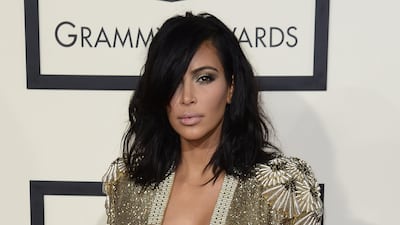
Kim Kardashian, in Jean Paul Gaultier, arrives for the 57th annual Grammy Awards held at the Staples Centre in Los Angeles, California, on February 8, 2015. EPA -
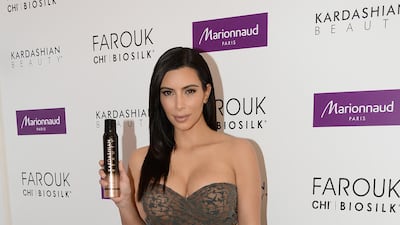
Kim Kardashian, in a draped midi dress, at Marionnaud Champs Elysees on April 15, 2015 in Paris, France. Getty Images -
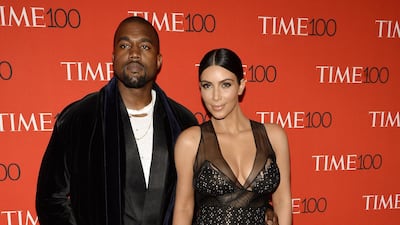
Kanye West and Kim Kardashian, in Sophie Theallet, arrive at the Time 100 Gala in New York on April 21, 2015. EPA -
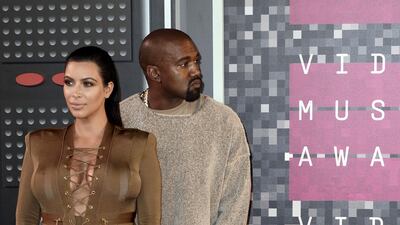
Kanye West and Kim Kardashian, in Balmain, arrive at the MTV Video Music Awards at the Microsoft Theatre in Los Angeles, California, on August 30, 2015. EPA -
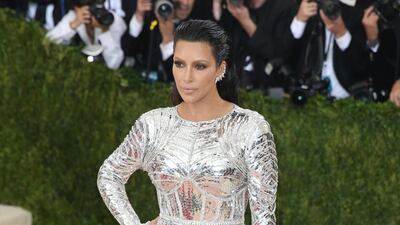
Kim Kardashian, in Balmain, arrives at the Met Gala in New York on May 2, 2016. EPA -
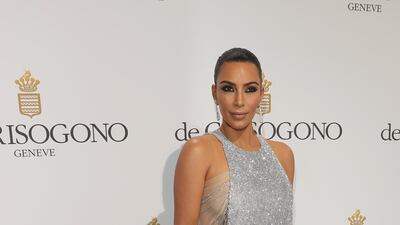
Kim Kardashian, in Lan Yu Couture, attends the De Grisogono Party at the annual 69th Cannes Film Festival on May 17, 2016 in Cap d'Antibes, France. Getty Images -
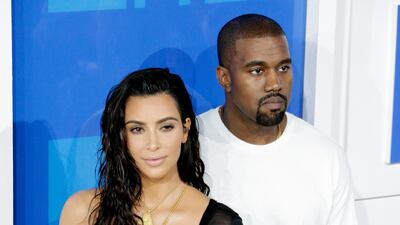
Kim Kardashian, in Galliano, and Kayne West arrive at the MTV Video Music Awards at Madison Square Garden in New York on August 28, 2016. EPA -
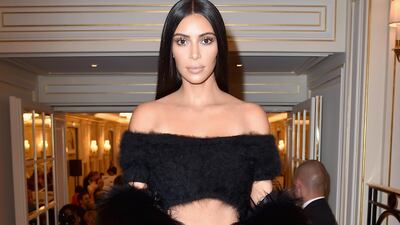
Kim Kardashian, in Givenchy, attends a Buro 24/7 party as part of Paris Fashion Week on September 30, 2016 in Paris, France. Getty Images -
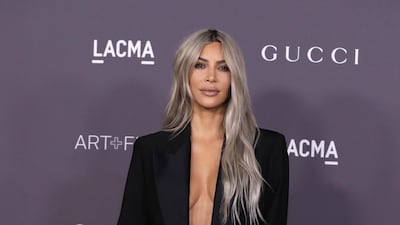
Kim Kardashian, in Tom Ford, arrives at the Lacma Art + Film Gala at the Los Angeles County Museum of Art in Los Angeles, California, on November 4, 2017. EPA -
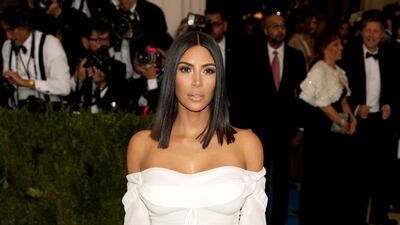
Kim Kardashian, in Vivienne Westwood, arrives at the Met Gala in New York on May 1, 2017. EPA -
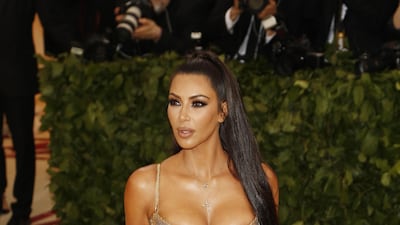
Kim Kardashian, in Versace, arrives at the Met Gala in New York on May 7, 2018. EPA -
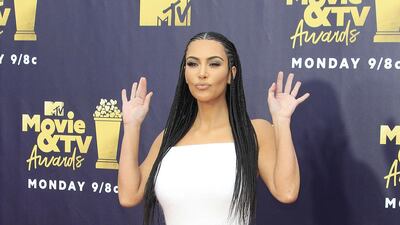
Kim Kardashian, in Versace, arrives at the MTV Movie and TV Awards at the Barker Hanger in Santa Monica, California, on June 16, 2018. EPA -
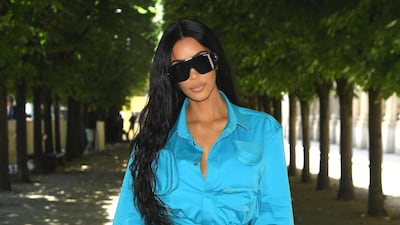
Kim Kardashian, in Louis Vuitton, attends the Louis Vuitton show as part of Paris Fashion Week on June 21, 2018 in Paris, France. Getty Images -
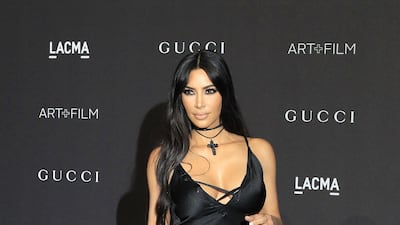
Kim Kardashian, in Gucci, arrives at the Lacma Art + Film Gala at the Los Angeles County Museum of Art in Los Angeles, California, on November 3, 2018. EPA -

Kim Kardashian, in Thierry Mugler, arrives at the Met Gala in New York on May 6, 2019. EPA -
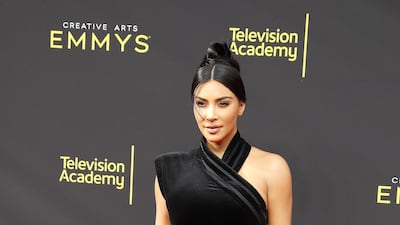
Kim Kardashian, in Versace, arrives at the Creative Arts Emmy Awards at the Microsoft Theatre in Los Angeles, California, on September 14, 2019. EPA -
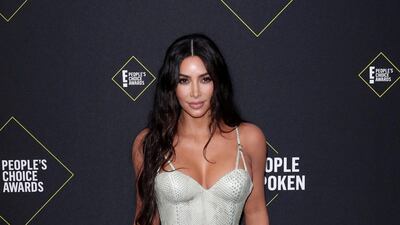
Kim Kardashian, in Versace, arrives at the People's Choice Awards at the Barker Hangar in Santa Monica, California, on November 10, 2019. EPA -
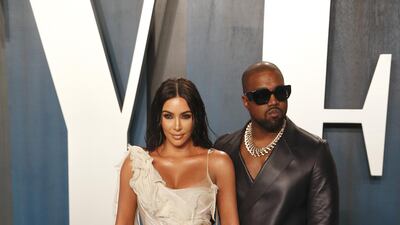
Kim Kardashian, in Alexander McQueen, and Kanye West attend the Vanity Fair Oscar Party in Beverly Hills, California, on February 9, 2020. EPA -
Kim Kardashian wears Marilyn Monroe's dress for the 2022 Met Gala at the Metropolitan Museum of Art on May 2, 2022, in New York. AFP


“I thought I knew how the story would shake out,” Kale writes in a column for The Guardian on creating the podcast. "I envisaged a lighthearted recap of my favourite shows, accompanied by deep dives into unresolved questions that linger to this day.”
But what emerged was a dramatically different story, she says.
One of the biggest causes for unease in this genre of television has been the consideration of after-care for the stars, not to mention contestants, in the case of competitions such as Big Brother, The X Factor and Love Island, the dating series that has raised serious concerns after three former contestants committed suicide, as well as former host Caroline Flack.
“There are no two ways about it: creating an entertaining reality TV show, and an ethical one, can be irreconcilable objectives,” Kale writes. “Historically, audiences have wanted conflict, even if it sometimes comes at the expense of contestants’ well-being and personal safety.”
reality TV star
The stars are pushed to play into stereotypes (Vaz Morgan, the first and only black star on TOWIE, said on The Reality of Reality TV podcast that he felt “intense pressure to perpetuate the black stereotype of the angry six-foot-two black man” in order to win camera time). They're made to live up to the roles that have been drawn up for them, start arguments and cause drama because “that’s what makes good television”, despite what level of backlash and trolling they might experience in real life.
In 2019, Kirk Norcross, who also appeared on TOWIE, said: "Reality TV turned me into a monster, but producers didn't want to look after the monster they created."
At the same time, questions and concerns have arisen over on-screen examples of manipulative, controlling relationships, clear and frequent demonstrations of toxic masculinity and sexism, and disingenuous, fickle friendships that end with people being iced out of social groups, alienated and outcast.
Unreal asks the question: how much of the responsibility lies with producers to ensure the people in these shows are safe and mentally well? Are they simply flies on the walls, alongside the audience, watching, not meddling? Or should they step in when something blatantly unethical is going on? If they don’t, does the show then only serve to normalise this kind of behaviour?
What perhaps concerns me more is that naive, unwitting audiences — our children, and those of us who were introduced to the genre young — are watching these shows and thinking that this kind of behaviour could be normal, even accepted. If someone can shout expletives and display aggression towards another person on TV and still have a huge social media following, brand deals and popularity outside of the show, then why wouldn’t they start to think that’s normal?
I’m not saying reality TV needs to go, but that it needs to evolve. Granted, the shows are growing up; the makeover show has moved on from the extremes of American series The Swan — in which contestants, or “ugly ducklings”, undergo surgery several times to achieve some kind of narrow-minded beauty ideal — to today’s Queer Eye, during which people are taught to cook, have their houses redone and even embrace culture.
Competitions are bolstering their after-care, too. And you certainly won’t see Simon Cowell telling a contestant she’s too fat to sing any more (yes, that happened).
Now it’s time for the faux-reality docusoaps to step up as they purport to reflect the real lives of the elite few, but actually are based on a bunch of characters hamming it up for the camera. As can be seen in the recently broadcast The Real Housewives of Dubai.
People are demanding better, and some shows, at least, are aiming to heed that call.
But while that happens, you’ll find me watching Stranger Things.
The cast of 'Real Housewives of Dubai' — in pictures
-
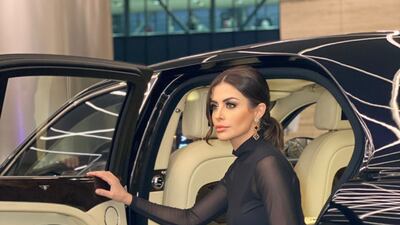
Nina Ali is one of six businesswomen and socialites starring in 'The Real Housewives Of Dubai', which will be released on Bravo on June 1. Photo: Twitter / @lipstickmommy -
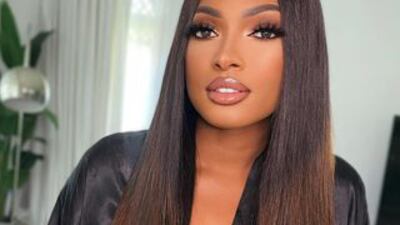
Fashion designer Lesa Milan is also part of the cast. Instagram -
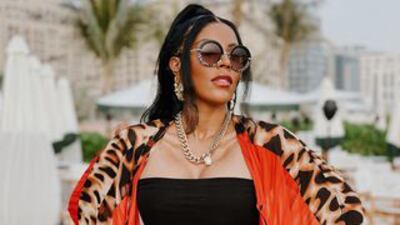
Entrepreneur Caroline Brooks features in the show, which had a trailer come out two weeks ahead of its release. Photo: @carolinedxb / Instagram -
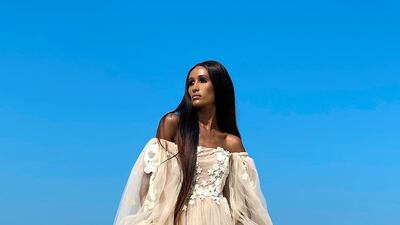
Model Chanel Ayan is part of the cast. Photo: @Chanelayan / Instagram -
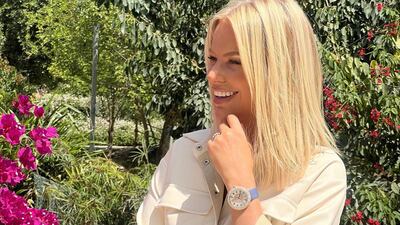
Former 'Ladies of London' star Caroline Stanbury is in the show. Photo: Instagram -
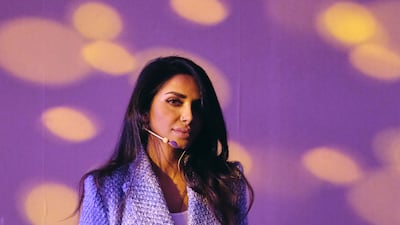
Emirati star Dr Sara Al Madani is part of the cast. Getty Images for Inflow -

Phaedra Parks from 'The Real Housewives of Atlanta' features in 'The Real Housewives of Dubai'. Photo: YouTube / Bravo -
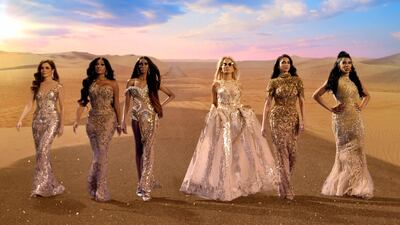
'The Real Housewives of Dubai' will display lavish lifestyles. Photo: Bravo



