

I first visited the refugee camp in Calais in October 2015. It was a day of many firsts: the first time I’d crossed the Channel on a ferry, the first time I’d been to that part of France, and my first major assignment as a news reporter.
I was 23 years old and out of my depth. But as we entered summer, I couldn’t ignore the extraordinary number of desperate refugees ending up on European shores. I wanted to report on the crisis, despite not having any experience in non-science writing. I was able to land a job at Quartz, an online news site. To my surprise, I was sent to Calais a month in.
A tall and animated volunteer for a British aid group had agreed to let me join their latest trip. We parked less than a mile away from the refugee camp infamously called ‘the Jungle’, which at its peak housed nearly 10,000 asylum seekers from all over the world.
The other volunteers arrived with donated food and clothes, which we packed into plastic bags once the sun rose over us. I came with my pen, notepad and phone, keen to talk to people, to ask them what or who they were fleeing, let them tell me their hopes and dreams.
-
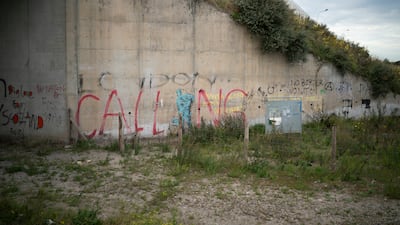
A Banksy mural at the entrance to the 'Jungle' migrant camp in Calais, France, fades as nature reclaims the area in 2018, two years after more than 1,000 migrants were evicted. All photos: Getty Images -
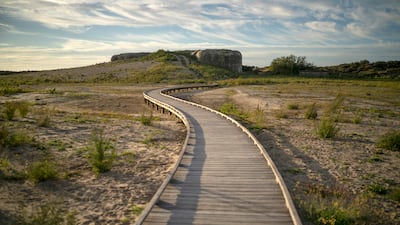
Sand dunes at the former site of Calais 'Jungle' migrant camp, which is now a nature reserve -
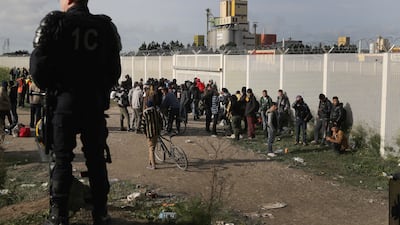
The last remaining migrants at the camp wait for transport outside the site in October 2016 -
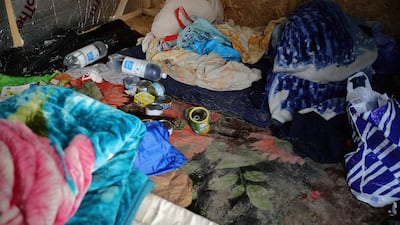
Bedding and food left inside a shack in the nearly deserted camp in 2016 -
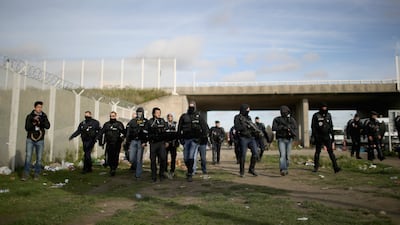
French police clearing the main entrance to the camp -
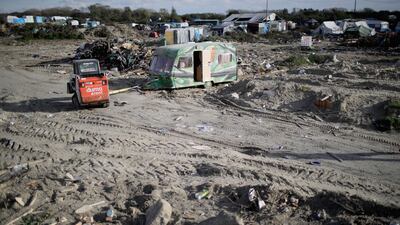
Contractors clearing the site -
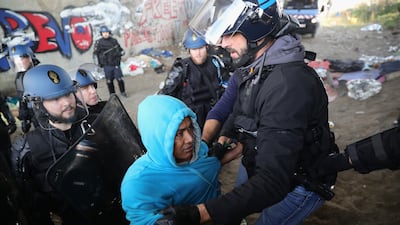
Police stop a migrant from returning -
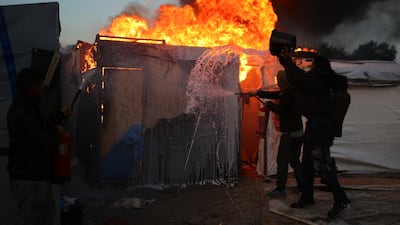
Volunteers and migrants tackle a blaze in the camp during the demolition -
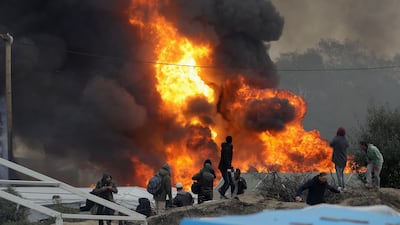
A gas canister explodes in the camp as fires rage in October 2016 -
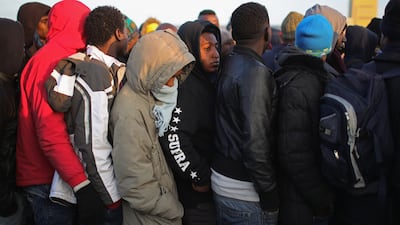
Sudanese migrants queue in the cold weather for buses to leave the camp -
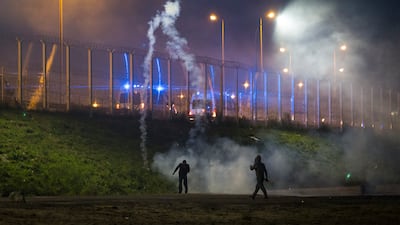
Migrants return a smoke grenade as they clash with French riot police in October 2016 -
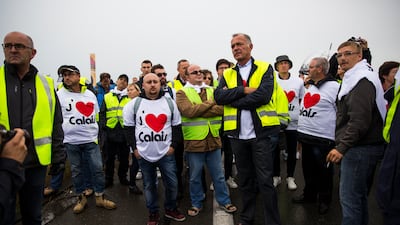
French business owners and locals blockade the main road into the Port of Calais, demanding the removal of the 'Jungle' camp in September 2016 -

Migrant children watch a movie inside the Jungle Books Cafe in the camp -
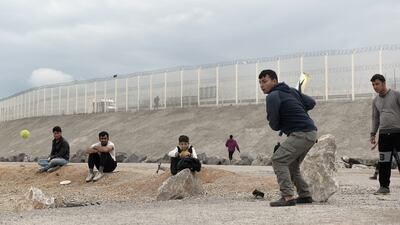
Migrants from Afghanistan play cricket on a makeshift wicket in May 2016 -
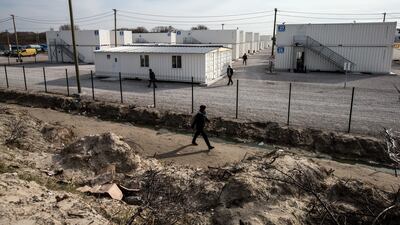
A migrant walks alongside a fence separating new accommodation from the jungle camp in February 2016 -
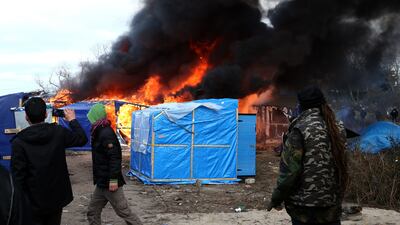
A hut burns as police officers clear part of the camp in February 2016 -
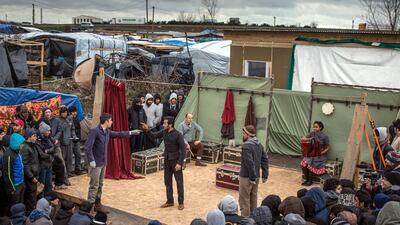
Actors from Shakespeare's Globe perform Hamlet to migrants at the Good Chance Theatre Tent in the camp in February 2016 -
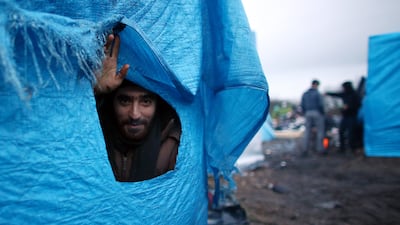
An Iranian man peers out from his shelter in the camp in January 2016 -
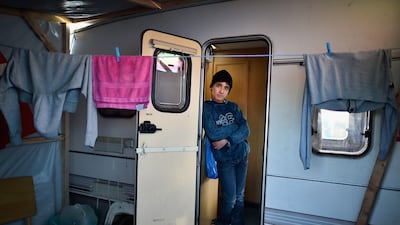
A boy looks out from a camper van as migrants contend with cold weather in December 2015 -

A view of the camp in June 2015


I walked around the entrance on edge, regretting wearing all black as the sun beat down. Two young Eritrean women who looked my age agreed to show me around the camp and said I could interview them so long as I didn’t use their names or pictures.
Displacement and desperation
The women invited me into their tent, where I heard their harrowing journey to France. Other women who joined us told a similar tale. So did men who agreed to talk.
But the interview that has stayed with me the most was the young Somali man I spoke to just before leaving. I got lost and walked towards a British volunteer handing out food, but he barked at me to get to the back of the line before I could ask for directions. I would be mistaken for a refugee in the camp twice more.
When I walked away, the Somali boy, who looked around 18, offered to walk me to the entrance. I accepted.
"Were you born in Somalia?" I asked.
"Yeah."
"When did you move out of Somalia?" I heard how stupid the question sounded as soon as I asked it.
"You’re Somali, you understand," he responded, almost incredulously.
"The civil war in the 1990s," I quickly filled in, "That’s when you left?"
"Yeah," he said, again. I nodded.

I didn’t know it then, but these were my first steps in truly understanding the impact the Somali civil war had on me. We had escaped the same war, but I was allowed to go in and out of the camp as a British citizen while the undocumented Somali asylum seeker walking beside me was trapped there.
I went to see my mum for lunch a few days after I returned from Calais. She smiled when she opened the door, and kissed me on both cheeks. She gave me a baati (a loose-fitted Somali dress often worn at home) to change into and I stood beside her, watching as she cooked an entire feast for me.
When I told her how often I was mistaken for a resident in the refugee camp in Calais, she laughed. My mum told me she wasn’t surprised because I dressed like an impoverished refugee. "You look like you bought your clothes from Poundland," she said and shook her head.
I pushed on and told her what I had seen in the camp. I told her about the lack of running water, the mud that clung onto everything and the rats that scuttled past.

'How we suffered!'
"Why did you go? Isn’t it bad enough that we suffered through Kakuma?" she asked. She said it in the most casual tone, as if she was recounting a holiday we’d been on. I said the word. Kakuma. It felt both foreign and all too familiar in my mouth. "You would never believe how we lived in Kakuma. How we suffered!"
I tried to get her to slow down, but my mum went on like she was in her own world as she told of the unbearable heat, and reminisced about the friends we had. I tried wading through the memories of my childhood and was surprised at the internal resistance I met.
"Have you really forgotten?" Mama asked me. Her eyes were wide as she stared. Had I?
A year before that meal, my parents had told me snippets of their extraordinary story of fleeing Somalia. Until then, I only knew that we claimed asylum in the UK when I was seven because of the civil war. I had known that we were refugees and I grew up disliking that fact. I knew my mum and I had lived in Kenya and then in Saudi Arabia but the details were blurry. They faded as I grew up in this country and I felt no need to hold onto them.

I didn’t know that I had lived in a refugee camp similar to the one in Calais. Or I had known, and I simply forgot. How does someone do that?
Silenced by survivor's guilt
A refugee rights campaigner, who arrived in the UK via the Kindertransport rescue effort, once told me, "I find my refugee start still drives my life today. It’s not just something that happened in the past. I’m still struggling to lead a life that was worth saving."
My survivor’s guilt had silenced me for years. Sometimes, often in the dead of night, I wonder why I survived and so many other refugee children died. And so many continue to die. I wonder why I got to resettle while so many refugees live entire lifetimes in camps that are meant to be temporary. Why do I have a passport in my pocket, while a young man escaping the same war does not?
I can’t answer these questions. I don't think I’ll ever be able to. I can, however, not let that guilt prevent me from responding to one of mankind’s most basic urges: the need to tell stories.
This is an edited extract from Scattered: The Making and Unmaking of a Refugee by Aamna Mohdin (Bloomsbury Circus) which is available in hardback for £18.99 and ebook for £13.29.


