

There is a story by writer Diaa Jubaili that imaginatively charts both the travails and the transformation of an Iraqi soldier.
During the ceasefire between Iraq and Iran in 1988, an infantry platoon takes a wrong turn into a minefield. Private First Class Hakim steps on a mine and stays rooted to the spot, afraid to trigger an explosion. His fellow soldiers, meanwhile, make a stealthy retreat.
Hakim becomes known as the "minefield scarecrow" and for years frightens away any birds that try to carry off the bones of his fallen comrades-in-arms around him.
In contrast, another of Jubaili’s stories features a platoon of Iraqi soldiers who rise from the dead two years after the Iran-Iraq War. After complaining about the quality of the soil that makes up their unmarked graves, the men re-insert eyeballs, pluck out rusty bullets, then set off in search of a better resting place.
These fantastical stories are included in Jubaili’s latest collection, No Windmills in Basra. Originally published in 2018, it has been masterfully translated into English by Chip Rossetti and has been released by Deep Vellum Publishing.
Jubaili has three other story collections under his belt, alongside nine novels. What makes this book different from his previous work is not the scope of his ideas, but rather the brevity of his fiction — the majority of the 76 stories contained within constitute “flash fiction”. Some tales unfold over several pages, others comprise only a couple of paragraphs.
This is the Basra-born author’s first attempt at this ultra-short form. It had obvious appeal for him.
“There are some ideas you can’t stretch onto a large canvas,” Jubaili tells The National. “We learned from Eduardo Galeano that there is no need to write a story with a lot of words when the idea behind it can only sustain a few lines.
"I believe that flash fiction is a self-contained narrative art. It requires a tremendous power, which persuades the reader of the advantage of this genre of writing. It’s a difficult task, but not an impossible one.”
Galeano isn’t Jubaili’s only creative influence. Other international writers — from Franz Kafka and Milan Kundera to Gabriel Garcia Marquez — have also helped him hone his craft.
“From them, I learned boldness and risk-taking in experimentation, and how to express substantive meaning through plain language.”
Closer to home, he has been inspired by Muhammad Khudayyir, who he describes as “the best writer of short stories in Iraq".
It is easy to see how these writers have informed No Windmills in Basra. Jubaili’s captivating stories are short, sharp bursts of inventiveness. He concocts bizarre character studies, outlandish bite-sized dramas, and tales that feel like absurd fables or warped allegories.

In Flying, a security guard at a poultry plant survives a bomb blast and acquires wings. In The Saltworks, a boy starts to secrete huge quantities of salt. Elsewhere, village girls wake up on the morning of Eid and discover starfish in their hair, a woman learns she has sparrows in her ribcage, and various protagonists undergo strange metamorphoses, whether into butterflies, dung beetles or water.
For Jubaili, such flights of fancy serve an artistic purpose.
“The fantastic is a mode of writing that authors use to express a reality that is difficult to convey as it is,” he says. “Our reality is more like raw material that has been lopped off and wrapped in fantasy. It’s particularly true for historical events, and even contemporary ones.
“One contemporary example is Barack Obama winning the American presidency. It was something that reverberated among blacks in Iraq, and had an obvious impact, especially in Basra. But it has been buried beneath the rubble of Iraqi life. The fantastic has the ability to disinter it, bring it to light and present it to readers. That is what I tried to do with my latest novel, The Black Penguin.”
Jubaili believes that his use of the fantastic is the best means of depicting his native city’s history of conflict and what he calls “the peculiarity of human nature in Iraqi society.”
“How can the irrational be expressed when it’s part of reality, except via magical realism or the Kafkaesque?” he asks. “To write reality ‘as it is’ is like burdening readers with a heavy legacy, while also boring them.”

When rendering violence, Jubaili eschews graphic and grounded depictions for something more playful and blackly comic. “This means stripping reality of its reality and taking an idea to the furthest limits of the fantastic, to the point where I can make the reader laugh at a story that should be sombre.”
But laughs are in short supply off the page when Jubaili opens up about current conditions in his home town.
“Basra is like a giant barrel of oil that everyone has agreed to plunder from,” he says. “At the same time, pollution levels are increasing due to toxic munitions dumps, as well as the smoke and gases that emanate from oil wells. Basra is a city being eaten away by corruption, the uncontrolled spread of weapons, militias and border-crossing drug traffic.”
Nevertheless, the city continues to play a large part in Jubaili’s writing. “It is a positive influence,” he concedes, “in spite of the bitterness that comes over me when I write about it being in this wretched state. I just wish Basra had urban planning like New York so I could write a trilogy about it like Paul Auster wrote about New York.”
For the moment, we can make do with the striking snapshots of the city in his stories — stories which cast a spell, even when there is little method in their madness.
“I don’t intend for my stories to contain particular messages, nor do they have an obvious didactic point or a goal they are heading towards,” Jubaili explains.
“But like it or not, stories always have something they want to say, and it is readers who let me know what my stories revealed.”
Nineteen graphic novels set in the Middle East — in pictures
-
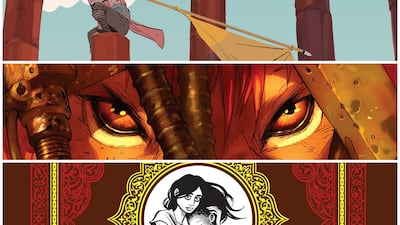
From across genres, writers and illustrators are telling authentic stories and nuanced experiences set in the Middle East. Photo: Supplied -
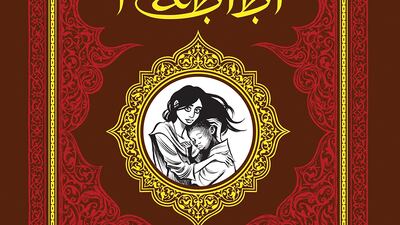
'Habibi' by Craig Thompson is set in a fictional Arab world and tells the story of refugee child slaves Dodola and Zam, who escape their captors. Photo: Craig Thompson -
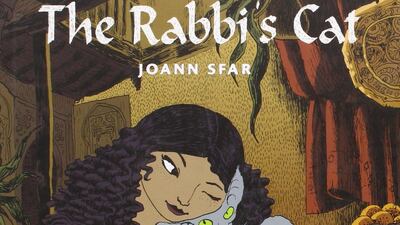
'The Rabbi’s Cat' by Joann Sfar is a comical story set in 1930s Algeria about a photo that gains the ability to speak after eating the family parrot. Photo: Joann Sfar -
'Hasib & the Queen of Serpents' by David B is an engrossing story influenced by the structural frame of the classic 'One Thousand and One Nights'. Photo: David B -
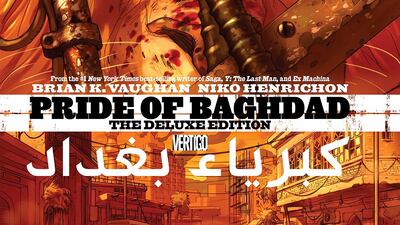
'Pride of Baghdad' by Brian K Vaughan is a story based on true events set in 2003 Iraq where a pride of lions, Zill, Safa, Noor and Ali, escape from the Baghdad Zoo after the city is bombed by American forces. Photo: Brian K Vaughan -
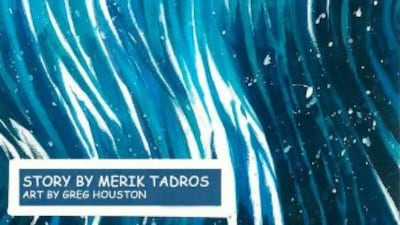
'River Jordan' by Merik Tadros is set in Chicago and Amman, Jordan and tells the story of Rami, 9, who is coming to terms with his father’s murder by creating art. Photo: Merik Tadros -

'Palestine' by Joe Sacco explores the Palestinian revolution and the Gulf War, detailing many of the difficulties faced by the Palestinian people. Photo: Joe Sacco -
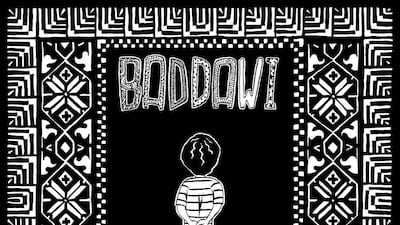
In 'Baddawi', Leila Abdelrazaq explores her father Ahmed’s harrowing childhood when he was raised in a refugee camp in northern Lebanon among thousands of Palestinians who fled their homeland after the 1948 war. Photo: Leila Abdelrazaq -
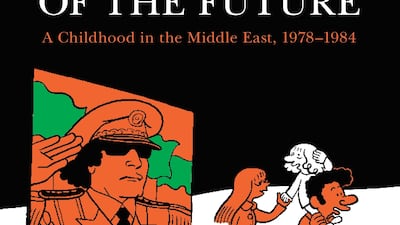
'The Arab of the Future' by Riad Sattouf is an autobiographical graphic novel set in rural France, Libya and Syria in the 1970s and '80s that featured three dictators that altered the course of Sattouf's life - Gaddafi, Assad, and his father. Photo: Riad Sattouf -
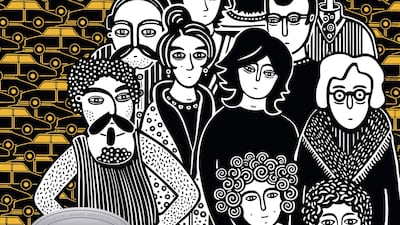
'A Game for Swallows' by Zeina Abirached is set in 1984, East Beirut, during the Lebanese Civil War, where Zeina, 6, and her brother must endure a night of bombings when their parents don’t return home. Photo: Zeina Abirached -

'I Remember Beirut' by Zeina Abirached is a collection of stories based on Abirached’s childhood in post-war Lebanon and is filled with poignant and powerful details on the impact of war. Photo: Zeina Abirached -
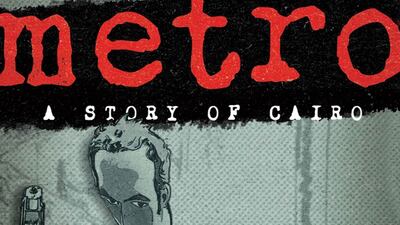
'Metro' by Magdy El Shafee is set in busy, dynamic Cairo, where Shihab, who in an attempt to pay back a loan, decides to rob a bank and finds himself in the middle of a government cover-up. Photo: Magdy El Shafee -

'Cairo' by G Willow Wilson is an urban fantasy set in the city, where a set of unlikely characters are in search of an artefact of formidable power - a jinn trapped in a stolen hookah. Photo: G Willow Wilson -
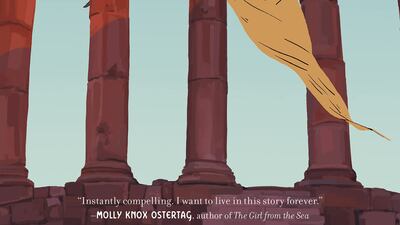
'Squire' by Sara Alfageeh and Nadia Shammas is an exciting fantasy adventure about swords, knights and squires. Photo: Sara Alfageeh and Nadia Shammas -
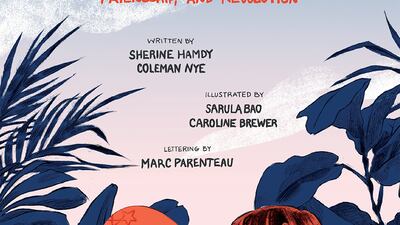
'Lissa: A Story about Medical Promise, Friendship, and Revolution' by Sherine Hamdy tells the story of an unlikely friendship, between Anna and Layla who come from different classes, cultural backgrounds and religions. Photo: Sherine Hamdy -
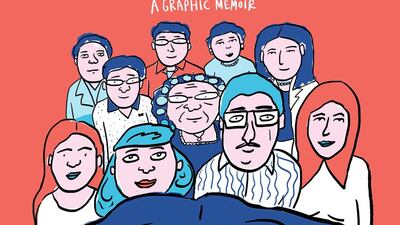
'I Was Their American Dream' by Malaka Gharib is a graphic memoir about heritage, self-discovery and family and the lives of modern immigrants in America. Photo: Malaka Gharib -
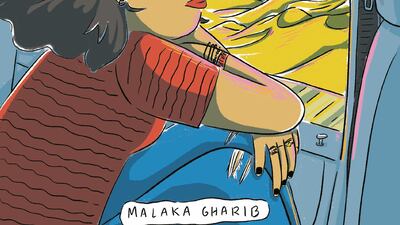
'It Won't Always Be Like This' is another intimate graphic memoir from Malaka Gharib about her experiences as a young American girl growing up with her Egyptian father's new family. Photo: Malaka Gharib -
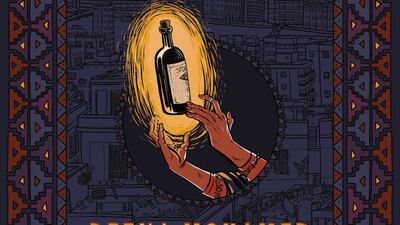
'Shubiek Lubiek' by Deena Mohamed is set in modern day Cairo but in a world where wishes from genies are not only real, but for sale. Photo: Deena Mohamed -
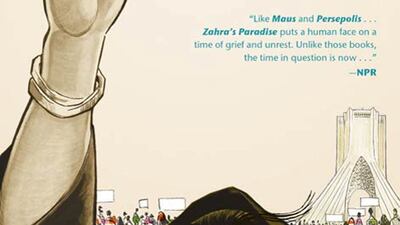
'Zahra's Paradise' by Amir Soltani and Khalil Bendib is set in modern Iran after the 2009 election and follows the chain of events after the disappearance of a young protestor and activist Mehdi. Photo: Amir Soltani and Khalil -
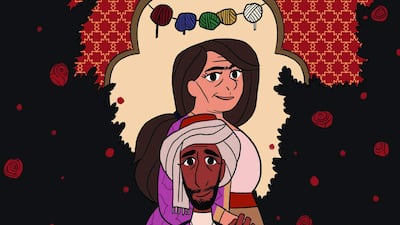
'The Carpet Merchant of Konstantiniyya' by Reimena Yee is the story of Zeynel who must reconnect to faith, love and his home after he is turned into a vampire by a stranger. Photo: Reimena Yee



