

Sheikh Dr Sultan bin Muhammad Al Qasimi, the Ruler of Sharjah, has published a new book on the history of the Sultans of Kilwa, an East African dynasty.
Titled The Biography of the Sultans of Kilwa, the 114-page book outlines how the dynasty migrated to Africa and ruled over Kilwa — an island in southern Tanzania.
During their reign, the sultans developed Kilwa into a wealthy merchant power along the Maritime Silk Road. One of the testaments to their might was the Great Mosque, the oldest standing mosque on the East African coast, and once the largest in sub-Saharan Africa.
Until now, the story of the Sultans of Kilwa has remained steeped in myth, with most popular accounts claiming the dynasty emerged from Shiraz, before carving out a realm that stretched across the Swahili Coast.
However, in order to determine truth from fiction, the Sharjah ruler wrote his book following a careful analysis of dozens of historical documents; notably The Book of Salwa in the History of Kilwa.
In the introduction of his book, he writes: “It is a true historical novel that I wrote based on the manuscript of The Book of Salwa in the History of Kilwa.”

He continues: “When I decided to write the history of East Africa, I contacted the British Library in London and obtained a photocopy of the manuscript known as The Book of Salwa in the History of Kilwa.
“I started studying that manuscript as well as studying everything written about that manuscript by Arab and foreign historians, who were unable to explain what was written in that manuscript, as the matter became confusing for them."
Although the manuscript’s author’s name is unknown, his birth is recorded as “the second Monday of Shawwal in the year 904 [Hijri]”. The manuscript’s age is attested by the date it was copied on the orders of the Sultan of Zanzibar in 1877.
There were some issues with using the manuscript as a reference — some parts were illegible, damaged over time or simply missing.
However, aside from his study of authors and historians from modern Kenya and Tanzania, Sheikh Dr Sultan's vast collection of British and Portuguese historical documents allowed him to fill in the missing details — compiling various strands of history, to piece together the whole picture for the very first time.
“What was written in the manuscript about the arrival of the Shiraz sultans to the African coast is a myth and the truth is in the contemporary manuscripts,” says Sheikh Dr Sultan.

Spanning 11 chapters, the book also includes an appendix, a genealogical chain of Sultans of Kilwa and dozens of foreign references — providing a crucial resource for anyone seeking to learn more about the dynasty.
In the process, Sheikh Dr Sultan clears up some misunderstandings surrounding the dynasty, adding to his body of work, which now spans 76 publications, with his titles translated into 20 foreign languages.
The Sharjah ruler is a prolific writer, academic and historian, who has composed memoirs, studies, novels, poetry collections and plays — exploring the heritage and teachings of the UAE, the Middle East and North Africa.
Scroll through images from 50 years of Sheikh Dr Sultan's rule below:
-

The Ruler of Sharjah, Sheikh Dr Sultan bin Muhammad Al Qasimi, holds a news conference in San Francisco in 1973 to discuss plans for developing oil operations in the emirate. AP -
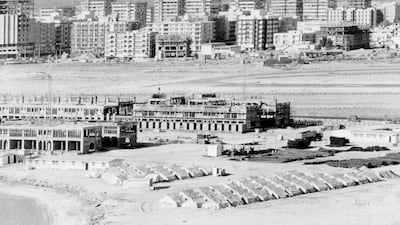
High rise buildings and hotels sprout on the sandy shore of Sharjah during its transformation from fishing town to major city in 1977. AP -
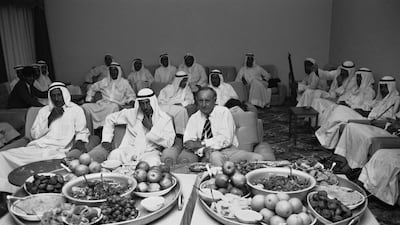
A British official mingles with local dignitaries at a feast in November 1971. AP -
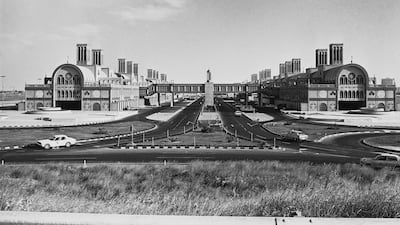
Sharjah's Central Souq in January 1980. AP -
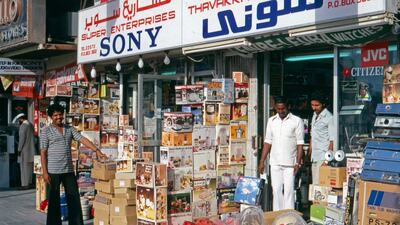
An electronics shop in the city in the 1970s. Getty -
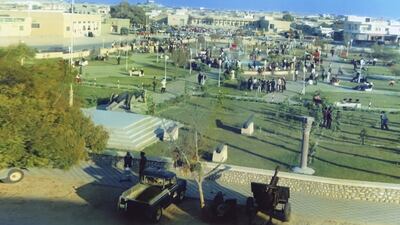
The park established by the Sharjah Municipality in front of Al Hisn, the city's fort, pictured in 1967. Photo: Sharjah Documentation and Archive Authority -
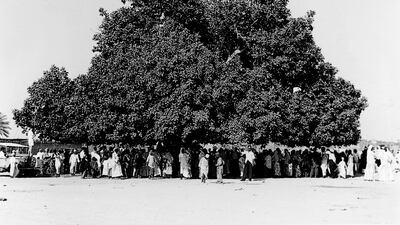
The Rolla tree in Sharjah in the 1950s during Eid celebrations. The enormous tree fell in 1978, to be commemorated by a statue in Rolla Square. Photo: Sharjah Documentation and Archive Authority -

Old Sharjah Airport Mosque, which was located near the airport in Al Qasimia. It was demolished and Al Khayal Mosque was built at the same site. Photo: Sharjah Documentation and Archive Authority -
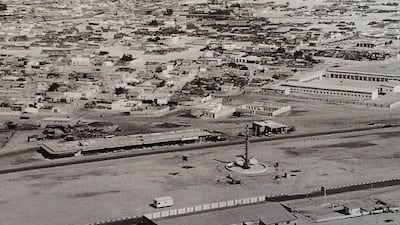
Sharjah city seen from the east in the late 1960s including the Clock Tower Square. Photo: Sharjah Documentation and Archive Authority -
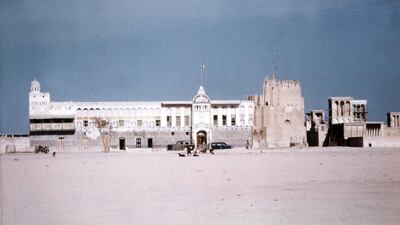
Al Hisn. The old fort was built around 1820 by then Ruler of Sharjah, Sheikh Sultan bin Saqr Al Qasimi, as Sharjah’s government headquarters. Photo: Sharjah Documentation and Archive Authority -
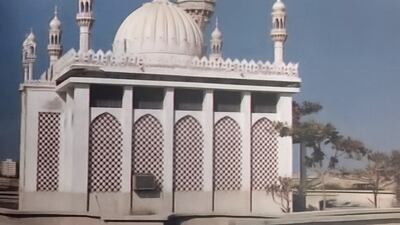
A mosque in Sharjah city in 1972. Photo: Sharjah Documentation and Archive Authority -
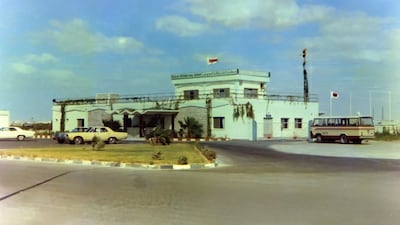
The entrance of the Sharjah Radio building, which was constructed in 1972. The station broadcast in Arabic for 16 hours a day. Photo: Sharjah Documentation and Archive Authority -

The Sharjah TV and Radio building in 1989. Photo: Sharjah Documentation and Archive Authority -
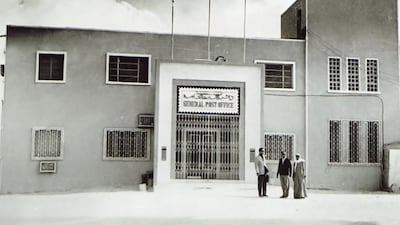
Sharjah's Central Post Office in the 1970s. Photo: Sharjah Documentation and Archive Authority -
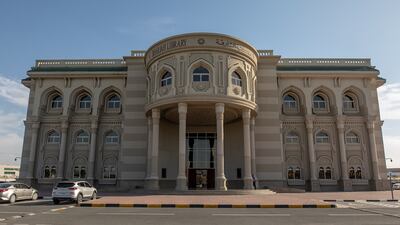
Sharjah Public Library. Photo: Sharjah Documentation and Archive Authority -
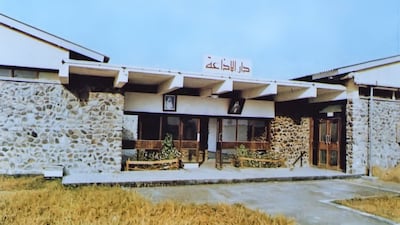
The entrance to the Sharjah Radio building, constructed in 1972. Photo: Sharjah Documentation and Archive Authority -
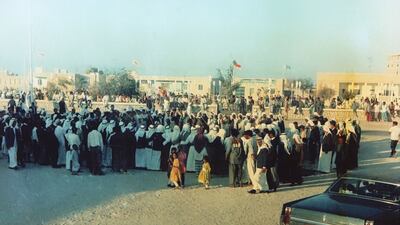
Eid celebrations in front of Al Hisn in the early 1970s. Photo: Sharjah Documentation and Archive Authority -
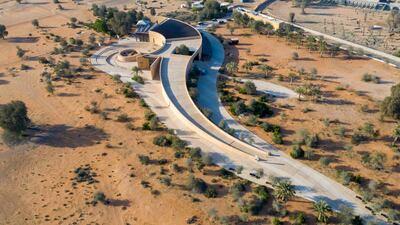
Mleiha Archaeological Centre. Photo: Sharjah Media Office -
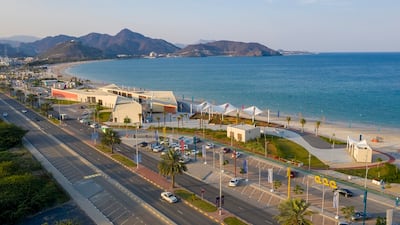
Khor Fakkan Beach. Photo: Sharjah Media Office -
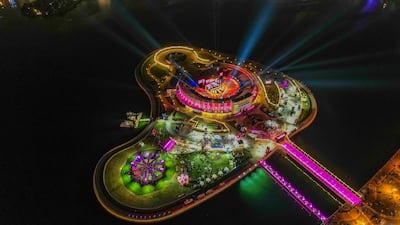
Al Majaz Amphitheatre, Sharjah. Photo: Sharjah Media Office -

Sharjah International Book Fair is an 11-day event that was first held in Sharjah in 1982. Photo: Sharjah Media Office -
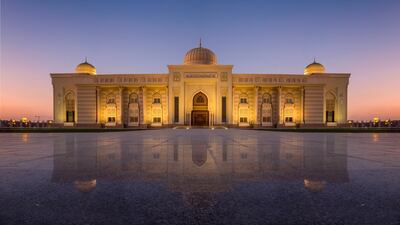
The College of Sharia and Islamic Studies is one of the foremost colleges that rose to prominence with the establishment of the University of Sharjah in the year 1977. Photo: Sharjah Media Office -
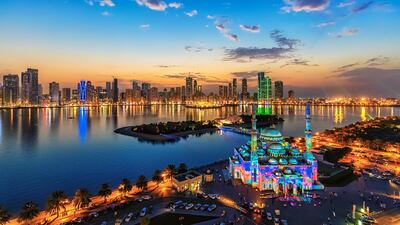
Al Noor Mosque and Al Noor Island, which sits in Khalid Lake in the city of Sharjah. Photo: Sharjah Media Office -
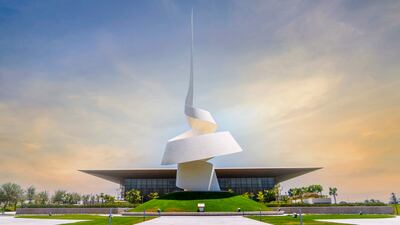
The House of Wisdom, Sharjah's state-of-the-art public library that opened in 2020. Photo: Sharjah Media Office -
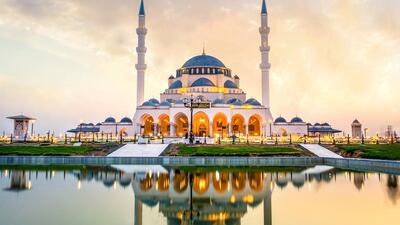
The Sharjah Mosque, the largest mosque in the emirate, opened in 2019. Photo: Sharjah Media Office -

The Ruler of Sharjah, Sheikh Dr Sultan bin Muhammad Al Qasimi, is shown a new housing and business development by Sheikh Sultan bin Ahmed, right, in 2020. The National -
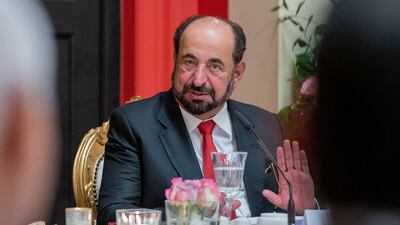
The Ruler of Sharjah, Sheikh Dr Sultan bin Muhammad Al Qasimi, presents his latest novel at a dinner reception hosted by the Sharjah Book Authority at the Literaturhaus in Frankfurt in 2018. Photo: Sharjah Media Corporation



