

“I was an 18-year-old who fell asleep one random night and woke up the next day with complete numbness all over my body,” writes Shahd Alshammari. Her neurologist predicted she would die by the age of 30. Now, at 36, the Kuwaiti-Palestinian writer and professor describes her tumultuous journey with multiple sclerosis in her memoir, Head Above Water.
The book, which also explores elements of faith and feminism while critiquing cultural taboos and social attitudes, was published by Neem Tree Press on May 30, World MS Day.
“I had never felt that being a woman was as heavy a burden until I felt the scarlet letter of disability wrapped around my neck,” writes Alshammari. Throughout her book, she draws attention to stigmas around disabilities, particularly in eastern cultures where women often face sexism and ableism. As a woman living with illness, Alshammari says she is doubly affected by cultural patriarchy, which can view the feminine body through a lens of shame.
The Kuwaiti-Palestinian author and professor explains that non-western narratives — especially female Arab ones — exploring illness are rare. “The idea of the body as taboo, and all this shame and silencing of the body was something I wanted to see in writing so that I could teach it one day,” she tells The National.
Cultural commentary and critique
At once reflective and poetic, Alshammari’s writing style is peppered with thought-provoking metaphors that chronicle her personal experiences with trauma, and society’s overall ignorance and inclination towards denial when it comes to illness. Each chapter opens with a diary entry and proceeds with conversations with her student-turned-friend Yasmeen, as Alshammari dives into the memories that shape her story.

“We were looking at abstract ideas, picked from my diary, like dead roses meant for potpourri,” she writes. Later, she compares humans to stallions while explaining how tribal Arab culture tends to view illness: “To be ill is to be polluted and likely to poison the healthy bloodline.”
Alshammari uses storytelling as a means of empowering herself with agency. She describes the numerous social obstacles that come with having MS, and the challenges she has with performing simple daily tasks such as buttoning her shirt. Sometimes, she interrupts narrative to stress the continuous presence of her pain. “Right now, I can’t feel my legs,” she writes at one point.
She also details the “tormenting” experimental medical procedure she underwent in her twenties, and the gripping near-death experience it resulted in. As it commenced, Alshammari felt like an “Eid sacrifice”, and she uses similar religious metaphors and spiritual language, sometimes referencing the Quran and Rumi, throughout her memoir.
“Whenever you go through something quite difficult, whether it’s emotional or physical, you start thinking about faith, and how you hold on,” she explains. “When you’re feeling hopeless, you start questioning the body: Where do we go from here? Is this a test of faith? All these kinds of questions come up.”
While parts of the writing process may have been cathartic, being so vulnerable and revisiting past trauma was no easy task. “There were some scenes that I didn’t really want to go back to,” she explains. “But I was prepared because I had read so much about the art of writing a memoir and illness narrative, and the dangers that come with that, and to take care of your emotional and mental health and kind of step away from it when you feel the need to. So I did leave it for a whole year, untouched, and then revisited it during Covid.”
At the height of the pandemic, while Alshammari was stuck at home and struggling with both physical and emotional pain caused by her illness, she decided to go back through her diary entries to start putting her work together in book format.
Giving a platform to other voices
While researching comparative literature, Alshammari found that there were often double standards and different gendered norms when it came to memoirs written by men as opposed to women. “White male biographies and stories are very much self-centred about their own experiences, but narratives written by women tend to be not just about themselves but about a community,” she explains. She cites prolific female writers such as Maya Angelou and bell hooks, who mention mother figures and other female family members in their writing, imbuing their stories with a community of voices.
Alshammari follows a similar approach with Head Above Water, weaving in the stories of some of her students and peers whose lives have been affected by illness. One woman, who has an autistic daughter, finds herself a single mother after her husband completely denies their child’s diagnosis. Another woman who struggles with endometriosis, makes the ultimate decision to have her uterus removed, resulting in her husband feeling “betrayed”.
The author says that she was inspired by sociologist Arthur Frank, who once said that if you have the privilege of being heard, then to lend your voice to others, too. “That idea of lending my voice really stuck with me,” she says. “It wasn’t just about me and MS and chronic pain but also different women’s experiences with the body and mind.”
At one point, Alshammari uses the metaphor of a Ferris wheel to depict the cyclical and yet random nature of illness. While her memoir starts with an exploration of death, brought on by the loss of her dog Flake, she concludes that she would like to “stay on the Ferris wheel, as scary as it is”.
In the meantime, she hopes her memoir will help to demystify illness and change the narrative on how society views women’s bodies, shame and disability. “If illness is to be feared and has contagion as its constant shadow, then may this book be contagious,” she writes.
'50U': UAE tribute book celebrates country through its diverse people — in pictures
-
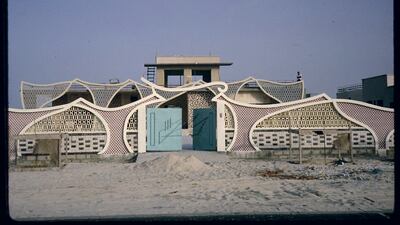
'50U' includes a collection of archival photographs, some of which were taken by US photographer Eve Arnold when she travelled the Gulf in the early 1970s. This is an undated photo of a house in Dubai. Photo: Eve Arnold Papers. Yale Collection of American Literature, Beinecke Rare Book and Manuscript Library -
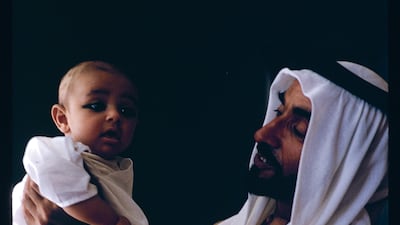
Sheikh Zayed, Ruler of Abu Dhabi, with the sixth child from his second wife, Fatima, in April 1970. Photo: Eve Arnold Papers. Yale Collection of American Literature, Beinecke Rare Book and Manuscript Library -

Hotel construction on the shores of the Arabian Gulf, April 1970. Photo: Eve Arnold Papers. Yale Collection of American Literature, Beinecke Rare Book and Manuscript Library -
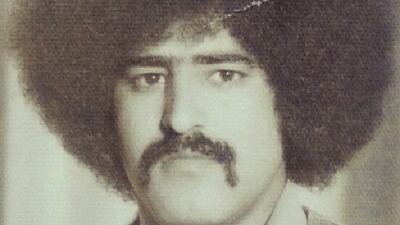
'50U' honours the efforts of visual historian Abdullah Salem Al Sheikh to archive portraits, snapshots and interviews, collating them in a popular Instagram account: @jumeira2323. The man in the photograph is identified as Marwan Al Khatib. Photo: @jumeira2323 / Instagram -

A picture shared by one of the account's followers who is a relative of the policeman, Abdullah Mohammad Said. Photo: @jumeira2323 / Instagram -
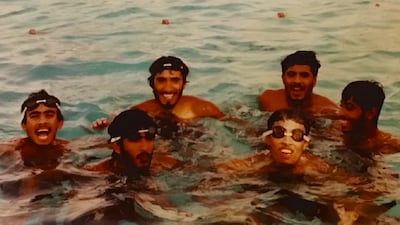
Abdel Rahman bin Meshar, Ahmad Suheil, Said Al Ayali, Jaber Al Tayer, Sultan BelHabalah and Ahmad Al Zafein. Photo: @jumeira2323 / Instagram -

From right, Bou Obeid Ali Obeid, Bou Haf Aswad Mohammad Hamad bin Khawaitim Al Ameri, Bou Said Hamza Khalifa Bel Obaida Al Seweidi, and Bou Said Omar Khalifa Bel Obeida Al Seweidi. The picture was shared to the Jumeira2323 account by Abdullah Bel Obaida. Photo: @jumeira2323 / Instagram -

Al Ain sword dance. Abu Dhabi, April 1970. Photo: Eve Arnold Papers. Yale Collection of American Literature, Beinecke Rare Book and Manuscript Library -
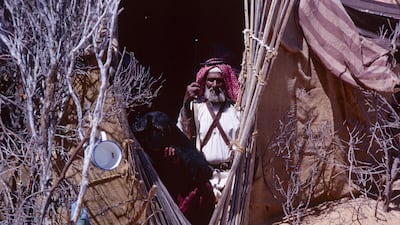
Bedouin man and his wife in their shelter, 1970. Photo: Eve Arnold Papers. Yale Collection of American Literature, Beinecke Rare Book and Manuscript Library -
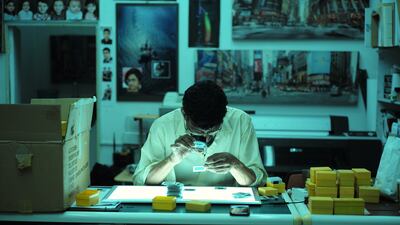
'50U' features a collection of photographs from Ammar Al Attar's 'Reverse Moments' series. Photo: Ammar Al Attar -

In 'Reverse Moments', Ammar Al Attar explores the oldest photographic studios of the UAE. Photo: Ammar Al Attar -
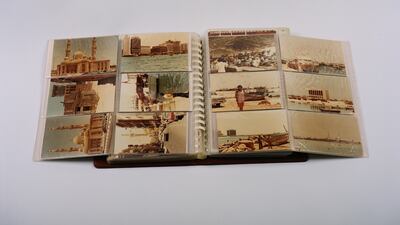
Ammar Al Attar photographed Mr Jafar’s Al Ahram Studio and Abdullah Al Awadhi’s Dubai Art Studio, set up in Dubai in the early 1960s. Photo: Ammar Al Attar -

‘Reverse Moments’ is a testament to the social history of the UAE, and its relations with its neighbours across the water – India, Iran and Pakistan. Photo: Ammar Al Attar -

For '50U', artist Charlie Koolhaas visited the UAE in the summer of 2021 to photograph architectural perspectives of Dubai. Photo: Charlie Koolhaas -

Charlie Koolhaas's photographs show Dubai from a range of vantage points. Photo: Charlie Koolhaas -
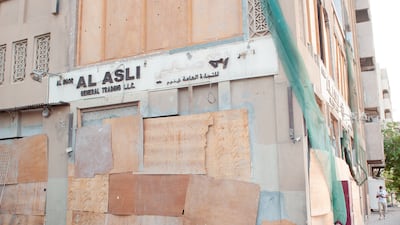
The works show glistening skyscrapers and lofty cranes to boarded-up general goods outlets and bird's-eye views of construction sites. Photo: Charlie Koolhaas



