

Mona Saudi, the Jordanian-Lebanese sculptor who created majestic, monumental works out of stone, has died aged 76.
The news was confirmed by her daughter, Dia, on Saudi's Instagram account on Thursday.
“With the heaviest heart, I share that my beautiful mama, sweetest grandmother and extraordinary artist, Mona Saudi, has left us last night in her beloved city Beirut," she wrote. "Words fail me beyond this.”
It is understood she had been ill, but no cause of death was given.
See works by Mona Saudi here:
-
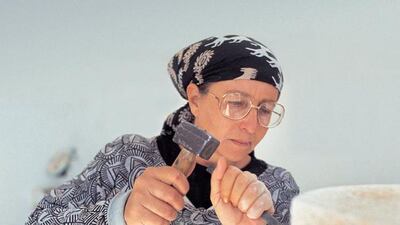
Mona Saudi at work on a sculpture. The Jordanian-Lebanese sculptor has died aged 76. Photo: Lawrie Shabibi Gallery -
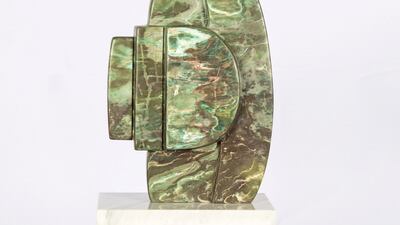
Jordanian Jade was used for 'Growth' by Mona Saudi. Photo: Sharjah Art Museum -
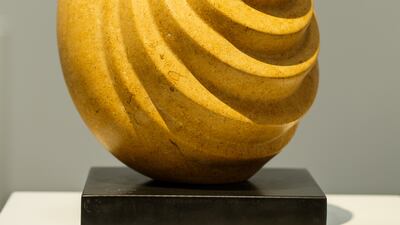
She worked with marble for 'The Seed' (2007). Photo: Lawrie Shabibi -
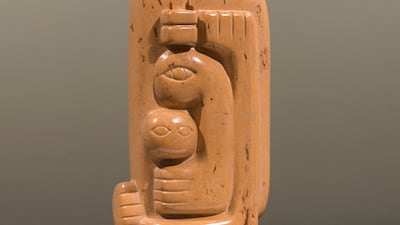
'Mother/Earth' (1969) crafted four years after her first sculpture by the same name, which was created for rising numbers of Palestinian refugees. Photo: Sharjah Art Foundation -
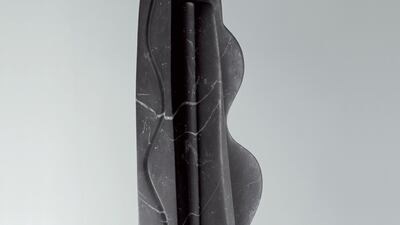
'The Nile Obelisk' by Saudi. Photo: Lawrie Shabibi -
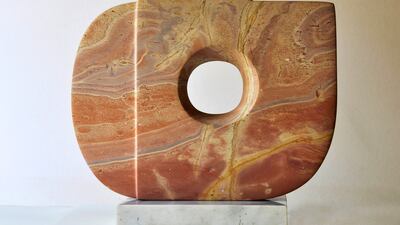
'Pink Sunset'. Photo: Lawrie Shabibi -
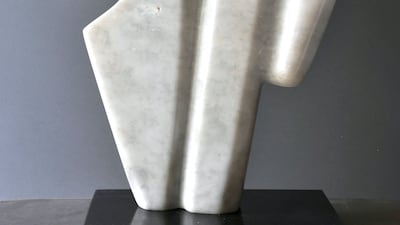
'The Seagull' by Saudi. Photo: Lawrie Shabibi -
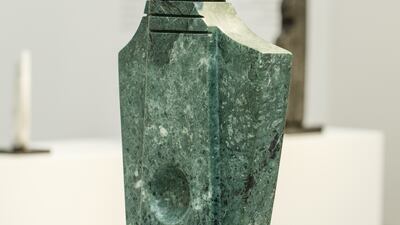
A sculpture titled 'The Poet'. Photo: Lawrie Shabibi -
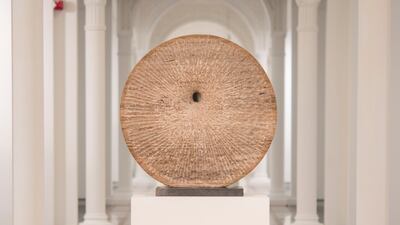
Saudi’s ‘Moods of Earth and Humans’. Photo: Sharjah Art Foundation


Saudi was born in Amman, Jordan, in 1945, and headed to Beirut at the age of 17 to become part of the Lebanese artistic milieu of the 1970s.
She studied sculpture at the Ecole nationale superieure des Beaux-Arts in Paris, travelling there with money raised from an exhibition she held in a Beirut cafe.
After returning to Beirut, she remained there until her death, staying in Lebanon throughout the Civil War.
History and myth were important inspirations for her. She drew on ancient civilisations such as the Ammonites, the Edomites and the Nabateans, referencing their motifs in her timeless and elegant forms, as well as works on paper such as The Petra Tablets (1997), a series of drawings that incorporate poetry by Adonis.
Saudi was active in the Beirut circles in which Adonis moved, and was friendly with him and other luminaries of the times such as Mahmoud Darwish and Paul Guiragossian.

She was also in love with the material of stone, working to bring out specific properties of the jade, marble, limestone and black diorite, among other stones, that she used.
Saudi chiselled her works herself, and at art fairs and shows often casually rested her hand upon them, as if she were back in her studio and not in the more constrained world of public exhibition.
She participated in many Arab biennials and exhibitions from the 1970s onwards. Her first major retrospective was held in 1995 at Darat Al Funun in Jordan, followed by a solo show, Poetic Inspirations, at The Mosaic Rooms in London in 2010 and, in 2018, a retrospective, Poetry & Form, at the Sharjah Art Museum, curated by Hoor Al Qasimi and Noora Al Mualla of the Sharjah Art Foundation.
She was one of the few artists who was able to embrace public sculpture and address it as a contemporary form.
A major work by her stands outside the Institut du Monde Arabe in Paris, its rectangular form, into which four curved stripes are carved, mirroring the square tile-effect of Jean Nouvel’s facade.
Other public works by her stand in the Jabal Amman public square in Amman, Al Wafa Bank in Casablanca and Lebanon’s International Sculpture Park in Rachana, on the Mediterranean coast.

Saudi was politically engaged early on in support of the Palestinian cause. She produced posters for the Palestine Liberation Organisation and has said that her first sculpture, Mother/Earth of 1965, created while she was in Paris, responded to the growing number of Palestinian refugee camps in Amman.
But she retreated from overt political engagement over the course of the Lebanese Civil War, seeing her artworks as a means to transcend day-to-day skirmishes and to respond to the constants of life.
Motherhood, time, remembrance and human emotions such as loss and joy became the leitmotifs that she rendered — remarkably — into legible stone form, and these sculptures will live long after the day she died.

