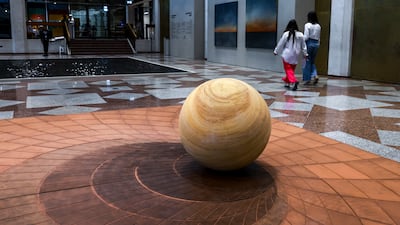
Galleries and museums across Abu Dhabi, Dubai and Sharjah are presenting a diverse programme of exhibitions as the UAE's autumn art season gathers pace.
Highlights include Two Horizons at Abu Dhabi's Cultural Foundation, where Emirati artist Shaikha Al Mazrou explores the relationship between industrial materials and the natural world; Art Here 2026 at Louvre Abu Dhabi, bringing together six artists whose works examine migration and cultural exchange across the Indian Ocean; and History Otherwise: Women Modernists from the Arab World at Concrete in Dubai, which revisits the contributions of women artists to modern Arab art.
Elsewhere, exhibitions explore childhood memories, cultural identity, environmental change and the relationship between people and their surroundings, with works spanning painting, photography, sculpture, ceramics and interactive installations.

Here are 21 exhibitions to see across the UAE.
1. Sculpture, Form & Memory at Maha Al Mansoori Art Gallery

Egyptian modernist Mahmoud Moussa (1913–2003) is the subject of his first solo exhibition in the UAE, bringing together more than 10 sculptures at Region Concept Space in Abu Dhabi's MiZa district. Presented by Maha Al Mansoori Art Gallery in collaboration with Motion Gallery in Cairo, the exhibition Sculpture, Form & Memory explores the artist's distinctive approach to material, form and cultural heritage.
Born in Alexandria, Moussa belonged to the second generation of pioneers of modern Egyptian sculpture. Drawing inspiration from ancient artistic traditions and everyday life, he developed a sculptural language that emphasised simplified forms, expressive contours and the physical qualities of materials including granite, marble, basalt and terracotta.
Curated by Emirati collector Maha Al Mansoori, the exhibition considers how sculpture can preserve personal and collective memory through its materials and forms. It also highlights Moussa's influence on subsequent generations of Egyptian artists, particularly through his teaching at Alexandria's Faculty of Fine Arts, where he joined the sculpture department in 1957.
November 11 to 15; Abu Dhabi
2. History Otherwise: Women Modernists from the Arab World at Concrete
History Otherwise: Women Modernists from the Arab World brings together works by women artists who helped shape modern art across the region during the 20th century. Presented at Concrete in Alserkal Avenue as part of Alserkal Art Week, the exhibition draws on the Barjeel Art Foundation collection to reconsider the contributions of artists who have often been overlooked in established accounts of Arab modernism.
Curated by Suheyla Takesh and Remi Homs, the exhibition opens with archival posters dating from the 1940s to the 1990s, documenting women's participation in exhibitions, artistic movements and cultural life. It then unfolds across four themes: introspecting, documenting, abstracting and crafting, examining approaches to portraiture, social commentary, experimentation and material.
Highlights include Inji Efflatoun's Untitled (1977), Samia Halaby's White Cube on Brown Cube (1969) and Mona Saudi's marble sculpture Continuity (1968). Spanning painting, sculpture, textiles and archival material, the exhibition challenges conventional narratives of modern art by bringing greater attention to the women who contributed to its development.
November 15 to 22; Dubai
3. Pieter Vermeersch at Perrotin Dubai
Belgian artist Pieter Vermeersch presents his first solo exhibition in the UAE at Perrotin Dubai, bringing together 11 works that explore the relationship between colour, material and perception.
Working across painting, photography and architectural interventions, Vermeersch frequently begins with photographic images that are manipulated and translated into abstract compositions. His practice also extends to natural materials, including stone and wood, creating works that examine the boundaries between painted surfaces and physical objects.
The exhibition reflects his interest in the ways colour can alter the experience of a space or material, encouraging viewers to reconsider the relationship between images, surfaces and their surroundings.
Until November 22; Dubai
4. The Horizon We Inherit at Iris Projects
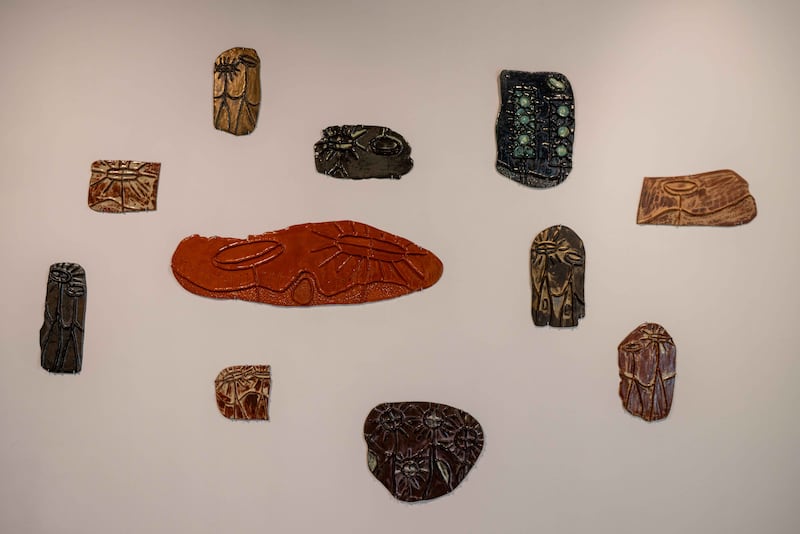
Emirati artist Eman Al Hashemi examines the changing rhythms of urban life in the UAE in The Horizon We Inherit, her first solo exhibition with Iris Projects. Working across ceramics, printmaking and mixed media, she considers how cities shape attention, memory and everyday routines.
The sun, street lights, buildings and roundabouts recur throughout the works, turning familiar features of the UAE cityscape into forms that can appear both recognisable and strange. Al Hashemi is particularly interested in the routes people repeatedly travel and the traces left behind as places are altered through construction and redevelopment.
Rather than treating the built environment as a backdrop, the exhibition considers it as an active force in daily life and asks what remains when familiar places survive only through photographs, maps, memories or repeatedly travelled routes.
Until November 26; Abu Dhabi
5. Provisional Sanctuaries at Tashkeel
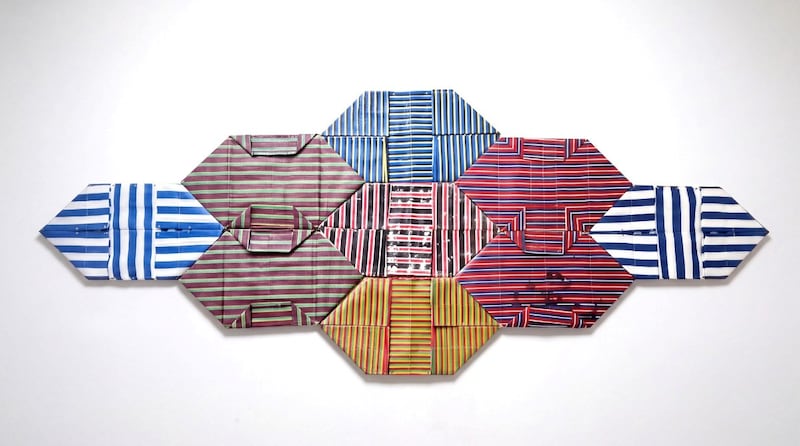
Dubai-based Malaysian artist Shamin Sharum explores the overlooked prayer spaces found across the UAE in Provisional Sanctuaries, his solo exhibition at Tashkeel. Drawing on the small, often temporary musallas established in warehouses, industrial areas and workplaces, the exhibition examines how modest architecture can provide a sense of familiarity and belonging in a city shaped by migration.
The exhibition grew from Sharum's experience of encountering a makeshift prayer room shortly after moving to Dubai. Working across painting, drawing, architectural models and axonometric studies, he reconstructs these spaces through memory, focusing on improvised minarets, hand-painted signs, prayer mats and other details that reflect the communities using them.
Trained as an architect, Sharum considers how temporary structures can acquire lasting emotional significance through shared rituals and everyday use. One model recalls a prayer space that he encountered during his first days in Dubai and that has since been demolished, turning an architectural study into an act of remembrance. Developed following his participation in Tashkeel's Critical Practice Programme, the exhibition connects the impermanence of these spaces with wider experiences of displacement, identity and belonging.
Until November 27; Dubai
6. Vantage Point 13 at Sharjah Art Foundation
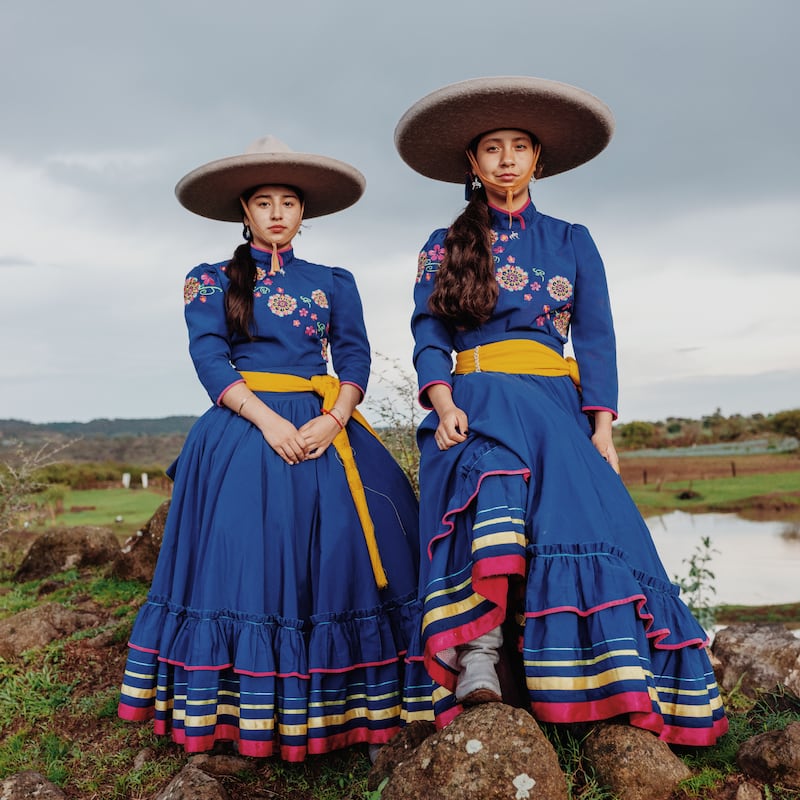
Vantage Point 13 marks a new chapter for Sharjah Art Foundation's long-running photography platform as it moves into the institution's dedicated photography gallery. Selected through an international open call, six artists present commissioned photographic series developed with the foundation's curatorial and production support.
The exhibition features work by Adam Rouhana, Guanyu Xu, Latifa AlBokhari, Luisa Dorr, Maheder Haileselassie and Sathish Kumar. Together, their projects demonstrate the breadth of contemporary photography, reflecting the programme's evolution from a platform for UAE-based photographers to an international exhibition embracing diverse approaches.
Introduced in 2013, Vantage Point has become one of the UAE's key photography initiatives. This edition also reflects the foundation's expanded commitment to supporting new work, with participating artists receiving production funding to create original projects specifically for the exhibition.
Until November 29; Sharjah
7. Fellow Travellers at Tabari
Fellow Travellers brings together six artists whose practices span Africa, Asia, Europe and the Americas, exploring themes of movement, memory, kinship and cultural exchange. Conceived and curated by artist, author and cultural historian Professor Omar Kholeif, the exhibition draws on nearly two decades of research, writing and personal relationships with artists.
The exhibition features works by Sonia Balassanian, Jai Chuhan, Luísa Correia Pereira, Lalitha Lajmi, Irene Scheinmann and Kholeif himself. Bringing together landmark pieces and rarely seen works, it traces artistic journeys across different geographies, considering how experiences of migration, cultural encounters and personal histories shape creative expression.
Accompanied by a limited-edition publication featuring original poetry and a curatorial essay, the exhibition also reflects Kholeif's long-standing interest in the relationships between artists and the connections that emerge across generations and borders.
Until November 30; Dubai
8. Children's Biennale: How the World Feels at Umm Al Emarat Park

Abu Dhabi's Umm Al Emarat Park has been transformed into an outdoor art exhibition designed around the ways children experience the world. Presented by Abu Dhabi Festival and curated by Dana Almazrouei, the Children's Biennale brings together eight interactive installations that encourage young visitors to explore art through touch, movement, sound and play.
Highlights include Egyptian artist Hana El-Sagini's Common Thread, Common Ground, featuring sculptures that children can alter by weaving and tying ropes, and Emirati artist Moza Almatrooshi's The Agriculture School – The Pollinators Play Museum, which explores the world of bees through colourful structures and sensory activities. Palestinian-American artist Sarah Afaneh invites visitors to contribute to woven tapestries inspired by the sun, land and sea.
Other installations include Where Wishes Grow by Nada Almosa and UT-R Studio, which invites children to share memories and hopes for public spaces, alongside a lantern installation by Indonesian artist Eko Nugroho. The month-long programme also features workshops, guided tours and family activities, encouraging children to become active participants in the artworks.
Until December 6; Abu Dhabi
9. Bodies that Make, Bodies that Grieve at NYU Abu Dhabi Project Space
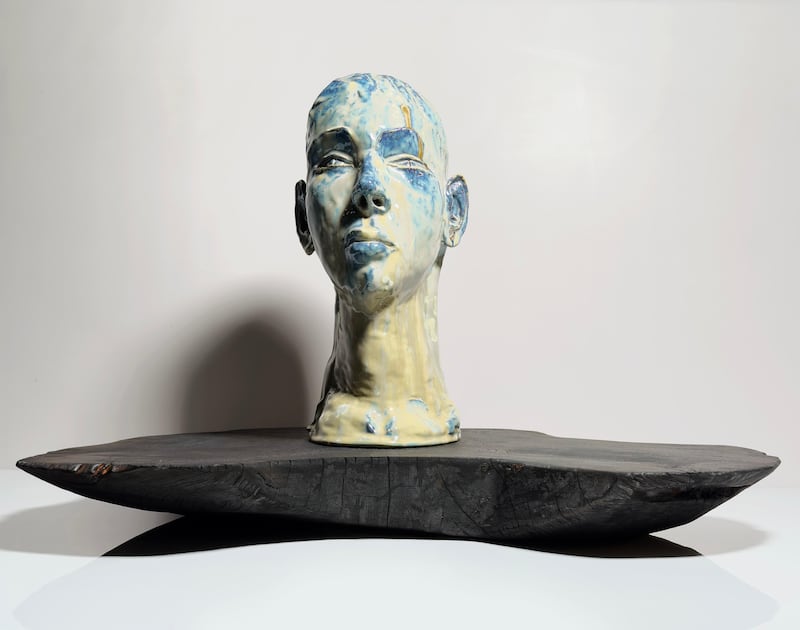
Bodies that Make, Bodies that Grieve brings together eight UAE-based female artists whose practices are rooted in the Global South, exploring how ceramics can give physical form to emotions and experiences that are difficult to express through words. Curated by Shafeena Yusuff Ali, founder and executive director of Rizq Art Initiative, the exhibition examines the relationship between the body, clay and emotional expression.
The exhibition features sculptures by Nujoom Alghanem, Mirna Bamieh, Moza Al Falasi, Malavika, Parneet Pahwa, Zahra Shafie, Laiba Sherin and Haseena Suresh. Working on an intimate, domestic scale, the artists use processes of pressing, building, breaking and firing clay to explore memory, grief and lived experience.
Presented at NYU Abu Dhabi Art Gallery's Project Space, the exhibition also considers the long-standing relationship between ceramics, women's labour and practices of care. By focusing on the physical act of making, it positions clay as a medium through which personal experiences and emotions can take shape.
Until December 13; Abu Dhabi
10. The Sky Held It, The Earth Remembered at Ishara Art Foundation
The exhibition brings together works by Shahana Rajani, Rohini Devasher and Sarker Protick to explore how land, water and the cosmos can act as archives of memory and history. Through photography, moving image and installation, the exhibition considers how ecological change and human intervention leave traces on the environment that can persist across generations.
Rajani’s three-channel film Lines That World a River focuses on communities displaced from the Indus Delta, where paintings and murals reconstruct villages submerged following the construction of dams and barrages. Devasher turns towards the cosmos with Latent Fields, monumental silk panels inspired by sunspots and other solar phenomena, while Protick’s Dhaka 1217 documents 15 years of transformation around the neighbourhood in Dhaka where he was born and continues to live.
Drawing together perspectives from Pakistan, India and Bangladesh, the exhibition considers ecological decline across national borders and the ways landscapes can preserve histories of displacement, destruction and resilience.
Until December 15; Dubai
11. Revelation at 421 Arts Campus
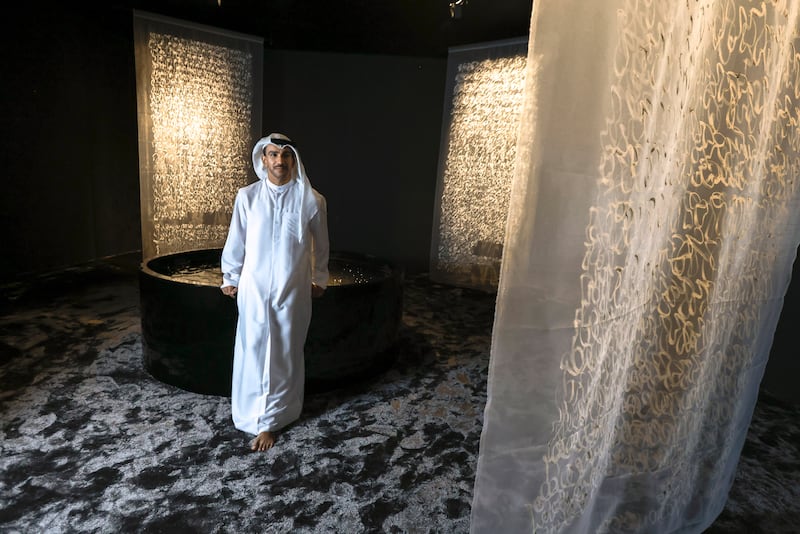
Emirati artist Juma Al Haj explores seclusion, reflection and personal transformation in Revelation, his first institutional solo exhibition.
Developed through 421 Arts Campus's Artistic Development Programme, the project brings together painting, engraved glass, text, light, shadow and installation to consider how moments of uncertainty can lead to greater self-understanding.
The exhibition unfolds as a physical journey, beginning with Balaa, a painting concerned with trials and the ways people measure their lives, and Traces, a series of engraved glass panels whose inscriptions shift with light and shadow. It culminates in Hijr, a darkened, carpeted space centred on a water feature, where visitors remove their shoes and are encouraged to slow down and contemplate.
Al Haj's approach draws on journaling, philosophy and spiritual texts, extending the layered marks of his paintings into an environment visitors can move through.
Rather than presenting revelation as a final answer, the exhibition treats it as one stage in an continuing process of reflection and discovery.
Until January 10, 2027; Abu Dhabi
12. What We Left In The Sandbox at Rizq Art Gallery

Emirati artist Reem Al Mubarak explores childhood memories, play and the emotional significance of everyday objects in What We Left In The Sandbox, her solo exhibition at Rizq Art Gallery on Abu Dhabi's Reem Island. Curated by Emirati architect and researcher Azza Aboualam, the exhibition invites visitors to reconsider their own experiences through interactive artworks made from familiar materials.
The exhibition features bubble wrap, sand, plastic chairs and objects associated with childhood games. Highlights include a sandcastle built to the exaggerated proportions of a child's memory, requiring adults to stoop to enter, and a metal sliding puzzle made from a photograph that can be rearranged but never fully restored.
Developed partly through Al Mubarak's six-month residency at Abu Dhabi's Cultural Foundation, the exhibition also draws on conversations and memories shared by others. By encouraging visitors to touch, move and interact with the works, it considers the unreliable nature of memory and the ways shared experiences can create lasting connections between people.
Until January 10, 2027; Abu Dhabi
13. The Territory Dreams Back at Nika Project Space
The Territory Dreams Back brings together five artists whose works explore the relationship between people, landscapes and the histories that shape them. Hosted at the Nika Project Space in Dubai's Al Quoz district, the exhibition considers how geography is influenced by memory, mythology, migration and political power.
Featuring newly commissioned and recent works by Rajni Perera, Sancintya Mohini Simpson, Soma Surovi Jannat, Karan Shrestha and Rain Wu, the exhibition spans painting, sculpture, video and installation. Each artist approaches the idea of territory differently, examining how personal experiences, cultural beliefs and systems of power influence the ways places are understood and inhabited.
The exhibition also considers the relationship between natural environments and human intervention, from the histories carried by land and water to the ways maps, borders and infrastructure reshape landscapes. Together, the works challenge the idea of geography as something fixed, presenting places as environments continually transformed by human activity and collective memory.
November 17 to January 15, 2027; Dubai
14. Paul Guiragossian: 100 Years of Art at Bassam Freiha Art Foundation
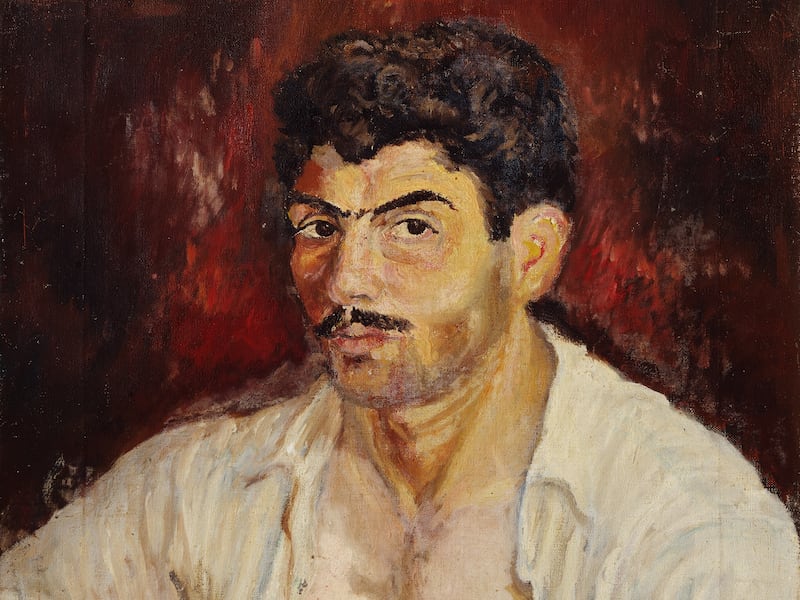
Paul Guiragossian: 100 Years of Art celebrates the centenary of the Lebanese artist's birth, bringing together significant works from his estate at Bassam Freiha Art Foundation in Abu Dhabi.
Developed in collaboration with the Paul Guiragossian Foundation, the exhibition offers an overview of the life and legacy of one of the leading figures of modern Lebanese and Middle Eastern art.
Known for his expressive use of colour and distinctive depictions of the human figure, Guiragossian (1926–1993) developed a visual language concerned with family, identity and the human condition. His paintings frequently explored themes of displacement, belonging and everyday life, reflecting both personal experiences and the wider history of the region.
Drawing primarily on works from the artist's estate, the exhibition traces the development of his practice and considers his enduring influence on modern Arab art.
Until January 17, 2027; Abu Dhabi
15. Spices and Wonders: Sailing the Indian Ocean at Louvre Abu Dhabi
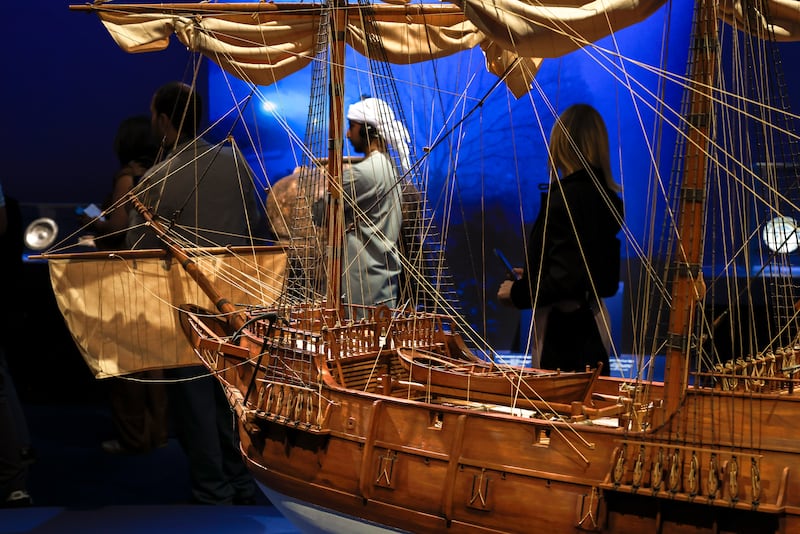
Spices and Wonders: Sailing the Indian Ocean explores 1,000 years of maritime trade and cultural exchange, tracing the routes that connected communities across East Africa, the Arabian Peninsula, India, China and South-East Asia. Organised in partnership with the Guimet National Museum of Asian Arts in Paris, the exhibition brings together about 240 artworks and historical objects from 24 lenders.
The exhibition places the Arabian Gulf at the centre of its narrative, examining the region's pearl trade and the movement of spices, precious stones, textiles and religious artefacts. Highlights include six detailed models of historic vessels, objects recovered from shipwrecks, ancient navigational instruments and a third-century Buddha sculpture from present-day Pakistan.
Through specially created maps and immersive displays, the exhibition examines how sailors navigated using stars and coastal landmarks, while merchants and pilgrims carried goods, beliefs and artistic traditions among distant societies. Its historical narrative concludes in the 17th century, drawing attention to the extensive trading networks that existed before European powers came to dominate Indian Ocean commerce.
Until February 14, 2027; Abu Dhabi
16. Public Art Abu Dhabi Biennial: Home – A Glossary for a Communal Sense of Place
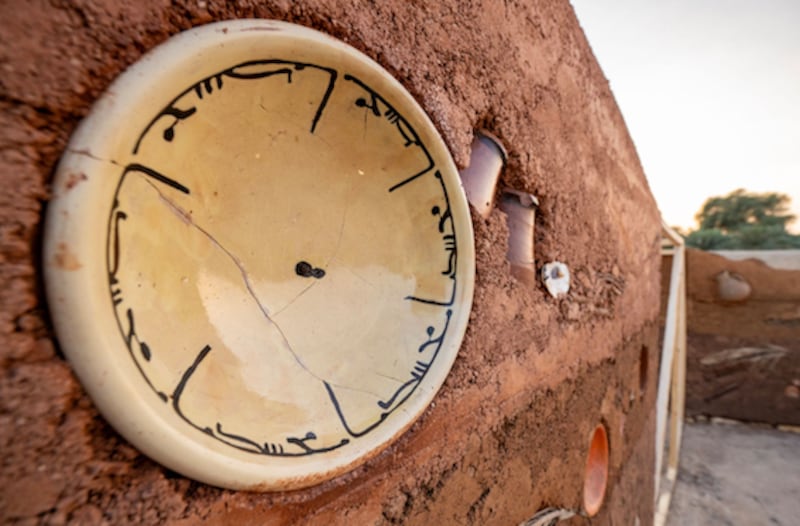
The second Public Art Abu Dhabi Biennial explores ideas of home, belonging and community through installations presented across public spaces in Al Ain and Abu Dhabi. Led by artistic director Elvira Dyangani Ose, the exhibition brings together 21 artists and collectives whose works respond to the environments and communities in which they are situated.
Titled Home: A Glossary for a Communal Sense of Place, the biennial considers the different ways people understand and experience home, from physical surroundings and personal memories to shared histories and cultural traditions.
The exhibition opened in Al Ain on October 23 and expands to Abu Dhabi on November 15, with installations at locations including Mina Zayed, Souq Al Mina and Saadiyat Cultural District. Participating artists include Ibrahim Mahama, Akram Zaatari, Nari Ward and Laure Prouvost, whose practices span sculpture, installation and socially engaged art.
Until February 15, 2027; Al Ain and Abu Dhabi
17. Art Here 2026: Confluences at Louvre Abu Dhabi

Art Here 2026 brings together six artists from India, Saudi Arabia, the UAE and Malaysia to explore migration, memory and centuries of cultural exchange across the Indian Ocean. Curated by Kamini Sawhney, the exhibition unfolds beneath Louvre Abu Dhabi's dome, with installations examining the personal experiences and shared histories connecting communities across the region.
Highlights include Indian artist Reena Kallat's Shorelines of Longing, which draws on letters and recorded messages exchanged between families separated by migration to the Gulf, and Ravikumar Kashi's Meghadutam, featuring cloud-like textiles patterned with correspondence. Emirati artist Almaha Jaralla's Daria Dawlat uses traditional sailors' garments to evoke the region's maritime history, while Vivek Vilasini's Dreamings of Arabia explores the UAE's linguistic diversity through monumental ceramic vessels.
The exhibition also features works by Saudi artist Ahaad Alamoudi and Malaysian artist Muhammad Shamin Sahrum, whose installations examine transformation and belonging. Presented alongside the Richard Mille Art Prize, the exhibition extends the historical narrative of Louvre Abu Dhabi's Spices and Wonders: Sailing the Indian Ocean into the present.
Until February 28, 2027; Abu Dhabi
18. The Matter of Light at Dom Art Projects
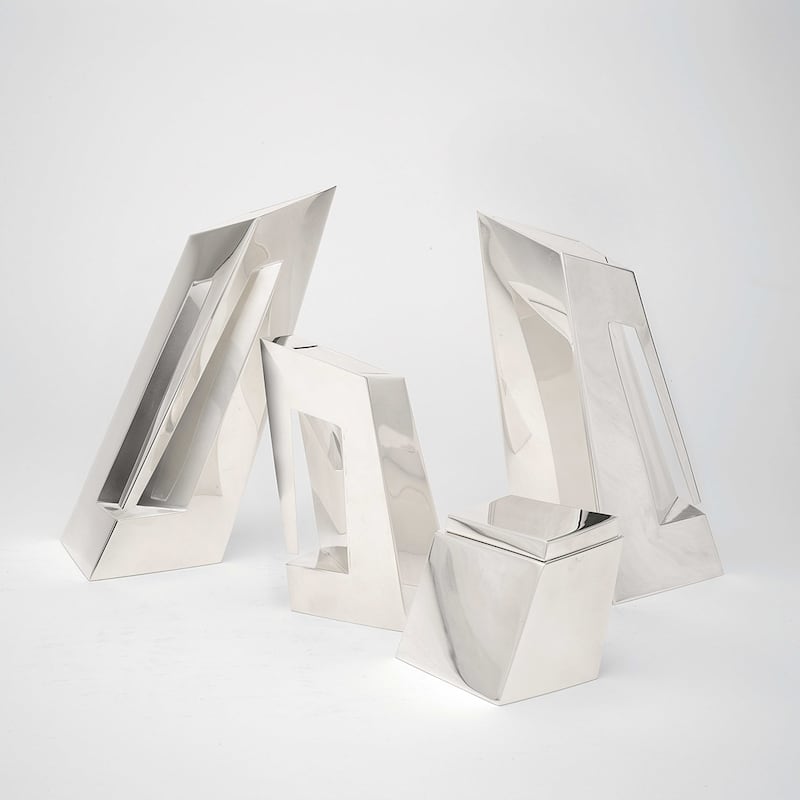
The Matter of Light brings together 22 artists and collectives from Eastern Europe and the Arab world to explore the role of light in shaping perception, space and artistic expression. Curated by Eugenia Kikodze, the exhibition considers light as both a physical phenomenon and a subject that artists have approached through different materials and disciplines.
Participating artists include Kamal Boullata, Zaha Hadid, Susan Hefuna and Zoulikha Bouabdellah. Their works examine the relationship between light, form and the environments people inhabit, bringing together approaches informed by architecture, abstraction and contemporary visual culture.
Featuring loans from collections including the Barjeel Art Foundation and Art Jameel, the exhibition creates connections between artists working across different regions and generations.
Until March 10, 2027; Dubai
19. Salah Elmur: Just as the Heart of a Mango is a Stone at Jameel Arts Centre
Sudanese artist Salah Elmur examines family histories, memory and collective experience in Just as the Heart of a Mango is a Stone, a solo exhibition at Jameel Arts Centre. Bringing together paintings, sketches, archival photographs and other materials, the exhibition focuses on works produced since 2018.
Curated by Zain Al Saie and Qutouf Elobaid, the exhibition unfolds across three chapters exploring relationships between family, land, labour and grief. Elmur's distinctive figurative paintings draw on everyday encounters and personal recollections, often combining familiar subjects with unusual compositions and expressive colour.
The exhibition considers the relationship between individual memory and wider social histories, reflecting the artist's long-standing engagement with Sudanese life and culture.
Until March 14, 2027; Dubai
20. A Board Game Adventure at Louvre Abu Dhabi
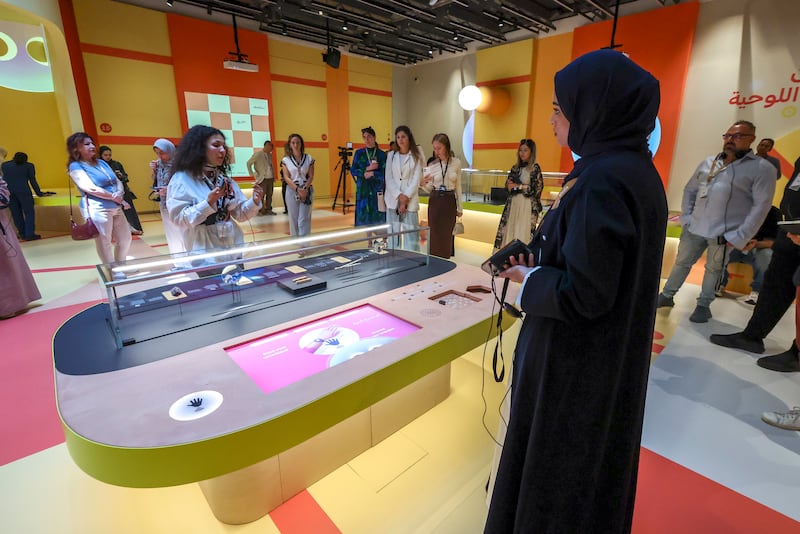
A Board Game Adventure transforms Louvre Abu Dhabi into a giant playground, using some of the world's oldest games to explore how people have connected across cultures for thousands of years. Designed for children but engaging for all ages, the exhibition traces the journey of games including chess, Mancala, Ludo and Carrom as they travelled between ancient civilisations and evolved into the games still played today.
The exhibition combines immersive installations with rare artefacts borrowed from international museums, including some of the earliest known board game objects from ancient Egypt, Mesopotamia, Iran and India. Highlights include centuries-old chess pieces carved from ivory and rock crystal, engraved backgammon pieces, ancient six-sided dice and one of the earliest known predecessors of Ludo.
Interactive displays encourage visitors to solve puzzles, challenge artificial intelligence, play on oversized game boards and discover how strategy, chance and storytelling have always been part of human play. Throughout the exhibition, historical figures including Queen Nefertari, Achilles and the samurai Hatakeyama Shigetada are reimagined through playful “player profiles”, linking games to the personalities and cultures that shaped them.
Rather than presenting games as simple entertainment, A Board Game Adventure reveals them as cultural objects that have crossed borders, adapted to societies and brought people together for millennia.
Until April 25, 2027
21. Shaikha Al Mazrou: Two Horizons at Cultural Foundation

Emirati artist Shaikha Al Mazrou explores the relationship between material, perception and the natural world in Two Horizons, a major solo exhibition at Abu Dhabi's Cultural Foundation. Bringing together existing works and new commissions, the exhibition examines how industrial materials can be transformed into forms that challenge expectations of weight, balance and permanence.
Curated by Reem Fadda, with Noor AlMehairbi, Paz Monge and Afra Saif Almazrouei, the exhibition unfolds across four chapters in the Cultural Foundation's atrium and inner galleries. Working with materials including steel, marble, glass, resin and copper, Al Mazrou creates sculptures that explore the tension between rigid structures and seemingly fluid or delicate forms.
Highlights include Fragmented Horizons, a new commission, alongside Water Was Never Blue and A Throw of the Dice Will Never Abolish Chance. The exhibition also introduces works in marble, extending the artist's experimentation with materials and their physical properties. Using the horizon as a recurring reference, Al Mazrou considers ideas of distance, longing and the shifting relationship between people and their surroundings.
Until July 18, 2027; Abu Dhabi

