

Growing up in Chennai in the early 1970s, one of the best place to visit was Dasaprakash Hotel in Egmore, on the busy Poonamalee High Road, which served delicious dosas and ice creams. It was a masterpiece of Art Deco style with porthole windows, wood-panelled interiors and an ice cream parlour with old-world ambience.
Chennaites were heartbroken when it closed its doors in 2010 during the global financial crisis — and even more so when it was later razed to make way for a modern apartment complex.
Art Deco was an eclectic architectural style from France that spread around the world and became popular after the First World War. It was an amalgamation of streamlined, geometric elements and motifs including Egyptian gods and goddesses — a craze sparked off after the discovery of Tutankhamun's tomb — which emerged as a counter-reaction to the highly stylised Art Nouveau movement. Art Deco also spread to other genres like jewellery, furniture and textiles.
Many affluent architects who had left India to travel abroad used this style when they returned to their home country. It expresses nationalist sentiments — which created an aesthetic movement against British colonial, Victorian and gothic architecture. Though Chennai (then Madras) was known most for its Indo-Saracenic architecture — a mix of gothic and Indian elements, with onion domes and arched windows. It also had a great treasure of Art Deco structures like other cities at that time, including Mumbai and Kolkata.
-
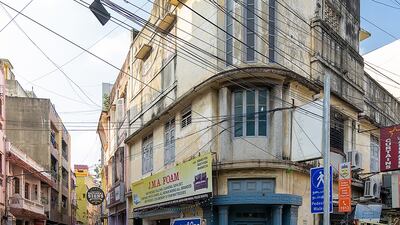
Chennai’s old neighbourhoods, such as Royapettah, are still lined with old Art Deco-style residences. Photo: Madras Inherited -
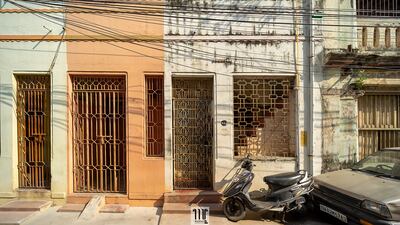
Mylapore was once one of Chennai's centres of Art Deco design. Photo: Madras Inherited -
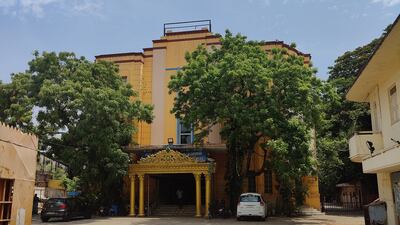
Formerly one of Mylapore's grand garden mansions, and later a cinema, Kamadhenu today is used as a wedding hall. Photo: Kalpana Sunder -
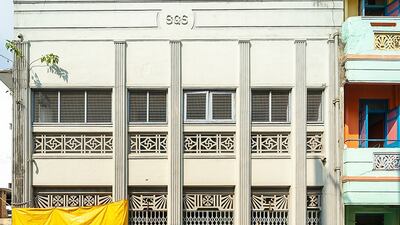
An Art Deco-inspired house in Mylapore. Photo: Madras Inherited -
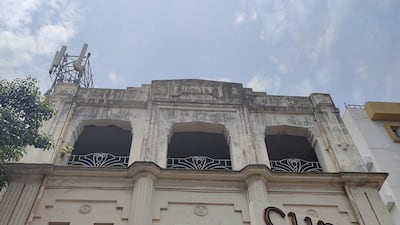
Founded in 1898, Curzon & Co in Triplicane, named after the British Viceroy Lord Curzon, is one of the oldest surviving furniture stores in the city housed in an Art Deco building. Photo: Kalpana Sunder -
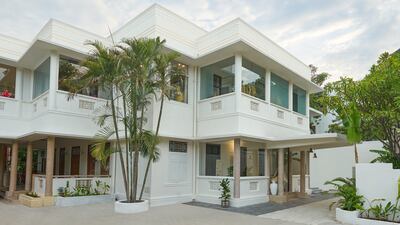
Fashion boutique Collage has taken up residence in a spacious two-floor, 70-year-old Art Deco villa with concrete and metal grilles, in Rutland Gate in Nungambakkam. Photo: Collage


While Mumbai has done a great job of preserving its Art Deco heritage that stretches from Colaba to Malabar Hills, much of Chennai’s treasures have disappeared in the relentless drive towards urbanisation and development. Some gems, however, do remain.
Asmitha Athreya, architect and head of operations at Madras Inherited, which is involved in heritage conservation and also conducts walks, tells The National: “Madras being a coastal city and the first presidency of the British colonisers in India, welcomed various architectural styles to its shores.
"One such was the Art Deco style, which found itself being reimagined and presented in movie theatres, office buildings, clock towers and residences. The style also offered itself to indigenisation, with several residences carrying, on their facade, elements that reflected the faiths and personal beliefs of the owners. While one can still find some spectacular examples of residences across areas that developed in the 1930s to '60s, there are fewer examples that can be cited of public buildings.”
Popular motifs that one can still see in Art Deco buildings in Chennai include pyramids, sunbursts, zigzags and other geometric shapes. Rounded corners and streamlined designs made the buildings look futuristic. Stepping the roof up and down like a ziggurat, was common.
Nautical features such as portholes and railings reminiscent of a ship’s deck were inspired by people travelling on large transatlantic steamers. While maintaining the traditional elements of Art Deco, the Indian architects wove in references to Indian culture and gods and goddesses, through the motifs and designs on the facade, doors and windows — while also adapting it to India’s climatic conditions.
Unlike Mumbai’s uniform Art Deco skyline, Chennai’s Art Deco structures have always been concentrated in certain pockets. Chennai’s old neighbourhoods like Royapettah, T’ Nagar and Adyar are still lined with old Art Deco-style residences with wraparound balconies, balustrades, concrete grilles, pillars with cornices and motifs of sunrises.
V Sriram, a Chennai historian and heritage activist says: “Art Deco came late to India, 20 years after it came to Europe, but it stayed here long after it died out in other countries; almost until the 1960s, dominating the design of many public buildings and residences.”

It was Laxman Mahadeo Chitale, an associate of the Royal Institute of British Architects, who brought Art Deco to India and designed some ground-breaking buildings. He teamed up with the renowned town planner, Henry V Lanchester and designed several landmark structures like the Umaid Bhawan Palace, Jodhpur. Other buildings included the Oriental Life Assurance building in Chennai and the Reserve Bank building in Nagpur.
“Two industries, in particular, adopted the Art Deco style in their buildings. One was insurance, which was in the first flush of Indian independence — driven by nationalistic tendencies and sentiments — and had names like Bharat, Swadeshi and so on,” explains Sriram.
"The other industry where Art Deco flourished was cinema theatres, which was not only in Chennai but a pan-India phenomenon."
One of the oldest Art Deco structures that still stands is the Royapettah Clock Tower, a stand-alone structure built in the 1920s near the Express Avenue mall. Before the clock tower arrived, officers used to fire cannonballs from Fort St George at 8pm every night. The National Assurance building on NSC Bose Road, built in 1938, and the imposing Dare House, with vertical lines and sunburst motifs on window grilles, housing the offices of the Murugappa Group, are other showstoppers.
The co-operative housing colonies, which sprouted up in areas like Gopalapuram, CIT Colony, T’Nagar and Adyar, also adopted Art Deco motifs and design. Chennai had a wealth of movie theatres in Art Deco style, but most cinemas of such style, unfortunately, were demolished during the subsequent real estate boom.
A few like the Kamadhenu Theatre in Luz, still stand though — today it is used as a wedding hall. It used to be one of the grand garden mansions of Mylapore and was later a popular cinema hall, which screened Tamil movies until the 1970s.
Founded in 1898, Curzon & Co in Triplicane, named after the British Viceroy Lord Curzon, is one of the oldest surviving furniture stores in the city housed in an Art Deco building. With clean lines, no designs and simple plastered walls it was one of the first buildings to transition from Indo-Saracenic to Art Deco.
In recent times, some designer stores have taken up old Art Deco mansions in the city as a form of adaptive reuse like Collage, a fashion boutique housed in a spacious two-floor, 70-year-old Art Deco home with concrete and metal grilles, in Rutland Gate in Nungambakkam.
Collage founder Lata Madhu says: "What I realised during and post-Covid was that the world at large, myself included was in a constant rush. This was even more so in retail, and if Collage was going to be a space of consumerism, why not do it more organically? We have consciously tried to blend elements of the Art Deco architecture with nature. A sense of the outdoors is visible in every corner.”
Most of the Art Deco buildings in Chennai are built using materials like lime mortar and teak, which is difficult for an individual to maintain in today’s context. “Maybe a public-private partnership can help at least these remaining buildings to survive”, says Sriram.

