


Balkrishna Doshi, one of India’s most distinguished architects, has died aged 95.
Doshi died on Tuesday, his family confirmed in a statement to the Indian media.
"We are deeply saddened to inform you about the passing away of Balkrishna Doshi, loving husband, father, grandfather and great-grandfather," his family said.
Doshi was one of the few to have been awarded two of the world’s most coveted architectural awards; the Royal Gold Medal, which he received last year, and the Pritzker Architecture Prize, often hailed as the Nobel Prize of architecture, which he won in 2018. He is the only person from India to be bestowed with both accolades.
Balkrishna Doshi's most significant buildings — in pictures
-
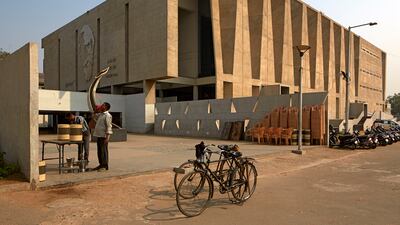
Tagore Memorial Hall in Ahmedebad is one of many buildings designed by the celebrated Indian architect Balkrishna Doshi. Getty Images -
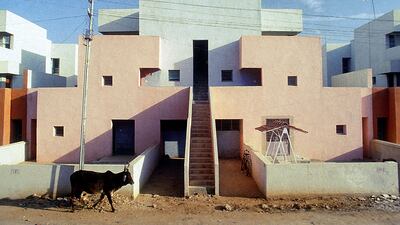
Doshi designed Ahmedabad's Life Insurance Corporation Housing in 1973. Photo: VSF -
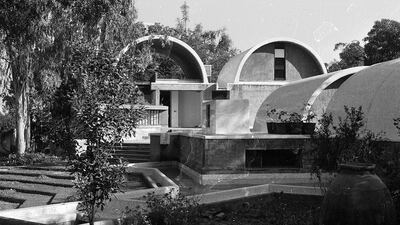
Doshi's own studio, Sangath, features a series of sunken vaults sheathed in china mosaic, as well as a small, grassy terraced amphitheatre and flowing water details. Photo: Sangath -

Aranya Low Cost Housing in Indore accommodates more than 80,000 people through a system of houses, courtyards and a labyrinth of internal pathways. Photo: VSF -
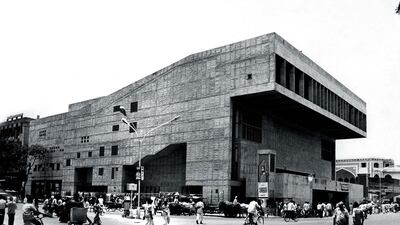
The Premabhai hall in Ahmedabad. Doshi designed the building in 1956 as a modern public theatre. Photo: Sangath -
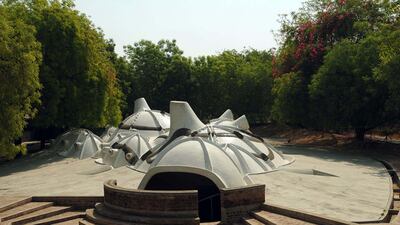
Amdavad ni Gufa is an underground art gallery in Ahmedabad, which exhibits works of the Indian artist Maqbool Fida Husain. Photo: Sangath -
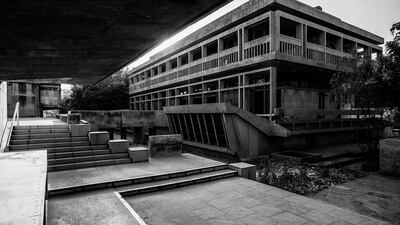
The Institute of Indology in Ahmedabad was designed to house ancient manuscripts, a research centre and eventually, a museum. Photo: Sangath -

The School of Architecture in Ahmedabad contains studios and teaching spaces for multiple uses. Photo: Sangath -
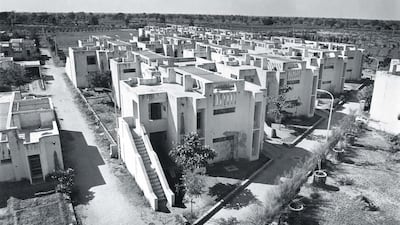
The Indian Farmers Fertiliser Co-operative Ltd (Iffco) eco-friendly township in Kalol. Photo: Sangath -
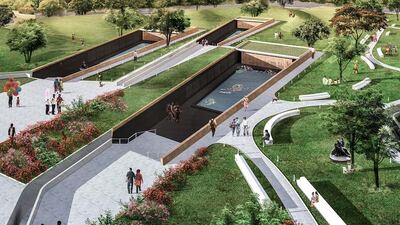
The National War Museum and Memorial in New Delhi. Photo: Sangath -

The Indian Institute of Management in Bangalore. Photo: Sangath -

The National Institute of Fashion Technology in New Delhi. Photo: VSF -
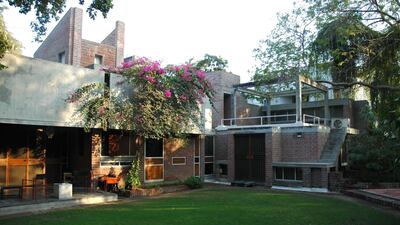
Kamala House in Ahmedabad was named after Doshi's wife and is the architect's personal residence. Photo: VSF


Indian Prime Minister Narendra Modi was among those who paid tribute to Doshi, calling him a "brilliant architect and a remarkable institution builder”.
“The coming generations will get glimpses of his greatness by admiring his rich work across India. His passing away is saddening. Condolences to his family and admirers. Om Shanti,” Modi wrote on Twitter.
Who is Balkrishna Doshi?
Doshi was born in 1927 to an extended family of furniture manufacturers. He studied at the Sir JJ School of Architecture in Mumbai, before working with Swiss-French architect Charles-Edouard Jeanneret, known as Le Corbusier, in Paris as a senior designer in the early 1950s.
He then travelled back to India to supervise Le Corbusier’s projects in Ahmedabad, including the Mill Owners’ Association Building and the Villa Sarabhai.
Across his seven-decade career, Doshi completed more than 100 projects, most of which were public institutions in India, including libraries, schools and art centres.
However, he is best known for his dedication to providing affordable housing in his native country. His most famous projects include the Life Insurance Corporation Housing in Ahmedabad, which he designed in the early 1970s, and the Aranya Low Cost Housing in Indore, which was completed in 1989.
In May last year, when he was conferred with the Royal Gold Medal by the Royal Institute of British Architects, Doshi said while he was expected to get into the family furniture business, his move to architecture was instinctive and inspired by watching his grandfather's house expand and adapt to his growing family.

"That growing house made an impact on me," he said. "The staircases that go across and the mohalla where you meet across and talk to people in balconies and the communities … I was interested in the community and cultural life and its impact on buildings."
Doshi established his own practice, Vastu Shilpa, in 1956 with two other architects. The architectural firm, which focuses on residential projects, is one of the most esteemed in India today. The firm also collaborated with famed US architect Louis Kahn to build the Indian Institute of Management in Ahmedabad in 1962.

