In a year populated by numerous crises, little divided the art world in 2022 quite as much as its increasingly tumultuous relationship with technology.
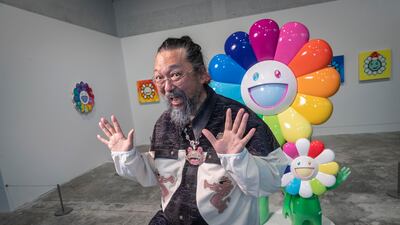
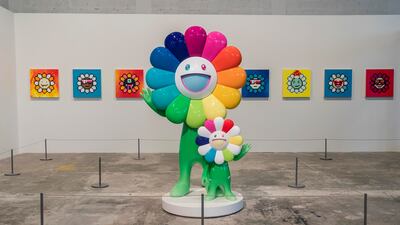
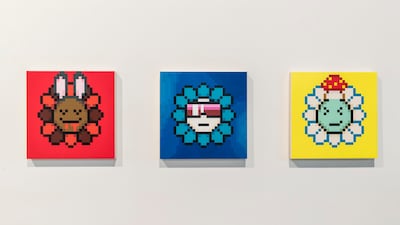
On one hand, while the entrance of artists such as Takashi Murakami into the NFT arena has lent the space some much-needed credibility, Christie's reported a 96 per cent decline in NFT sales over the course of the year.
Although the medium remains subject to the same vulnerabilities as the crypto market, many creatives and platforms continue to explore ways to utilise the technology — with applications ranging from practical to abstract, and social to commercial.
Some will go on questioning the legitimacy of NFTs as an artistic medium, as online marketplaces continue to be flooded with meme art tokens. Now that the hysteria has settled down, questions are being raised about the inherent "value" in NFT art, with conceptual works that can easily be minted over and over again, as opposed to physical works by modern artists.
Elsewhere, blockchain proponents continue to swear by the utopian ideal the technology is laying the foundation for — whether as a means of verifying provenance and authenticity, or a promised land of opportunity for emerging artists.
Others will simply wonder what the best application of the technology may be in the creative field. Much has been said about the democratising force of NFTs, but their ability to truly empower creators and enrich communities has yet to be demonstrated on a wide scale. How many emerging artists have bypassed the gatekeepers and risen to the top of the arts world, scaling the ladder of NFTs?
The rise of AI
However, if 2021 was the year of NFTs, 2022 was the year of artificial intelligence. Over the course of the past 12 months, the rise and release of AI image generators, such as Dall-E and Midjourney, has offered an unparalleled insight into just how powerful these algorithms have become.
There is no more tangible way to explore the power of a modern AI system than by simply typing in “Arab man drinking coffee in the style of Van Gogh”, and watching it draw a faithful depiction in under a minute.
The conversation bubbled to the surface in August, when Jason Allen won the Colorado State Fair award for a piece of digital art produced using the Midjourney system. He told The National that while critics of AI-generated work often aim to discount the degree of human input in the creative process, “you don't just type in a few words and get amazing pieces”.
He added: “There's a process to it. One of my points is, if the prompt was no big deal, why does everybody keep asking me what it is?
“Instead of brushstrokes, it's keystrokes. I don't know what the outcome is going to be but I know what I feel and how I want to express it. And then I discovered [it] at the end, and it's just faster than your process. So is that the problem? You're afraid of the power?”
It is precisely that power which is sending shock waves across the arts and culture spaces, with many wondering where to draw the line. At what point do we stop valuing the space not just between the brush and the canvas, but the artist and the brush? When does the physical medium become redundant? And where does it all stop? As Murakami told us, the new question of our age is: "What is creativity?"
Automation has long been an issue across various other sectors. As we head further into the Fourth Industrial Revolution, the debate over the next waves of automation, especially in the creative spaces, may be spearheaded by AI art.
Other applications, meanwhile, such as the Lensa AI app, have triggered wider debates — particularly over copyright issues, with artists claiming that it creates avatars for its users by compiling existing artworks.
For algorithms trained to amalgamate and replicate other people’s existing artworks, rather than reconfiguring sources of inspiration as a human might, the process raises even more questions — where exactly does one draw the line between inspiration and duplication?
We can expect these conversations to escalate as AI technology continues to grow at an exponential rate, and more systems, including perhaps Google’s own Imagen, are made more available to the public.
Some established artists will incorporate these systems into their work, others will shun and deride them. Smaller digital artists working on commission will probably feel the squeeze.
Merit of the metaverse
Earlier this year, The National also met Ai-Da, dubbed “the world’s first ultra-realistic artist robot”. An AI-powered robot who uses a mechanical arm to paint, Ai-Da told us: “I believe that art can be a powerful tool for change. I strive to use my artwork to encourage discussions over new technologies. It is inspiring to see people discuss our features.”
Of course, mirroring this, not all technological innovation in the arts will prove as divisive. Virtual and augmented reality will continue to offer artists, and audiences, new ways to experiment and explore.
We’ve already covered projects, such as the Mosul Heritage Museum’s virtual reality exhibition, which uses technology to remarkable effect — allowing visitors to revisit heritage sites destroyed by terrorists. We also explored how forensic architecture is being used to solve human rights abuses around the world.
However, the storied metaverse continues to drag its heels, leaving people wondering whether the soil it ploughs will ever reap a worthy harvest. Do people really want to throw on a set of VR goggles and peruse an exhibition of Ringo Starr’s art in the metaverse?
There are wider issues to explore: will Meta own the metaverse? Should anyone own the metaverse? And if they do, what does that mean for creativity? Will all digital art be filtered through the sort of socio-economic hierarchies the internet has always promised to counteract?
If monopolies such as Meta aim to enforce control over these digital spaces, perhaps we will see greater lunges from artists towards the decentralising forces of NFTs, lest their work be diluted by the shackles of algorithms designed to promote commercial interests. In this outcome, in a world where people’s attention span is a product to sell to advertisers, what role does art serve, and what can creatives do to protect virtual cultural spaces?
Of course, the conversation is sure to shift, and with technology developing at the rate it is, it’s impossible to truly predict how things will unfold. But one thing is for certain: the marriage of art and technology is sure to remain a juggling act of promise and problems for some time to come.
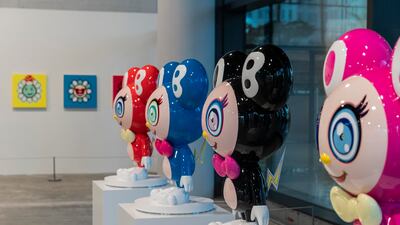
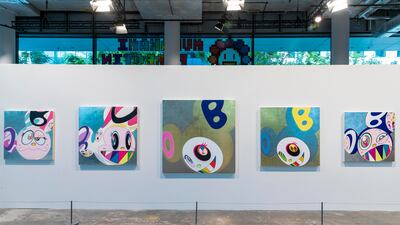
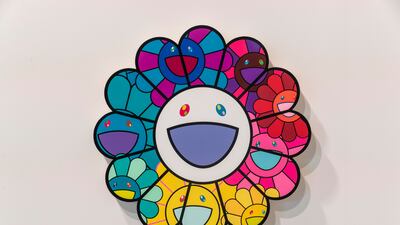
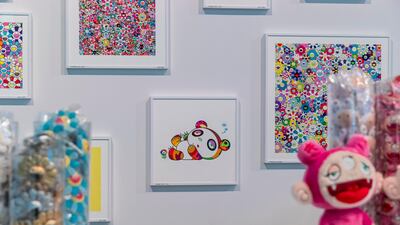
Scroll through images of Takashi Murakami's NFT project and Dubai exhibition below
The low down
Producers: Uniglobe Entertainment & Vision Films
Director: Namrata Singh Gujral
Cast: Rajkummar Rao, Nargis Fakhri, Bo Derek, Candy Clark
Rating: 2/5
Mercer, the investment consulting arm of US services company Marsh & McLennan, expects its wealth division to at least double its assets under management (AUM) in the Middle East as wealth in the region continues to grow despite economic headwinds, a company official said.
Mercer Wealth, which globally has $160 billion in AUM, plans to boost its AUM in the region to $2-$3bn in the next 2-3 years from the present $1bn, said Yasir AbuShaban, a Dubai-based principal with Mercer Wealth.
“Within the next two to three years, we are looking at reaching $2 to $3 billion as a conservative estimate and we do see an opportunity to do so,” said Mr AbuShaban.
Mercer does not directly make investments, but allocates clients’ money they have discretion to, to professional asset managers. They also provide advice to clients.
“We have buying power. We can negotiate on their (client’s) behalf with asset managers to provide them lower fees than they otherwise would have to get on their own,” he added.
Mercer Wealth’s clients include sovereign wealth funds, family offices, and insurance companies among others.
From its office in Dubai, Mercer also looks after Africa, India and Turkey, where they also see opportunity for growth.
Wealth creation in Middle East and Africa (MEA) grew 8.5 per cent to $8.1 trillion last year from $7.5tn in 2015, higher than last year’s global average of 6 per cent and the second-highest growth in a region after Asia-Pacific which grew 9.9 per cent, according to consultancy Boston Consulting Group (BCG). In the region, where wealth grew just 1.9 per cent in 2015 compared with 2014, a pickup in oil prices has helped in wealth generation.
BCG is forecasting MEA wealth will rise to $12tn by 2021, growing at an annual average of 8 per cent.
Drivers of wealth generation in the region will be split evenly between new wealth creation and growth of performance of existing assets, according to BCG.
Another general trend in the region is clients’ looking for a comprehensive approach to investing, according to Mr AbuShaban.
“Institutional investors or some of the families are seeing a slowdown in the available capital they have to invest and in that sense they are looking at optimizing the way they manage their portfolios and making sure they are not investing haphazardly and different parts of their investment are working together,” said Mr AbuShaban.
Some clients also have a higher appetite for risk, given the low interest-rate environment that does not provide enough yield for some institutional investors. These clients are keen to invest in illiquid assets, such as private equity and infrastructure.
“What we have seen is a desire for higher returns in what has been a low-return environment specifically in various fixed income or bonds,” he said.
“In this environment, we have seen a de facto increase in the risk that clients are taking in things like illiquid investments, private equity investments, infrastructure and private debt, those kind of investments were higher illiquidity results in incrementally higher returns.”
The Abu Dhabi Investment Authority, one of the largest sovereign wealth funds, said in its 2016 report that has gradually increased its exposure in direct private equity and private credit transactions, mainly in Asian markets and especially in China and India. The authority’s private equity department focused on structured equities owing to “their defensive characteristics.”
McLaren GT specs
Engine: 4-litre twin-turbo V8
Transmission: seven-speed
Power: 620bhp
Torque: 630Nm
Price: Dh875,000
On sale: now
How to help
Send “thenational” to the following numbers or call the hotline on: 0502955999
2289 – Dh10
2252 – Dh 50
6025 – Dh20
6027 – Dh 100
6026 – Dh 200
Six things you need to know about UAE Women’s Special Olympics football team
Several girls started playing football at age four
They describe sport as their passion
The girls don’t dwell on their condition
They just say they may need to work a little harder than others
When not in training, they play football with their brothers and sisters
The girls want to inspire others to join the UAE Special Olympics teams
8 traditional Jamaican dishes to try at Kingston 21
- Trench Town Rock: Jamaican-style curry goat served in a pastry basket with a carrot and potato garnish
- Rock Steady Jerk Chicken: chicken marinated for 24 hours and slow-cooked on the grill
- Mento Oxtail: flavoured oxtail stewed for five hours with herbs
- Ackee and salt fish: the national dish of Jamaica makes for a hearty breakfast
- Jamaican porridge: another breakfast favourite, can be made with peanut, cornmeal, banana and plantain
- Jamaican beef patty: a pastry with ground beef filling
- Hellshire Pon di Beach: Fresh fish with pickles
- Out of Many: traditional sweet potato pudding
Challenge Cup result:
1. UAE 3 faults
2. Ireland 9 faults
3. Brazil 11 faults
4. Spain 15 faults
5. Great Britain 17 faults
6. New Zealand 20 faults
7. Italy 26 faults
UAE squad
Esha Oza (captain), Al Maseera Jahangir, Emily Thomas, Heena Hotchandani, Indhuja Nandakumar, Katie Thompson, Lavanya Keny, Mehak Thakur, Michelle Botha, Rinitha Rajith, Samaira Dharnidharka, Siya Gokhale, Sashikala Silva, Suraksha Kotte, Theertha Satish (wicketkeeper) Udeni Kuruppuarachchige, Vaishnave Mahesh.
UAE tour of Zimbabwe
All matches in Bulawayo
Friday, Sept 26 – First ODI
Sunday, Sept 28 – Second ODI
Tuesday, Sept 30 – Third ODI
Thursday, Oct 2 – Fourth ODI
Sunday, Oct 5 – First T20I
Monday, Oct 6 – Second T20I
Indoor Cricket World Cup - Sept 16-20, Insportz, Dubai
Dubai World Cup nominations
UAE: Thunder Snow/Saeed bin Suroor (trainer), North America/Satish Seemar, Drafted/Doug Watson, New Trails/Ahmad bin Harmash, Capezzano, Gronkowski, Axelrod, all trained by Salem bin Ghadayer
USA: Seeking The Soul/Dallas Stewart, Imperial Hunt/Luis Carvajal Jr, Audible/Todd Pletcher, Roy H/Peter Miller, Yoshida/William Mott, Promises Fulfilled/Dale Romans, Gunnevera/Antonio Sano, XY Jet/Jorge Navarro, Pavel/Doug O’Neill, Switzerland/Steve Asmussen.
Japan: Matera Sky/Hideyuki Mori, KT Brace/Haruki Sugiyama. Bahrain: Nine Below Zero/Fawzi Nass. Ireland: Tato Key/David Marnane. Hong Kong: Fight Hero/Me Tsui. South Korea: Dolkong/Simon Foster.
Avatar: Fire and Ash
Director: James Cameron
Starring: Sam Worthington, Sigourney Weaver, Zoe Saldana
Rating: 4.5/5
UAE%20SQUAD
%3Cp%3E%0D%3Cstrong%3EMen%3A%3C%2Fstrong%3E%20Saif%20Al%20Zaabi%2C%20Salem%20Al%20Marzooqi%2C%20Zayed%20Al%20Ansaari%2C%20Saud%20Abdulaziz%20Rahmatalla%2C%20Adel%20Shanbih%2C%20Ahmed%20Khamis%20Al%20Blooshi%2C%20Abdalla%20Al%20Naqbi%2C%20Khaled%20Al%20Hammadi%2C%20Mohammed%20Khamis%20Khalaf%2C%20Mohammad%20Fahad%2C%20Abdulla%20Al%20Arimi.%0D%3Cbr%3E%3Cstrong%3EWomen%3A%3C%2Fstrong%3E%20Mozah%20Al%20Zeyoudi%2C%20Haifa%20Al%20Naqbi%2C%20Ayesha%20Al%20Mutaiwei.%3C%2Fp%3E%0A
Dubai Bling season three
Cast: Loujain Adada, Zeina Khoury, Farhana Bodi, Ebraheem Al Samadi, Mona Kattan, and couples Safa & Fahad Siddiqui and DJ Bliss & Danya Mohammed
Rating: 1/5
Labour dispute
The insured employee may still file an ILOE claim even if a labour dispute is ongoing post termination, but the insurer may suspend or reject payment, until the courts resolve the dispute, especially if the reason for termination is contested. The outcome of the labour court proceedings can directly affect eligibility.
- Abdullah Ishnaneh, Partner, BSA Law
Overall standings
1. Christopher Froome (GBR/Sky) 68hr 18min 36sec,
2. Fabio Aru (ITA/AST) at 0:18.
3. Romain Bardet (FRA/ALM) 0:23.
4. Rigoberto Uran (COL/CAN) 0:29.
5. Mikel Landa (ESP/SKY) 1:17.
Fifa Club World Cup quarter-final
Esperance de Tunis 0
Al Ain 3 (Ahmed 02’, El Shahat 17’, Al Ahbabi 60’)
THREE POSSIBLE REPLACEMENTS
Khalfan Mubarak
The Al Jazira playmaker has for some time been tipped for stardom within UAE football, with Quique Sanchez Flores, his former manager at Al Ahli, once labelling him a “genius”. He was only 17. Now 23, Mubarak has developed into a crafty supplier of chances, evidenced by his seven assists in six league matches this season. Still to display his class at international level, though.
Rayan Yaslam
The Al Ain attacking midfielder has become a regular starter for his club in the past 15 months. Yaslam, 23, is a tidy and intelligent player, technically proficient with an eye for opening up defences. Developed while alongside Abdulrahman in the Al Ain first-team and has progressed well since manager Zoran Mamic’s arrival. However, made his UAE debut only last December.
Ismail Matar
The Al Wahda forward is revered by teammates and a key contributor to the squad. At 35, his best days are behind him, but Matar is incredibly experienced and an example to his colleagues. His ability to cope with tournament football is a concern, though, despite Matar beginning the season well. Not a like-for-like replacement, although the system could be adjusted to suit.
Turkish Ladies
Various artists, Sony Music Turkey
Company profile
Name: One Good Thing
Founders: Bridgett Lau and Micheal Cooke
Based in: Dubai
Sector: e-commerce
Size: 5 employees
Stage: Looking for seed funding
Investors: Self-funded and seeking external investors
MOUNTAINHEAD REVIEW
Starring: Ramy Youssef, Steve Carell, Jason Schwartzman
Director: Jesse Armstrong
Rating: 3.5/5
Married Malala
Malala Yousafzai is enjoying married life, her father said.
The 24-year-old married Pakistan cricket executive Asser Malik last year in a small ceremony in the UK.
Ziauddin Yousafzai told The National his daughter was ‘very happy’ with her husband.
If you go…
Emirates launched a new daily service to Mexico City this week, flying via Barcelona from Dh3,995.
Emirati citizens are among 67 nationalities who do not require a visa to Mexico. Entry is granted on arrival for stays of up to 180 days.
More coverage from the Future Forum
Various Artists
Habibi Funk: An Eclectic Selection Of Music From The Arab World (Habibi Funk)