• 'The Interpreter' by Hayv Kahraman (2016). All Photos: Christie's Dubai
    'The Interpreter' by Hayv Kahraman (2016). All Photos: Christie's Dubai
  • 'Mirror Ball' by Monir Shahroudy Farmanfarmaian (circa 1970).
    'Mirror Ball' by Monir Shahroudy Farmanfarmaian (circa 1970).
  • Mahmoud Saïd's 1948 seascape 'Les falaises-la baie à Marsa Matrouh (esquisse)'.
    Mahmoud Saïd's 1948 seascape 'Les falaises-la baie à Marsa Matrouh (esquisse)'.
  • 'Angelus II-1' by Kamal Boullata (2017).
    'Angelus II-1' by Kamal Boullata (2017).
  • 'Hollyland' by Hazem Harb (2019).
    'Hollyland' by Hazem Harb (2019).
  • 'Evolution of Man' by Ahmed Mater (2010).
    'Evolution of Man' by Ahmed Mater (2010).

Demand for Middle Eastern art is soaring as Christie's sale tops $3 million


Razmig Bedirian
  • English
  • Arabic

Demand for artworks from across the Middle East is on the up.

Christie’s announced a live auction and online sale of regional modern and contemporary art brought in more than $3 million last week, with several sales far exceeding initial estimates.

The top lot of the sale was Broken Land by Iranian artist Ali Banisadr, which sold for £415,800 against a low estimate of £250,000.

The live auction was held in London last Wednesday; its online counterpart ran for three weeks and closed the day after. The top lot of the sale was Broken Land by Iranian artist Ali Banisadr, which sold for $477,000 against a low estimate of $286,000. Kamal Boullata’s Angelus II-I sold for almost $29,000, marking a new auction record for the Palestinian artist.

Two works by Egyptian painter Mahmoud Said were offered in the live auction, including the 1948 seascape Les falaises-la baie a Marsa Matrouh (esquisse), which the artist gave to his niece Queen Farida in the late 1940s. The painting was estimated to fetch between $80,000 to $115,000, and sold for more than $180,000. A 1919 work Le Nil a Louxor (Chadouf) by Said, meanwhile, brought in almost $70,000.

Paysage by Lebanese artist Etel Adnan sold for $159,000, while No 224 by Palestinian artist Samia Halaby fetched $217,000.

'Evolution of Man' by Ahmed Mater (2010). Photo: Christie's Dubai

The lot also included works by Saudi artist Ahmed Mater, Iraqi artist Hayv Kahraman and Egyptian-Armenian artist Chant Avedissian. Many of the artworks were presented at an exhibition at Christie’s Dubai in September. A curated selection was also on view during Christie's London Frieze Week.

The exhibitions are likely to have helped garner international exposure for the works and bolster auction results, with the winning bidders comprising private collectors and institutions from 15 countries, including the UAE, US, UK and France. Christie’s says that 25 per cent of those participating in the auction were new clients.

“There is a much larger volume of people that are interested in art for the Middle East, internationally,” Suzy Sikorski, associate specialist of Middle Eastern Art at Christie's, says. “New people are coming in and are paying top dollar for some of these works. That was very exciting to see, the fact that there are new names in the market.”

These include international clients with little relation to the region, as well as a few institutions from the region, Sikorski says, without divulging any names.

This is the sixth year the autumn auction has been offered and the first live iteration since 2019. Sikorski says that the fact that several prices from this year’s lot exceeded initial estimates is indicative of a steadily rising demand for modern regional art, as well as more contemporary works.

“There is a mature collecting taste coming from collectors that have historically been looking at Middle Eastern art, where certain collectors have a vision of which era to focus on," she says. "But I think what’s important also is that a lot of these top value artworks are also coming from contemporary artists, which is really exciting to see. There are many collectors who are already aware, who have already had seen these works and followed them.”

Sikorski says certain sale prices, such as Boullata’s Angelus II-I, is also a sign that often overlooked names are finally getting their due attention.

“He’s a very important Palestinian artist,” she says.

'Angelus II-I' by Kamal Boullata (2017). Photo: Christie's Dubai

Another key work sold was by Tunisian artist Hedi Turki (Plaine Fertile), who “might not have had that moment yet,” Sikorski says.

Renowned contemporary names like Ali Cherri — who had the Silver Lion award at the Venice Biennale were also featured in the lot. “He is someone that, again, is very much international — I think having those fresh young artists that are well known and respected internationally is another aspect that is slowly going to be expanding prices.”

Sikorski says there was also special focus devoted to more affordable pieces, to entice budding collectors or those still peeking into the region’s art history.

“There were many new clients that were eager to learn, many who are maybe making their first purchases from the Middle East. We have this pocket who are investing £15,000 ($17,200) or less to get their feet wet, which makes the auction seem less intimidating than they might think.”

Dr Ridha Moumni, deputy chairman of Christie’s Middle East concluded: “This year, Christie's presented a quality of artworks reflecting the diversity and creativity of the Middle East.

"We are delighted with the success of the sale and the acquisition by both private collectors and institutions from the curated selection that included significant works from Iran, Lebanon, Egypt, Saudi Arabia, and the Maghreb. We will ensure significant upcoming sales of modern and contemporary artworks and develop the category to meet the growing interest in the art of the region, regionally and internationally.”

Scroll through images of Islamic and Indian works Christie's displayed in Dubai earlier this year below

  • The exhibition will be on show at Christie’s DIFC until October 3. All Photos: Christie's
    The exhibition will be on show at Christie’s DIFC until October 3. All Photos: Christie's
  • 'Portrait of Henrietta Maria' (1636) by Sir Anthony van Dyck.
    'Portrait of Henrietta Maria' (1636) by Sir Anthony van Dyck.
  • A Kashan Luster, turquoise and cobalt blue star tile depicting a camel with a saddle, from Iran. It was made in the later 13th and early 14th centuries.
    A Kashan Luster, turquoise and cobalt blue star tile depicting a camel with a saddle, from Iran. It was made in the later 13th and early 14th centuries.
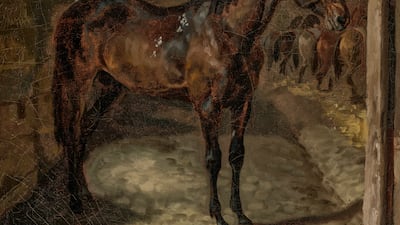
  • 'Etalon Anglo-Arabe' by Theodore Gericault.
    'Etalon Anglo-Arabe' by Theodore Gericault.
  • Rare Royal Mughal Pashmina Carpet, Northern India.
    Rare Royal Mughal Pashmina Carpet, Northern India.
  • The carpet dates back to 1650.
    The carpet dates back to 1650.
  • 'The First Kiss of the Sun' (1886) by Jean-Leon Gerome.
    'The First Kiss of the Sun' (1886) by Jean-Leon Gerome.
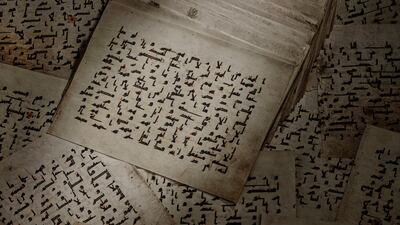
  • A Kufic Quran section from one of the from one of the earliest examples of Quran production.
    A Kufic Quran section from one of the from one of the earliest examples of Quran production.
  • The Kufic script on vellum pages from one of the earliest examples of Quran production.
    The Kufic script on vellum pages from one of the earliest examples of Quran production.
  • 'A White-Eared Bulbul' (1620) by Reza Abbasi from Safavid Isfahan, Iran.
    'A White-Eared Bulbul' (1620) by Reza Abbasi from Safavid Isfahan, Iran.
  • Iznik Slipware pottery jug from Ottoman Turkey, 1570.
    Iznik Slipware pottery jug from Ottoman Turkey, 1570.
  • Intricate details of the jug.
    Intricate details of the jug.
  • A painting from the Ludwig Haboghorst collection Attributed to Govardhan, Mughal India, 1605.
    A painting from the Ludwig Haboghorst collection Attributed to Govardhan, Mughal India, 1605.
The specs: 2018 Nissan Patrol Nismo

Price: base / as tested: Dh382,000

Engine: 5.6-litre V8

Gearbox: Seven-speed automatic

Power: 428hp @ 5,800rpm

Torque: 560Nm @ 3,600rpm

Fuel economy, combined: 12.7L / 100km

Name: Peter Dicce

Title: Assistant dean of students and director of athletics

Favourite sport: soccer

Favourite team: Bayern Munich

Favourite player: Franz Beckenbauer

Favourite activity in Abu Dhabi: scuba diving in the Northern Emirates 


Ten tax points to be aware of in 2026

1. Domestic VAT refund amendments: request your refund within five years

If a business does not apply for the refund on time, they lose their credit.

2. E-invoicing in the UAE

Businesses should continue preparing for the implementation of e-invoicing in the UAE, with 2026 a preparation and transition period ahead of phased mandatory adoption. 

3. More tax audits

Tax authorities are increasingly using data already available across multiple filings to identify audit risks. 

4. More beneficial VAT and excise tax penalty regime

Tax disputes are expected to become more frequent and more structured, with clearer administrative objection and appeal processes. The UAE has adopted a new penalty regime for VAT and excise disputes, which now mirrors the penalty regime for corporate tax.

5. Greater emphasis on statutory audit

There is a greater need for the accuracy of financial statements. The International Financial Reporting Standards standards need to be strictly adhered to and, as a result, the quality of the audits will need to increase.

6. Further transfer pricing enforcement

Transfer pricing enforcement, which refers to the practice of establishing prices for internal transactions between related entities, is expected to broaden in scope. The UAE will shortly open the possibility to negotiate advance pricing agreements, or essentially rulings for transfer pricing purposes. 

7. Limited time periods for audits

Recent amendments also introduce a default five-year limitation period for tax audits and assessments, subject to specific statutory exceptions. While the standard audit and assessment period is five years, this may be extended to up to 15 years in cases involving fraud or tax evasion. 

8. Pillar 2 implementation 

Many multinational groups will begin to feel the practical effect of the Domestic Minimum Top-Up Tax (DMTT), the UAE's implementation of the OECD’s global minimum tax under Pillar 2. While the rules apply for financial years starting on or after January 1, 2025, it is 2026 that marks the transition to an operational phase.

9. Reduced compliance obligations for imported goods and services

Businesses that apply the reverse-charge mechanism for VAT purposes in the UAE may benefit from reduced compliance obligations. 

10. Substance and CbC reporting focus

Tax authorities are expected to continue strengthening the enforcement of economic substance and Country-by-Country (CbC) reporting frameworks. In the UAE, these regimes are increasingly being used as risk-assessment tools, providing tax authorities with a comprehensive view of multinational groups’ global footprints and enabling them to assess whether profits are aligned with real economic activity. 

Contributed by Thomas Vanhee and Hend Rashwan, Aurifer

Real estate tokenisation project

Dubai launched the pilot phase of its real estate tokenisation project last month.

The initiative focuses on converting real estate assets into digital tokens recorded on blockchain technology and helps in streamlining the process of buying, selling and investing, the Dubai Land Department said.

Dubai’s real estate tokenisation market is projected to reach Dh60 billion ($16.33 billion) by 2033, representing 7 per cent of the emirate’s total property transactions, according to the DLD.

Lampedusa: Gateway to Europe
Pietro Bartolo and Lidia Tilotta
Quercus

UAE currency: the story behind the money in your pockets
THE CLOWN OF GAZA

Director: Abdulrahman Sabbah 

Starring: Alaa Meqdad

Rating: 4/5

What%20is%20cystic%20fibrosis%3F
%3Cul%3E%0A%3Cli%3ECystic%20fibrosis%20is%20a%20genetic%20disorder%20that%20affects%20the%20lungs%2C%20pancreas%20and%20other%20organs.%3C%2Fli%3E%0A%3Cli%3EIt%20causes%20the%20production%20of%20thick%2C%20sticky%20mucus%20that%20can%20clog%20the%20airways%20and%20lead%20to%20severe%20respiratory%20and%20digestive%20problems.%3C%2Fli%3E%0A%3Cli%3EPatients%20with%20the%20condition%20are%20prone%20to%20lung%20infections%20and%20often%20suffer%20from%20chronic%20coughing%2C%20wheezing%20and%20shortness%20of%20breath.%3C%2Fli%3E%0A%3Cli%3ELife%20expectancy%20for%20sufferers%20of%20cystic%20fibrosis%20is%20now%20around%2050%20years.%3C%2Fli%3E%0A%3C%2Ful%3E%0A
Results

5pm: Al Falah – Maiden (PA) Dh80,000 (Turf) 1,200m; Winner: Bshara, Richard Mullen (jockey), Salem Al Ketbi (trainer)

5.30pm: Wathba Stallions Cup – Handicap (PA) Dh70,000 (T) 1,400m; Winner: AF Musannef, Tadhg O’Shea, Ernst Oertel

6pm: Al Dhafra – Maiden (PA) Dh80,000 (T) 1,600m; Winner: AF Mualami, Antonio Fresu, Abubakar Daud

6.30pm: Al Khaleej Al Arabi – Handicap (PA) Dh80,000 (T) 1,600m; Winner: Hawafez, Adrie de Vries, Abubakar Daud

7pm: Al Mafraq – Handicap (PA) Dh80,000 (T) 1,600m; Winner: JAP Almahfuz, Royston Ffrench, Irfan Ellahi

7.30pm: Al Samha – Handicap (TB) Dh80,000 (T) 1,600m; Winner: Celestial Spheres, Patrick Cosgrave, Ismail Mohammed

INDIA'S%20TOP%20INFLUENCERS
%3Cp%3E%3Cstrong%3EBhuvan%20Bam%3C%2Fstrong%3E%3Cbr%3E%3Ca%20href%3D%22https%3A%2F%2Fwww.instagram.com%2Fbhuvan.bam22%2F%3Fhl%3Den%22%20target%3D%22_self%22%3EInstagram%3C%2Fa%3E%20followers%3A%2016.1%20million%3Cbr%3EBhuvan%20Bam%20is%20a%2029-year-old%20comedian%20and%20actor%20from%20Delhi%2C%20who%20started%20out%20with%20YouTube%20channel%2C%20%E2%80%9CBB%20Ki%20Vines%E2%80%9D%20in%202015%2C%20which%20propelled%20the%20social%20media%20star%20into%20the%20limelight%20and%20made%20him%20sought-after%20among%20brands.%3Cbr%3E%3Cstrong%3EKusha%20Kapila%3C%2Fstrong%3E%3Cbr%3E%3Ca%20href%3D%22https%3A%2F%2Fwww.instagram.com%2Fkushakapila%2F%3Fhl%3Den%22%20target%3D%22_self%22%3EInstagram%3C%2Fa%3E%20followers%3A%203.1%20million%3Cbr%3EKusha%20Kapila%20is%20a%20fashion%20editor%20and%20actress%2C%20who%20has%20collaborated%20with%20brands%20including%20Google.%20She%20focuses%20on%20sharing%20light-hearted%20content%20and%20insights%20into%20her%20life%20as%20a%20rising%20celebrity.%3Cbr%3E%3Cstrong%3EDiipa%20Khosla%3C%2Fstrong%3E%3Cbr%3E%3Ca%20href%3D%22https%3A%2F%2Fwww.instagram.com%2Fdiipakhosla%2F%3Fhl%3Den%22%20target%3D%22_self%22%3EInstagram%3C%2Fa%3E%20followers%3A%201.8%20million%3Cbr%3EDiipa%20Khosla%20started%20out%20as%20a%20social%20media%20manager%20before%20branching%20out%20to%20become%20one%20of%20India's%20biggest%20fashion%20influencers%2C%20with%20collaborations%20including%20MAC%20Cosmetics.%3Cbr%3E%3Cstrong%3EKomal%20Pandey%3Cbr%3E%3C%2Fstrong%3E%3Ca%20href%3D%22https%3A%2F%2Fwww.instagram.com%2Fkomalpandeyofficial%2F%3Fhl%3Den%22%20target%3D%22_self%22%3EInstagram%3C%2Fa%3E%20followers%3A%201.8%20million%3Cbr%3EKomal%20Pandey%20is%20a%20fashion%20influencer%20who%20has%20partnered%20with%20more%20than%20100%20brands%2C%20including%20Olay%20and%20smartphone%20brand%20Vivo%20India.%3Cbr%3E%3Cstrong%3ENikhil%20Sharma%3C%2Fstrong%3E%3Cbr%3E%3Ca%20href%3D%22https%3A%2F%2Fwww.instagram.com%2Fnikkkhil%2F%3Fhl%3Den%22%20target%3D%22_self%22%3EInstagram%3C%2Fa%3E%20followers%3A%201.4%20million%3Cbr%3ENikhil%20Sharma%20from%20Mumbai%20began%20his%20online%20career%20through%20vlogs%20about%20his%20motorcycle%20trips.%20He%20has%20become%20a%20lifestyle%20influencer%20and%20has%20created%20his%20own%20clothing%20line.%3Cbr%3E%3Cem%3ESource%3A%20Hireinfluence%2C%20various%3C%2Fem%3E%3Cbr%3E%3C%2Fp%3E%0A
Who's who in Yemen conflict

Houthis: Iran-backed rebels who occupy Sanaa and run unrecognised government

Yemeni government: Exiled government in Aden led by eight-member Presidential Leadership Council

Southern Transitional Council: Faction in Yemeni government that seeks autonomy for the south

Habrish 'rebels': Tribal-backed forces feuding with STC over control of oil in government territory

How to come clean about financial infidelity
  • Be honest and transparent: It is always better to own up than be found out. Tell your partner everything they want to know. Show remorse. Inform them of the extent of the situation so they know what they are dealing with.
  • Work on yourself: Be honest with yourself and your partner and figure out why you did it. Don’t be ashamed to ask for professional help. 
  • Give it time: Like any breach of trust, it requires time to rebuild. So be consistent, communicate often and be patient with your partner and yourself.
  • Discuss your financial situation regularly: Ensure your spouse is involved in financial matters and decisions. Your ability to consistently follow through with what you say you are going to do when it comes to money can make all the difference in your partner’s willingness to trust you again.
  • Work on a plan to resolve the problem together: If there is a lot of debt, for example, create a budget and financial plan together and ensure your partner is fully informed, involved and supported. 

Carol Glynn, founder of Conscious Finance Coaching

WEST ASIA RUGBY 2017/18 SEASON ROLL OF HONOUR

Western Clubs Champions League
Winners: Abu Dhabi Harlequins
Runners up: Bahrain

Dubai Rugby Sevens
Winners: Dubai Exiles
Runners up: Jebel Ali Dragons

West Asia Premiership
Winners: Jebel Ali Dragons
Runners up: Abu Dhabi Harlequins

UAE Premiership Cup
Winners: Abu Dhabi Harlequins
Runners up: Dubai Exiles

UAE Premiership
Winners: Dubai Exiles
Runners up: Abu Dhabi Harlequins

TEACHERS' PAY - WHAT YOU NEED TO KNOW

Pay varies significantly depending on the school, its rating and the curriculum. Here's a rough guide as of January 2021:

- top end schools tend to pay Dh16,000-17,000 a month - plus a monthly housing allowance of up to Dh6,000. These tend to be British curriculum schools rated 'outstanding' or 'very good', followed by American schools

- average salary across curriculums and skill levels is about Dh10,000, recruiters say

- it is becoming more common for schools to provide accommodation, sometimes in an apartment block with other teachers, rather than hand teachers a cash housing allowance

- some strong performing schools have cut back on salaries since the pandemic began, sometimes offering Dh16,000 including the housing allowance, which reflects the slump in rental costs, and sheer demand for jobs

- maths and science teachers are most in demand and some schools will pay up to Dh3,000 more than other teachers in recognition of their technical skills

- at the other end of the market, teachers in some Indian schools, where fees are lower and competition among applicants is intense, can be paid as low as Dh3,000 per month

- in Indian schools, it has also become common for teachers to share residential accommodation, living in a block with colleagues

Mercer, the investment consulting arm of US services company Marsh & McLennan, expects its wealth division to at least double its assets under management (AUM) in the Middle East as wealth in the region continues to grow despite economic headwinds, a company official said.

Mercer Wealth, which globally has $160 billion in AUM, plans to boost its AUM in the region to $2-$3bn in the next 2-3 years from the present $1bn, said Yasir AbuShaban, a Dubai-based principal with Mercer Wealth.

Within the next two to three years, we are looking at reaching $2 to $3 billion as a conservative estimate and we do see an opportunity to do so,” said Mr AbuShaban.

Mercer does not directly make investments, but allocates clients’ money they have discretion to, to professional asset managers. They also provide advice to clients.

“We have buying power. We can negotiate on their (client’s) behalf with asset managers to provide them lower fees than they otherwise would have to get on their own,” he added.

Mercer Wealth’s clients include sovereign wealth funds, family offices, and insurance companies among others.

From its office in Dubai, Mercer also looks after Africa, India and Turkey, where they also see opportunity for growth.

Wealth creation in Middle East and Africa (MEA) grew 8.5 per cent to $8.1 trillion last year from $7.5tn in 2015, higher than last year’s global average of 6 per cent and the second-highest growth in a region after Asia-Pacific which grew 9.9 per cent, according to consultancy Boston Consulting Group (BCG). In the region, where wealth grew just 1.9 per cent in 2015 compared with 2014, a pickup in oil prices has helped in wealth generation.

BCG is forecasting MEA wealth will rise to $12tn by 2021, growing at an annual average of 8 per cent.

Drivers of wealth generation in the region will be split evenly between new wealth creation and growth of performance of existing assets, according to BCG.

Another general trend in the region is clients’ looking for a comprehensive approach to investing, according to Mr AbuShaban.

“Institutional investors or some of the families are seeing a slowdown in the available capital they have to invest and in that sense they are looking at optimizing the way they manage their portfolios and making sure they are not investing haphazardly and different parts of their investment are working together,” said Mr AbuShaban.

Some clients also have a higher appetite for risk, given the low interest-rate environment that does not provide enough yield for some institutional investors. These clients are keen to invest in illiquid assets, such as private equity and infrastructure.

“What we have seen is a desire for higher returns in what has been a low-return environment specifically in various fixed income or bonds,” he said.

“In this environment, we have seen a de facto increase in the risk that clients are taking in things like illiquid investments, private equity investments, infrastructure and private debt, those kind of investments were higher illiquidity results in incrementally higher returns.”

The Abu Dhabi Investment Authority, one of the largest sovereign wealth funds, said in its 2016 report that has gradually increased its exposure in direct private equity and private credit transactions, mainly in Asian markets and especially in China and India. The authority’s private equity department focused on structured equities owing to “their defensive characteristics.”

The National Archives, Abu Dhabi

Founded over 50 years ago, the National Archives collects valuable historical material relating to the UAE, and is the oldest and richest archive relating to the Arabian Gulf.

Much of the material can be viewed on line at the Arabian Gulf Digital Archive - https://www.agda.ae/en

Banned items
Dubai Police has also issued a list of banned items at the ground on Sunday. These include:
  • Drones
  • Animals
  • Fireworks/ flares
  • Radios or power banks
  • Laser pointers
  • Glass
  • Selfie sticks/ umbrellas
  • Sharp objects
  • Political flags or banners
  • Bikes, skateboards or scooters
The alternatives

• Founded in 2014, Telr is a payment aggregator and gateway with an office in Silicon Oasis. It’s e-commerce entry plan costs Dh349 monthly (plus VAT). QR codes direct customers to an online payment page and merchants can generate payments through messaging apps.

• Business Bay’s Pallapay claims 40,000-plus active merchants who can invoice customers and receive payment by card. Fees range from 1.99 per cent plus Dh1 per transaction depending on payment method and location, such as online or via UAE mobile.

• Tap started in May 2013 in Kuwait, allowing Middle East businesses to bill, accept, receive and make payments online “easier, faster and smoother” via goSell and goCollect. It supports more than 10,000 merchants. Monthly fees range from US$65-100, plus card charges of 2.75-3.75 per cent and Dh1.2 per sale.

2checkout’s “all-in-one payment gateway and merchant account” accepts payments in 200-plus markets for 2.4-3.9 per cent, plus a Dh1.2-Dh1.8 currency conversion charge. The US provider processes online shop and mobile transactions and has 17,000-plus active digital commerce users.

• PayPal is probably the best-known online goods payment method - usually used for eBay purchases -  but can be used to receive funds, providing everyone’s signed up. Costs from 2.9 per cent plus Dh1.2 per transaction.

Updated: November 09, 2022, 7:46 AM