


World Heritage Day was marked this week, reminding global citizens to cherish important sites that can link us to moments in history and symbolise key elements of our culture.
Heritage is a word with a long history and a deep meaning. The English word as we know it is derived from an old French word, heriter, meaning to inherit. Before that, heriter came from the Latin word hereditatem, meaning to be an heir.
The etymology of the English word shows that it’s used to describe things, practices and places that have been passed on through generations. Heritage, therefore, is a form of inheritance – something left behind by older generations to newer ones.
The Arabic word for heritage is tourath, which comes from erth, meaning legacy. Tourath is a significant word, as it denotes all the different aspects of what is inherited, which could range from the cultural to the linguistic or even the sartorial.
Tourath is a noun, often used with an adjective to specify the different types of heritage, such as tourath al aabaa'a (ancestral heritage) or tourath al she’er (heritage of poetry). In the UAE, the word is often seen during Union Day as a reminder of the country's origins, a time to appreciate what generations left behind for us to use and take forward.
-
Hob is the Arabic word for love, but can be used in many contexts -

The Arabic word helu translates, in English, to sweet -
Nashef is the Arabic word for dry, but has many connotations, depending on the context in which you use it -
The Arabic word hurriyeh translates to freedom in English -
The Arabic word tayeb can mean delicious or good, depending on the context -
The Arabic word mustaqbal is best expressed as future in English -
Waqaa, the Arabic word for fall, can signify a loss of power, stature, health or grace -
Hudood means borders in English -
The Arabic word rooh translates to spirit or soul in English -
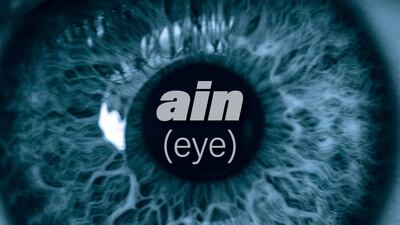
The Arabic word ain means eye in English -
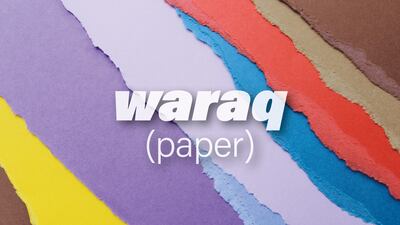
Waraq, the Arabic word of the week means paper in English -
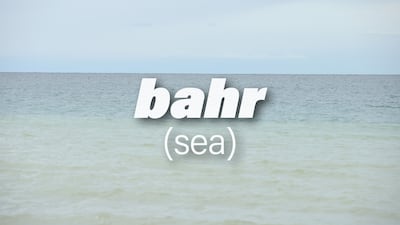
Bahr, the Arabic for sea, has a poetic lilt -
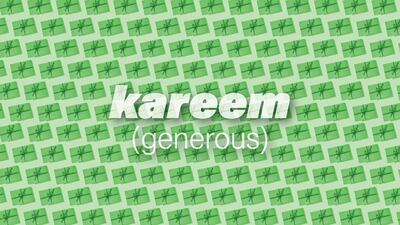
Kareem means generous in English -
Bab means door in English -
Eid means holiday or festival -
Najm means star for the night sky and cosmos, but also has plenty of other meanings, including ambition or fame -
Alwan, the Arabic word for colours, has many shades of meaning -
Akel can refer to home-cooked meals, embezzlement, fire and rust -

Jamal is the Arabic word for beauty, be it literal or figurative -

Herfe translates to profession or craft -

Tabiaa translates to nature and can frame landscapes and portraits -

Sehha is the Arabic word for health -

Ijaza is Arabic for holiday and shines in summer but is not stress-free -

Aamal is the Arabic word for work -
Al dahr translates to time -

Qalb is a word for heart, with poetic roots -
Lugha in Arabic translates to language in English -
Insaan means human being -
Na'eeman is an idiomatic expression used when someone has had a shower or bath, a haircut or had their beard trimmed -
The Arabic word for life touches on eternity, death and accomplishment -

Qamar is the Arabic for moon -
The Arabic word for strength or power is quwwa -
Burj is Arabic for tower -
The Arabic word for sun is shams -
Sabr in English can translate to patience -
Hayba is the Arabic word for prestige -
The Arabic term al shay'e translates as 'the thing' in English -

The Arabic word for road is tareeq -
The Arabic word for read has mystical and scholarly connotations -
Istikan is the Arabic word for a type of tea cup -
The Arabic word hanan means affection in English -
The Arabic word atlal means ruins in English -
Kura is the Arabic word for ball, in all its forms -
Janaah in Arabic means wing in English -
The Arabic word sana translates to year in English -
Qasida is the Arabic for poem, not poetry -
Ameer, the Arabic word for prince, which influenced another English title -
Nakhla translates to palm tree in English -
Al samt is the Arabic for silence -

Kalimaat translates to words in English -

Markaz is Arabic for centre -
Beshara is the Arabic word for good news -
Bayt is the Arabic for house or home -

Fann is the Arabic word for art, and can be either a verb or an adjective -
Isim, which means name, is made up of three letters, alif, seen and meem -
Dunya is the Arabic word for world -
Nazaafah translates to cleanliness in English -
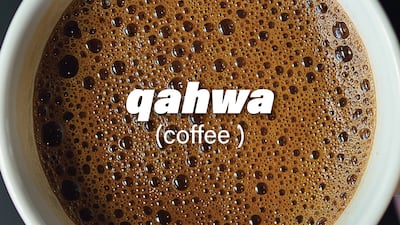
Many traditions revolve around drinking coffee, including weddings, funerals and business meetings -
Fajr is the Arabic word for dawn -
Maghrib is the Arabic word for sunset -
The Arabic language is filled with idioms, quotes and colloquial quips involving the mirror -
Raei is the Arabic word for opinion -

Wa'ed is a multifaceted word for 'promise', as well as a female name -
Qussa is the Arabic word for story -
Sadaaka is the Arabic word for friendship -
Akhbaar is the Arabic word for news -
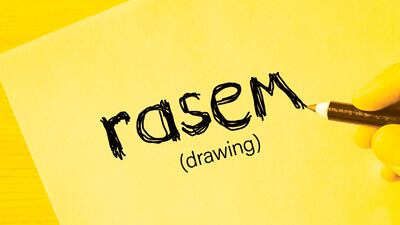
Rasem is made up of the three Arabic letters Rah, Seen and Meem. While it can simply mean a drawing or a sketch it’s also a malleable word whose definition can change depending on context and dialect – particularly between colloquial and classical Arabic. -

As well as finishing a task, khatem denotes a deeper sense of finality -
Commonly translated to blessed, mubarak is used as a popular greeting on auspicious days -
The Arabic word for lighthouse is also a term that has become closely associated with Islam -
Siyaam, the Arabic word for fasting is also connected to silence -

Tawbah, the Arabic word for repentance, is also connected to Ramadan -
Safar, the Arabic Word for travel can also refer to sunny days, a brighter-blazing fire or exile. The National


A popular summer camp in the country also bears the word in its name, Nady Tourath Al Emaraat, which translates to Emirates Heritage Club. During camp, young people are taught skills and lessons passed down by elders, such as tying knots and catching fish with nothing but a line and a hook – practices that aren’t commonplace today. At the camp, children learn that all aspects of heritage passed down to them are important to maintain and preserve. It's not just the skills they pick up, but also the bonds they create that enable tourath to become ingrained in younger generations.
But heritage is not just a reflection of the past, there is modern heritage too. Earlier this year, Abu Dhabi decided to mark some of the most important landmarks across the city with plaques.
These plaques read modern heritage and its translation al tourath al hadeeth – showing that tourath is not just about preserving the past, but also highlighting new creations worth embedding into a culture's heritage, giving them extra attention and care.
They have been posted in 60 locations across the city, including the Chamber of Commerce, the Central Bank, Al Ibrahimi Tower, Zayed Sports City and the Main Bus Terminal.
“The modern heritage of Abu Dhabi serves as a reminder of our emirate, and our country, what we stand for, what we strive for, and for the legacy that we are creating for future generations,” chairman of the Department of Culture and Tourism – Abu Dhabi, Mohamed Khalifa Al Mubarak, wrote in a column for The National.
“Together we must guard modern heritage, because of the value it holds in our collective memory as residents of this emirate, and because of the historical testimony it conveys in telling Abu Dhabi’s story through architectural and urban identity.”

